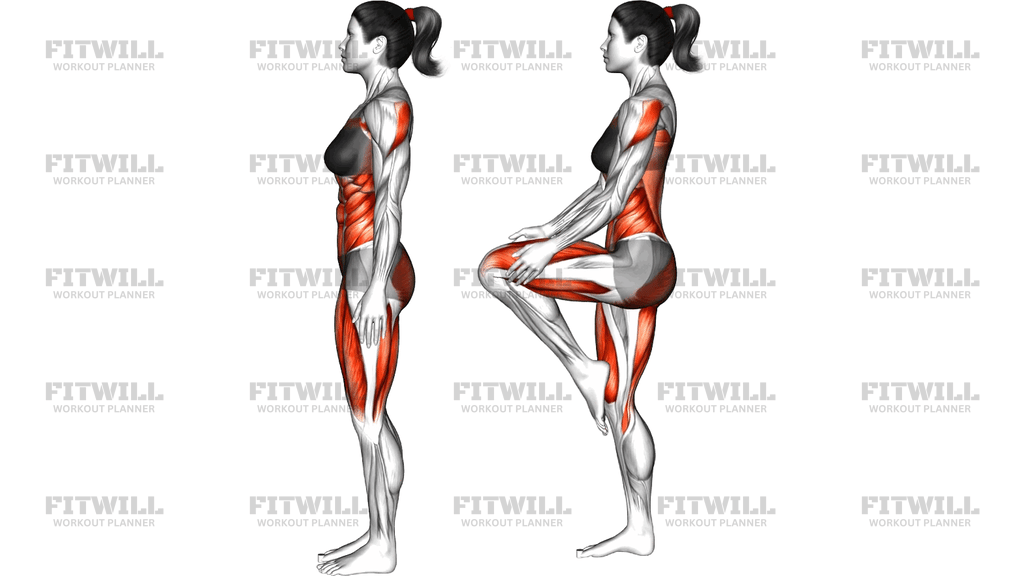
Standing Figure Four Pose
Standing Figure Four Pose is a bodyweight hip and glute stretch that uses a single-leg balance position to open the outer hip of the crossed leg. The shape looks like a standing version of the figure-four stretch: one ankle rests across the opposite thigh while the supporting leg holds your weight. The stretch is useful when the hips feel stiff from sitting, running, lifting, or any training session that leaves the glutes and deep hip rotators feeling tight.
The setup matters because the knee and ankle positions decide whether the stretch lands in the hip or turns into pressure in the knee. Keep the crossed ankle above the standing knee, flex the lifted foot, and settle into a tall stance before you fold forward. A wall, rack, or post can help you stay steady if balance is the limiting factor, but the main job is still to stack the pelvis and keep the support leg controlled.
As you move into the pose, sit the hips back instead of dropping straight down. Keep the standing knee tracking over the middle toes, let the torso hinge forward only as far as you can hold a long spine, and gently press the crossed knee outward with your elbows or hands if that feels comfortable. The stretch should build gradually across the crossed-leg glute, outer hip, and deep rotators, not produce a sharp pinch in the front of the hip or inside the knee.
Standing Figure Four Pose works well in a warmup, between strength sets, or at the end of a session when you want to downshift and restore hip motion. It is especially practical for people who spend a lot of time sitting, because the standing balance demand exposes side-to-side differences that seated stretches can hide. Beginners can absolutely use it, but they should keep the range small and use support until they can balance without twisting the pelvis.
Treat each side independently and spend the same time on both legs so the pose does not reinforce asymmetry. Smooth breathing matters here: long exhales often let the hip release a little more without forcing the position. If the support leg cramps, the torso rounds, or the crossed knee starts to feel irritated, back out of the stretch and reset the ankle placement before trying again.
[ Workout Log & Planner ]
Put your next workout in Fitwill
Keep your plan and training log ready when you are.


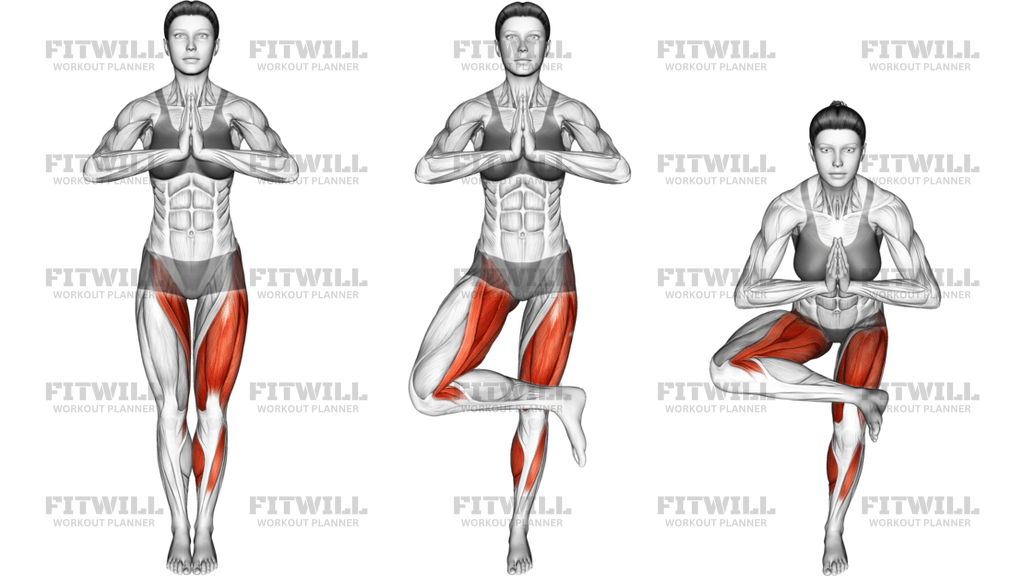
Instructions
- Stand tall with your feet about hip-width apart and use a wall, rack, or sturdy post with one hand if you need balance help.
- Shift your weight onto one leg and keep that knee softly bent so the support side stays stable.
- Cross the opposite ankle over the standing thigh just above the knee, then flex the lifted foot to keep the leg active.
- Square your hips forward and keep the standing knee pointed over the middle toes instead of letting it cave inward.
- Bring your hands to prayer at your chest or lightly hold the crossed knee and ankle for balance.
- Sit your hips back as if you are reaching for a chair, keeping your chest long and your spine neutral.
- Hinge forward slightly from the hips only until you feel a deep stretch in the crossed leg's glute and outer hip.
- Breathe slowly for the target hold, then rise out of the stretch with control and switch sides.
Tips & Tricks
- Keep the crossed ankle on the thigh above the knee joint; letting it sit on the knee is too much pressure for this pose.
- Flex the lifted foot hard so the ankle stays active and the stretch stays in the hip instead of collapsing through the knee.
- If balance is shaky, keep one fingertip on a wall and shorten the hold instead of forcing a deeper position.
- Sit the hips back more than you fold the chest down; a hip hinge gives a cleaner glute stretch than rounding forward.
- Do not let the standing hip drift outward or the pelvis twist open, or the stretch will become uneven side to side.
- A small bend in the standing knee is normal and often helps you stay steady without arching the lower back.
- If you feel the front of the hip pinching, come higher, reduce the ankle height, or switch to a supported version.
- Take longer exhales while you hold the pose; that usually softens the deep hip rotators without pushing past comfort.
Frequently Asked Questions
What does Standing Figure Four Pose stretch the most?
It mainly targets the crossed leg's glute, outer hip, and deep hip rotators. You may also feel a mild stretch in the support-side glute and calf from balancing.
Can beginners do Standing Figure Four Pose?
Yes. Beginners usually do best with one hand on a wall and a smaller hip hinge so they can balance without twisting the pelvis.
Where should the ankle sit in Standing Figure Four Pose?
The ankle should rest above the standing knee, on the thigh, not directly on the knee joint. That keeps the stretch in the hip and reduces knee stress.
Should I lean forward in Standing Figure Four Pose?
A small forward hinge is fine, but the movement should come from the hips. If your spine rounds hard to get deeper, you are probably forcing the pose.
Why do I need to flex the lifted foot?
Flexing the foot keeps the ankle active and helps protect the knee. It also makes the stretch feel more organized and less sloppy.
What if I lose balance during Standing Figure Four Pose?
Use a wall, rack, or sturdy post with one hand and keep the torso taller. Balance should support the stretch, not compete with it.
What is a safer alternative if my knee feels irritated?
Use a seated or supine figure-four stretch instead. Those versions remove most of the balance demand and make it easier to control the knee angle.
How long should I hold Standing Figure Four Pose?
Hold it long enough to feel the outer hip soften, usually around 20 to 40 seconds per side. If you are using it as a warmup, shorter holds and a lighter hinge are usually enough.