Thread The Needle Pose
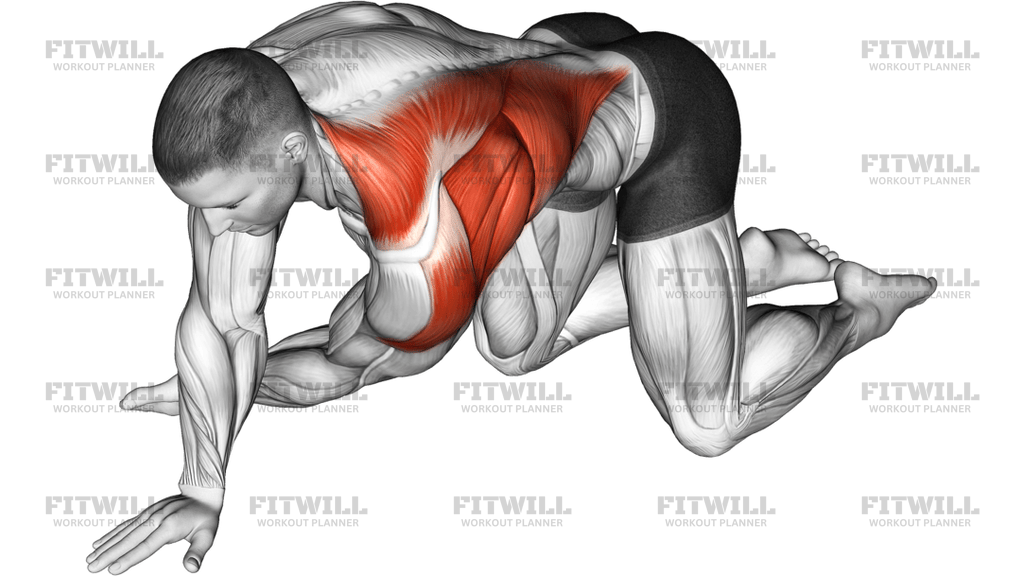
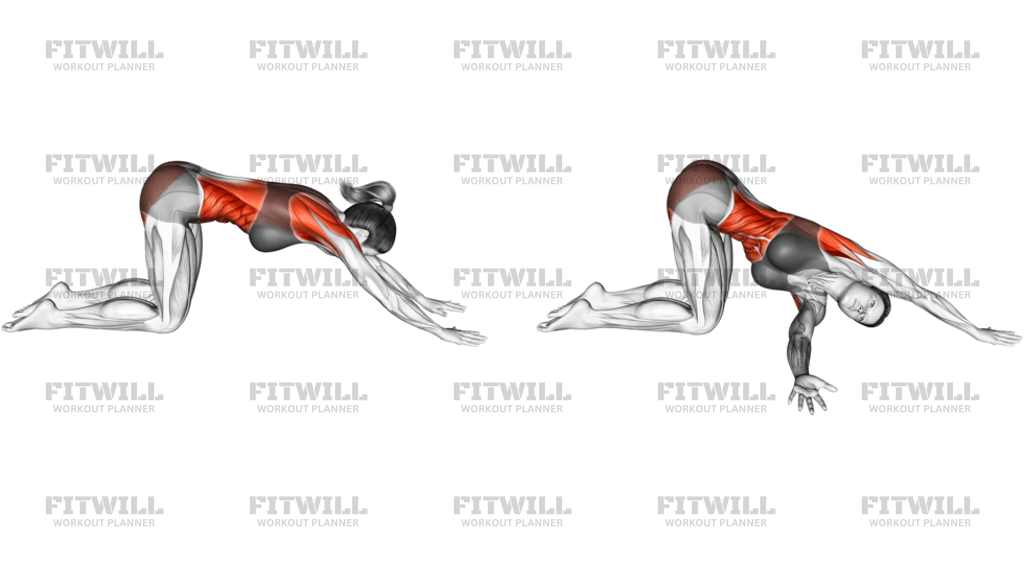
Thread the Needle Pose is a kneeling thoracic rotation and shoulder stretch done from a hands-and-knees base. One arm threads under the chest while the other arm supports the body, creating a long stretch through the rear shoulder, upper back, lat, and the side of the ribcage. It is a bodyweight mobility drill, not a strength movement, and the quality of the setup determines how well the spine and shoulder open.
This pose is most useful when the upper back feels stiff, the shoulders are rounded forward, or you need a controlled rotational stretch before training. The support hand and knees keep the position grounded while the threaded arm and the chest rotate toward the floor. That combination lets you feel the twist without forcing the lower back to do all the work.
The goal is to keep the hips stacked over the knees, the supporting shoulder active, and the head relaxed as the threaded arm slides underneath the torso. When the reach is done well, the stretch lands across the back of the shoulder blade, the outside of the upper back, and the thoracic spine rather than pinching the neck or collapsing the chest.
Use the pose as a warm-up, cooldown, or recovery drill when you want smoother rotation and better overhead comfort. Move slowly, breathe into the ribs, and let the exhale deepen the twist. If the stretch turns sharp in the shoulder or the neck has to crane to make room, shorten the range and keep the movement smaller.
Because the exercise is bodyweight and low intensity, beginners can usually do it safely with a shallow reach and steady breathing. The main coaching priorities are a stable base, a smooth thread under the torso, and a controlled return to hands and knees. Repeating those cleanly matters more than chasing a bigger range of motion.
Fitwill
Log Workouts, Track Progress & Build Strength.
Achieve more with Fitwill: explore over 9600 exercises with images and videos, access built-in and custom workouts, perfect for both gym and home sessions, and see real results.
Start your journey. Download today!




Instructions
- Start on your hands and knees with your hands under your shoulders, knees under your hips, and toes relaxed on the floor.
- Press the palm of the support hand into the ground and keep both elbows soft so your upper body can rotate without dumping into the shoulder.
- Take a breath to lengthen your spine, then slide one arm under your chest with the palm facing up and the shoulder rotating inward.
- Let the threaded shoulder and the side of the head move toward the floor only as far as you can keep the hips mostly stacked over the knees.
- Keep the supporting arm active and reach the threaded arm long enough that you feel the stretch across the back of the shoulder and upper back.
- Pause in the stretched position for one to three slow breaths without collapsing your neck or forcing the range.
- Exhale as you reverse the path and thread the arm back out from under your torso.
- Return to the quadruped start position with both hands under the shoulders before repeating on the other side.
Tips & Tricks
- Keep the hips over the knees; if they drift back toward the heels, the stretch turns into a different position and the thoracic rotation gets smaller.
- Reach the threaded arm long, not just far across the floor, so the stretch opens behind the shoulder blade instead of jamming the shoulder forward.
- Let the ribcage rotate with the arm instead of twisting only the neck; the goal is upper-back motion, not a head turn.
- Press lightly through the support hand so the supporting shoulder stays organized and does not sink into the floor.
- Use a slow exhale in the bottom position to make room for a little more rotation without forcing it.
- If the top of the shoulder feels pinched, shorten the reach and keep more weight in the support hand.
- Keep the threaded palm facing up; that position usually helps the shoulder blade glide more comfortably under the torso.
- Move to the side that feels tighter first if you are using this as a mobility reset, but still match both sides for total work.
Frequently Asked Questions
What muscle does Thread The Needle Pose target most?
It mainly stretches the rear shoulder, upper back, and the muscles around the thoracic spine.
Do I need any equipment for the threaded arm position?
No. It is a bodyweight floor stretch done from hands and knees.
Where should I feel the stretch when my arm threads under my chest?
You should feel it along the back of the shoulder, the upper back, and sometimes into the side of the ribcage.
Should my hips stay square to the floor?
Mostly yes. A little rotation is normal, but keep the hips stacked over the knees instead of rolling fully open.
Why does my neck get tight in this pose?
Usually because the head is reaching for the floor instead of letting the ribcage rotate. Keep the neck relaxed and the movement smaller.
Is this a good warm-up before pressing or overhead work?
Yes. It can help restore upper-back rotation and make shoulder positioning feel easier before training.
What is the most common mistake in the setup?
Letting the hips sit too far back or collapsing into the support shoulder, which reduces the stretch and makes the pose feel sloppy.
How long should I hold each side?
A short hold of one to three breaths is usually enough, especially if you alternate sides in a mobility sequence.