Revolved Head To Knee Pose
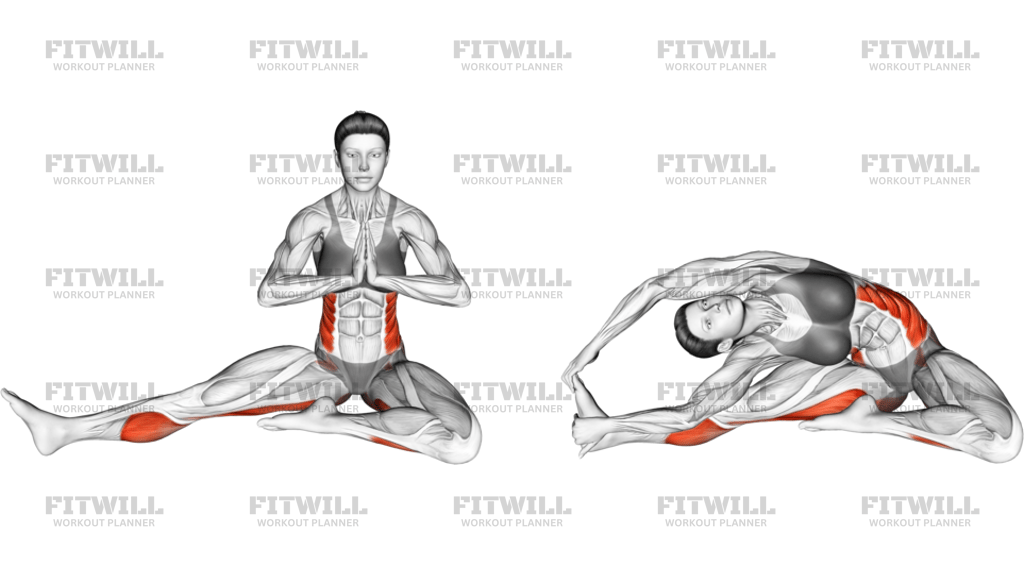
Revolved Head to Knee Pose is a seated yoga stretch that combines a forward fold, spinal rotation, and side-body reach. In the image, one leg stays extended while the other leg folds in and opens out to the side, creating a long line through the hamstring, hip, and trunk. The pose is less about forcing depth and more about arranging the pelvis, spine, and shoulders so the body can lengthen without collapsing into the lower back.
This movement primarily targets the hamstring and calf of the straight leg, while the inner thigh of the bent leg, the obliques, the lats, and the muscles around the spine all help maintain the twist and the reach. Because the posture asks for both rotation and a side bend, the quality of the setup matters more than how close the chest gets to the shin. If the pelvis tips back or the torso rounds aggressively, the stretch shifts out of the intended line and into strain.
A good rep starts by sitting tall with both sitting bones grounded, then extending one leg and tucking the other leg in according to the pose. The bent knee stays relaxed and open to the side while the straight leg stays active through the heel and toes. From there, the torso rotates toward the extended leg and the opposite arm reaches overhead or toward the foot, depending on your mobility, so the rib cage can lengthen over the thigh instead of just folding forward.
The finished position should feel like a controlled stretch across the back of the straight leg, the side waist, and the outer hip, not a sharp pinch in the knee or a jam in the lumbar spine. Breathe slowly into the side ribs and back body, then let the exhale soften the fold a little more without losing length through the spine. If the shoulders bunch up or the chest caves toward the floor, reduce the depth and keep the twist cleaner.
Use Revolved Head to Knee Pose as a flexibility drill, cooldown stretch, or yoga sequence position when you want to improve hamstring length, seated spinal control, and side-body opening. It works best with patient holds and calm breathing rather than fast repetitions. Beginners can perform it with a smaller reach and a more upright torso, while more flexible lifters can add range only if the pelvis stays rooted and the rotation stays smooth.
[ Workout Log & Planner ]
Put your next workout in Fitwill
Keep your plan and training log ready when you are.


Instructions
- Sit on the floor with one leg extended straight in front of you and the other leg folded in, knee open out to the side and the foot tucked near the inner thigh.
- Ground both sitting bones as evenly as you can, then lengthen the spine before you reach forward.
- Keep the straight leg active by pressing through the heel and lifting the toes toward the ceiling.
- Rotate your torso toward the extended leg so your chest starts to face that thigh instead of collapsing straight down.
- Reach the opposite arm overhead or toward the foot to create space through the side body and ribs.
- Fold forward from the hips while keeping the chest long, stopping when you feel a strong stretch without pain.
- Let the other hand support the shin, ankle, or foot if that helps you stay tall and balanced.
- Hold the end position with slow breathing, then come back up by unrolling the spine and returning to a tall seat.
- Switch sides and repeat for the planned hold time or number of breaths.
Tips & Tricks
- Keep both sitting bones heavy; if one hip pops off the floor, you are usually reaching too far.
- Let the rotation come from the rib cage and upper back, not from yanking the shoulder across the knee.
- A slight bend in the straight knee is fine if it lets you keep the pelvis upright and the spine long.
- Reach forward only as far as you can keep the chest open over the thigh.
- If the bent knee feels strained, bring the foot closer to the groin and let the thigh relax outward.
- Use the exhale to soften the fold and the inhale to grow taller through the crown of the head.
- Do not force the forehead to the shin; the goal is a clean line through the side body, not a crash into the leg.
- If the lower back pinches, reduce the twist and focus on lengthening before deepening the stretch.
Frequently Asked Questions
What does Revolved Head to Knee Pose stretch most?
It most strongly stretches the hamstring and calf of the extended leg, with additional work through the obliques, lats, and side waist.
Can beginners do this pose without forcing the twist?
Yes. Keep the folded knee relaxed, sit on both sitting bones, and only rotate and fold as far as you can keep the spine long.
Should my straight leg be fully locked out?
Not necessarily. A soft bend is better than locking the knee if that helps you keep the pelvis grounded and the hamstring stretch controlled.
Where should I feel the stretch in the revolved position?
You should feel length through the back of the extended leg and across the side body, not a sharp pull in the knee or a pinch in the low back.
Do I need to reach the foot with both hands?
No. Use one hand on the shin, ankle, or foot only if it helps you keep the torso tall and the twist organized.
Why does my lower back round when I try to go deeper?
That usually means you have run out of hip and hamstring mobility for the current position. Back off a little and keep length through the spine.
Is this better as a hold or a repetition-based stretch?
It is usually best as a controlled hold with slow breathing, because the pose depends on staying organized rather than bouncing into range.
What is the biggest mistake people make in this pose?
The most common mistake is collapsing the chest toward the floor and losing the twist, which shifts the stretch away from the intended line.