Half Sun Salutation
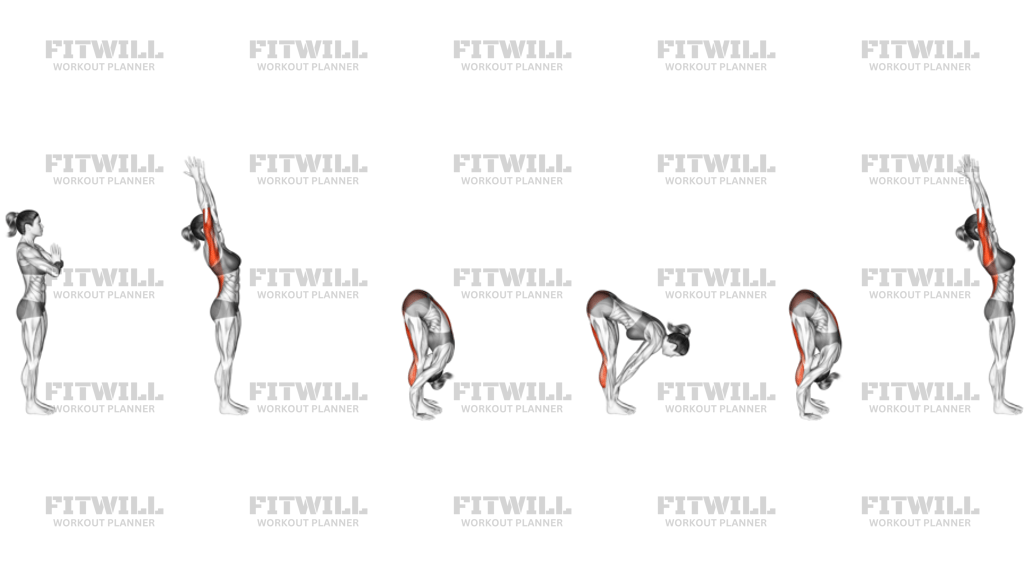
Half Sun Salutation is a bodyweight yoga flow built around a controlled rise, forward fold, half lift, and return to standing. It is less about raw strength than about moving with a steady rhythm, matching the breath, and keeping the spine organized as the body changes shape. The sequence is commonly used as a warm-up because it opens the hamstrings, calves, hips, and upper back while teaching you to move smoothly between standing, hinging, and lengthening positions.
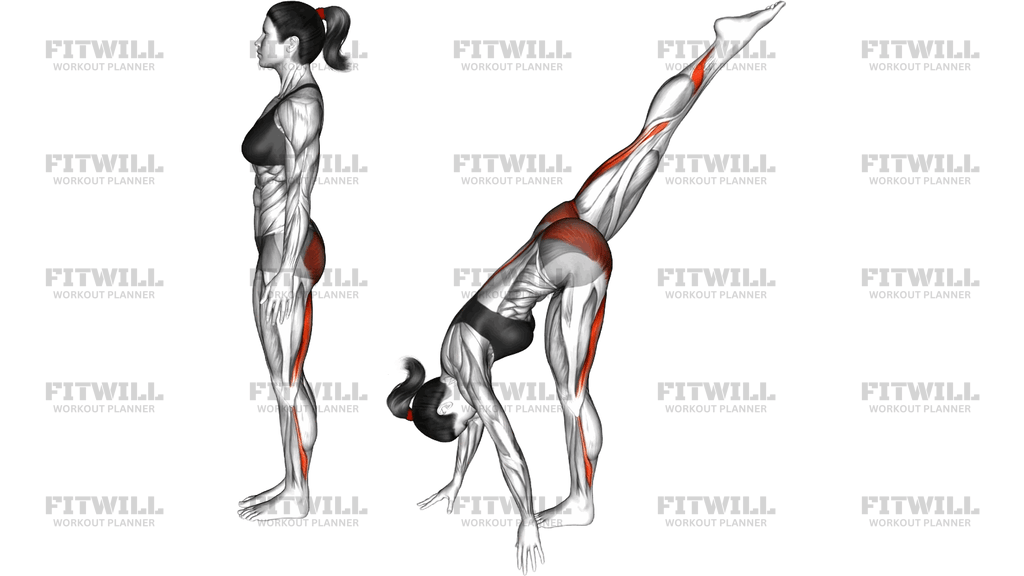
The image shows a classic half sun pattern: start tall with the hands at the chest, reach overhead, fold forward, lengthen into a half lift with a long back, then move back into a deeper fold before returning to a tall reach. That repeated pattern makes setup important. If the feet, hinge, or spinal position are sloppy at the start, each later position gets harder to control and the stretch turns into a yanking motion instead of a clean flow.
The main training value comes from the quality of the transition. A good Half Sun Salutation keeps the chest open when you reach, the hips moving back when you fold, and the spine long when you half lift. The movement should feel coordinated rather than rushed. You should be able to inhale into length, exhale into the fold, and use the breath to pace each shape instead of forcing range with momentum.
This exercise fits well in a warm-up, mobility block, or recovery session before lifting, running, or athletic work. It can also be used as a light conditioning flow when done for repeated rounds. Beginners can absolutely use it because the movement is bodyweight and easy to scale, but the goal should still be precision. Keep the knees soft if the hamstrings are tight, shorten the reach if the low back rounds, and stop the set if you lose the long-spine positions that make the sequence worthwhile.
Treat Half Sun Salutation as a skillful transition drill, not a race. Smooth breathing, controlled tempo, and clear shapes matter more than speed. When done well, it prepares the whole body for training and reinforces good posture through repeated standing-to-folding patterns.
Fitwill
Log Workouts, Track Progress & Build Strength.
Achieve more with Fitwill: explore over 9600 exercises with images and videos, access built-in and custom workouts, perfect for both gym and home sessions, and see real results.
Start your journey. Download today!




Instructions
- Stand tall with your feet together or hip-width apart, palms together at your chest, shoulders relaxed, and weight balanced over the middle of each foot.
- Inhale and sweep both arms overhead without letting your ribs flare or your lower back arch hard.
- Exhale and hinge at the hips to fold forward, keeping the knees soft if your hamstrings are tight.
- Let your hands slide toward the floor or shins and keep the neck long instead of hanging the head aggressively.
- Inhale and lengthen into a half lift with a flat back, chest forward, and fingertips on the floor, shins, or thighs as needed.
- Exhale and fold back down, keeping the hips moving back and the spine as long as possible on the way down.
- Inhale, root through the feet, and rise back to standing with the arms reaching overhead or the hands returning to prayer at the chest.
- Reset at the top, regain balance, and repeat for the planned number of rounds with a steady breath rhythm.
Tips & Tricks
- Think of the half lift as a spine-lengthening move, not a hamstring stretch race; the goal is a long back, not reaching the floor.
- Soften the knees enough to keep your pelvis from tucking under when you fold, especially if your hamstrings are tight.
- Keep your shoulders away from your ears as the arms travel overhead so the reach stays active instead of compressed.
- Use the breath to set the pace: inhale into length, exhale into the fold, and avoid holding your breath at the bottom.
- If your hands do not reach the floor comfortably, place them on your shins or thighs and keep the fold controlled.
- Press through the whole foot when you rise so the return to standing feels smooth instead of jerky.
- Keep the neck in line with the spine in both the fold and half lift; dropping the head too far can make the whole sequence sloppy.
- Move at a rhythm you can repeat for multiple rounds without losing the quality of the forward fold or half-lift positions.
Frequently Asked Questions
What does Half Sun Salutation work most?
It mainly trains mobility and control through the hamstrings, calves, hips, and upper back while the core and shoulders help keep the flow organized.
Is the half lift supposed to be flat-backed?
Yes. In the half lift, the goal is a long spine and open chest, not a deep round into the low back.
How low should I fold in the standing forward fold?
Fold only as far as you can keep the movement smooth. Bent knees and hands on the shins are better than forcing the chest to the thighs.
Can beginners do this sequence?
Yes. It is beginner-friendly because it is bodyweight and easy to scale with bent knees, shorter reaches, and a smaller range of motion.
What is the most common mistake in the forward fold and half lift?
People often rush through the fold and then collapse the back in the half lift. Keep both shapes deliberate so the spine stays organized.
Should my hands touch the floor every rep?
No. The floor is optional. Hands on shins or thighs are fine if that lets you keep the fold and half lift controlled.
How should I breathe during the salutation?
Inhale as you reach up and lengthen, exhale as you fold, and inhale again when you move into the half lift or return to standing.
When is Half Sun Salutation most useful?
It works well in a warm-up, mobility session, or recovery day flow before harder training.