Vinyasa
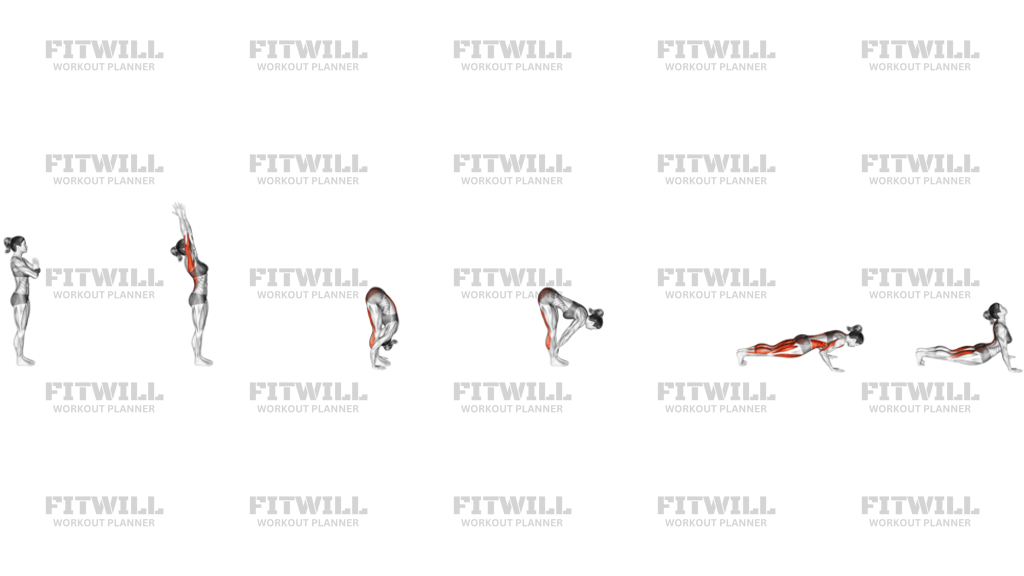
Vinyasa is a bodyweight yoga flow built around smooth transitions, steady breathing, and controlled position changes. Instead of chasing a single static pose, each rep links shapes together so the body learns to move from one support pattern into the next without losing alignment. That makes it useful for warm-ups, mobility work, and conditioning when you want the shoulders, trunk, hips, and feet to stay organized through a full sequence.
This movement is usually performed as a flowing chain of positions such as standing fold, plank, chaturanga or lowered push-up, upward-facing dog or cobra, and downward-facing dog. The exact sequence can vary, but the training goal stays the same: keep the hands, shoulders, ribs, pelvis, and breath coordinated so the transition feels smooth rather than rushed. The primary emphasis is listed as Other because this exercise trains the whole movement pattern more than one isolated muscle.
Setup matters because each transition depends on the last one. Start with enough space on the mat to step or hop back cleanly, place the hands firmly under the shoulders, and spread the fingers so the wrists feel supported. From there, brace lightly through the trunk, keep the neck long, and move with a pace that lets you hold shape in the plank and the upside-down positions instead of collapsing into them.
During the flow, lower with control, then press the floor away as you open the chest and lengthen through the front line of the body. In downward dog, keep the spine long and let the heels reach toward the floor without forcing them down. The best reps look quiet and deliberate: the breath leads the movement, the shoulders stay organized, and the hips travel without swinging or dumping into the low back.
Vinyasa is often used to connect the start of a session to the main work, but it can also stand alone as a mobility-focused conditioning block. It fits beginners when the transitions are simplified, the range is shortened, and the pace is kept slow enough to maintain control. The exercise should feel like a coordinated flow through supporting muscles, core, and shoulders, not like a race through the mat.
Fitwill
Log Workouts, Track Progress & Build Strength.
Achieve more with Fitwill: explore over 9600 exercises with images and videos, access built-in and custom workouts, perfect for both gym and home sessions, and see real results.
Start your journey. Download today!




Instructions
- Stand tall at the top of the mat, then fold forward and place your hands on the floor with your fingers spread.
- Step or lightly hop both feet back so you arrive in a high plank with your hands under your shoulders and your body in one straight line.
- Brace your midsection, keep your neck long, and breathe out as you lower with control toward chaturanga or a modified kneeling version.
- Inhale as you press through your palms and open into upward-facing dog or cobra, keeping the shoulders away from the ears.
- Exhale and tuck your toes, then lift your hips back and up into downward-facing dog.
- Lengthen through your spine and settle into the back of the shoulders without letting the ribs flare or the low back sag.
- Take one or more steady breaths in downward dog, or pedal the feet if the sequence calls for a brief reset.
- Step or hop your feet back toward your hands to return to the fold, then rise or repeat the flow for the planned number of reps.
Tips & Tricks
- Treat the breath as the metronome: one inhale and one exhale should guide the transitions instead of forcing a faster pace.
- Keep the shoulders stacked over the wrists in plank so the flow starts from a stable base instead of a soft upper back.
- If chaturanga is too deep, lower only partway or keep the knees down so the elbows stay close and the shoulders do not dump forward.
- In upward-facing dog or cobra, lift the chest without pinching the low back; the hips should stay controlled, not shoved into extension.
- Spread the fingers and press through the knuckles to reduce wrist irritation during repeated hand support.
- In downward dog, reach the hips back more than you push the heels down; forcing the heels often shortens the spine.
- Step softly between the hands so the hips do not swing side to side when you return from plank.
- Shorten the range or slow the tempo if the flow starts to lose shape in the ribs, shoulders, or pelvis.
Frequently Asked Questions
What is Vinyasa in this exercise record?
It is a flowing yoga sequence that links standing folds, plank, backbend, and downward dog positions with controlled breathing.
What muscles work during Vinyasa flow?
The shoulders, core, upper back, hip stabilizers, and legs all help keep the transitions organized.
Do I need to lower all the way through chaturanga?
No. Use a shortened lower or keep the knees down if that lets you keep the elbows close and the shoulders controlled.
Where should my hands be in the plank portion?
Place them under the shoulders with the fingers spread wide so the wrists and shoulder line stay stacked.
Can beginners do Vinyasa flow?
Yes. Beginners usually do best with slower transitions, shorter ranges, and knee-down variations in the lower phase.
What is the most common form mistake?
Letting the ribs flare and the low back sag when moving from plank into the backbend or downward dog.
Should my heels touch the floor in downward dog?
Not necessarily. Reach the hips back and keep the spine long; the heels can stay elevated if hamstring mobility is limited.
How long should one rep take?
Long enough to match the breath and keep every transition controlled, usually slower than a normal conditioning rep.