Lying Crunch Straight Legs
Lying Crunch Straight Legs is a bodyweight floor crunch for the front of the core. It trains trunk flexion from a fixed lying position, so the abs have to shorten and control the movement without help from leg drive, swinging, or sitting all the way up. The straight-leg position makes the set feel stricter than a bent-knee crunch because you have less room to cheat and less chance to use hip flexors to finish the rep.
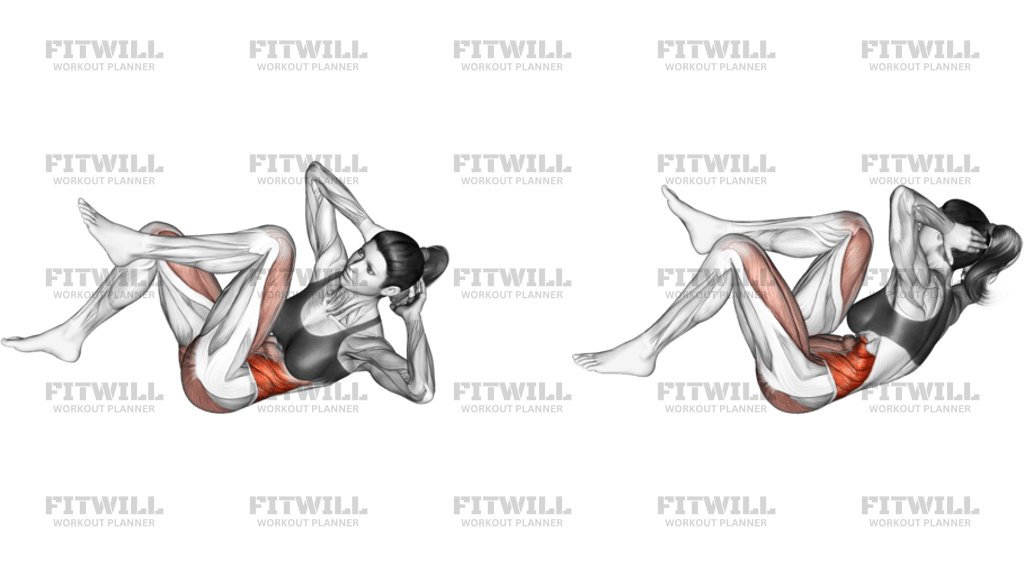
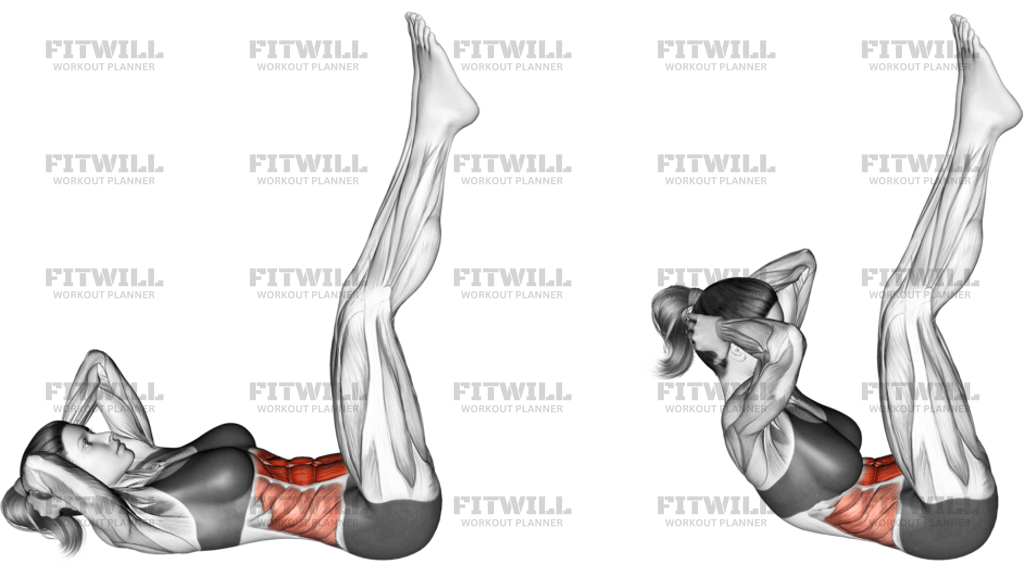
The image shows the lifter on the floor with the legs held straight up and the hands supporting the head. That setup matters because it keeps the pelvis and lower body quiet while the rib cage moves toward the pelvis. When the legs stay vertical and the low back stays controlled against the floor, the abs do the work instead of the hips, neck, or momentum.
This exercise is most useful when you want a simple, repeatable abdominal movement that you can load with time under tension rather than heavy external resistance. It fits well in core blocks, warm-ups, accessory work, and finishers. The range should stay small and precise: lift the shoulder blades and upper ribs, squeeze the abs, then lower with control before the next rep.
Good reps feel like a curl through the upper trunk, not a sit-up. Keep the chin gently tucked, do not pull on the head, and avoid throwing the elbows forward. If the lower back arches hard off the floor or the hips start to move, the set has become too fast or too large. Short, clean reps are better than forcing a big range.
Because the movement is floor-based and low impact, beginners can use it early in a training program as long as they keep the legs still and the neck relaxed. Advanced lifters can make it harder by slowing the lowering phase, pausing at the top, or adding a small plate or med ball only if the torso stays controlled. The goal is always the same: crisp abdominal flexion with steady breathing and no wasted motion.
[ Workout Log & Planner ]
Put your next workout in Fitwill
Keep your plan and training log ready when you are.


Instructions
- Lie flat on your back on the floor or a mat and raise both legs straight up so they point toward the ceiling.
- Place your hands lightly behind your head or by your ears, then keep your elbows wide instead of pulling the head forward.
- Press your lower back gently into the floor and set your chin in a neutral, slightly tucked position.
- Exhale, curl your shoulder blades and upper ribs off the floor, and bring your rib cage toward your pelvis.
- Keep the legs vertical and still while the abs lift the trunk; do not swing the legs or kick for momentum.
- Squeeze the abs briefly at the top with the shoulder blades clear of the floor.
- Lower slowly until your shoulders and upper back are back on the mat, keeping tension in the midsection.
- Reset your breath and repeat for the planned number of repetitions.
Tips & Tricks
- Think about lifting your sternum toward your pelvis, not trying to sit all the way up.
- Keep the legs stacked over the hips; if they drift forward, the hip flexors start taking over.
- Let the hands support the head lightly only; if the neck bends or the elbows collapse, the rep is too aggressive.
- A small top range is correct for this exercise. The shoulder blades just need to clear the floor.
- Keep your low back controlled against the mat and avoid over-arching between reps.
- Exhale on the crunch to help the rib cage close and the abs contract harder.
- Slow the lowering phase to make the abs do the braking instead of dropping back down.
- If your hip flexors cramp, shorten the set, reduce the range, or bend the knees slightly until control improves.
Frequently Asked Questions
What does Lying Crunch Straight Legs train most?
It mainly trains the abdominal muscles through spinal flexion, especially the rectus abdominis.
Why are the legs kept straight up?
Straight legs make the crunch stricter and reduce the chance of using leg swing or knee bend to cheat the rep.
How high should my shoulders come off the floor?
Only high enough for the shoulder blades to clear the mat. This is a crunch, not a full sit-up.
Should I pull on my head with my hands?
No. The hands are only there for light support, and the neck should stay relaxed.
What is the most common mistake with this crunch?
The biggest mistake is turning it into a fast sit-up by swinging the legs or yanking the torso up.
Can beginners do this exercise safely?
Yes. Beginners usually do well with slow reps, a small range, and a focus on keeping the legs still.
What if I feel it more in my hip flexors than my abs?
Shorten the range, keep the legs directly over the hips, and slow the lowering phase so the abs stay in control.
How can I make Lying Crunch Straight Legs harder?
Use a slower eccentric, add a brief pause at the top, or hold a light plate only if your torso stays strict.