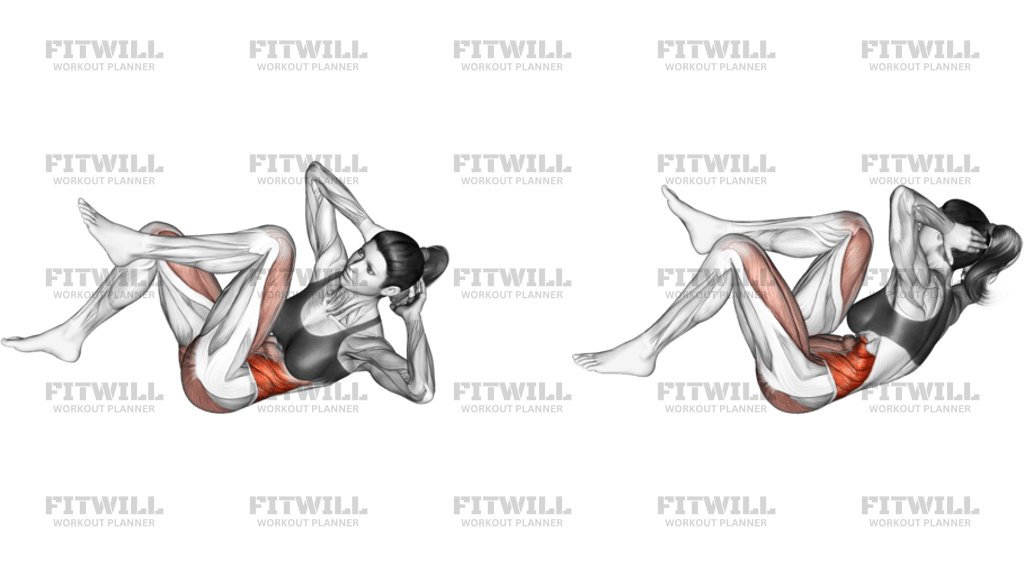
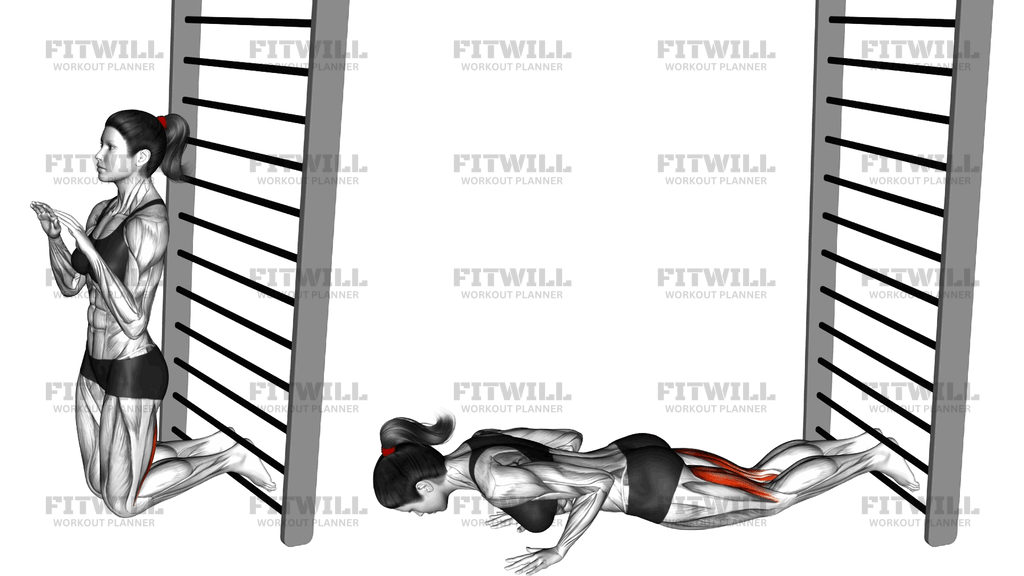
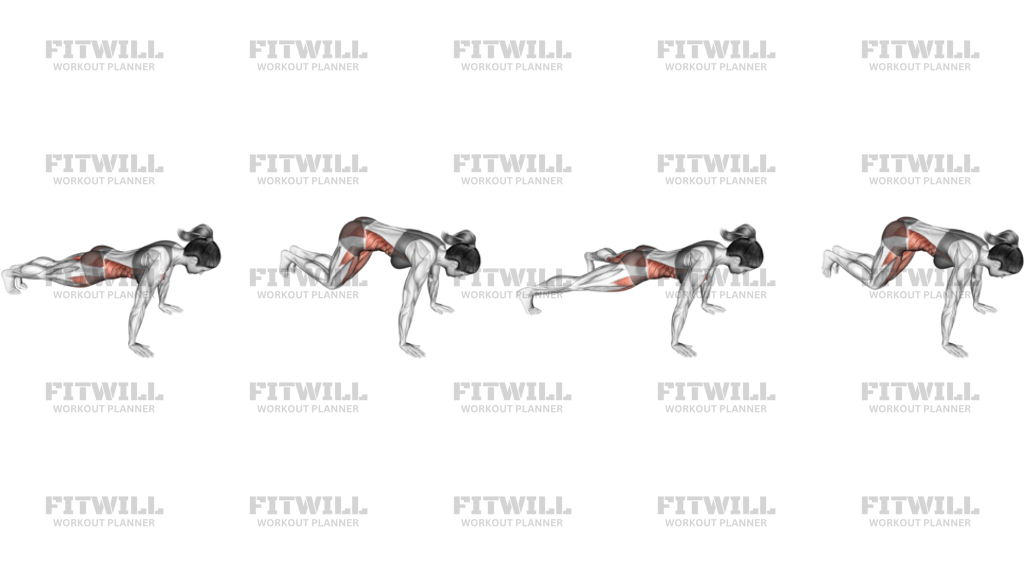
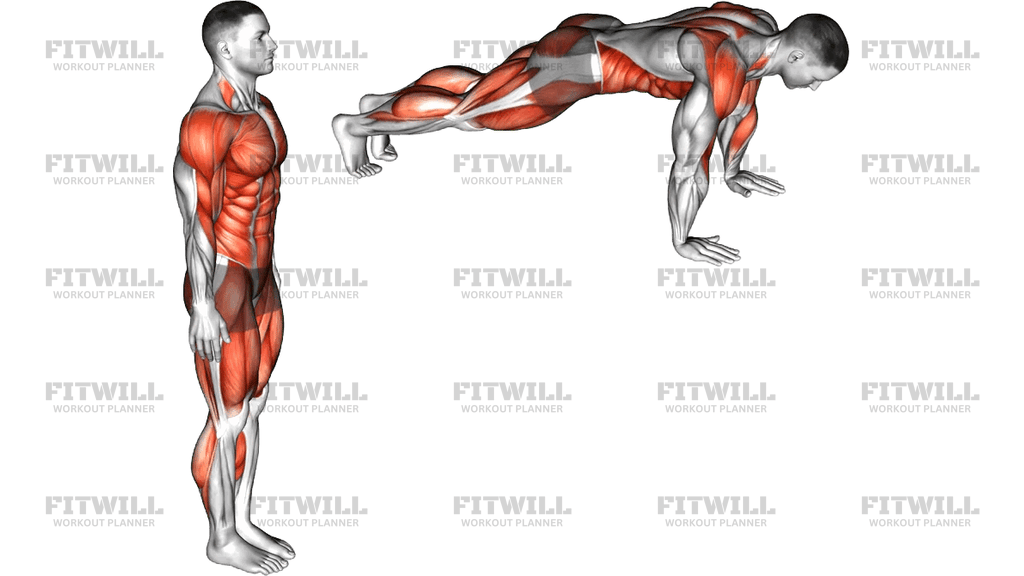
Lying Crunch Straight Legs
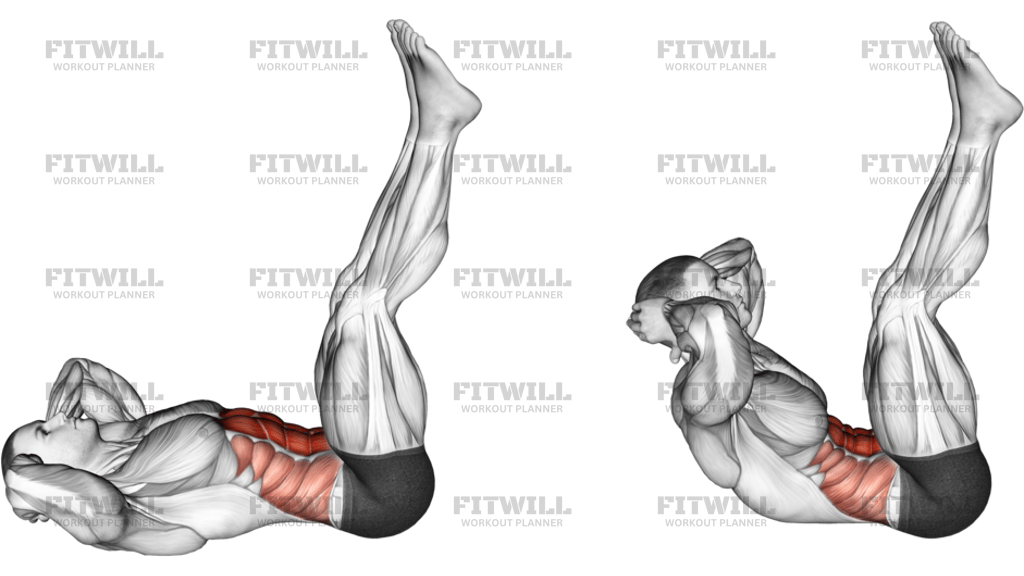
Lying Crunch Straight Legs is a floor-based abdominal exercise that uses body weight and a very simple setup to challenge the front of the torso while the legs stay extended and lifted. The position looks small, but the demand is real: once the legs are held straight up, the abs have to work harder to keep the pelvis organized and prevent the lower back from taking over. That makes it a useful choice for people who want a strict, no-machines core drill that still feels demanding.
The main job of the movement is trunk flexion from the ribcage, not a fast swing of the shoulders or a yank on the neck. Because the legs stay long instead of bent, the hip flexors also have to help hold the lower body in place, which increases the challenge compared with a standard bent-knee crunch. The exercise is especially useful for core-focused sessions, warmups that need controlled abdominal tension, or accessory work after compound lifts.
The setup matters more here than in many abdominal drills. Lie flat on your back, press your lower back toward the floor, and bring the legs straight up so the hips and knees stay stacked. Hands can support the head lightly, but they should not pull on it, and the chin should stay tucked just enough to keep the neck long. If the ribs flare or the lower back arches before you even start, the rep is already too loose.
Each repetition should be short, deliberate, and repeatable. Curl the upper back off the floor by bringing the ribs toward the pelvis, then pause briefly at the top before lowering under control until the shoulder blades touch down again. The legs should stay as quiet as possible; any large hip swing or knee bend usually means the abs lost tension and the body started borrowing momentum. A slower pace keeps the set honest and makes the exercise useful for both beginners and advanced trainees.
Lying Crunch Straight Legs works best when the goal is strict abdominal work rather than speed or load. Keep the movement pain-free, especially through the neck and lower back, and stop the set if the lower spine starts to arch or the legs start drifting forward. Done well, it is a compact but demanding floor exercise that teaches you how to brace, curl, and control the torso without turning the rep into a sloppy sit-up.
[ Workout Log & Planner ]
Put your next workout in Fitwill
Keep your plan and training log ready when you are.


Instructions
- Lie on your back on a flat floor or mat with your legs extended straight up, feet stacked over your hips, and your lower back pressed gently toward the floor.
- Place your hands lightly behind your head or at the sides of your temples so your elbows stay open and your neck can remain relaxed.
- Tuck your chin slightly and set your ribs down before the first rep so your torso starts in a compact, braced position.
- Exhale as you curl your upper back off the floor by lifting your shoulder blades and reaching your chest toward your pelvis.
- Keep the legs vertical and as still as possible while the abs do the work instead of letting the hips swing.
- Pause briefly at the top of the crunch when your shoulder blades are clearly off the floor.
- Lower your upper back back to the mat under control until your shoulder blades touch down again.
- Reset your brace, keep the legs stacked, and repeat for the planned number of reps.
Tips & Tricks
- Press the lower back into the mat before every rep; if it arches, shorten the crunch and reset.
- Keep the legs vertical over the hips instead of drifting toward your face, which usually turns the set into a hip-flexor pull.
- Think about lifting the sternum, not yanking the head forward with your hands.
- Keep the elbows wide enough that the hands only support the head and do not add neck strain.
- Use a slow lowering phase so the shoulder blades return to the floor without losing abdominal tension.
- Exhale as you crunch up and avoid holding your breath through the top half of the rep.
- If your hip flexors cramp, reduce the total range and make the top position smaller and cleaner.
- Stop the set when the legs start to wobble or the lower back comes off the floor.
Frequently Asked Questions
What muscles does Lying Crunch Straight Legs work?
It mainly trains the abdominals, especially the rectus abdominis, while the hip flexors help hold the straight legs up.
Should my legs stay perfectly still during Lying Crunch Straight Legs?
Yes, the legs should stay stacked over the hips with only a small amount of natural movement. If they swing or drift, the abs usually lose tension.
Where should my hands go in Lying Crunch Straight Legs?
Place your hands lightly behind your head or at your temples. They are there for support only, not for pulling the head forward.
Can beginners do this exercise?
Yes, but only with a short, controlled range. Beginners should focus on keeping the lower back down and making the curl small and strict.
Why does my neck feel strained during the crunch?
Usually the hands are pulling the head forward or the chin is lifted too high. Keep the elbows open and imagine the ribcage curling toward the pelvis instead.
How high should I crunch up?
Only high enough to lift the shoulder blades off the floor. This exercise is about a strict abdominal curl, not a full sit-up.
What if my hip flexors take over?
Lower the number of reps, slow the tempo, and keep the legs vertical over the hips. If the front of the hips still dominates, switch to a bent-knee crunch for a set or two.
Is Lying Crunch Straight Legs better than a regular crunch?
It is usually harder because the straight legs increase the demand on the trunk and hip flexors. A regular crunch may be the better starting point if you cannot keep the pelvis stable.