Bodyweight Standing Scapula Row
Bodyweight Standing Scapula Row is a standing upper-back drill that trains shoulder blade control without bending the elbows. The movement looks simple, but its value comes from teaching the scapulae to glide cleanly from reach to retraction while the torso stays tall and quiet. That makes it useful for posture work, shoulder warm-ups, and any program that needs better control of the trapezius and the muscles that steady the shoulder girdle.
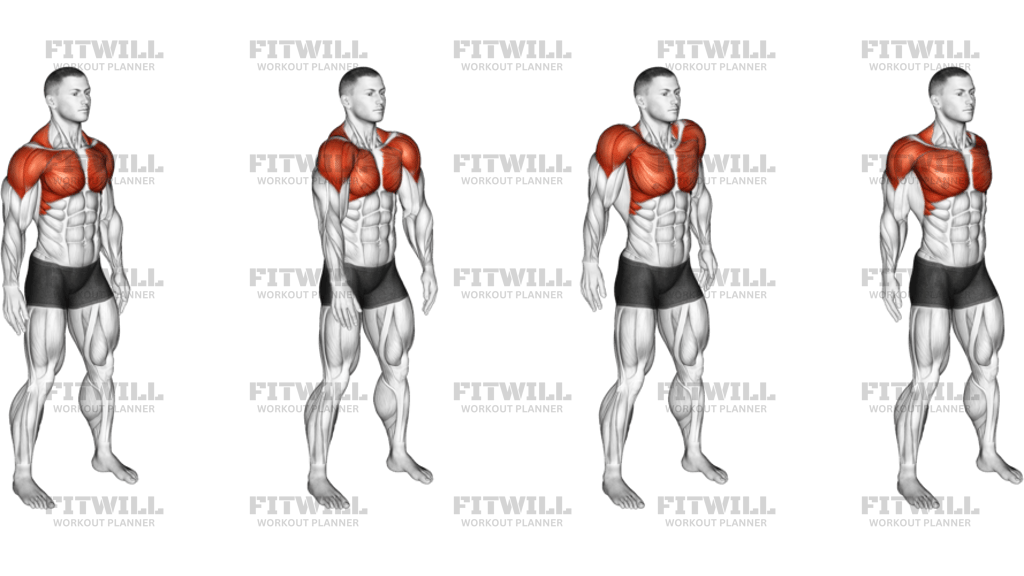
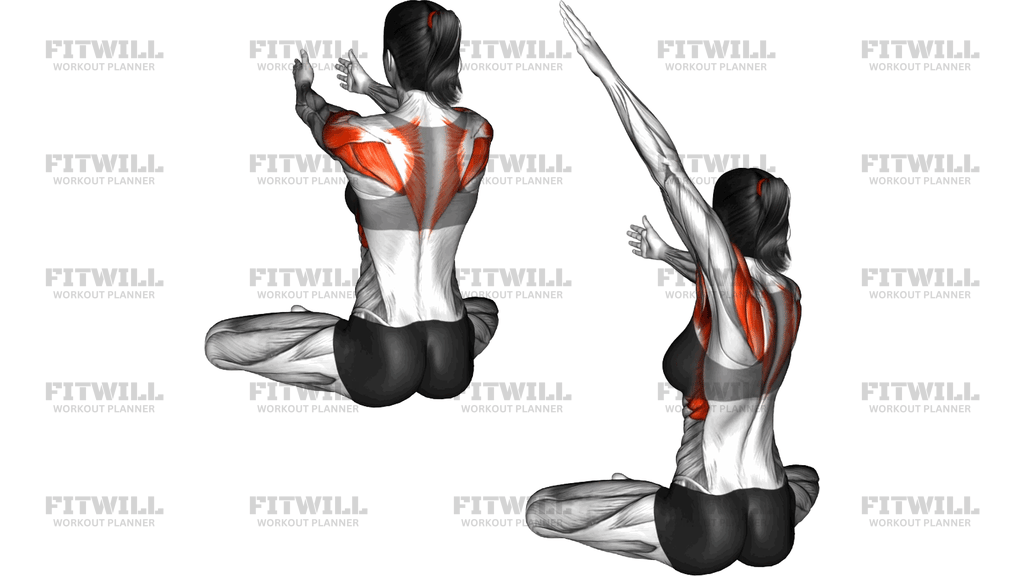
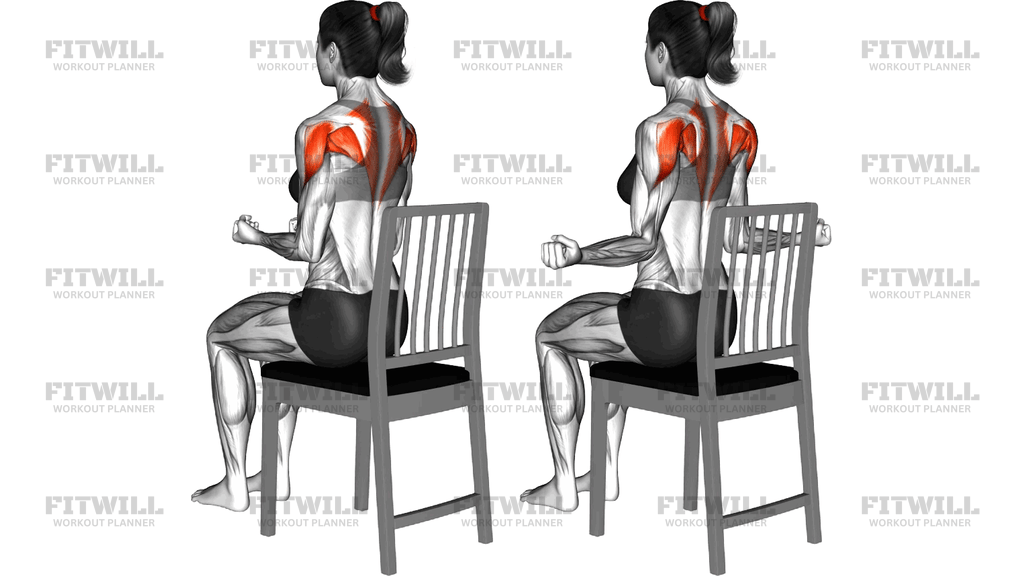
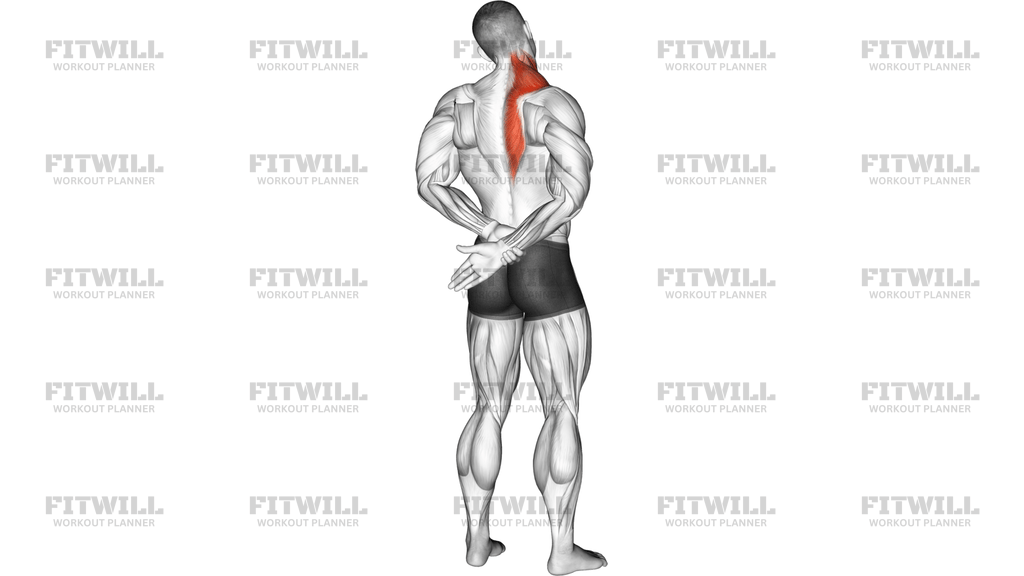
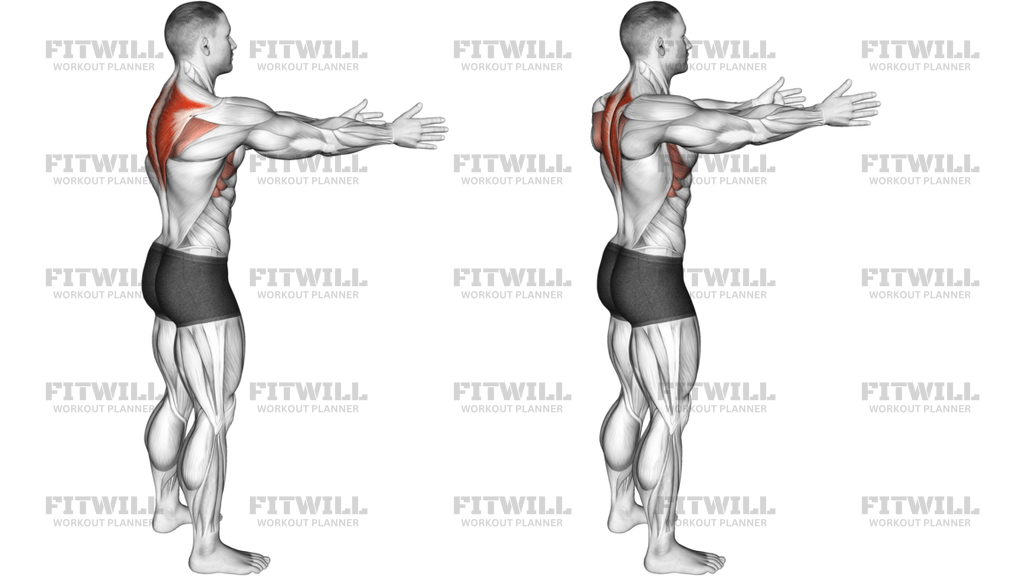
The image shows the key idea clearly: the arms stay long at shoulder height while the shoulders move around the ribcage. On the reach, the shoulder blades spread slightly and the upper back stays organized. On the pull, the chest opens as the scapulae come back and slightly down, with the neck staying long instead of shrugging. The exercise is about precision, not range for its own sake.
A good rep starts from a balanced stance with the ribs stacked over the pelvis, glutes lightly on, and the head in line with the spine. From there, the hands reach forward only as far as you can keep the shoulders controlled. The return should feel deliberate, with no bounce through the lower back or twisting through the torso. If the elbows bend, the chest flares hard, or the shoulders climb toward the ears, the set has drifted away from the intended pattern.
This movement works well as a warm-up before rows, presses, or any session where the shoulders need to be awake but not fatigued. It is also useful after long sitting periods because it reminds the upper back how to move without compensating through the neck or lower back. Beginners can use it to learn scapular control, while more advanced lifters can make it harder with slower tempo, longer pauses, or stricter range.
Keep the rep smooth, pain-free, and repeatable. The goal is to feel the mid and upper back doing the work while the arms act as long levers, not as the primary movers. If the shoulder joint feels pinchy or unstable, shorten the range and reduce the effort until the motion feels clean and centered.
[ Workout Log & Planner ]
Put your next workout in Fitwill
Keep your plan and training log ready when you are.


Instructions
- Stand tall with your feet about hip-width apart and lift both arms straight out in front of you at shoulder height.
- Keep the elbows straight or only very softly unlocked, with the hands reaching forward as if you are trying to lengthen through the fingertips.
- Stack your ribs over your pelvis, lightly brace your abdomen, and keep your neck long before the first rep.
- Let the shoulder blades spread slightly so the upper back rounds just enough to reach forward without collapsing the torso.
- Pull the shoulder blades back and slightly down to open the chest while keeping the arms long and the elbows from bending.
- Pause for a moment at the end of the retraction and feel the upper back working without shrugging the shoulders upward.
- Return slowly to the forward reach under control, letting the scapulae glide apart again instead of snapping back.
- Breathe out on the pull and breathe in as you reach forward, then repeat for the planned number of reps.
Tips & Tricks
- Think about moving the shoulder blades more than the hands; the arms should stay long the whole time.
- Keep the elbows straight so the exercise stays focused on scapular control instead of turning into a row.
- If the chest pops up hard, shorten the pull and keep the ribs stacked over the pelvis.
- Let the shoulders travel back and slightly down, not up toward the ears.
- Use a slow return so the protraction phase is as controlled as the squeeze.
- Keep pressure even through both feet; twisting through the torso usually means the back is cheating.
- A small, clean range is better than forcing a big reach that makes the shoulders feel pinched.
- If the neck starts to work harder than the upper back, reduce the effort and soften the range.
Frequently Asked Questions
What muscle does Bodyweight Standing Scapula Row target most?
It mainly targets the trapezius, especially the middle and upper fibers that control shoulder blade position.
Can beginners perform this exercise?
Yes. It is beginner-friendly because the arms stay straight and the movement is easy to learn with slow, controlled reps.
Do the elbows bend during the row?
No. Keep the elbows long so the shoulder blades do the work instead of turning the movement into an arm row.
What should I feel at the top of the rep?
You should feel the upper back tighten as the shoulder blades come back and slightly down, not a shrug in the neck.
Why is this exercise useful before rows or presses?
It wakes up the shoulder girdle and reminds the scapulae to move cleanly before heavier upper-body work.
Should my lower back move during the exercise?
No. Keep the torso stacked so the motion comes from the shoulder blades, not from leaning back or arching.
What if I feel the exercise mostly in my neck?
That usually means you are shrugging. Reduce the range and keep the shoulders away from the ears.
How can I make the movement harder without adding equipment?
Slow the return, hold the retracted position a little longer, or make each rep smaller and cleaner.