Side Plank With Raised Leg Version 2 Left Side
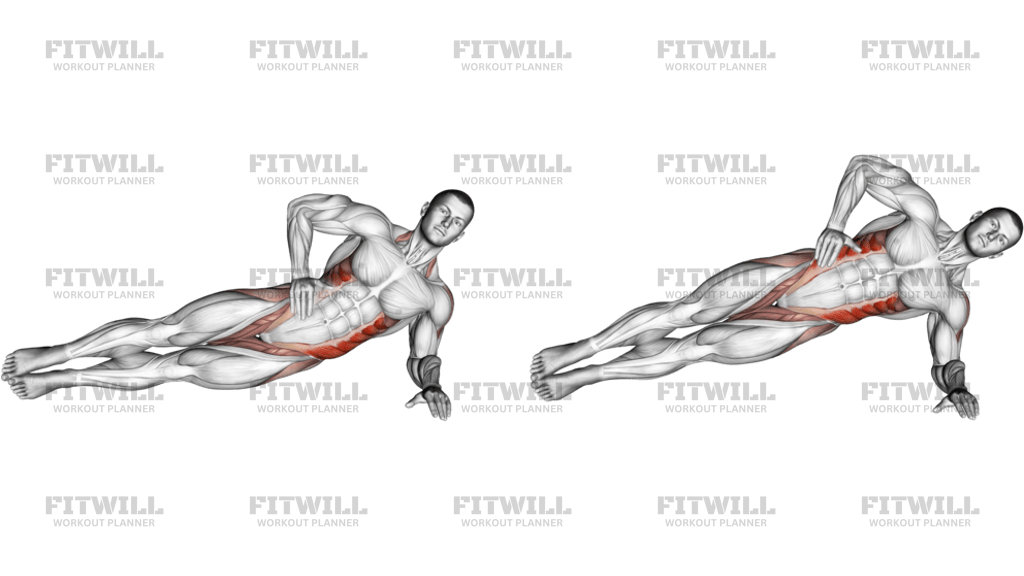
Side Plank With Raised Leg Version 2 Left Side is a bodyweight side-core exercise that builds anti-lateral flexion strength, hip stability, and control through the trunk and outer hip. In the pictured setup, you support yourself on the left forearm, stack the shoulder over the elbow, and hold the body in a straight line while the top leg lifts away from the bottom leg. That combination makes the exercise more demanding than a standard side plank because the torso has to stay rigid while the pelvis resists tipping and the raised leg stays controlled.
The left side of the body is doing the main support work here. The left obliques, deep abdominal wall, and quadratus lumborum help keep the ribs and pelvis from collapsing toward the floor, while the hip muscles around the standing leg and the lifted leg help keep the position clean. The raised leg also asks the glute on the top side to stay active so the pelvis does not rotate open or drift backward. When the position is correct, the effort should feel concentrated in the waist, outer hip, and shoulder stabilizers rather than in the lower back.
Setup matters because small errors become obvious fast in a side plank. If the elbow sits too far from the shoulder, the shoulder has to work harder to hold the position. If the hips drift behind the torso, the plank turns into a twisted hold instead of a straight side line. Start with the left forearm planted firmly, the feet stacked or closely aligned, and the body long from head to heel. The top hand can rest on the hip or reach upward, but the ribs should stay down and the neck should remain relaxed.
During each repetition, lift the hips to a firm side-plank line first, then raise the top leg without letting the torso sway. The leg should come up under control, not with a kick. The goal is a stable trunk and a clean leg lift, not a huge range. Lower the leg slowly, keep the hips level, and reset only if the body starts to twist or sag. Breathing should stay smooth so the brace does not turn into a breath hold that breaks position.
Use this movement when you want focused core work that carries over to running, cutting, carries, single-leg training, and any sport or lift that needs lateral stability. It is especially useful as an accessory exercise, a core finisher, or part of a warm-up when you want to wake up the side body and outer hip. Beginners can shorten the lever by keeping the top leg lower or by performing a standard side plank first, then progressing to the raised-leg version once the left-side hold stays steady for the full set.
[ Workout Log & Planner ]
Put your next workout in Fitwill
Keep your plan and training log ready when you are.


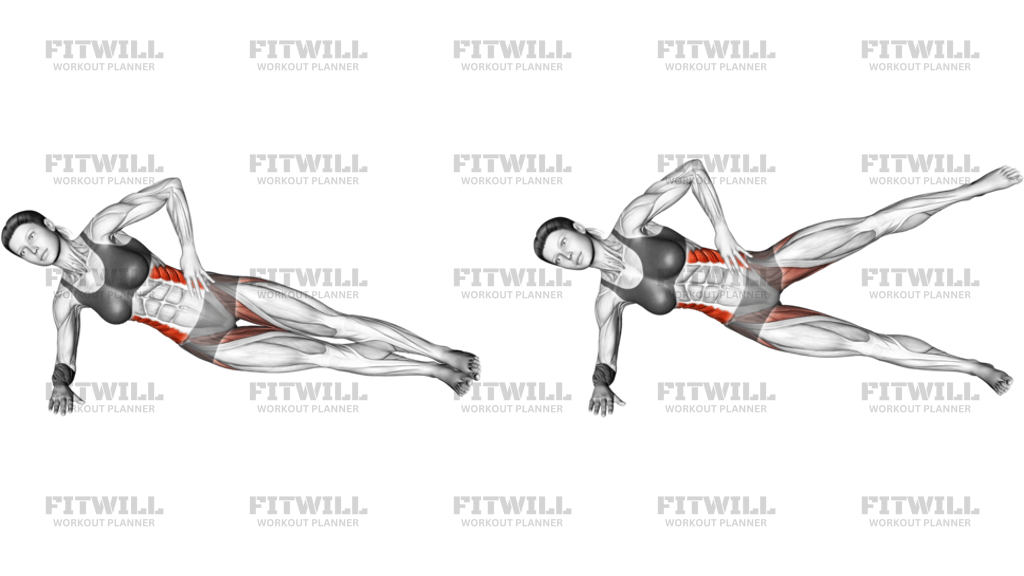
Instructions
- Lie on your left side and place your left forearm on the floor with the elbow directly under the shoulder.
- Stack your feet or line them up closely, then extend the body from head to heels with the chest facing mostly forward.
- Set your right hand on your hip or reach it toward the ceiling, and brace the ribs so the torso does not twist.
- Press through the left forearm and the outer edge of the left foot to lift the hips into a straight side-plank line.
- Once the plank is steady, raise the right leg to hip height or slightly above without letting the pelvis roll backward.
- Pause briefly at the top while keeping the left waist, shoulder, and glute tight.
- Lower the right leg slowly and keep the hips lifted until the foot comes back down.
- Reset only if the body sags or rotates, then repeat for the planned reps before switching sides if needed.
Tips & Tricks
- Keep the left elbow directly below the shoulder so the joint stack can support the hold instead of hanging in front of it.
- Press the floor away with the forearm and the side of the foot to make the rib cage feel lighter and the waist work harder.
- Keep the bottom hip lifted; if it drops, the raised leg becomes a balance swing instead of a side-core rep.
- Lift the top leg from the outer hip, not by kicking the foot upward.
- Do not let the top shoulder roll forward or the chest open toward the ceiling.
- Keep the neck long and your gaze slightly forward rather than craning up at the ceiling.
- Exhale as the leg lifts and hold enough air to keep the ribs from flaring open.
- Use a shorter lever or keep the top leg only a few inches off the bottom leg if the pelvis starts to rotate.
- Lower the leg slowly; the controlled return is what keeps the obliques and glute medius under tension.
- Stop the set when the left shoulder starts to sink or the hips can no longer stay in one line.
Frequently Asked Questions
What does Side Plank With Raised Leg Version 2 Left Side work most?
It mainly challenges the left obliques, deep core, and outer hip while the shoulder stabilizes the body in place.
Why does the exercise say left side?
The left forearm and left side of the body are the support side, so that side does the main anti-collapse work.
How high should I lift the top leg?
Lift it only to hip height or a little higher if the pelvis stays square; bigger is not better if the torso starts to twist.
What is the most common mistake in the left-side plank position?
Letting the elbow drift away from the shoulder or letting the hips sag as soon as the leg lifts.
Can beginners do this version?
Yes, but many beginners should master a regular side plank first or keep the top leg lower until the support side feels steady.
Should my hips face forward or open up?
Keep the chest mostly forward and the pelvis stacked; opening the body turns it into a different exercise and reduces the side-core load.
How long should I hold each rep?
Hold long enough to control the top-leg lift and the lower, usually a brief pause rather than a long isometric grind.
What if I feel it in my lower back more than my waist?
Shorten the leg lift, keep the ribs tucked, and make sure the hips stay stacked instead of arching or rotating.