Hanging Hollow Hold
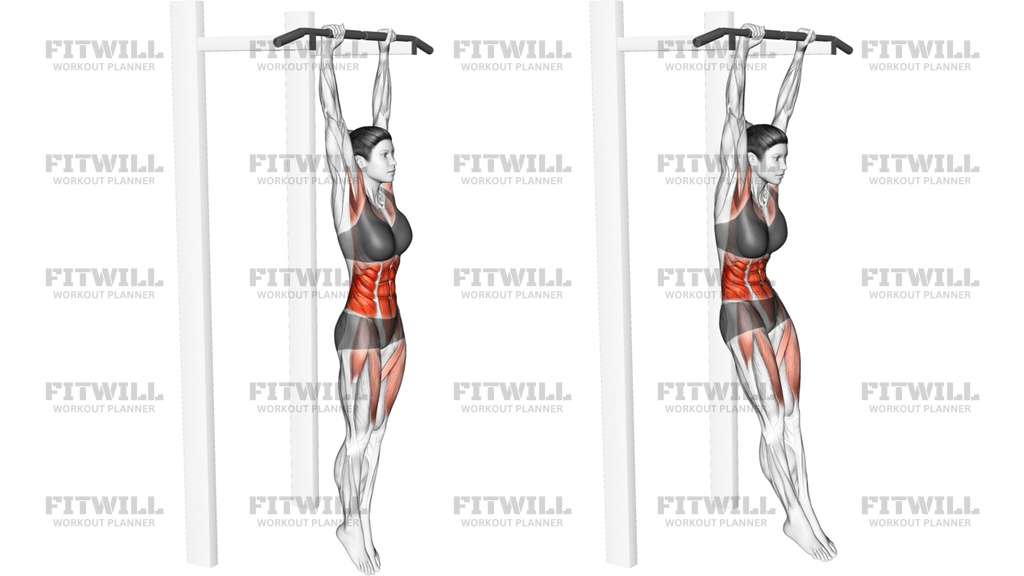
Hanging Hollow Hold is a bodyweight hanging core drill that asks you to create and maintain a hollow body while suspended from a pull-up bar. The goal is not to swing, kick, or hang passively. The goal is to keep the ribs tucked down, pelvis slightly posteriorly tilted, and the legs held in front of the body so the trunk stays rigid from shoulders to toes.
That shape makes the exercise useful for developing the kind of tension that carries over to calisthenics skills, hanging leg raises, toes-to-bar work, and any movement where the torso must stay organized while the limbs move. It also gives the lats, grip, deep abdominal wall, and hip flexors a demanding isometric job. When the body is lined up correctly, the hold becomes a strong lesson in total-body control rather than just an ab exercise.
The setup matters because the bar, grip, and shoulder position decide how much of the work stays in the trunk. Hang with an overhand grip, keep the shoulders active, and avoid letting the body collapse into a loose dead hang. Once you have a stable hang, draw the front of the ribs toward the pelvis, squeeze the glutes, and bring the legs slightly forward so the lower back does not arch.
During the hold, think about making your body as long and firm as possible while still keeping the hollow shape. The chest should stay quiet, the neck relaxed, and the legs together or nearly together. Breathe behind the brace without losing the tuck. If the swing starts, reset and re-establish control before continuing.
This exercise fits well in core sessions, warm-ups, gymnastics prep, and accessory work for hanging strength. Beginners can shorten the lever by bending the knees or keeping the thighs higher while they learn the position. Stop the set when the low back starts to arch, the shoulders shrug, or the bar grip fails before the trunk does.
[ Workout Log & Planner ]
Put your next workout in Fitwill
Keep your plan and training log ready when you are.


Instructions
- Hang from a pull-up bar with an overhand grip, hands about shoulder-width apart, and let the body settle into a controlled hang.
- Keep the shoulders active by pulling them slightly down away from the ears instead of hanging passively.
- Squeeze the legs together and slightly in front of the body so you can build the hollow shape before the hold begins.
- Tuck the pelvis, draw the ribs down, and flatten the lower back so the torso stops arching.
- Hold the position with the knees straight or softly bent, depending on the level you can keep under control.
- Keep the body still and avoid kicking, swinging, or opening the chest as fatigue builds.
- Breathe in short, controlled breaths without losing the rib tuck or letting the legs drift backward.
- End the hold when the shoulders shrug, the low back arches, or the swing becomes hard to stop.
Tips & Tricks
- Think of pulling your belt buckle toward your ribs to keep the hollow shape locked in.
- If full-leg hollow position is too hard, bend the knees and keep the thighs in front of the torso.
- A slight posterior shoulder position helps, but do not turn the hold into an active row.
- Keep the glutes tight so the hold does not turn into a hanging low-back extension.
- Use the bar as a reference for stillness; if your body is drifting, reset before continuing.
- Do not over-squeeze the neck or shrug the shoulders to the ears when fatigue hits.
- Shorter holds with perfect body shape are better than long holds with a broken arch.
- If the grip gives out first, use a thicker bar or shorter set lengths so the trunk still gets quality work.
Frequently Asked Questions
What does Hanging Hollow Hold train most?
It primarily trains the deep core, with strong demand on the hip flexors, lats, and grip while the body stays suspended.
How is this different from just hanging on a bar?
A passive hang lets the body relax, while a hollow hold requires you to tuck the pelvis, keep the ribs down, and hold the legs in front of you.
Can beginners do Hanging Hollow Hold?
Yes. Beginners usually need a bent-knee version or shorter holds until they can keep the low back from arching.
Should my legs be straight the whole time?
Straight legs are the full version, but a slight knee bend is fine if it helps you keep the hollow body position and stop swinging.
Why do my shoulders get tired before my abs?
The shoulders and lats have to stabilize the hang, so if they fatigue early, the hold is usually too long or the shoulders are not staying active enough.
What is the biggest form mistake on this exercise?
Letting the low back arch and the ribs flare is the most common mistake, usually followed by swinging the legs to fake a longer hold.
Can I use this as prep for toes-to-bar or leg raises?
Yes. It is a useful skill-builder because it teaches the body position you need before adding dynamic hanging leg movement.
How long should I hold it?
Use a hold length that lets you keep the hollow shape the entire time; quality usually matters more than chasing a longer timer.