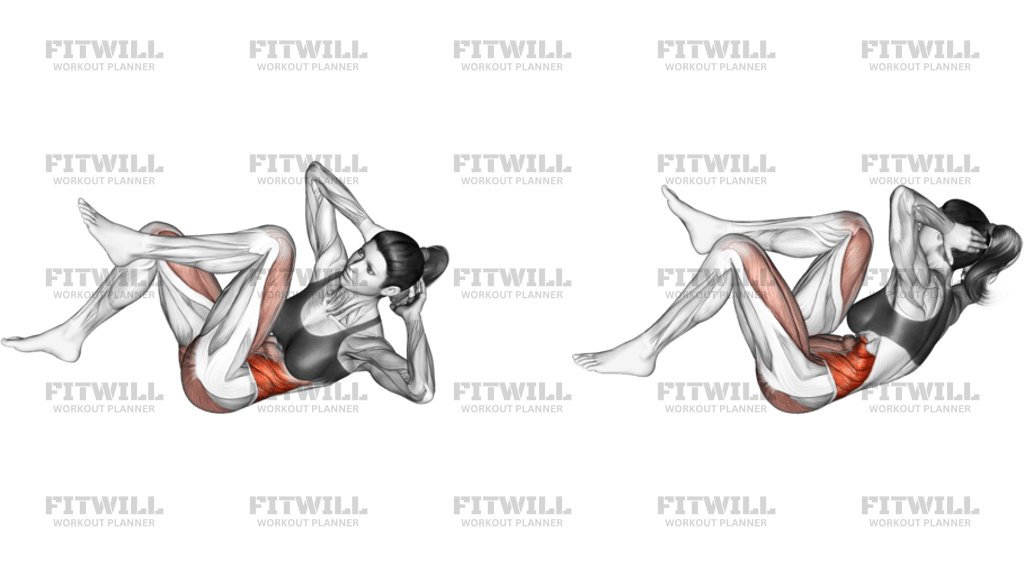
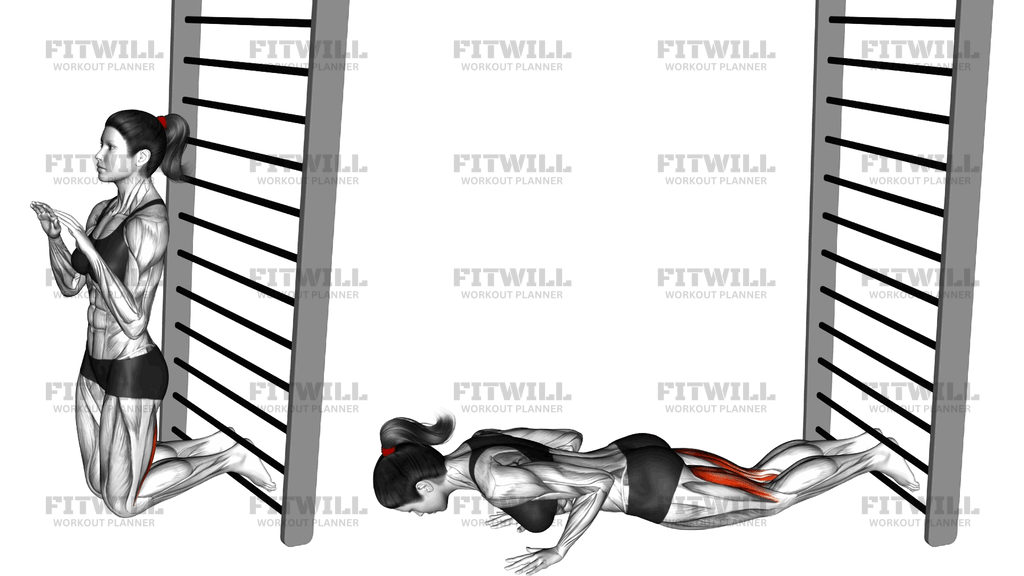
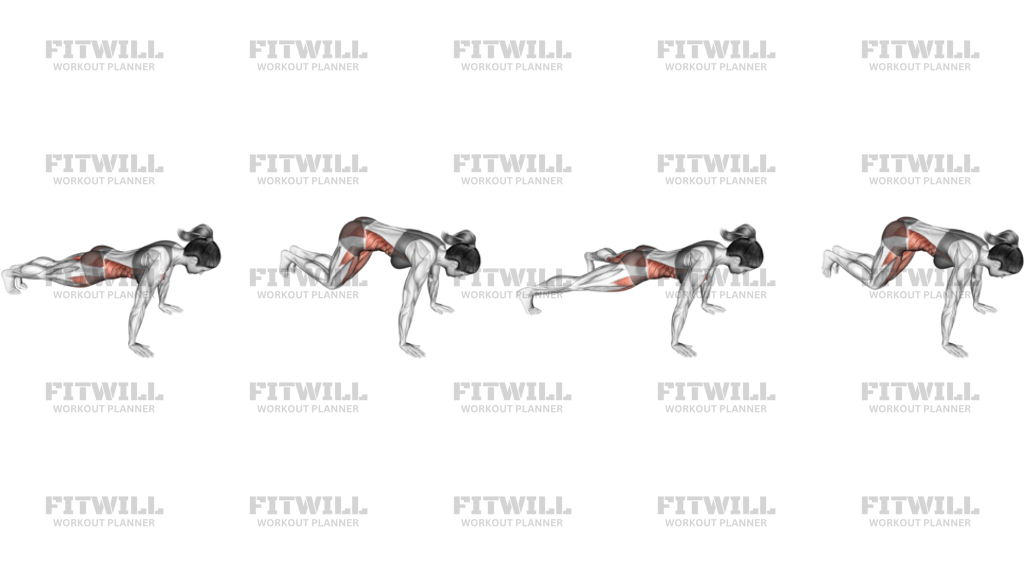
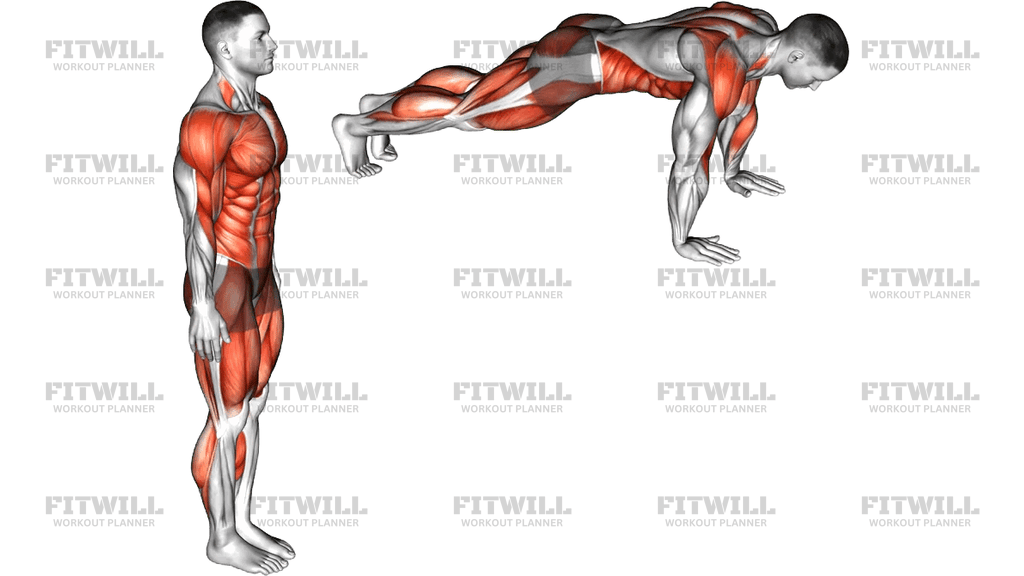
Glute Ham Sit-Up
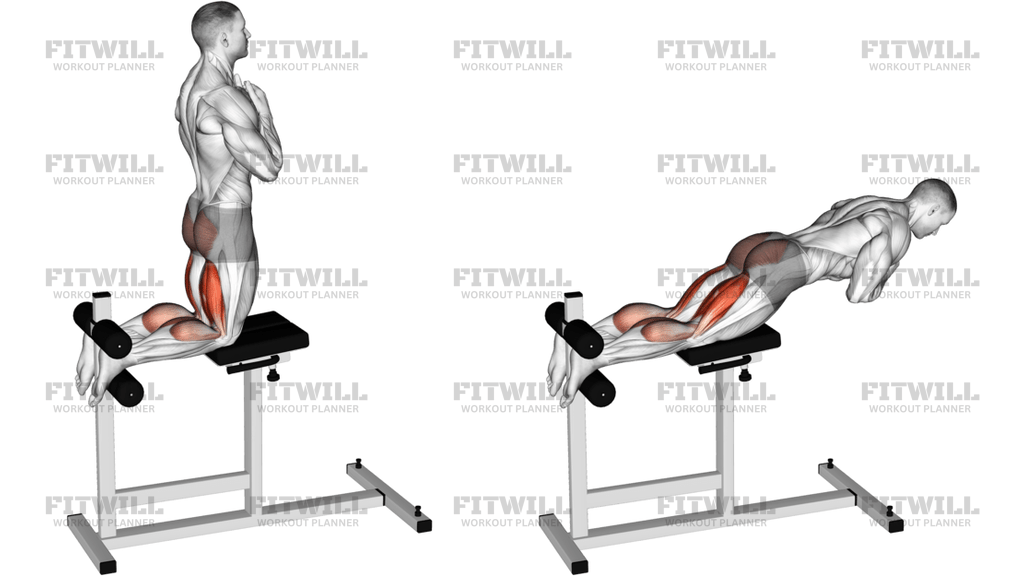
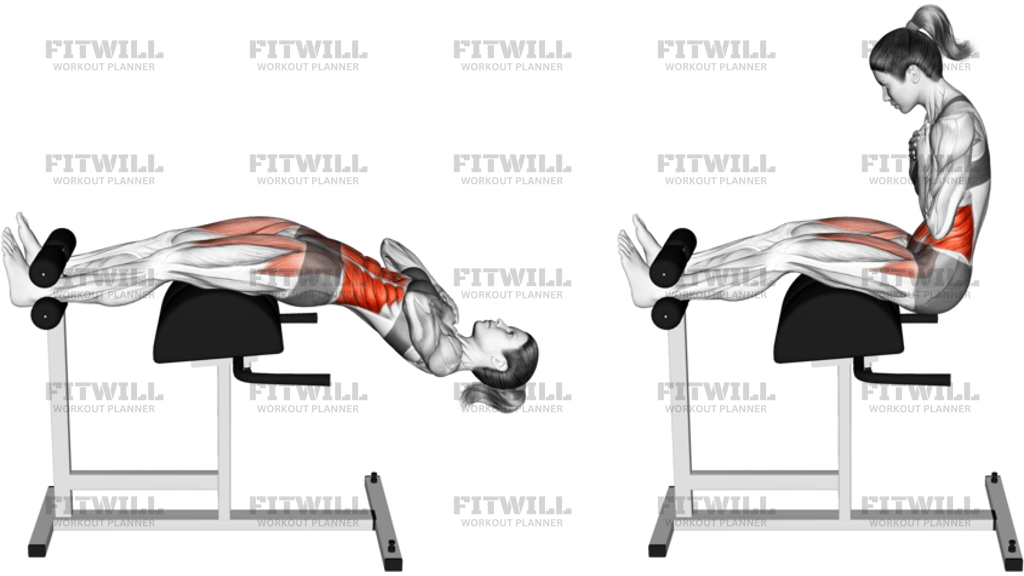
Glute Ham Sit-Up is a GHD-based bodyweight core exercise where your feet are locked under the rollers, your thighs are supported on the pad, and your torso moves through a long arc from a stretched-back position to an upright sit-up. It is designed to train trunk flexion control rather than speed, so the quality of the setup matters as much as the rep itself.
The exercise asks the abdominal wall to shorten and lengthen under tension while the hip flexors and surrounding stabilizers keep the pelvis organized. When the pad is set correctly, you can move through the spine without sliding forward, losing position at the hips, or turning the rep into a hip swing. That makes the movement useful for building strong, controlled midline work.
On each repetition, lower back until your torso is long and your shoulders are behind the pad, then reverse the motion by curling your ribs toward your pelvis and sitting tall again. The return should feel deliberate, not explosive. A smooth tempo keeps the lower back out of trouble and makes it easier to feel the abs doing the work instead of momentum carrying you through the top.
Glute Ham Sit-Up fits well in core training, accessory work, or conditioning blocks when you want a harder abdominal movement than a floor sit-up. Beginners should shorten the range and keep the arms crossed on the chest until they can control the full path. More advanced lifters can extend the arms or add resistance, but the same rule applies: stay anchored on the GHD, keep the descent controlled, and finish each rep without collapsing through the lumbar spine.
[ Workout Log & Planner ]
Put your next workout in Fitwill
Keep your plan and training log ready when you are.


Instructions
- Set the GHD so your feet are secured under the rollers and your thighs rest on the pad with your hips just over the front edge.
- Start seated upright with your torso tall, shins braced, and your arms crossed over your chest or lightly touching your chest.
- Keep your glutes and hamstrings engaged so your pelvis stays anchored to the pad before you begin the first rep.
- Lean back under control until your torso reaches a long, stretched position and your shoulders move behind the pad.
- Reverse the motion by curling your ribs toward your pelvis and bringing your chest back up to tall sitting.
- Keep the movement smooth through the middle so you do not snap off the bottom or jerk past the top.
- Exhale as you sit up and inhale as you lower back into the stretch.
- Stop the set if you lose contact with the pad, feel your hips sliding, or can no longer control the return.
Tips & Tricks
- If the rollers sit too low on your calves, you will slide during the descent; adjust the GHD so your feet feel pinned before you start.
- Crossing the arms over the chest shortens the lever and is the cleanest way to learn the rep.
- Keep the pad contact on the upper thighs and hip crease area; drifting too far forward usually turns the movement into a wobble.
- Do not throw the torso up with hip drive at the top; finish by flexing the trunk, not by bouncing off the pad.
- A slow lower is more important than a fast sit-up because the eccentric phase is where the control challenge lives.
- If your lower back takes over, shorten the range and stop a little higher on the way down.
- Hold your chin neutral instead of cranking the head back, especially when your torso is extended behind the pad.
- Add overhead arms only after you can keep the pelvis locked and the return smooth.
Frequently Asked Questions
What does a Glute Ham Sit-Up train most?
It mainly trains the abdominal wall and trunk flexion control, with the hip flexors and deep core helping keep the body organized on the GHD.
How should I set up on the GHD for this sit-up?
Lock the feet under the rollers, place the thighs on the pad, and start with your hips just over the front edge so you can move without sliding.
Should my arms stay crossed on my chest?
Crossed arms are the best starting position because they keep the lever shorter and make it easier to control the full range.
How far back should I lower on each rep?
Lower only as far as you can keep the pad contact, control the ribs, and reverse the motion without swinging.
What is the biggest mistake on this movement?
The most common error is bouncing out of the bottom or using hip snap at the top instead of controlled trunk flexion.
Can I make the Glute Ham Sit-Up harder?
Yes. Extend the arms overhead, slow the lowering phase, or add light resistance only after you can control the bodyweight version.
Is this different from a regular sit-up on the floor?
Yes. The GHD version uses a longer lever and a much bigger range, so it demands more control and more strict setup.
What should I do if I feel it mostly in my lower back?
Shorten the range, keep the ribs tucked as you rise, and stop before you lose the ability to control the lumbar position.