Seated Forearms Stretch
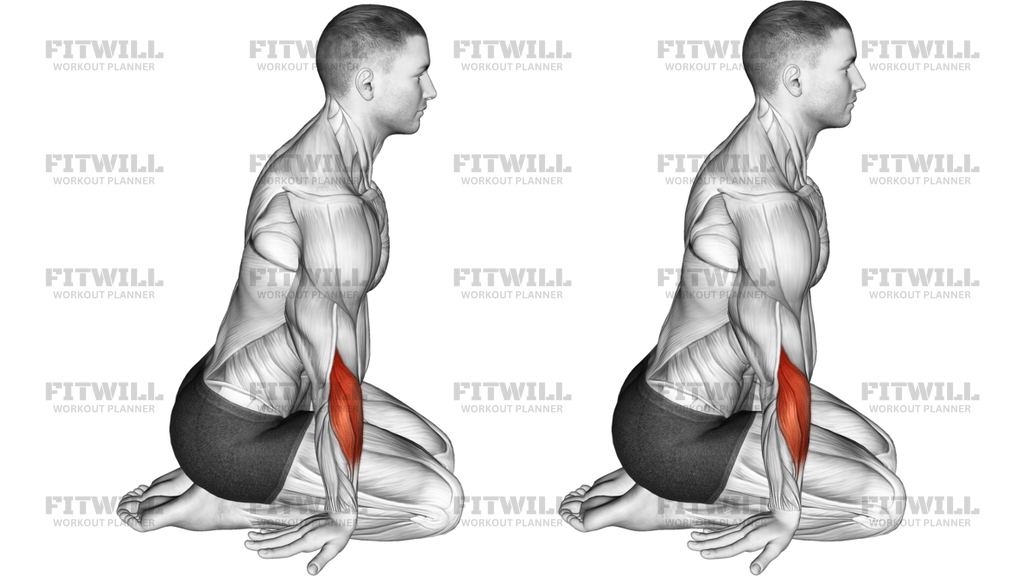
Seated Forearms Stretch is a bodyweight mobility drill for the forearm and wrist complex. In the visible demo, it is shown as a kneeling floor variation: both hands are planted on the floor, the fingers are turned back toward the knees, the elbows stay straight, and the hips drift rearward to increase the stretch. That position lengthens the muscles crossing the wrist and forearm while teaching you to tolerate tension without letting the wrist collapse.
The setup matters because small changes in hand placement, elbow position, and how far the hips travel can completely change where the stretch lands. Keep the shoulders stacked over the hands at first, then shift the hips back only until the pull becomes strong and even. If the wrists feel jammed or pinched, move the hands a little farther forward, reduce the amount of body weight you place through them, or shorten the hold.
Perform the stretch by exhaling as you settle into range, then keeping the chest open and the neck long while the forearms lengthen. The goal is a steady stretch through the forearm muscles, not a sharp pinch in the wrist joint or a cramp in the hand. Hold long enough for the tissue to relax, then come forward with control and reset before repeating. The stretch should feel intense but quiet, with no bouncing and no sudden change in pressure.
This drill is useful after grip-heavy lifting, pressing, climbing, racquet work, or long desk sessions when the wrists and forearms feel stiff. It can be used in warmups, cooldowns, or recovery sessions because the intensity is easy to scale by changing hand placement and hip distance. If you prefer a seated version, keep the same wrist angle and body control, but match the visible joint position instead of forcing a generic seated stretch. Use it to restore motion before training or to unwind the forearms after training, especially when wrist extension or loaded hand support has been a limiting factor.
[ Workout Log & Planner ]
Put your next workout in Fitwill
Keep your plan and training log ready when you are.


Instructions
- Kneel on the floor and place both hands flat in front of you with the fingers turned back toward the knees.
- Set the hands shoulder-width apart and keep the elbows straight so the stretch stays in the forearms and wrists.
- Stack the shoulders over the hands first, then brace lightly through the ribs and abdomen.
- Begin shifting the hips rearward in a slow line until you feel a firm stretch through the forearm muscles.
- Keep the palms fully planted and let the fingers stay relaxed instead of curling or gripping the floor.
- Breathe out as you settle into the end range and keep the neck long rather than shrugging the shoulders.
- Hold the position for a controlled stretch without bouncing or rocking forward and back.
- If one side feels tighter, ease slightly toward that side while keeping both wrists comfortable.
- Come forward slowly, reset the hands, and repeat for the desired number of holds.
Tips & Tricks
- A small hand adjustment can change the stretch a lot, so slide the hands forward a few centimeters if the wrists feel pinched.
- Keep the elbows long; bending them turns the drill into a different upper-arm position and reduces the forearm stretch.
- Shift the hips back from the knees instead of collapsing the chest onto the hands.
- If the floor is too aggressive, do the same hand position on a bench, box, or mat table to reduce the load.
- The stretch should run through the forearm and wrist, not as a sharp pinch in the base of the thumb or the center of the wrist.
- Keep the fingers relaxed and spread instead of making a fist, which can mask how much tension is actually in the forearm.
- Use longer holds after heavy gripping work and shorter holds if you are still warming up before pressing or crawling.
- Stop if you feel tingling, numbness, or a sudden stabbing sensation; that is not normal stretch tension.
Frequently Asked Questions
What does Seated Forearms Stretch target most?
It mainly stretches the forearm and wrist muscles, especially the tissue that gets loaded when the hands are planted and the wrists are extended.
Is the image really showing a seated stretch?
No, the visible demo is a kneeling floor version. The name says seated, but the hand and wrist position in the image is the more important clue for how the stretch is performed.
Why are the elbows kept straight?
Straight elbows keep the stretch in the forearms and wrists instead of shifting the work toward the triceps or shoulders.
Where should I feel the stretch?
You should feel a steady pull through the forearm near the wrist, with no sharp pinch in the joint itself.
Can I do this if my wrists are sensitive?
Yes, but shorten the lean, place the hands farther forward, or use a bench so less body weight sits directly over the wrists.
How long should I hold each rep?
A typical hold is about 15 to 30 seconds, or long enough for the forearm tension to settle without forcing the end range.
When is this stretch most useful?
It works well after lifting, climbing, racquet sports, or long computer sessions when the forearms feel tight from repeated gripping.
What is the most common mistake?
Most people push the hips too far back too fast and end up collapsing into the wrists instead of getting a controlled forearm stretch.