Back Stretch On Tube
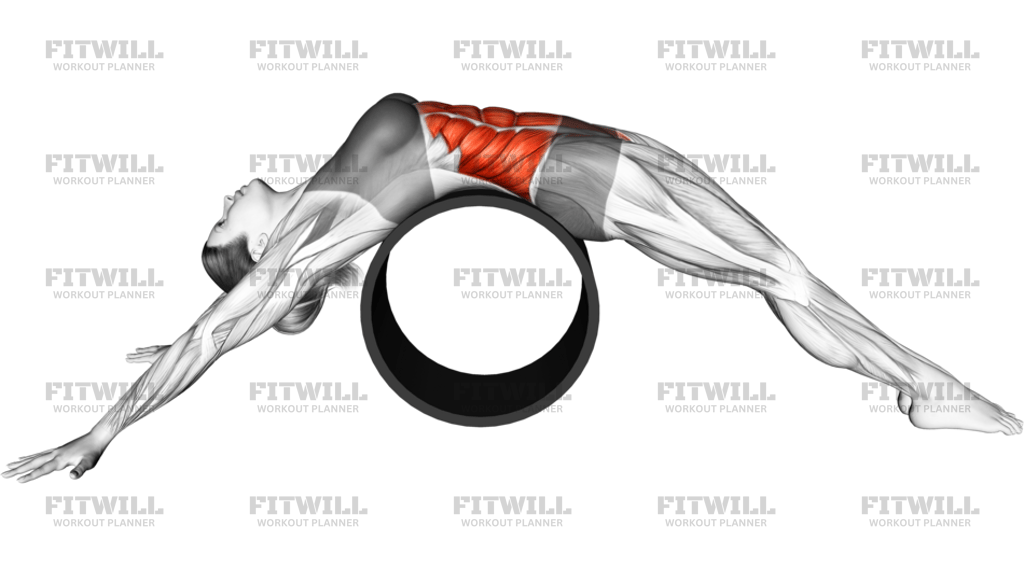
Back Stretch On Tube is a supported back-opening stretch performed over a curved tube or roller. The position lets you lengthen the front of the body while gently extending the thoracic spine, ribs, shoulders, and hip flexors. It is useful when you want to undo a lot of sitting, open the chest, and work on a more comfortable arch through the upper back without forcing a full floor backbend.
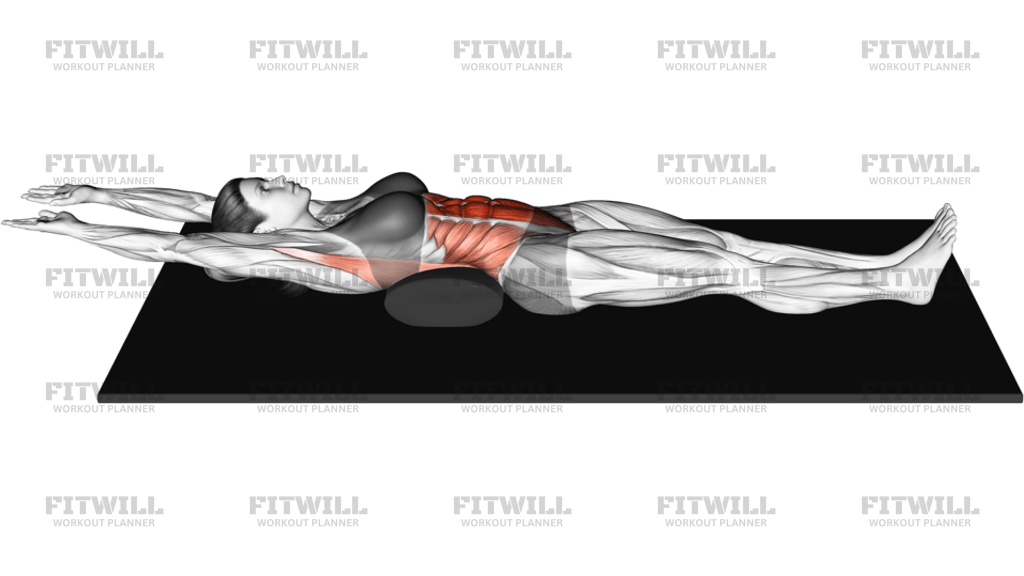
The image shows the body draped over the tube with the spine moving into extension and the arms reaching long overhead. That setup matters because the tube acts as a fulcrum: if it sits too high, the low back gets jammed; if it sits too low, the stretch shifts away from the upper back and shoulders. A clean setup should feel stable, open through the ribs, and controlled through the neck and pelvis.
This stretch is not about cranking into the deepest possible position. The goal is to let the chest and abdomen open while you breathe into the front and sides of the rib cage. A good rep feels like a long, even stretch through the abdominals, chest, lats, and hip flexors with the shoulders relaxed and the neck long. Keep the movement smooth enough that you can stay there for a few breaths instead of bouncing in and out of the range.
Use it as part of a warm-up, mobility sequence, or recovery block when you need more spinal extension and front-side opening. It can be a helpful counterbalance to pressing work, desk posture, or activities that keep the trunk rounded forward. For safety, stay in a pain-free range and avoid dumping all of the load into the low back. The best version leaves you feeling more open, not pinched, and more able to extend through the upper back on the next exercise.
[ Workout Log & Planner ]
Put your next workout in Fitwill
Keep your plan and training log ready when you are.


Instructions
- Place the tube or roller lengthwise across the floor and lie so it contacts the mid to upper back, not the low back.
- Set your feet on the floor with enough distance to keep balance, and let the knees soften if you need more control.
- Reach the arms long overhead as shown, then settle the rib cage and pelvis so you are not over-arching the lumbar spine.
- Let the head and neck stay long as the upper back drapes over the tube.
- Take a slow breath in through the nose and feel the chest and side ribs expand around the support.
- Exhale gently and sink only as far as you can keep the stretch smooth and pain free.
- Hold the end position for several calm breaths without bouncing or pushing harder on every exhale.
- To come out, brace lightly, engage the abs, and roll your torso off the support with control.
- Reset before the next rep so each stretch starts from the same stable position.
Tips & Tricks
- Keep the tube under the mid-back; if it slides too low, the lumbar spine usually takes over.
- Let the ribs open, but do not flare the lower ribs aggressively or you will turn the stretch into a low-back compression.
- If your shoulders feel tight, lower the arms slightly instead of forcing them flat overhead.
- A small bend in the knees usually helps you stay balanced and keeps the hamstrings from pulling the pelvis out of position.
- Breathe into the sides and back of the rib cage rather than holding a brace the whole time.
- Use a slow exit every rep; dropping off the support too fast can irritate the spine.
- If the stretch feels pinchy, move the support a little higher on the back and shorten the range.
- This should feel like an opening stretch, not a maximal flexibility test.
Frequently Asked Questions
What does Back Stretch On Tube primarily stretch?
It mainly opens the chest, abdominals, lats, and upper back while encouraging thoracic extension.
Should the tube be under my low back or mid-back?
Mid-back is usually the right position. That lets the thoracic spine extend without jamming the lumbar spine.
Why are the arms reaching overhead in the image?
The overhead reach increases the stretch through the shoulders, lats, and rib cage, but it should still feel controlled and relaxed.
What is the biggest mistake with this stretch?
Most people over-arch the low back instead of opening the upper back, which turns the stretch into a pinched lumbar position.
Is this okay for beginners?
Yes, if they keep the range small, use light support, and stop well before any pinching or sharp discomfort.
Can I use this after pressing or desk work?
Yes. It is a good recovery stretch after chest-heavy training or long periods of sitting and rounding forward.
How long should I hold the stretch?
Hold long enough for a few slow breaths, then reset. Quality matters more than chasing a very long hold.
What should I do if my neck feels strained?
Shorten the overhead reach, keep the chin gently tucked, and reduce how far you drape over the tube.