Sitting Yoga Pose Siddhasana
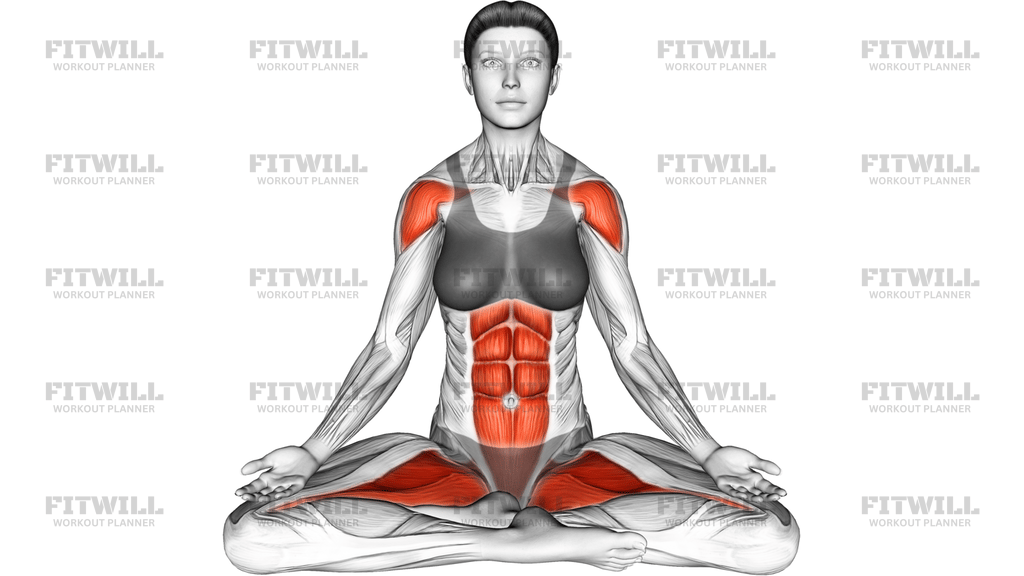
Sitting Yoga Pose Siddhasana is a seated yoga posture used to create a steady, comfortable base for breath work, meditation, and gentle hip opening. In this position, the goal is not to chase load or speed. The goal is to settle the pelvis, lengthen the spine, and let the hips, knees, and ankles relax into a stable cross-legged seat.
The pose primarily asks for quiet work from the hips and trunk while the groin, inner thighs, and lower legs adapt to the folded position. Your torso stays upright, your shoulders stay soft, and the deep core helps keep you from collapsing backward or rounding through the lower back. Because the posture is static, small alignment choices matter more than effort: where the sit bones are grounded, how high the knees sit, and whether the ankles are comfortable can all change the quality of the hold.
Set the pose up deliberately before you settle into breathing. If the floor is too low, sit on a folded blanket or cushion so the pelvis can tilt slightly forward and the knees can drop more naturally. A cleaner setup usually means less strain in the knees and ankles and a longer, easier hold. For many people, Siddhasana feels best when the sit bones are well supported and the crossed legs are arranged without forcing the knees toward the floor.
Once the position is set, Siddhasana should feel calm rather than aggressive. Keep the crown of the head reaching upward, the chest open, and the jaw and face relaxed while the hands rest on the knees or thighs. Breathe evenly into the ribs and belly, and use each exhale to soften tension in the hips instead of pushing deeper. If the pose creates knee pain, sharp ankle pressure, or numbness, come out of it and adjust the height or leg position rather than trying to tough it out.
This posture is most useful as a meditation seat, a breathing position, or a gentle cooldown after more active training. It is also a practical option for people who want to practice sitting upright for longer periods without slipping into a slumped spine. If you use it regularly, alternating which leg is in front on different sessions can help reduce side-to-side stiffness and keep the hips more balanced over time.
[ Workout Log & Planner ]
Put your next workout in Fitwill
Keep your plan and training log ready when you are.


Instructions
- Sit on the floor or on a folded blanket with your sit bones grounded and your legs bent in front of you.
- Draw one heel toward the perineum and bring the other foot in front of the opposite ankle or shin, using only the range that keeps both knees comfortable.
- Stack your torso tall, lift through the crown of your head, and let your shoulders settle away from your ears.
- Rest your hands on your knees or thighs with your palms relaxed and your elbows soft.
- Let both knees drop naturally toward the floor without pressing them down by force.
- Keep your chin slightly tucked and your gaze soft so the neck stays long.
- Breathe slowly into your ribs and belly, keeping the pelvis heavy and stable on the support.
- Hold the pose for the planned time, then uncross the legs and straighten them out before repeating or switching the leg arrangement.
Tips & Tricks
- Sit on a cushion or folded blanket if your knees sit much higher than your hips; that usually makes Siddhasana easier on the lower back.
- Do not force the knees toward the floor. In this pose, the legs should relax into position instead of being pried open.
- If one ankle feels pinched, shift the heel slightly closer to or farther from the pelvis until the pressure disappears.
- Keep the weight centered on the sit bones, not rolled back onto the tailbone, so the spine can stay tall without strain.
- Relax the shoulders and hands; gripping the knees tightly usually means you are compensating for tension in the hips.
- Slow nasal breathing helps the pose settle. If your breath gets shallow, the seat is probably too aggressive for the hips right now.
- Alternate which leg is in front on different sessions to avoid building more mobility on one side than the other.
- Come out of the pose immediately if you feel knee pain, ankle numbness, or tingling in the feet.
Frequently Asked Questions
What is Sitting Yoga Pose Siddhasana used for?
It is mainly used as a steady seated position for meditation, breath work, and relaxed hip opening rather than as a strength exercise.
Is Sitting Yoga Pose Siddhasana beginner friendly?
Yes, as long as you use support under the hips and stop short of any knee or ankle pain. Beginners often need a blanket or block to make the seat more comfortable.
What should I feel in Sitting Yoga Pose Siddhasana?
You should feel a relaxed stretch through the hips, groin, and inner thighs, plus a gentle sense of upright support through the trunk. It should not feel sharp in the knees.
Why are my knees so high in Sitting Yoga Pose Siddhasana?
That usually means your hips are tighter than the floor allows. Sitting on a folded blanket or cushion can tilt the pelvis forward and reduce stress on the knees.
Can I use Sitting Yoga Pose Siddhasana if my ankles feel tight?
Yes, but keep the feet and ankles relaxed and adjust the foot placement if there is pressure or pinching. If the ankles still complain, another seated pose may be a better choice for now.
How long should I hold Sitting Yoga Pose Siddhasana?
Hold it for as long as you can breathe steadily and stay upright, often from a few breaths to several minutes depending on comfort and experience.
How is Sitting Yoga Pose Siddhasana different from Lotus Pose?
Siddhasana is usually less demanding than Lotus Pose because the feet are not forced deep onto the thighs. That makes it a more practical seated position for many people.
What should I do if Sitting Yoga Pose Siddhasana causes numbness?
Come out of the pose right away and straighten the legs. Numbness usually means too much pressure at the ankles, knees, or feet, and the setup needs to be adjusted.