Suspension Star Plank
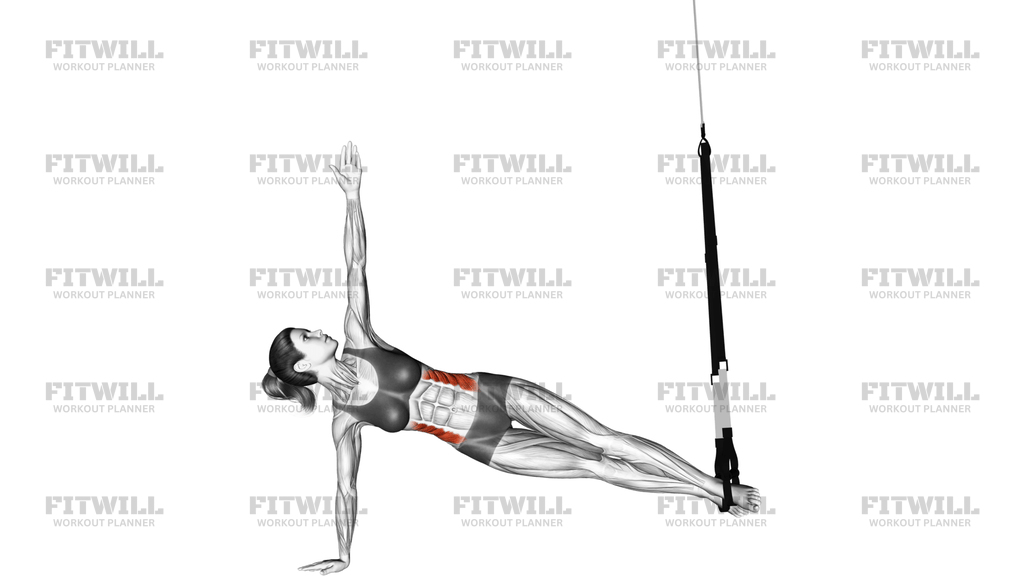
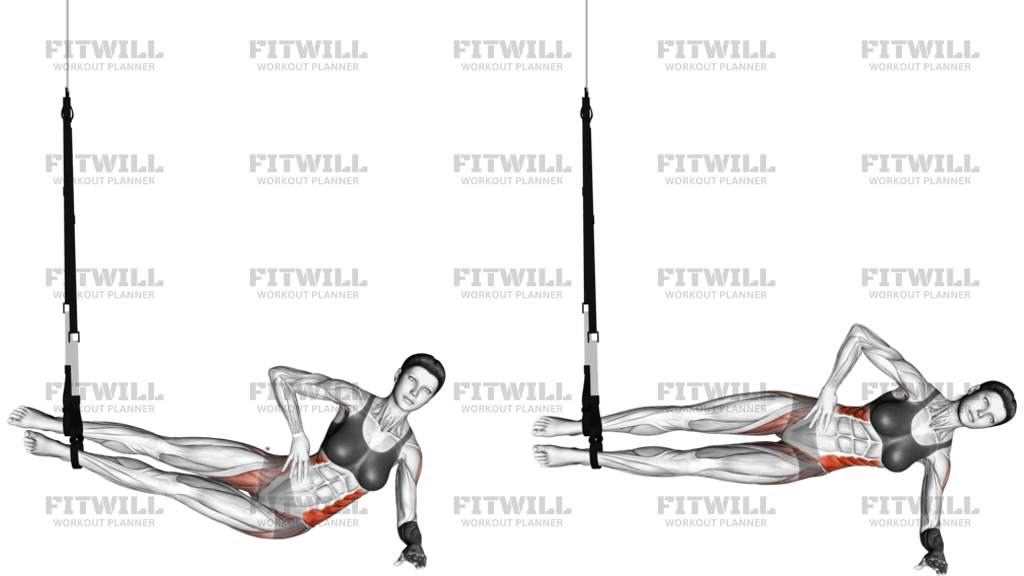
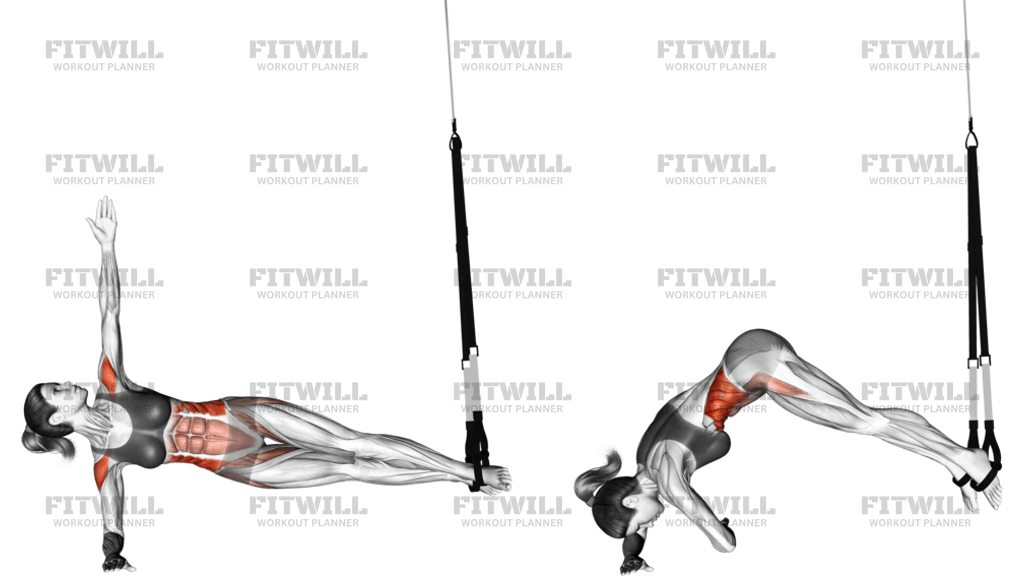
Suspension Star Plank is a suspension-based side plank variation that challenges the obliques, deep abs, shoulder stabilizers, and hip control at the same time. In the pictured setup, one hand supports the body on the floor while the upper foot is held in the suspension strap and the free arm reaches toward the ceiling. That long, open position makes the exercise much harder than a standard side plank because the suspended leg wants to pull the pelvis out of line, so every rep depends on staying stacked and steady.
The main training value is anti-lateral-flexion control: the torso has to resist sagging, twisting, and rotation while the shoulder and hip work together to keep the body in one line. The External obliques are the primary muscle group, with Rectus abdominis, Erector spinae, and Transversus abdominis helping to keep the ribcage and pelvis organized. When it is done well, the movement trains the waist and hips without turning into a shrugging contest in the shoulder or a wobbling hold through the low back.
Setup matters more here than on most core drills. The support hand should be directly under the shoulder, the body should be turned fully sideways, and the suspension length should let the working foot hang without dragging the hips forward or backward. Before lifting, lock the ribs down, squeeze the glutes, and create a straight line from the grounded hand through the hips to the suspended heel. If the strap is too long or the body starts with the ribs flared, the set usually breaks down within seconds.
During the hold, keep pressing the floor away so the shoulder stays active instead of collapsing, and keep the top arm stacked over the shoulder or slightly open if the position allows it. The suspended leg should stay long and active, not relaxed or drifting. Small adjustments are better than big corrections; if the pelvis starts to rotate or the waist drops, reset and shorten the hold rather than fighting through a sloppy position.
This exercise fits well in core-focused sessions, athletic accessory work, or as a demanding stability drill after the main lifts. It is also easy to regress by placing the lower knee on the floor or by using a standard side plank before adding the suspension strap. Stop the set if the shoulder pinches, the wrist cannot stay stacked, or the low back starts to take over. The goal is a clean, stacked hold that makes the obliques and hips do the work without losing the line of the body.
[ Workout Log & Planner ]
Put your next workout in Fitwill
Keep your plan and training log ready when you are.


Instructions
- Set the suspension strap so one foot can rest in it without pulling your hips forward or forcing the torso to rotate.
- Place the support hand directly under the shoulder and turn the body fully onto one side with the other arm reaching straight up.
- Slide the upper foot into the strap, extend both legs, and stack the feet so the body is long from hand to heel.
- Brace the ribs down, squeeze the glutes, and press the support hand into the floor before lifting the hips.
- Raise the hips into a straight line so the head, shoulders, ribs, pelvis, and heels stay stacked.
- Keep the suspended leg active and the top arm vertical while the shoulder stays away from the ear.
- Hold the position or perform the planned side-plank pulses without letting the waist sag or the torso twist.
- Breathe in short, controlled breaths, then lower out with control, reset, and repeat on the other side if prescribed.
Tips & Tricks
- If the hips keep drifting back, shorten the suspension length so the strap is not pulling the working foot behind the body.
- Keep the support shoulder stacked over the wrist and spread the fingers wide so the hand can anchor the position.
- Think about lifting the bottom waist away from the floor; that cue usually turns the set back into an oblique drill instead of a shoulder shrug.
- Keep the top ribs from opening toward the ceiling too far, or the movement turns into a twist instead of a side-plank hold.
- Lock the glutes before you lift so the pelvis stays level and the lower back does not take over.
- A small bend in the grounded elbow is fine if it helps keep the shoulder packed and the neck relaxed.
- Use short holds first; once you can stay stacked without wobbling, extend the time before you add a harder strap angle.
- If the strap foot starts swinging, stop the set and reset rather than chasing more time with a crooked line.
Frequently Asked Questions
What muscle does Suspension Star Plank target most?
The obliques do most of the work, especially the external obliques, with the deep abs and hip stabilizers helping to keep the body stacked.
How is this different from a regular side plank?
The suspension strap makes the working leg unstable, so the hips and waist have to resist more twisting and sagging than they do in a floor side plank.
Which foot goes in the strap?
Use the upper foot in the strap and keep the grounded foot stacked over it so the body can stay in one long side-plank line.
Why do my hips start dropping so quickly?
The strap is often too long, the support shoulder is not pressing away from the floor, or the ribs are flaring and breaking the stacked position.
Should I keep the top arm straight up?
Yes, keep it stacked over the shoulder or only slightly open if needed; letting it drift forward usually helps the torso rotate.
Can beginners use this exercise?
Yes, but most beginners should start with a floor side plank or a shorter suspension hold before moving to the full star-plank version.
What should I do if I feel the low back more than the side waist?
Reset the position, squeeze the glutes harder, and reduce the hold time; if the low back still dominates, regress to a simpler side plank.
How do I make the exercise harder without losing form?
Use a longer hold, increase the body line tension, or move the feet slightly farther from the anchor, but only if the hips stay level the whole time.