Suspension Side Bridge
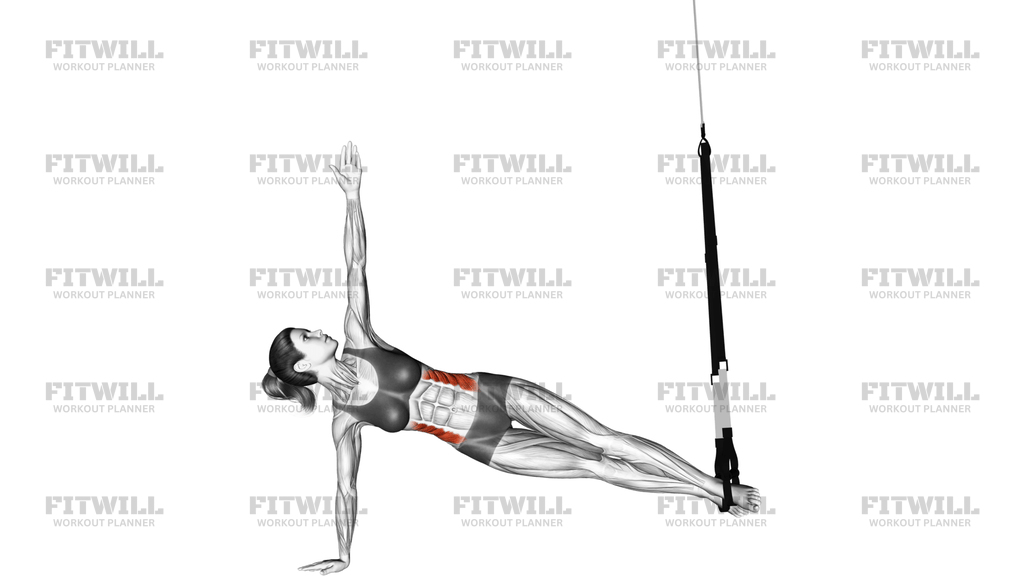
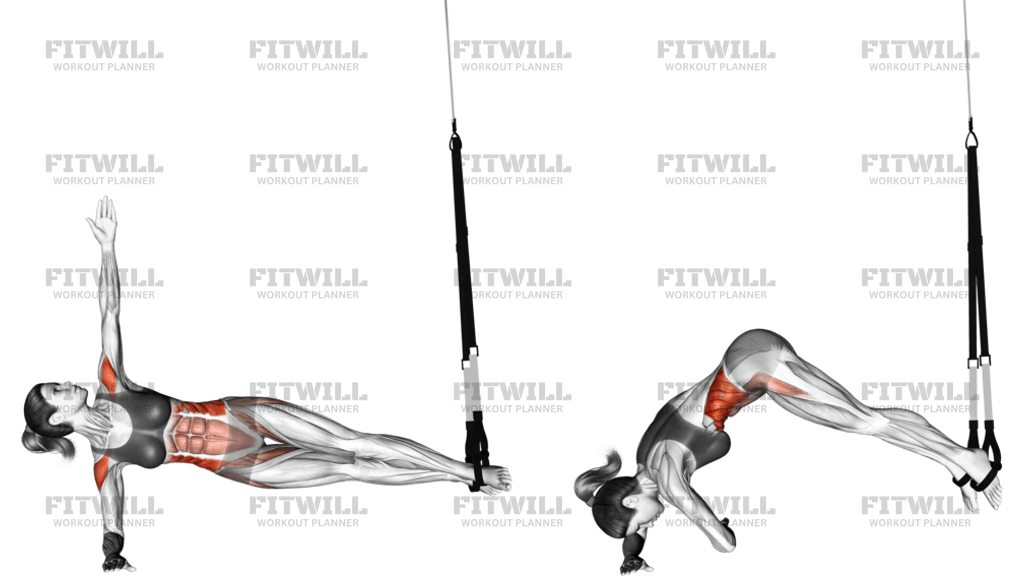
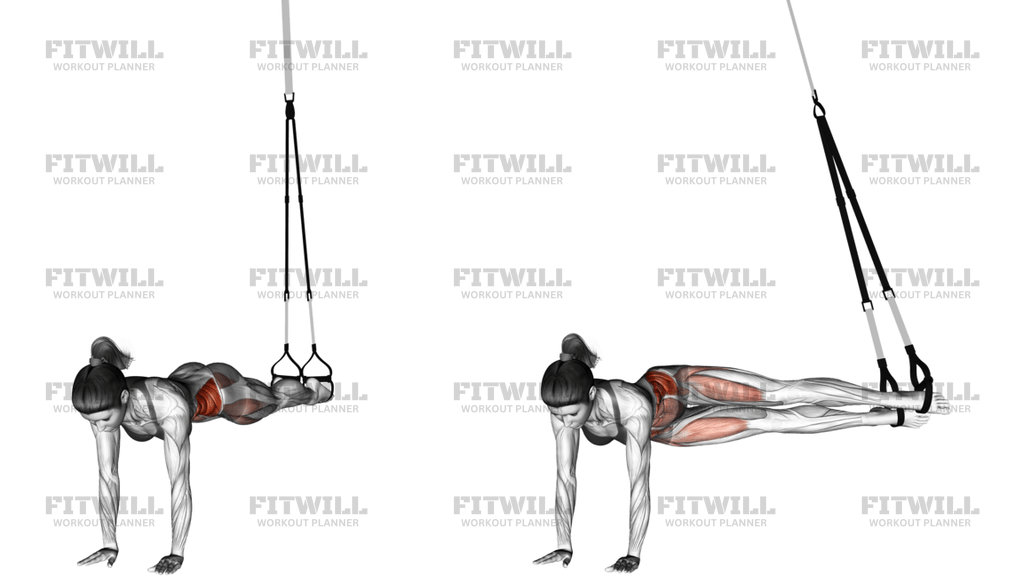
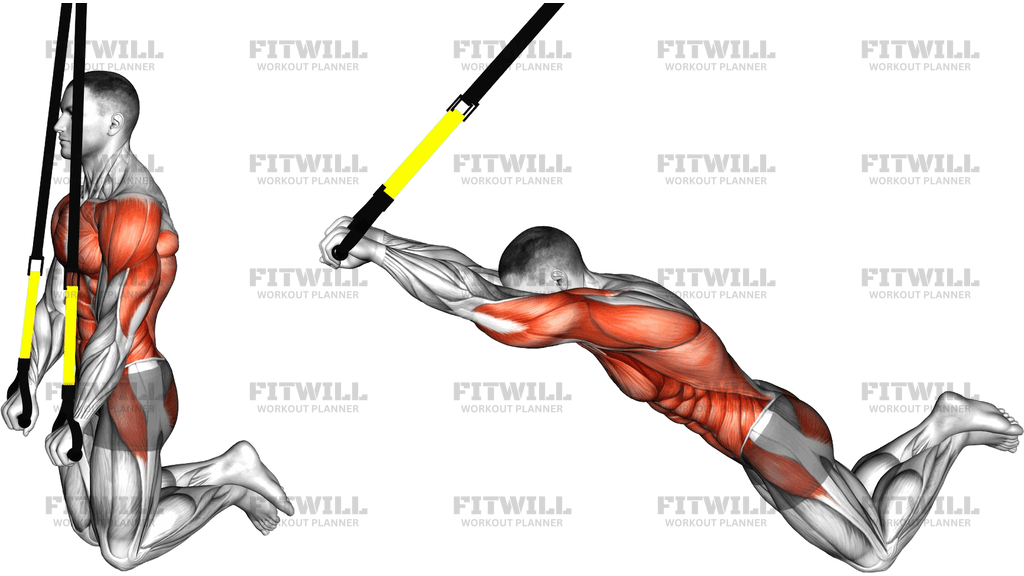
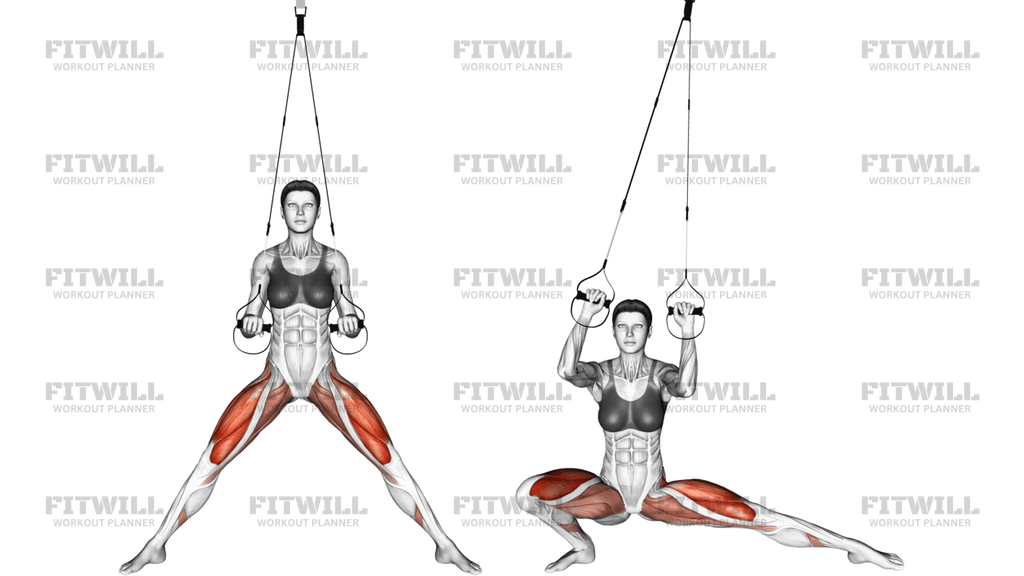
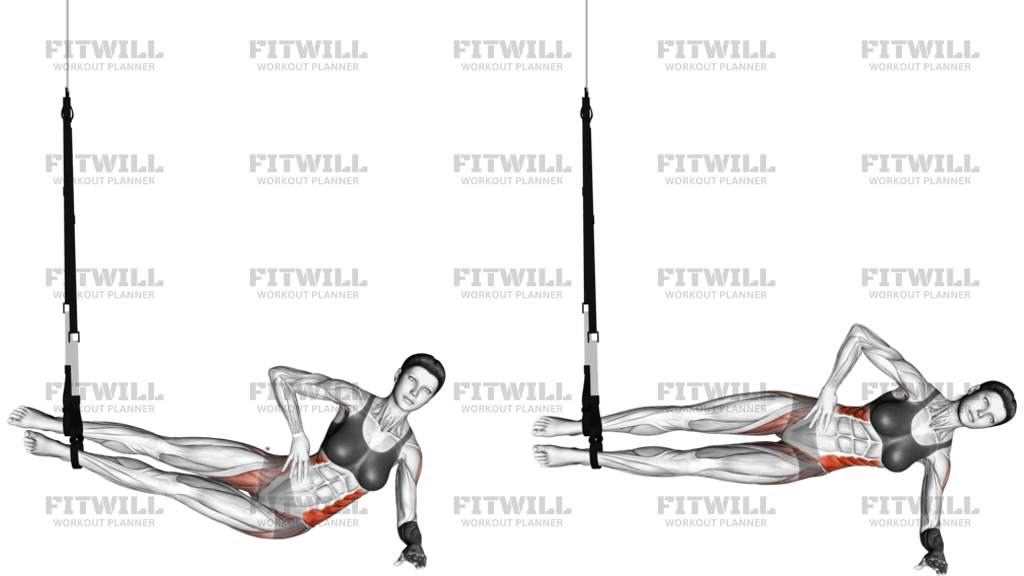
Suspension Side Bridge is a suspension-assisted side plank that loads the obliques, lateral trunk, and hip stabilizers while also demanding shoulder control from the arm on the floor. The suspension straps make the exercise more unstable than a standard side plank, so the value comes from keeping the body rigid while the feet drift as little as possible. In practice, it is a control exercise first and a strength exercise second: if the hips twist, the ribs flare, or the straps swing, the set stops training the target muscles well.
The setup matters because the line from the supporting hand to the suspended feet determines how much tension reaches the waist. Place the support hand directly under the shoulder, stack the torso sideways, and secure both feet in the suspension cradles so the legs stay long and aligned. A clean start should feel like one straight line from head to heels, with the top shoulder and top hip stacked rather than rolled open toward the ceiling.
From there, drive the floor away with the support hand, lift the hips until the side of the waist has to work hard, and keep the pelvis from drifting forward or backward. If the exercise is performed as a hold, stay tall and breathe without losing the line. If it is done as a pulse or rep, lower the hips a few inches under control and bring them back up without swinging the straps. The range should be small enough that the ribcage stays down and the neck stays relaxed.
Suspension Side Bridge fits well in core-focused sessions, anti-rotation work, accessory blocks, or as a regression/progression step between a floor side plank and harder unstable side-plank variations. It is especially useful when you want the obliques and hip abductors to work together without a lot of spinal motion. Keep the motion smooth, stop before the shoulder collapses, and choose a level of instability that lets every rep look the same.
[ Workout Log & Planner ]
Put your next workout in Fitwill
Keep your plan and training log ready when you are.


Instructions
- Set the suspension straps so both feet can rest securely in the cradles without pulling you out of line.
- Lie on your side and place the support hand directly under the shoulder with the arm vertical.
- Slide both feet into the suspension cradles and extend the legs long so the body is stacked from head to heels.
- Keep the top shoulder and top hip stacked, then brace the waist before you lift.
- Press the floor away and raise the hips until your body forms one straight side plank line.
- Hold the top position without letting the ribs flare or the pelvis roll forward or back.
- If you are doing reps, lower the hips a few inches under control and drive them back up without swinging the straps.
- Breathe out through the hard part of the rep, then inhale as you lower or reset.
- Finish by lowering the hips to the floor in control and unhooking the feet from the straps before switching sides.
Tips & Tricks
- If the straps swing a lot, shorten the range and slow the rep until the feet stay quiet.
- Keep the support shoulder packed by pressing the floor away instead of sinking into it.
- Stack the hips and ribs; opening the chest too much usually turns the movement into a low-back twist.
- A smaller hip lift with perfect alignment is better than a higher lift with a bent waist.
- Keep the legs long and active so the suspension does not steal tension from the side core.
- If your neck feels tight, look straight ahead or slightly down instead of turning to chase the ceiling.
- Use the same foot position every rep so the straps do not change the difficulty mid-set.
- Stop the set as soon as the pelvis starts rotating or the shoulder begins to collapse.
Frequently Asked Questions
What muscles does Suspension Side Bridge train most?
It mainly trains the obliques, with the shoulder, glute medius, and deep core working hard to keep the body stacked.
Should my support hand be under my shoulder?
Yes. Keeping the hand directly under the shoulder helps you press the floor away and keep the shoulder joint stacked.
Do my feet stay together in the suspension cradles?
Usually yes. Keeping the feet together or lightly stacked makes it easier to keep the pelvis from rotating.
Why do my hips keep turning forward or backward?
The straps are probably too unstable for your current level, or the top hip is opening. Shorten the range and restack the torso.
Can a beginner use this exercise?
Yes, but start with short holds and a very controlled side plank line before you try longer sets or hip pulses.
What if I feel this more in my shoulder than my waist?
Recheck the hand position and press the floor away harder so the shoulder blade stays active instead of collapsing.
How do I make Suspension Side Bridge harder?
Increase hold time, slow the lowering phase, or use less stable straps so the obliques must control more sway.
Where does this fit in a workout?
It works well in a core block, as accessory work after main lifts, or as a progression from a floor side plank.