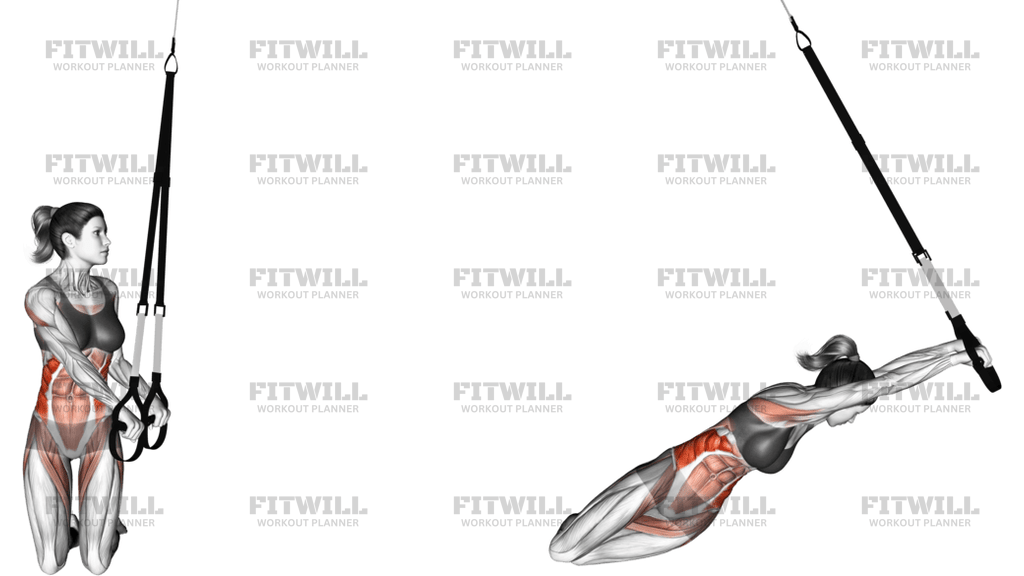
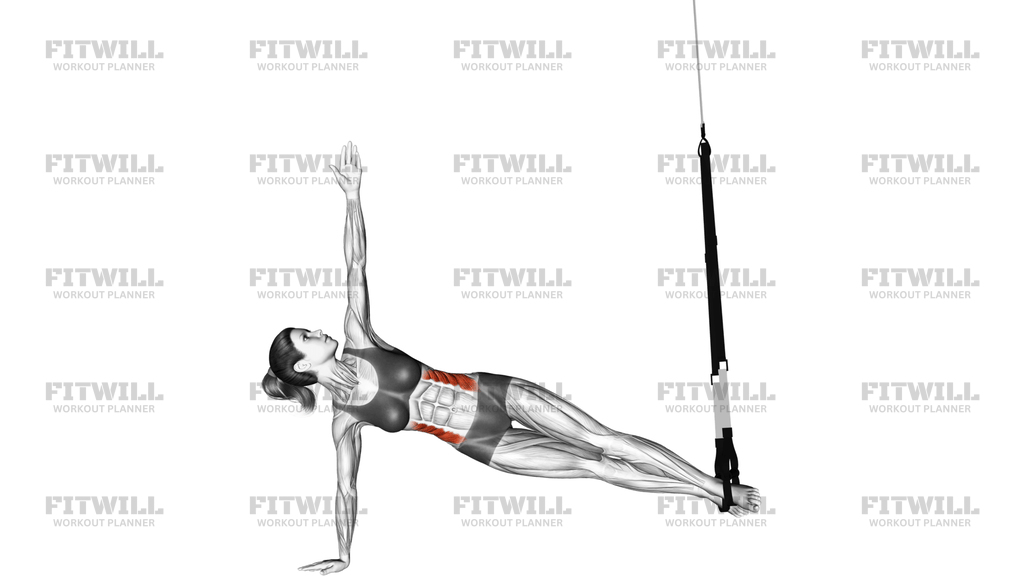
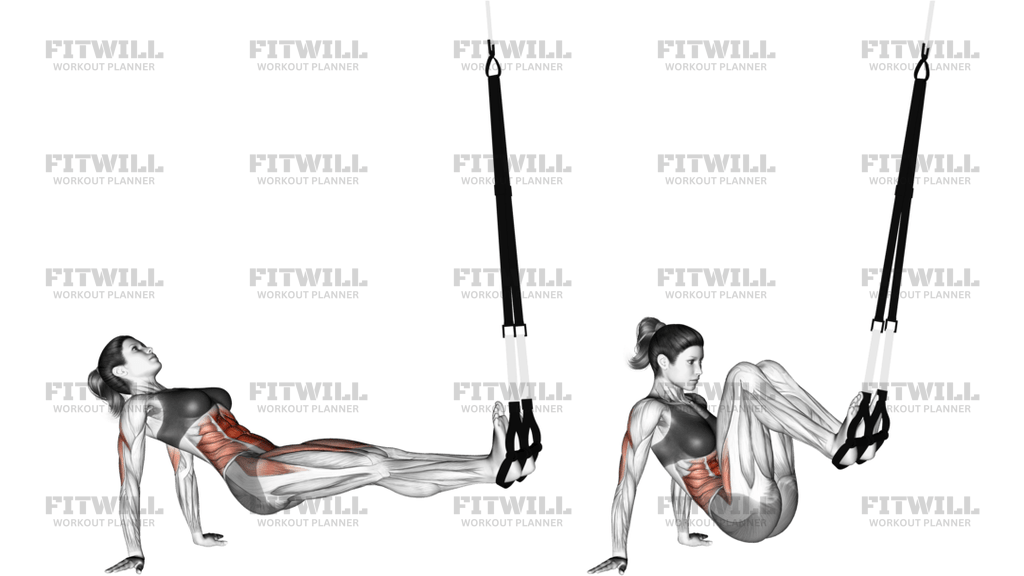
Suspension Single Leg Plank
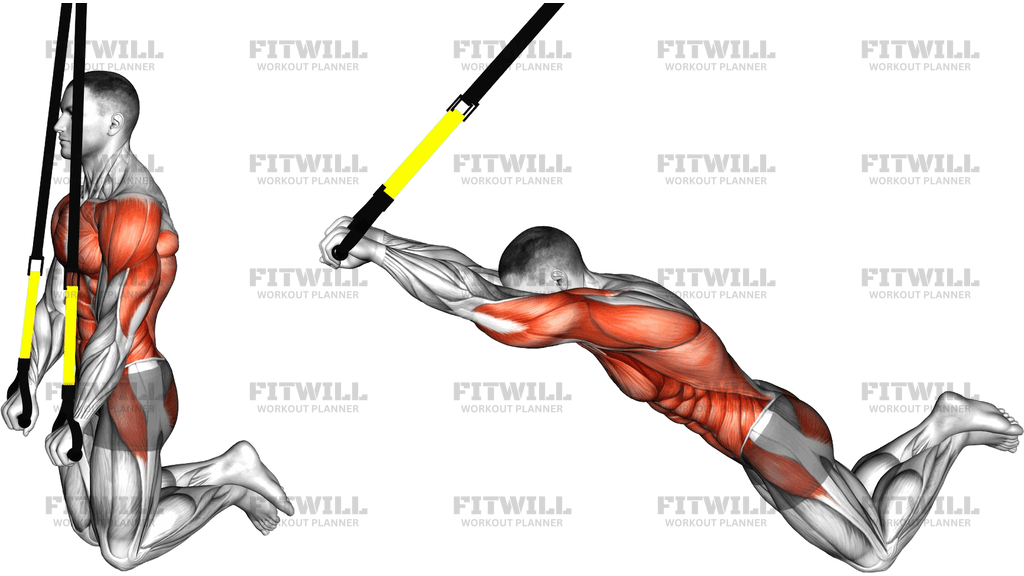
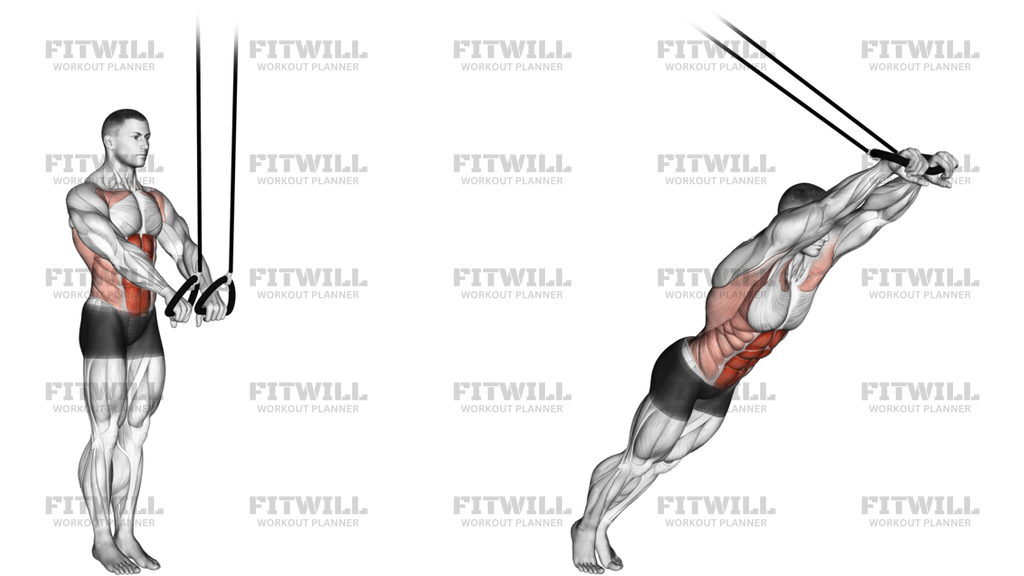
Suspension Single Leg Plank is a suspension-based core stability exercise built around an anti-rotation plank with one leg unloaded. The forearms stay planted on the floor while the feet are supported in straps, so the torso has to resist sagging, twisting, and side-to-side shift while the legs stay long and controlled. It is less about movement speed and more about holding a clean plank shape under constant instability.
The main training effect is centered on the abs, with the obliques, hip flexors, and deeper trunk stabilizers helping keep the pelvis level and the ribs tucked. In anatomy terms, the primary work comes from the Rectus abdominis, with support from the External obliques, Iliopsoas, and Transversus abdominis. That combination makes the exercise useful when you want direct core tension without loading the spine through motion.
The setup matters more here than in a basic plank because the straps can amplify every small mistake. Set the forearms directly under the shoulders, press the elbows down, and get long through the body before you lift or lighten one leg. If the hips start to turn, the shoulders shrug, or the low back arches, the suspension setup stops training the trunk and starts turning the set into a balance scramble.
During each hold, keep the lifted leg quiet and the working leg straight, with the pelvis square to the floor. Breathe behind the brace instead of holding your breath, and use short, controlled exhales if the position starts to drift. This is a strong accessory choice for core circuits, warmups, or athletic prep when you want anti-extension and anti-rotation work in the same drill.
Use a smaller range and a shorter hold if the straps pull you out of alignment, or if your shoulders cannot stay packed over the elbows. Suspension Single Leg Plank should feel demanding in the trunk and glutes, not sloppy in the lower back or shoulders. Clean position, controlled breathing, and even pressure through the forearms are the keys to getting the intended training effect.
[ Workout Log & Planner ]
Put your next workout in Fitwill
Keep your plan and training log ready when you are.


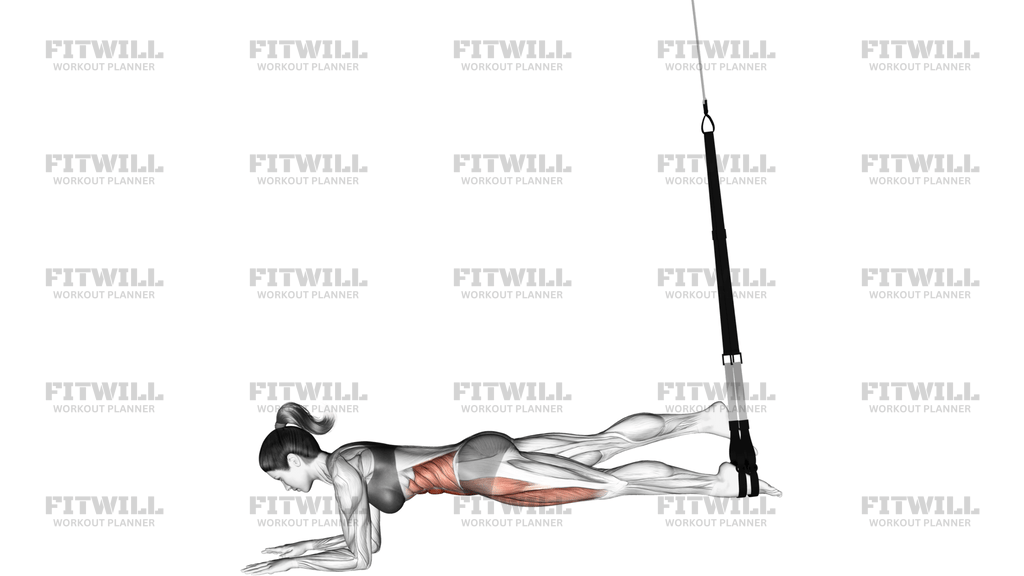
Instructions
- Set the suspension straps so the feet are supported behind you, then place your forearms on the floor with the elbows under the shoulders.
- Straighten the body into a long plank and make sure the neck stays neutral, the head in line with the spine, and the ribs pulled down.
- Brace the abs and squeeze the glutes before you lighten either leg so the pelvis starts level and steady.
- Shift a little more pressure into the forearms, then lift one leg slightly while keeping the straps quiet and the hips facing the floor.
- Keep both legs long and avoid letting the lifted side drift outward or the lower back sag as you hold the position.
- Breathe in short, controlled breaths without losing the plank shape or letting the chest collapse toward the floor.
- Lower the lifted leg with control until both sides are level again, then reset the brace before the next hold or rep.
- Switch legs on the next repetition or set, and step out carefully once the planned work is complete.
Tips & Tricks
- Think of pushing the floor away through your forearms while the straps try to pull your feet out of line.
- Keep the elbows stacked under the shoulders; if they drift forward, the hold usually turns into shoulder strain instead of core work.
- A small lift of the working leg is enough. Big kicks usually twist the pelvis and cancel the plank effect.
- If the low back starts to arch, shorten the hold before you try to add time or reps.
- Keep the glutes active so the hips do not sag when the suspended leg gets lighter.
- The straps should stay quiet. If they swing or bounce, slow down and reset the setup before continuing.
- Exhale gently when the position gets difficult, but do not let the ribs flare as you breathe.
- Use a smooth, deliberate hold instead of chasing fatigue; this movement loses value when the torso starts wobbling.
Frequently Asked Questions
What does Suspension Single Leg Plank work most?
It mainly trains the abs, especially the rectus abdominis, while the obliques and deep core muscles keep the pelvis from twisting.
Why use the suspension straps instead of a normal plank?
The straps add instability at the feet, so the trunk has to resist rotation and extension while the forearms keep the body anchored.
Should my elbows stay directly under my shoulders?
Yes. That position gives you the best base for the forearms and helps keep the shoulders from drifting forward as the straps move.
How high should I lift the working leg?
Only a few inches is usually enough. The goal is to keep the hips square, not to swing the leg high and twist the torso.
What if the straps start swinging?
Slow the set down, shorten the hold, and re-brace before the next repetition. Swinging usually means the core lost tension.
Is this harder on the abs or the shoulders?
The abs should do most of the work, but the shoulders and forearms must stay packed enough to keep the plank from collapsing.
Can beginners try this version of the plank?
Yes, but it is usually best to start with short holds and perfect alignment before adding time or trying longer single-leg efforts.
What should I do if my lower back arches?
End the rep, reset the brace, and use a shorter hold or an easier plank variation until you can keep the ribs down.