Reverse Lunge High Knee
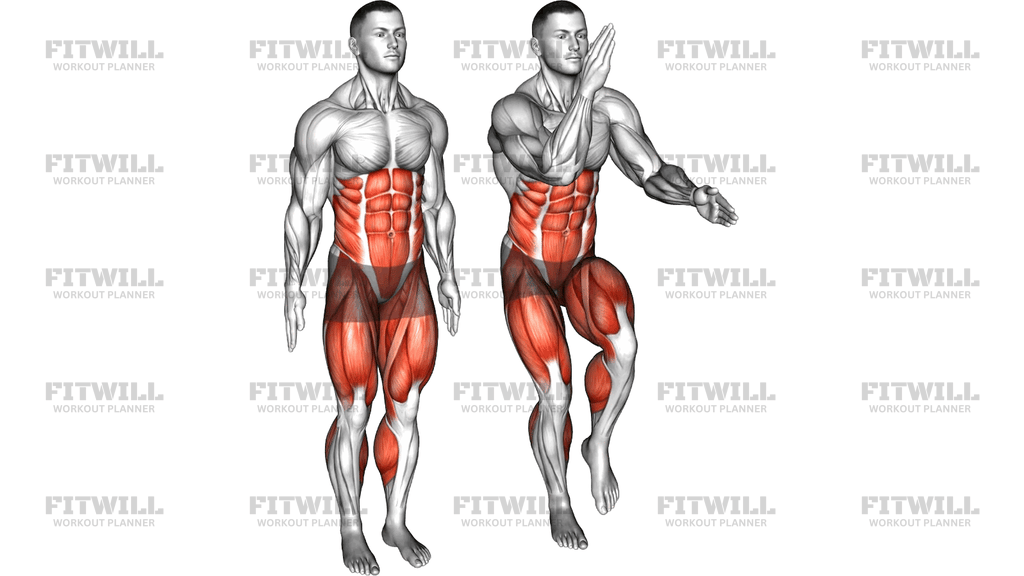
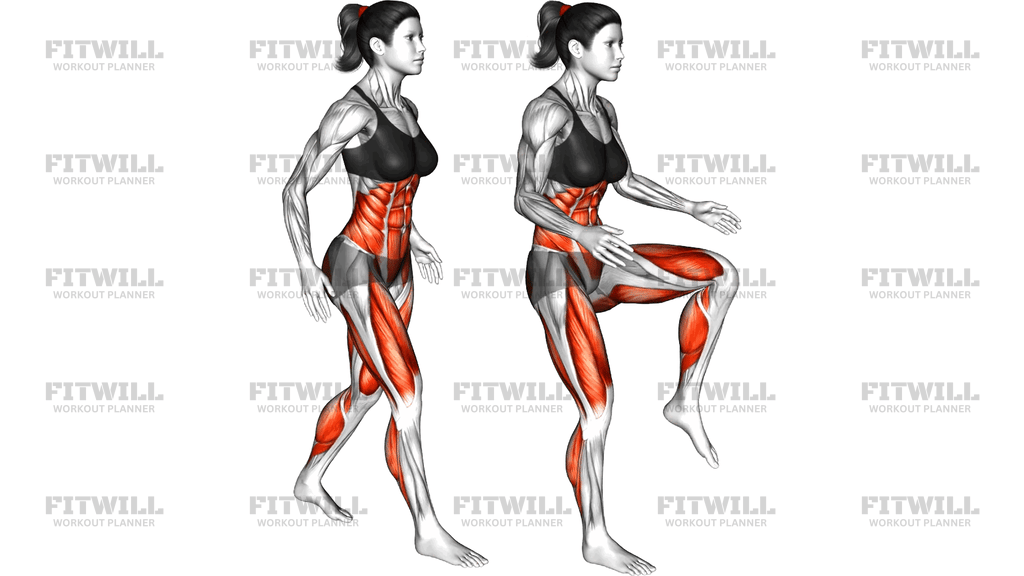
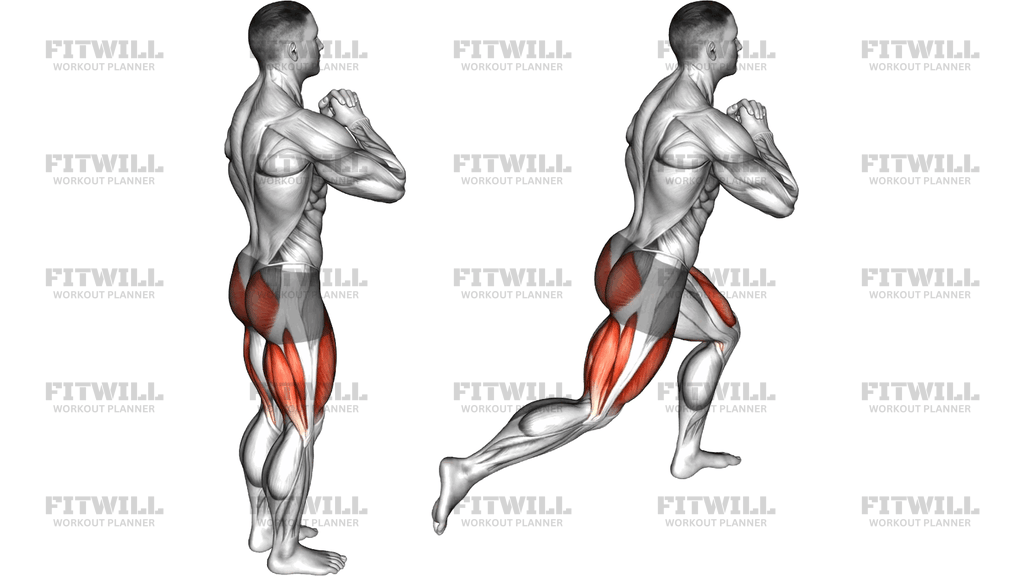
The Reverse Lunge High Knee is a bodyweight lunge variation that combines a backward step with an upward knee drive as you return to standing. Instead of simply stepping back to a parallel stance, you finish each rep by pulling the rear leg forward and lifting the knee to roughly hip height in one fluid movement. This small addition turns a standard reverse lunge into a more demanding, dynamic exercise that challenges balance, coordination, and single-leg strength at the same time.
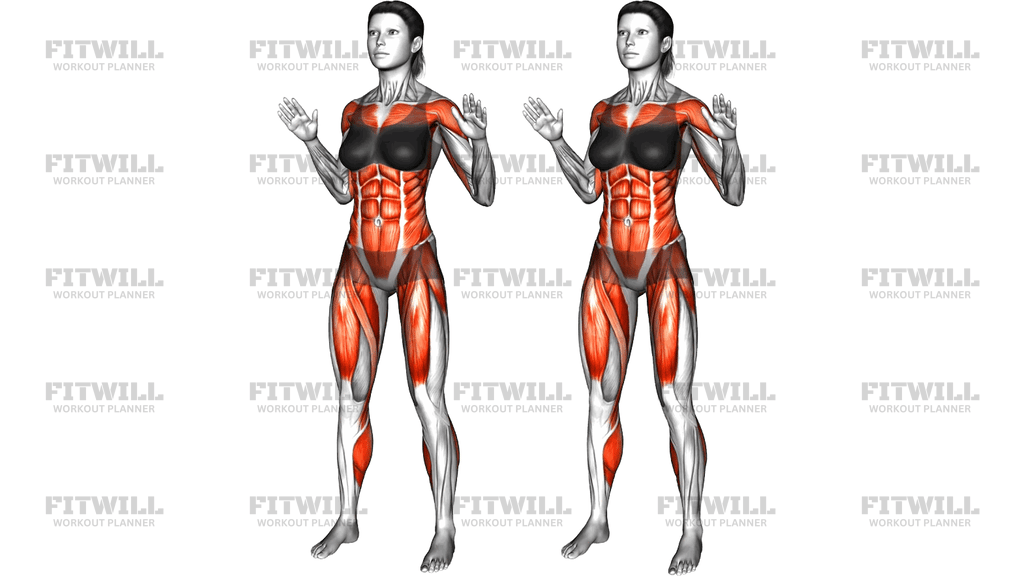
The lunge portion loads the quads and glutes of the front leg, while the knee drive brings the hip flexors into play and forces the standing leg to stabilize through the ankle, knee, and hip. Because you spend the entire rep balanced on one leg at some point, the core works continuously to keep your torso upright and square to the front. The heart rate also climbs faster than it would during slow, static lunges, giving this movement a mild conditioning effect.
This exercise suits a wide range of trainees. Beginners can use it to build the single-leg control needed for more advanced lunge and split squat variations, while intermediate lifters often use it as a warm-up, a finisher, or a low-impact conditioning drill between strength sets. It is also popular in group training and home workouts because it needs no equipment and very little floor space.
Setup matters more than most people expect. Because you finish each rep on one foot, a stance that is too narrow or a torso that leans too far forward will compromise your balance before the knee drive even begins. Start with feet hip-width apart, weight distributed over the whole foot, and eyes fixed on a point ahead of you to give your balance a stable reference.
To perform the movement well, step one leg straight back into a reverse lunge, lowering until the front knee bends to about 90 degrees with the shin roughly vertical. Drive through the front heel to stand up, and as the rear leg swings forward, lift that knee up in front of your body under control before lowering it back down for the next rep. Avoid rushing the knee drive; the control at the top is where much of the hip flexor and balance work happens.
A few practical safety points will keep the movement productive. Keep the front knee tracking over or slightly inside the toes rather than caving inward, and keep your torso tall rather than letting your chest fall toward the thigh. If balance is a limiting factor early on, slow the tempo down or place a hand lightly on a wall until the pattern feels stable.
[ Workout Log & Planner ]
Put your next workout in Fitwill
Keep your plan and training log ready when you are.


Instructions
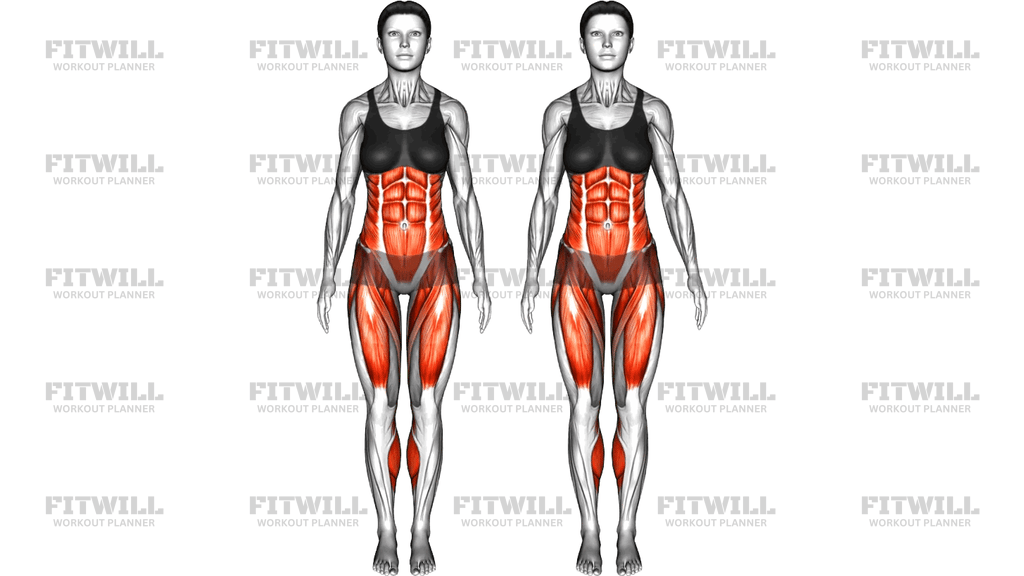
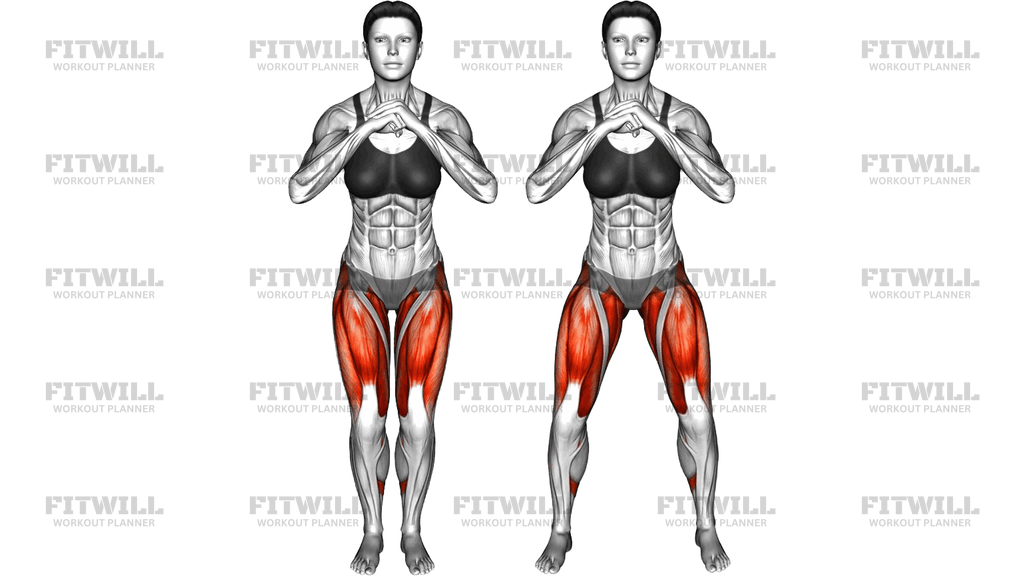
- Stand tall with your feet hip-width apart, arms relaxed at your sides or hands clasped in front of your chest for balance.
- Brace your abdominal muscles lightly and pull your shoulders back so your torso is upright before you move.
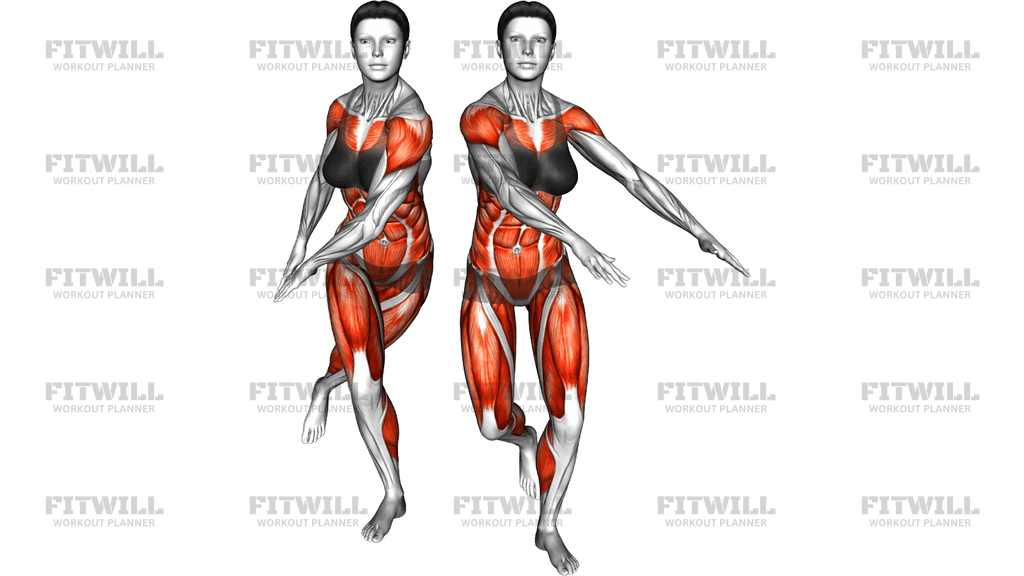
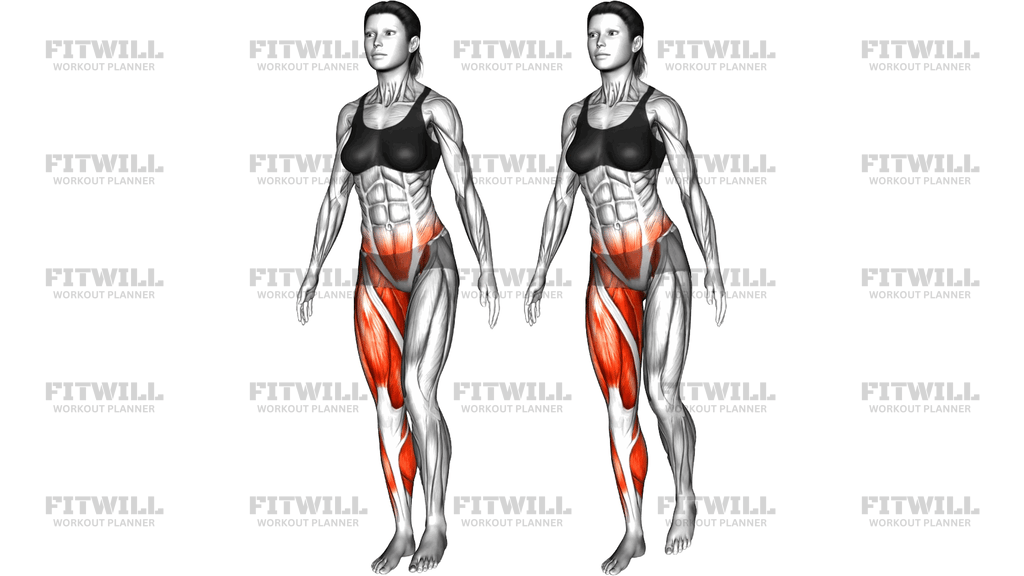
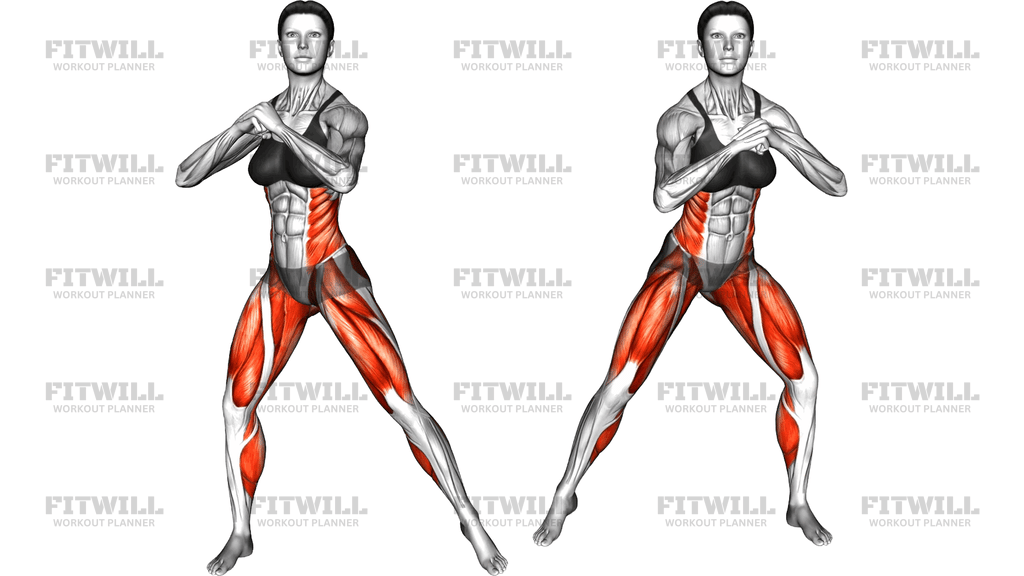
- Shift your weight onto one leg, then step the opposite leg straight back about two to three feet, landing on the ball of that foot.
- Lower your back knee toward the floor until both knees form roughly 90-degree angles, keeping your front shin close to vertical and your torso tall.
- Press firmly through the heel and midfoot of the front leg to drive your body back up to standing.
- As you rise, continue the momentum of the rear leg and lift that knee forward and up to about hip height, balancing briefly on the standing leg.
- Lower the knee back down under control and step that same leg back into the next reverse lunge.
- Exhale as you drive up and lift the knee, and inhale as you lower into the lunge.
- Complete all reps on one side, then switch legs, or alternate legs rep by rep if that feels more natural.
- Reset your stance and brace between reps if you lose your balance rather than rushing through the set.
Tips & Tricks
- A common mistake is letting the front knee collapse inward as you stand up. Think about spreading the floor with your front foot to keep the knee tracking over your toes.
- Do not slam the knee up as fast as possible. A controlled knee drive at about hip height trains the hip flexors far better than a rushed swing.
- If you wobble at the top of the knee drive, hold the balance point for a full second before lowering. The pause builds ankle and hip stability faster than speeding up.
- Keep your torso vertical throughout. Leaning your chest over the front thigh turns the movement into a strained lunge and makes the knee drive awkward.
- Step straight back rather than back and to the side. A narrow, tightrope-style step is a frequent cause of losing balance during the knee lift.
- Push through the heel of the front leg, not the toes of the back foot. Relying on the rear leg to push you up reduces the work the front-leg glutes and quads do.
- If your balance limits you before your legs do, hold onto a wall or rack lightly with one hand for the first few sessions and reduce your reliance on it over time.
- Keep your hands in front of your chest rather than swinging your arms wildly. Counterbalancing with your arms helps, but exaggerated swinging throws off the knee drive.
- Alternate legs each rep if you are using this for conditioning, and do all reps on one side first if your goal is single-leg strength and balance.
Frequently Asked Questions
What muscles does the Reverse Lunge High Knee work?
The quads and glutes of the front leg do most of the work during the lunge, while the knee drive targets the hip flexors. Your core, calves, and ankle stabilizers also work continuously to keep you balanced on one leg.
Is the Reverse Lunge High Knee suitable for beginners?
Yes, as long as you start with a moderate depth and a controlled tempo. Beginners with poor balance can place a hand lightly on a wall or do the knee lift to a lower height until single-leg stability improves.
How high should I lift my knee during the Reverse Lunge High Knee?
Aim for roughly hip height, which is enough to engage the hip flexors without forcing you to lean back or lose your upright posture. Lift only as high as you can while keeping your torso tall and your balance.
Why does the Reverse Lunge High Knee use a backward step instead of a forward step?
Stepping back places less shear stress on the front knee and makes it easier to keep the shin vertical. It also sets up the rear leg to swing forward naturally into the knee drive.
What is the most common mistake in the Reverse Lunge High Knee?
The most common error is rushing the transition from the lunge to the knee drive, which causes the torso to lean forward and the standing foot to wobble. Slow the tempo down and treat the knee lift as a controlled lift, not a kick.
Can I add weight to the Reverse Lunge High Knee?
Yes, once your balance is solid you can hold a dumbbell in each hand or a medicine ball at your chest. Start light, because the added load makes the single-leg balance point at the top noticeably harder.
What can I substitute if the knee drive is too difficult?
Perform a standard reverse lunge and simply bring the rear foot back to a parallel stance without lifting the knee. Once that feels stable, add a small knee lift and gradually increase the height.
How many reps and sets of the Reverse Lunge High Knee should I do?
For strength and balance, do 3 sets of 6 to 10 reps per leg with all reps on one side before switching. For conditioning, alternate legs for 30 to 45 seconds per round at a steady pace.
Do I need any equipment for the Reverse Lunge High Knee?
No, it is a bodyweight movement that only requires enough floor space to step back comfortably. Supportive, flat-soled shoes or barefoot training on a non-slip surface both work well.
Is it safe for my knees to do the Reverse Lunge High Knee?
When performed with the front knee tracking over the toes and a controlled depth, the movement is generally knee-friendly because the backward step reduces forward knee travel. If you feel sharp pain rather than normal muscle effort, reduce your range or consult a qualified professional.