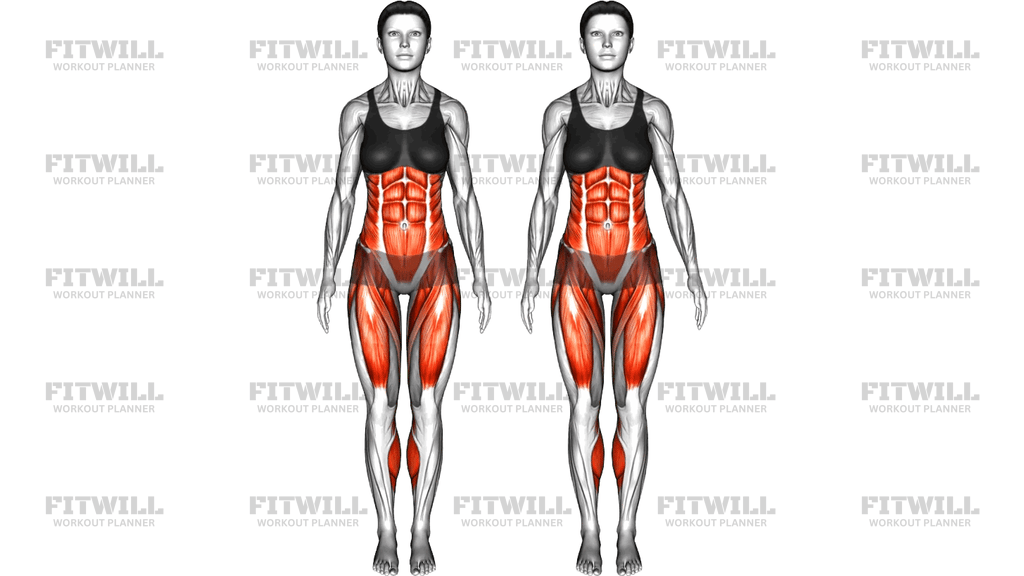
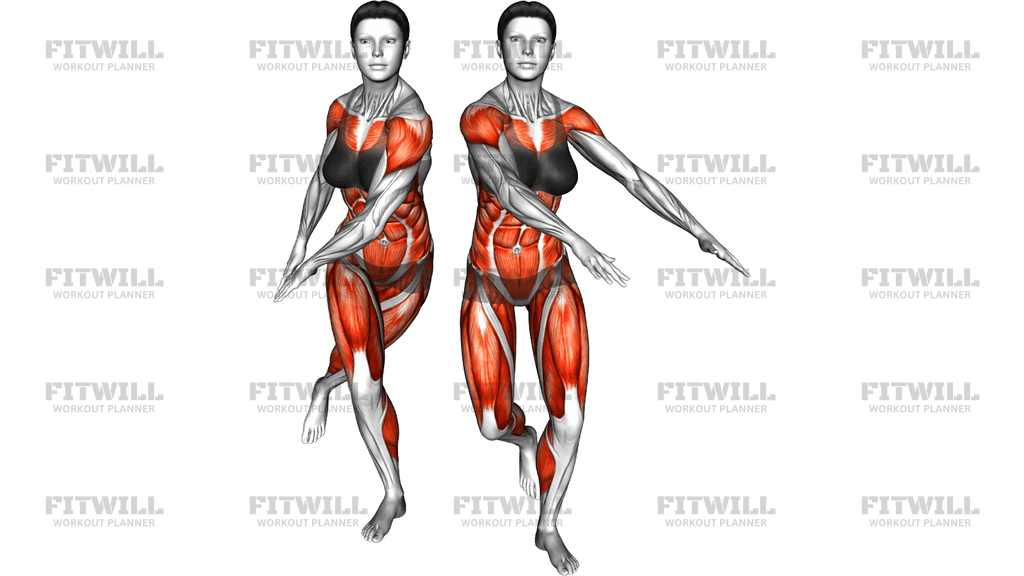
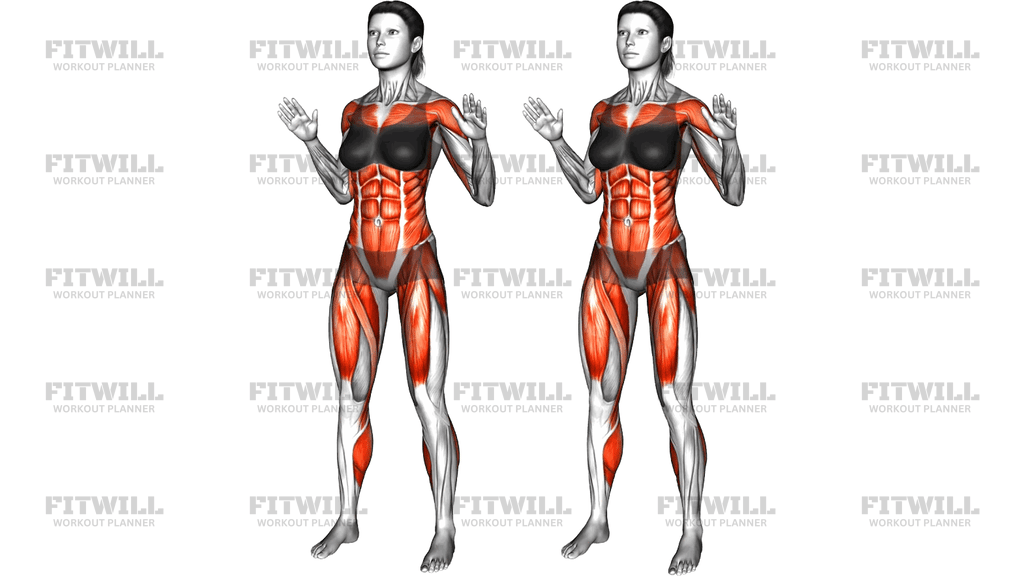
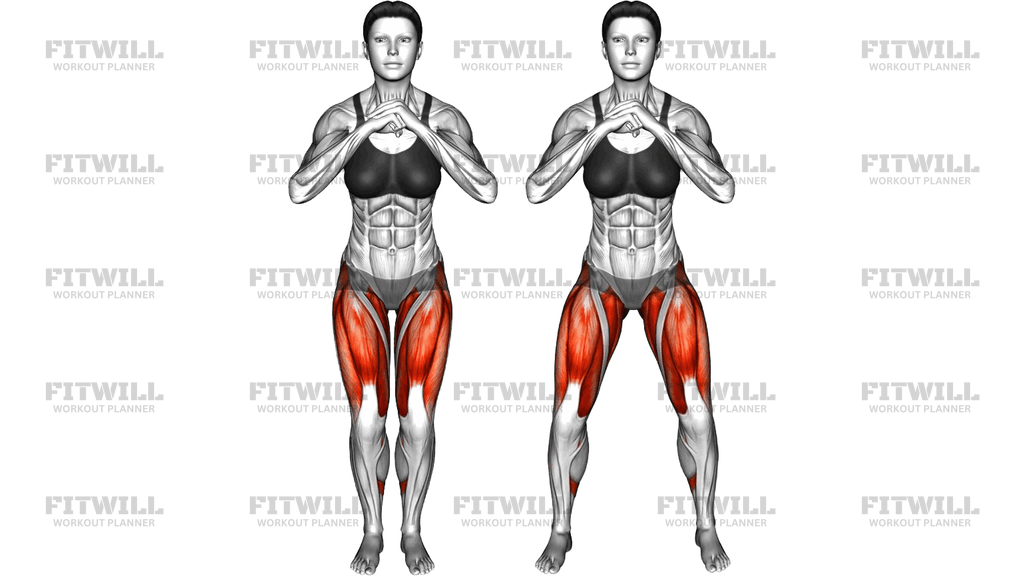
High Lunge
The High Lunge is a bodyweight lunge variation performed with a long, tall split stance in which the front knee bends over the ankle while the rear leg stays extended and active through the ball of the foot. Unlike a walking lunge, you hold your position and work one side at a time, which makes it easier to feel and correct your alignment. It can be done in place as a strength exercise, or held as a static position to open the hip flexors of the back leg.
This movement suits almost anyone: beginners learning single-leg control, lifters warming up before squats or deadlifts, runners and cyclists who need to lengthen tight hips, and anyone training at home without equipment. Because each rep challenges balance as well as strength, it also quietly trains the stabilizers around the hip, knee, and ankle.
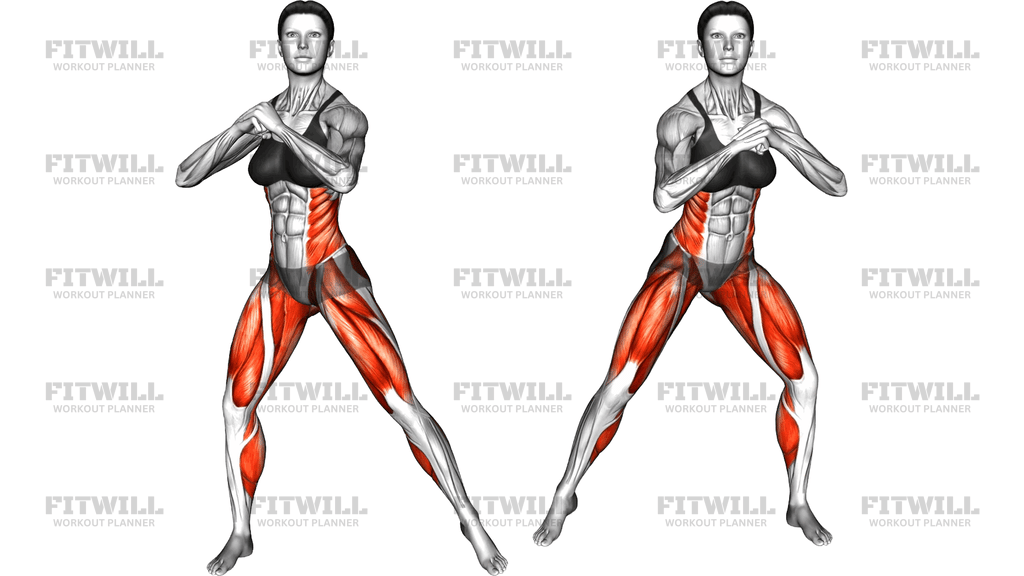
The main work comes from the quadriceps and glutes of the front leg as they lower and lift your body, while the hamstrings and calves assist and the hip flexors of the rear leg work to keep that leg long and engaged. Holding an upright torso with ribs stacked over the pelvis keeps the core involved throughout the set.
Setup matters because the High Lunge rewards a long stance. If your feet are too close together, the front knee travels too far forward and the rear hip flexor never gets a real stretch; if the stance is too wide, you lose depth and stability. A stance of roughly two to three foot-lengths, with both feet pointing straight ahead and hips squared forward, gives you the strongest position.
To execute well, lower straight down rather than forward, letting the back knee travel toward the floor while the front knee tracks over the middle of the foot. Keep the torso tall, shoulders relaxed, and gaze forward. Drive through the whole front foot to rise back up, squeezing the front thigh and glute at the top without locking the knee hard.
Use the High Lunge as a warm-up primer, as strength work for higher reps on each side, or as a static hold for hip mobility. If balance is a struggle early on, hold a wall, a chair, or a sturdy rack with one hand until your stability improves, and keep all movement in the knees and hips rather than letting the torso wobble.
[ Workout Log & Planner ]
Put your next workout in Fitwill
Keep your plan and training log ready when you are.


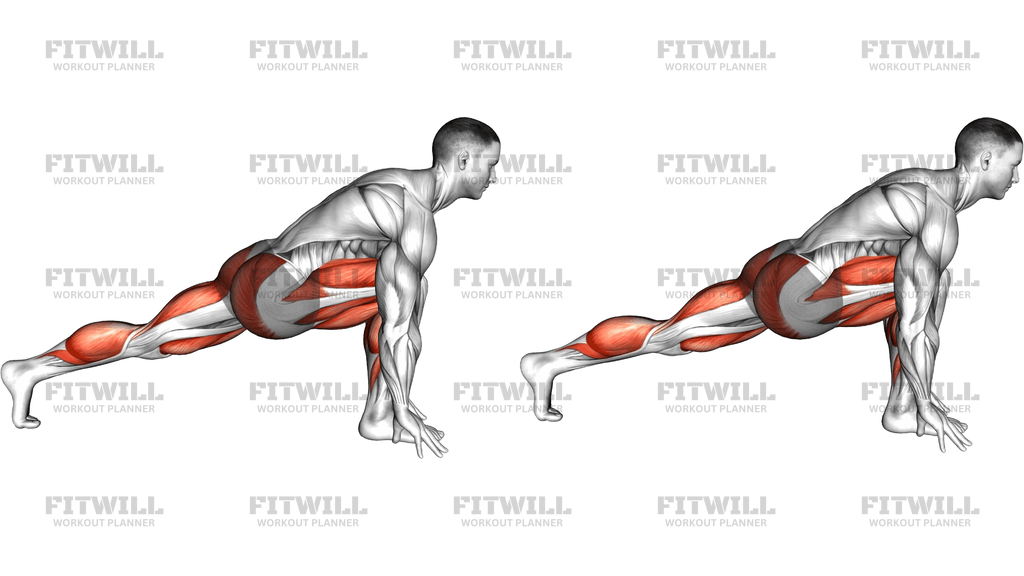
Instructions
- Stand tall with your feet hip-width apart, then step your right foot forward about two to three foot-lengths so you land in a long split stance.
- Point both feet straight ahead, square your hips to the front, and place your weight evenly across the whole front foot with the rear heel lifted.
- Brace your abdominal muscles gently and lengthen your spine so your ribs sit over your pelvis, shoulders relaxed and gaze forward.
- Bend your front knee to about 90 degrees, keeping it stacked over your ankle and tracking in line with your second toe.
- Lower your back knee straight down toward the floor while keeping the rear leg active, heel reaching back and hips staying squared.
- Stop when the front thigh is roughly parallel to the floor or when you reach your deepest controlled position without the knee drifting forward.
- Press through the entire front foot, especially the heel and mid-foot, and straighten the front leg to return to the top of the stance.
- Exhale as you lower, inhale at the bottom, and exhale again as you drive up.
- Complete your reps on the right leg, then switch by stepping the left foot forward and repeat for the same number of reps.
- To reset, step the rear foot forward to meet the front foot and stand fully upright before starting the next set.
Tips & Tricks
- If your front knee shoots past your toes, your stance is too short; step the rear foot back a few inches before your next rep.
- Avoid letting the front knee cave inward. Cue yourself to spread the floor with your front foot so the knee tracks over the second toe.
- Many people lean the chest toward the front thigh as they fatigue. Keep your back heel pressing back and your chest lifted to stay tall.
- Do not drop the rear hip and twist it open. Pull both hip points forward so the stretch lands in the rear hip flexor, not the lower back.
- If you wobble, narrow your stance slightly and slow the tempo down before adding speed or reps.
- Keep the rear heel actively reaching back rather than passively resting on the toes; this keeps the calf and hamstring engaged.
- For a deeper hip flexor stretch, hold the bottom position for 20-30 seconds per side instead of moving continuously.
- Stop short of letting the back knee slam into the floor; hovering just above it keeps tension on the muscles and protects the joint.
- Progress the exercise by pausing two seconds at the bottom of each rep before adding any external load.
Frequently Asked Questions
Which muscles does the High Lunge work the most?
The quadriceps and glutes of the front leg do the majority of the work as you lower and rise. The rear leg's hip flexors and calves work isometrically to hold the split stance, and the core stabilizes your upright torso.
How is the High Lunge different from a regular lunge?
The High Lunge uses a long, fixed stance with the rear heel lifted and the torso held tall, working one side at a time in place. A regular lunge often alternates legs or travels across the floor with a shorter, faster step.
Is the High Lunge good for beginners?
Yes, it is one of the best starting points for single-leg training because you control the depth and can use a wall or chair for balance. Beginners should reduce the depth first rather than shortening the stance.
Should my front knee go past my toes in the High Lunge?
With a correct long stance, the knee should stack roughly over the ankle. If it travels well past the toes, your feet are too close together and you should step the rear foot farther back.
Why does my back leg shake or feel unstable during the High Lunge?
The rear leg works hard to stay extended with the heel lifted, which challenges the calf, hamstring, and hip stabilizers. This shaking is common when the position is new and typically improves with consistent practice.
Can I use the High Lunge as a stretch instead of a strength exercise?
Yes, holding the bottom position for 20-30 seconds per side effectively lengthens the hip flexors of the rear leg. Keep the hips squared forward and the torso tall so the stretch targets the hip rather than the lower back.
What is the most common mistake in the High Lunge?
The most frequent error is a stance that is too short, which pushes the front knee forward and collapses the torso. Another common issue is letting the front knee fall inward, which you can fix by consciously tracking it over the second toe.
How many reps and sets of the High Lunge should I do?
For strength and endurance, aim for 8-12 controlled reps per leg for 2-3 sets. For mobility, hold each side for 20-30 seconds once or twice.
What can I do if the High Lunge hurts my knees?
Reduce the depth so the front knee bend stays comfortable, verify the knee tracks over the ankle rather than past the toes, and shorten the set. If discomfort persists, a reverse lunge pattern often loads the knee more gently.