Cable Donkey Diagonal Kickback
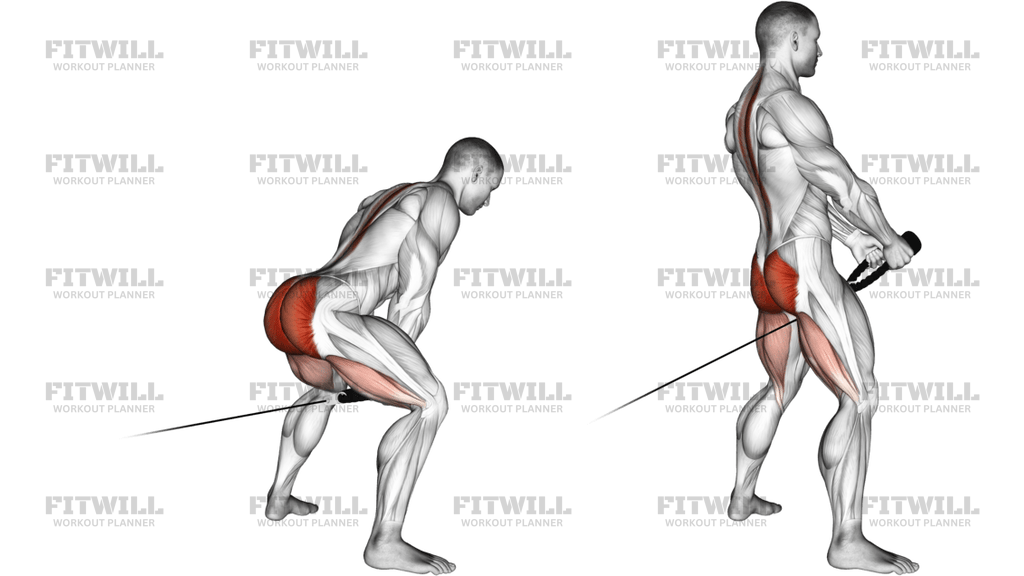
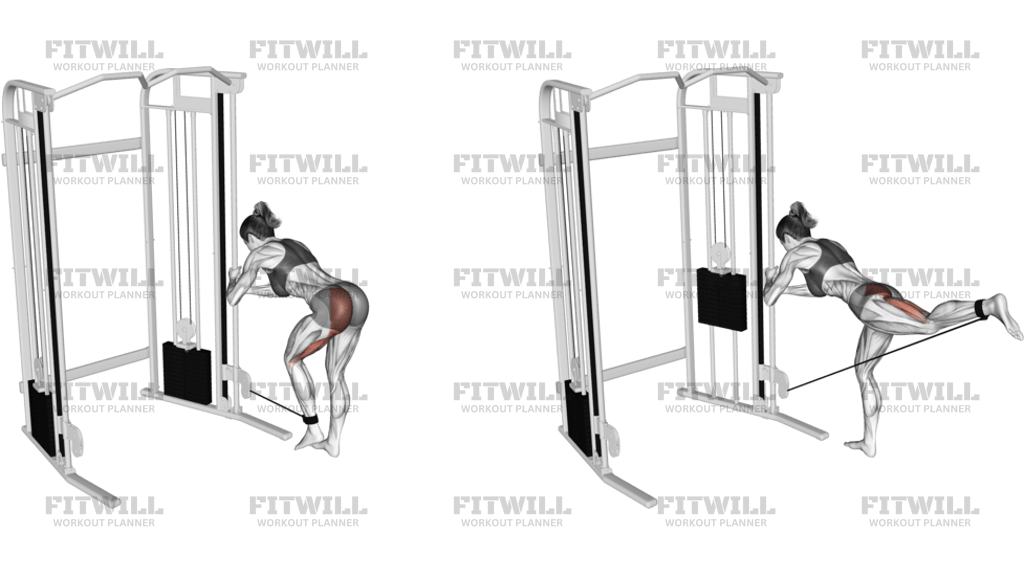
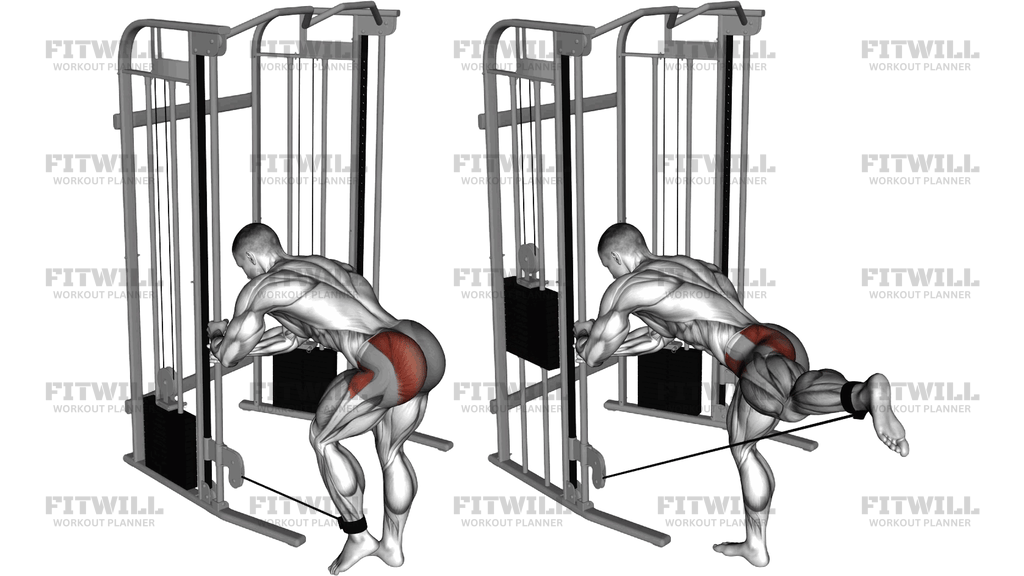
The Cable Donkey Diagonal Kickback is a bent-over, single-leg glute exercise performed on a cable machine with an ankle strap attached to a low pulley. You hinge forward and brace your forearms on the machine's frame, then drive the strapped leg back and up on a diagonal path toward the ceiling. Because the cable pulls from a low point behind you, the glute works against constant tension through the entire arc of the kick, something bodyweight donkey kicks on the floor cannot provide.
This movement targets the gluteus maximus as the prime mover, with the hamstrings assisting on the extension and the gluteus medius and hip stabilizers of the standing leg working hard to keep your pelvis level. The bent-over torso position also asks your spinal erectors, obliques, and deep core to hold your trunk steady while one hip moves independently, which makes it more of a full posterior-chain stability challenge than it first appears.
It is especially useful for lifters who want focused glute work without loading the spine with a barbell, for anyone rehabilitating or strengthening a single side after noticing left-right imbalances, and for gym-goers whose squat or hinge work leaves the glutes undertrained relative to the quads. Because the resistance is light and precise, it also suits beginners learning to feel the glute contract before moving to heavier hip thrusts or deadlifts.
Setup matters here. The pulley should sit at the lowest setting, the strap should wrap snugly around the ankle of your working leg, and your torso should hinge far enough forward that your forearms rest comfortably on the frame with a soft bend in the standing knee. Standing too upright turns the movement into a straight-leg pull and shifts work away from the glute; leaning too far and rounding the low back puts strain on the spine instead.
To execute well, keep the torso pressed against your braced arms and let the hip do the work: sweep the strapped leg back and up diagonally, squeeze the glute hard at the top for a beat, then lower the leg slowly and under control rather than letting the cable drag it back. A slight knee bend in the working leg is fine and often feels more natural than locking it straight.
One practical note: the diagonal path is the point of the exercise. Kicking straight back loads mainly the gluteus maximus, while adding the upward-outward angle brings the upper glute into the picture. Pick the direction deliberately and keep it consistent between sides so both hips get the same stimulus.
[ Workout Log & Planner ]
Put your next workout in Fitwill
Keep your plan and training log ready when you are.


Instructions
- Set the pulley of the cable machine to its lowest position and attach an ankle strap around the ankle of your working leg.
- Stand facing the machine, then hinge forward at the hips and rest your forearms on the machine's frame so your torso is angled down and supported.
- Step the working leg slightly back so there is tension on the cable before you start, with a soft bend in your standing knee.
- Brace your core and keep your back flat from hips to shoulders; your head stays in line with your spine, looking at the base of the machine.
- Drive the strapped leg back and up on a diagonal path, letting the knee bend slightly, until your thigh is extended behind you and the glute is fully squeezed.
- Pause at the top for one to two seconds and feel the contraction in the glute rather than chasing extra height with your lower back.
- Lower the leg slowly and with control, resisting the cable's pull until your leg is back under your hip but tension remains on the strap.
- Exhale as you kick back, inhale as you return the leg.
- Complete all repetitions on one side, then release the strap, reattach it on the other ankle, and repeat with the opposite leg.
Tips & Tricks
- If your lower back arches and your torso lifts as the leg rises, the weight is too heavy or you are reaching for range; reduce the load and let the glute, not the spine, finish the rep.
- Keep your forearms firmly planted on the frame throughout the set. If your arms shift or your shoulders rise, your trunk is rotating to help the leg, which steals work from the target hip.
- Aim the kick slightly out to the side as well as up. If you only kick straight back, the hamstrings take over; the diagonal angle is what biases the upper glute.
- Do not lock the working knee hard at the top. A slightly bent knee keeps the hamstring from cramping and lets the glute drive the movement.
- Keep weight in the midfoot of the standing leg. If you rock onto your toes, the balance demands exceed the glute work and the set becomes wobbly.
- The cable should stay taut at the bottom of each rep. Letting the stack fully settle between reps removes tension and turns the exercise into brief, jerky pulls.
- Squeeze deliberately at the top instead of flicking the leg up. Height comes from the low back, but tension comes from a hard one-second glute squeeze.
- Match reps and effort exactly between sides, and always start with your weaker leg so you do not drift into a bigger imbalance.
- If the ankle strap rubs or slides, cinch it above the ankle bone over a thin sock rather than loosening it, since a loose strap shifts the pull direction mid-rep.
Frequently Asked Questions
Which muscles does the Cable Donkey Diagonal Kickback work?
The gluteus maximus is the primary mover, with the hamstrings assisting on the leg extension. The gluteus medius, standing-leg hip stabilizers, obliques, and lower back all work isometrically to keep your torso and pelvis steady.
Why kick on a diagonal instead of straight back?
The diagonal, upward-outward path adds a hip abduction component, which biases the upper glute along with the gluteus maximus. Kicking straight back is still effective but leans more on the hamstrings.
Is the Cable Donkey Diagonal Kickback suitable for beginners?
Yes, and it is actually a good learning tool because the light cable load lets you isolate and feel the glute. Start with a low weight and focus on a clean hinge and a deliberate squeeze before adding resistance.
Should my working leg be straight or bent at the knee?
A slight knee bend is usually better. A fully locked knee can cause hamstring cramping and shifts tension away from the glute, while a moderate bend keeps the hip extension dominant.
Why do I feel my lower back instead of my glutes?
That usually means your torso is rising and your lumbar spine is extending to lift the leg. Hinge further forward, plant your forearms on the frame, shorten the range slightly, and reduce the weight until the glute does the lifting.
Can I do donkey kickbacks without a cable machine?
Yes. Quadruped floor donkey kicks with an ankle weight or a resistance band are the closest substitute. The cable version offers smoother constant tension and easier load adjustments, but the floor version is a solid alternative at home.
How high should the leg go at the top?
High enough that the glute is fully contracted, generally with the thigh slightly above hip height, but never so high that your back arches or your torso rotates. Controlled height beats maximum height.
Where should the pulley be set for this exercise?
At the lowest setting. The cable should run from near floor level up to your ankle strap so the resistance pulls the leg down and back as you kick up, which is what creates tension on the glute.
Is it safe for people with lower back issues?
The bent-over position loads the spine's stabilizers, so anyone with an irritated lower back should start very light, keep the torso firmly supported, and stop if symptoms appear. When in doubt, check with a qualified professional before adding it to your routine.
How many sets and reps should I do per side?
Two to four sets of 10 to 15 controlled reps per leg works well for most lifters. Because the movement is about quality of contraction rather than load, err on the side of more reps with strict form.