Side Squat
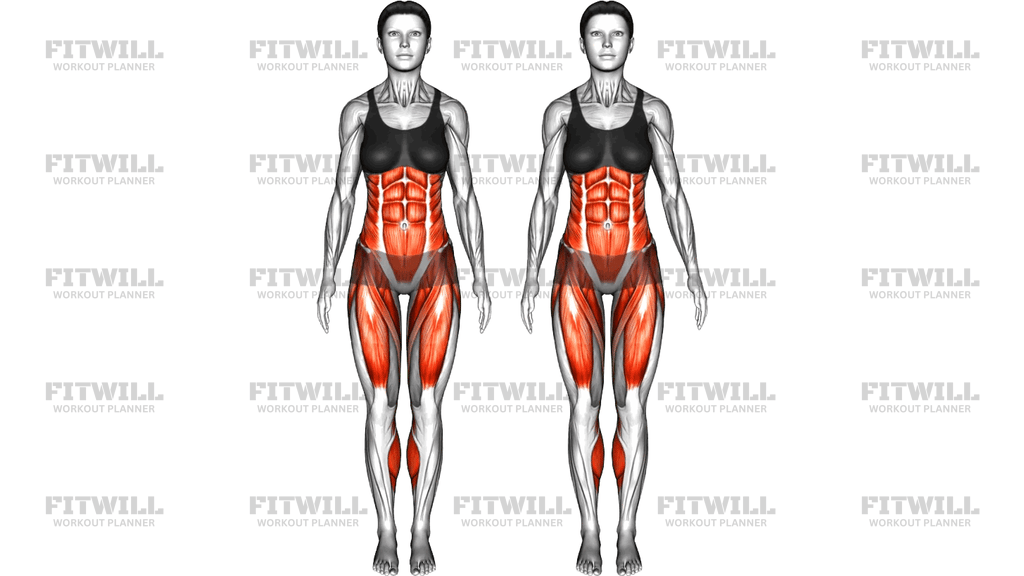
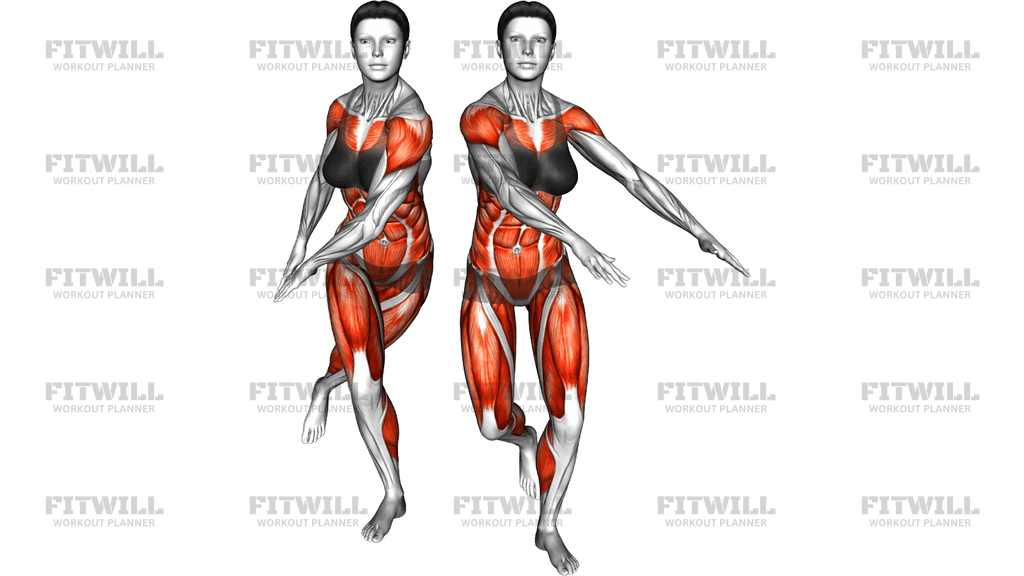
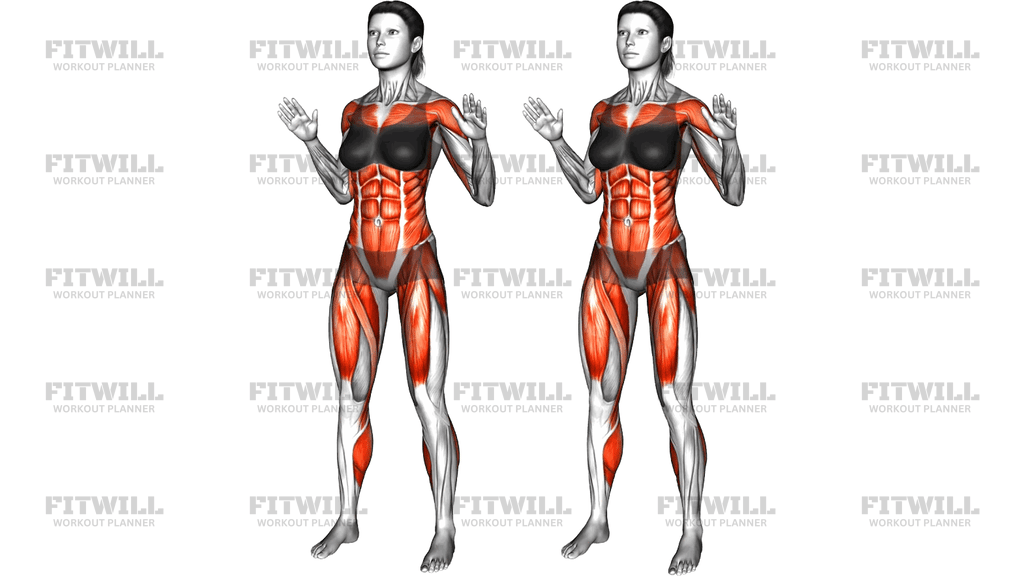
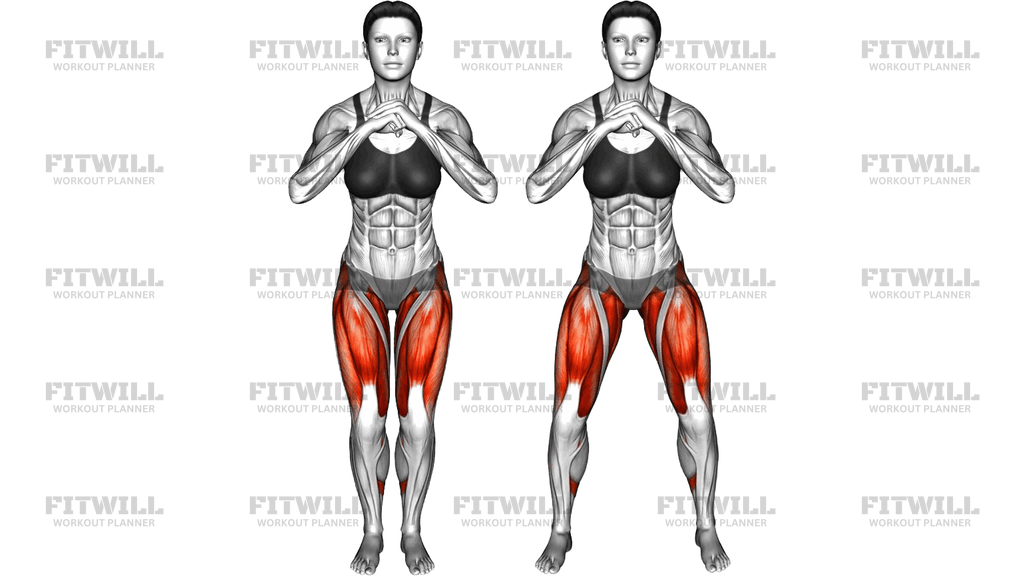
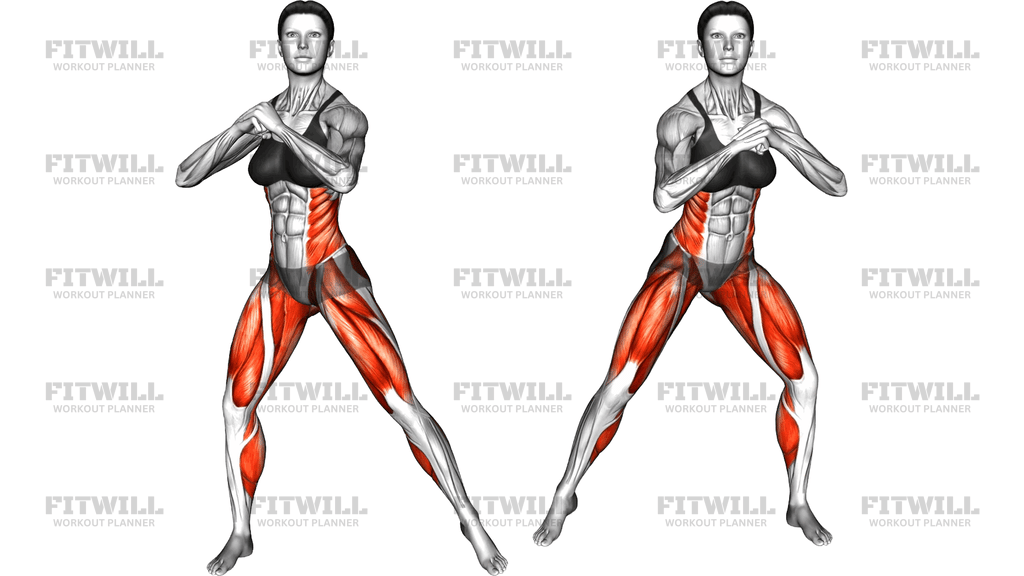
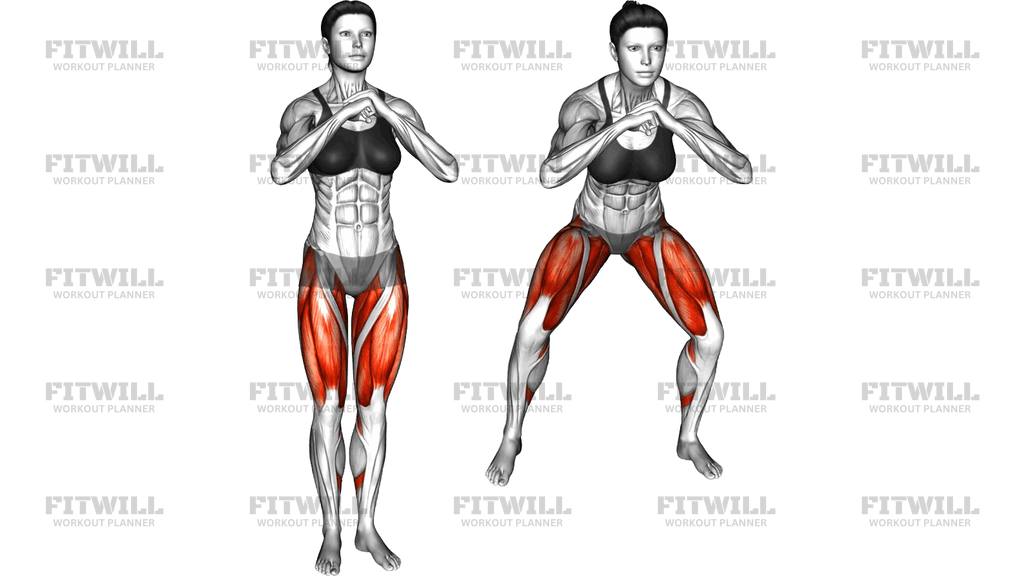
The Side Squat is a bodyweight variation of the squat where you shift your weight onto one leg at a time while stepping or holding the other leg out to the side. From a tall stand with your hands clasped in front of your chest, you push your hips back and sink onto the working leg, keeping the opposite leg straight with the foot flexed on the floor beside you. The result looks like a cross between a regular squat and a side lunge, but the hips stay square and the weight repeatedly loads one side.
Because one leg has to handle most of your bodyweight, the Side Squat is a good step up from a standard two-legged squat for anyone who wants single-leg strength without jumping straight to pistol squats or Bulgarian split squats. It challenges the quads and glutes of the bent leg, and the straightened leg plus the wide stance put a noticeable stretch and workload through the inner thighs. The stance also asks the hip stabilizers to keep you balanced over the working foot, which many people feel in the outer hip the first few sessions.
Setup matters more than it appears to. If your torso drifts too far forward or your working knee caves inward, the movement stops being a squat and starts being a stress on the knee. Keeping the chest tall, hands at chest height for counterbalance, and the working knee tracking over the toes keeps the load on the thigh muscles where it belongs. The straight leg should stay genuinely straight with the foot flat, acting as a brace rather than a second working leg.
To execute the movement, stand with your feet together or only a few inches apart, clasp your hands at chest height, and brace your midsection. Shift your weight onto one leg and step the other foot out wide, then push your hips back and bend the working knee to lower into a squat on that side. Drive through the working foot to stand back up, and either alternate sides each rep or complete all reps on one side before switching. Aim for a controlled tempo, especially on the way down.
The Side Squat fits well into home workouts, warm-ups, and lower-body circuits because it needs no equipment and little space. It is commonly used by runners and field-sport athletes to build side-to-side strength, by beginners preparing for loaded single-leg work, and in rehabilitation-style programming where light lateral loading is useful. You can hold a weight at your chest to make it harder once bodyweight reps feel easy.
A few practical points will keep the exercise safe and effective. Move within a depth where your working heel stays glued to the floor, and stop the set when you start wobbling side to side, since fatigue on one leg tends to show up as poor knee tracking. If you have a knee injury or feel pinching at the inside of the knee, shorten the range or reduce the width of the step before abandoning the movement entirely.
[ Workout Log & Planner ]
Put your next workout in Fitwill
Keep your plan and training log ready when you are.


Instructions
- Stand tall with your feet close together, arms relaxed, and clasp your hands together in front of your chest for counterbalance.
- Brace your midsection lightly, lift your chest, and look straight ahead so your torso is ready to stay upright.
- Shift your weight onto your right leg and step your left foot out wide to the side, landing with the left foot flat and the leg straight.
- Push your hips back and to the right as you bend your right knee, lowering until your right thigh is roughly parallel to the floor or as deep as your mobility allows.
- Keep your right knee stacked over your right toes and your right heel firmly on the floor throughout the descent.
- Press through the whole right foot, especially the heel and midfoot, to drive back up until your right leg is straight again.
- Either bring the left foot back in to a narrow stance or keep it out wide and perform the next rep on the same side.
- Exhale as you push up out of the squat and inhale as you lower into the next rep.
- Complete all reps on one side, then reset your stance and repeat on the left leg.
- If you lose balance, step the non-working foot in briefly, reset your posture, and continue rather than grinding through a wobbly rep.
Tips & Tricks
- If your working knee dives inward as you descend, think about spreading the floor with that foot; the knee should track over the second and third toes.
- A common mistake is loading both legs evenly and turning the Side Squat into a wide-stance squat. Keep your weight clearly on the bent leg and let the straight leg act only as a light brace.
- Do not let the straight side foot roll onto its outer edge. Keep that foot flat and the toes pointing forward to protect the ankle and keep the inner thigh engaged.
- If your torso pitches forward and your chest drops, raise your clasped hands slightly and sit back into the working hip rather than reaching with your shoulders.
- Keep the working heel down. If it lifts, you are descending too deep for your current ankle mobility, so shorten the range and build up over time.
- Alternate sides each rep when you are learning. It doubles as balance practice and makes strength differences between legs obvious.
- Move deliberately on the lowering phase. Dropping quickly into the bottom position is where most people lose knee position on this exercise.
- Wider is not automatically better. Step out only as far as you can keep the straight leg long and the working foot stable; a staggered, wobbly stance trains nothing useful.
- Once bodyweight reps feel easy, hold a dumbbell or kettlebell at your chest to add load instead of increasing depth beyond your control.
Frequently Asked Questions
Which muscles does the Side Squat work?
The Side Squat primarily targets the quads and glutes of the bent working leg, with the inner thighs working hard because of the wide, lateral stance. The outer hip muscles also contribute to keep you balanced over the working foot.
Is the Side Squat good for beginners?
Yes. It is a manageable introduction to single-leg squatting because the straight leg provides light support, unlike a pistol squat where the other leg is completely off the floor. Beginners should start with a shallow depth and a moderate step width.
How is the Side Squat different from a side lunge?
In a side lunge you step out and shift onto the new leg each rep with a longer stride, while the Side Squat keeps the hips sinking straight down onto the working leg with the other leg held straight and close to the floor. The Side Squat tends to feel more like a one-legged squat, the side lunge more like a dynamic lateral step.
Should I alternate legs or do all reps on one side?
Either works. Alternating each rep keeps you symmetric and adds a balance challenge, while completing all reps on one side before switching makes it easier to feel and correct differences between your legs.
Why does my inner thigh feel a stretch during the Side Squat?
The wide stance with one leg held straight puts the adductors of the straight leg under a lengthened stretch while they work to stabilize. This is expected; if the stretch feels sharp rather than like a working tension, narrow your stance slightly.
How deep should I squat on the working leg?
Descend until your working thigh is roughly parallel to the floor or until your heel starts to lift or your knee position changes. Depth that costs you knee tracking or heel contact is not worth the extra range.
Can I add weight to the Side Squat?
Yes. Holding a dumbbell or kettlebell at your chest is the simplest progression and actually helps some people stay upright. Add load only once you can keep the working knee tracking cleanly for all your reps.
My balance falls apart on one side. What should I do?
Slow the tempo down, reduce the depth, and tap the straight leg lightly on the floor for support instead of loading it. Single-leg balance usually improves within a few sessions of consistent practice.
Is the Side Squat safe for the knees?
For healthy knees it is generally a safe, controlled bodyweight movement as long as the working knee tracks over the toes and the heel stays down. If you have an existing knee issue or feel pinching, shorten the range or check with a qualified professional first.
Where does the Side Squat fit into a workout?
It works well as a warm-up before heavier leg training, as a main single-leg strength exercise in home workouts, or as a higher-rep finisher in a lower-body circuit. Pair it with a hinge pattern like glute bridges or deadlifts for balanced leg development.