Split Squat Against Wall
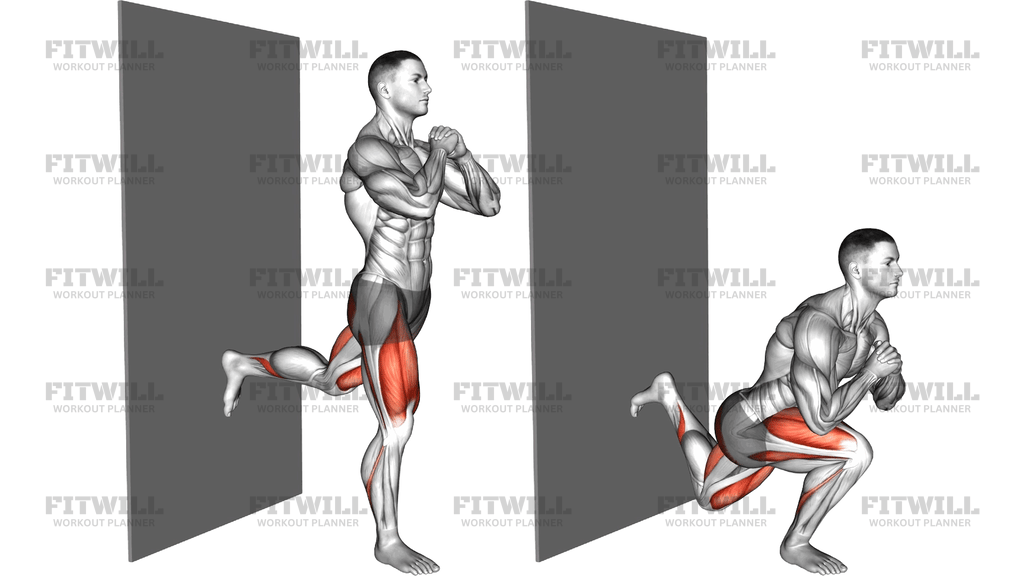
The Split Squat Against Wall is a single-leg strength exercise where your rear foot rests against a wall behind you while you lower and raise your body over the front leg. It sits between a regular split squat and a fully elevated Bulgarian split squat: the wall supports the rear foot and biases more weight onto the front leg, but without a bench you can adjust exactly how much load the rear foot takes. Because it needs no equipment beyond a clear patch of wall, it is one of the most practical unilateral leg exercises for home training.
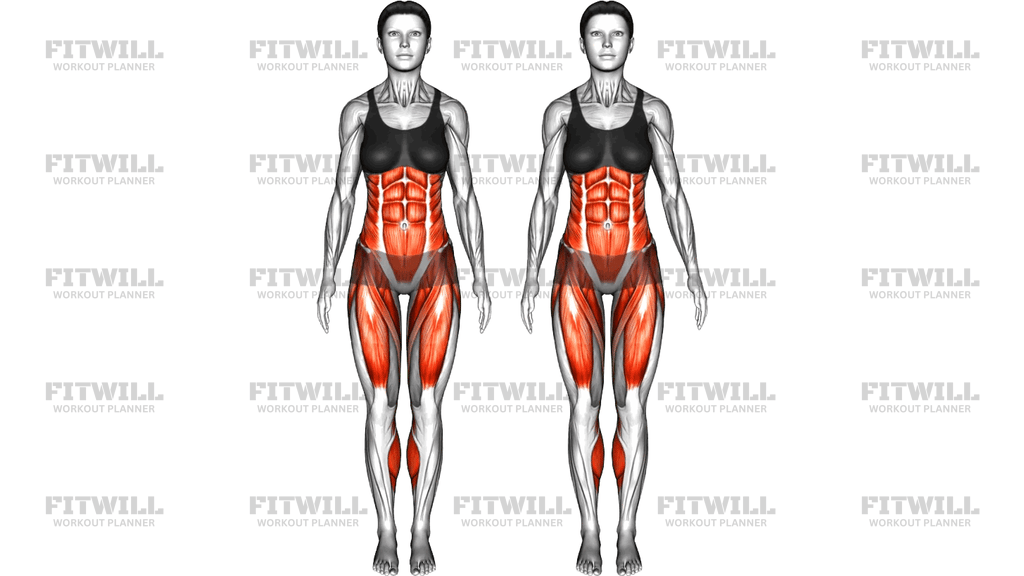
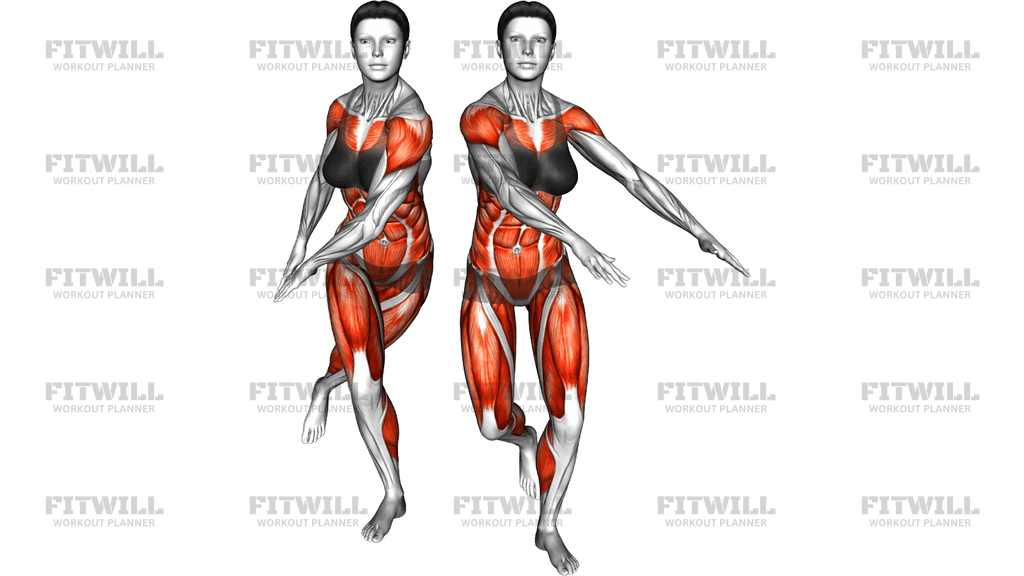
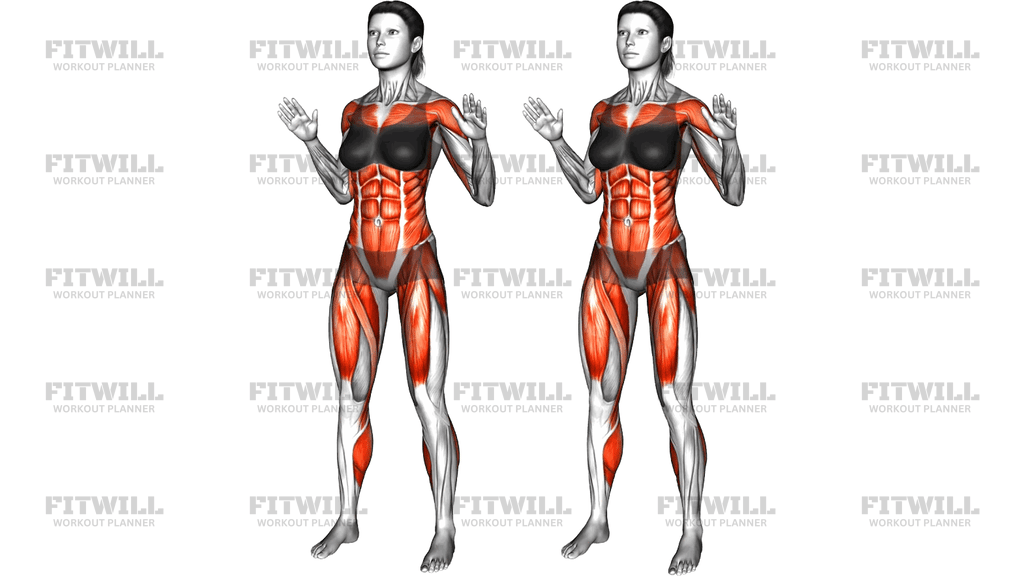
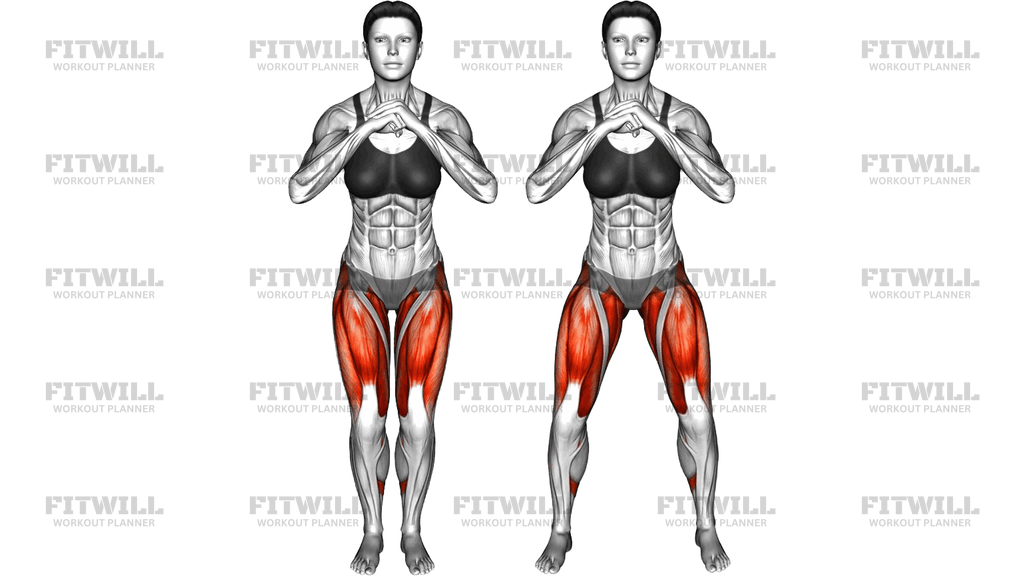
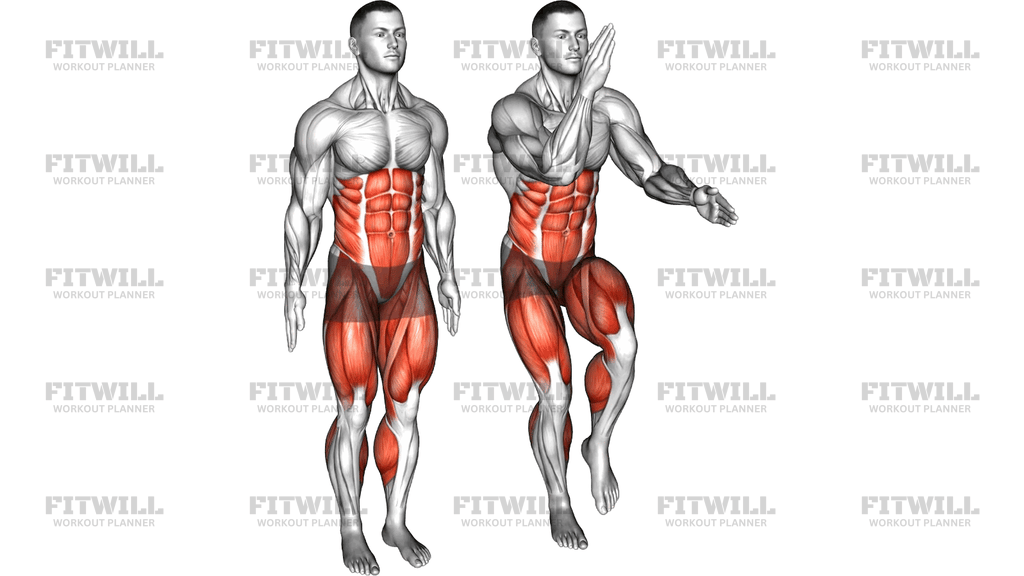
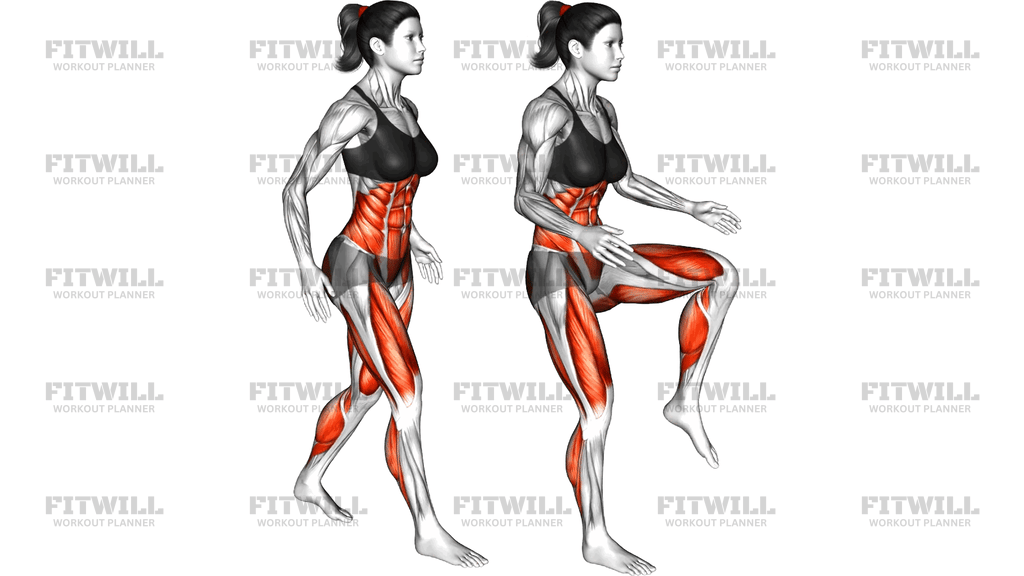
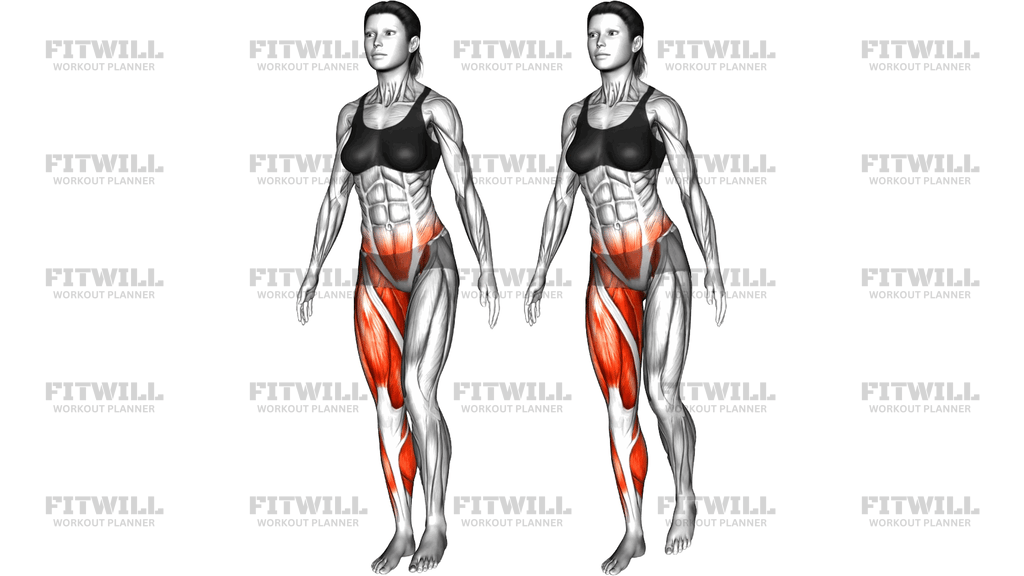
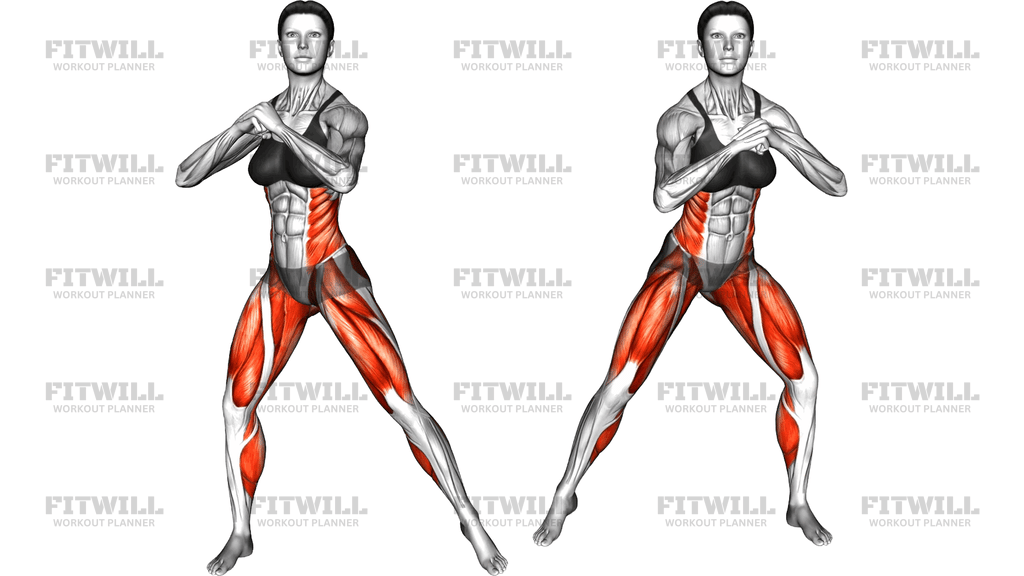
The movement primarily targets the quadriceps of the front leg, with the glutes and hamstrings of the same leg contributing as you descend and drive back up. The rear leg works at long ranges for the hip flexors and calves, and the whole setup demands balance, which quietly trains the stabilizers around the hip, knee, and ankle. Highlighted work in the front thigh and posterior chain reflects how much of the effort stays in the working leg rather than spreading across the body.
This exercise suits beginners learning single-leg mechanics with a safety net, intermediate lifters who want more quad-focused split squat work without a bench, and anyone rehabbing or prehabbing around knee control who needs a supervised-feeling setup. Because the rear foot only leans on the wall instead of resting on an elevated platform, the range is easier to scale: stand closer to the wall for less challenge, farther away for a longer, harder rep.
Setup matters more here than in a standard split squat. The distance between your front foot and the wall determines your knee travel and torso angle, and getting it wrong is the most common reason people feel this in the wrong places. Aim for a stance long enough that your front knee tracks over or slightly behind your toes without jamming, and keep the rear toes or ball of the foot pressed into the wall for support rather than collapsing sideways.
To perform it well, keep your torso tall with hands clasped at chest height for balance, brace your trunk, and lower under control until your rear knee approaches the floor and your front thigh is near parallel. Drive through the whole front foot, especially the midfoot and heel, to stand back up without pushing off the rear leg. Move smoothly in both directions rather than dropping quickly and bouncing out of the bottom.
Use it as a main lower-body lift when you have no equipment, as an accessory after squats or deadlifts to address side-to-side differences, or as a warm-up activation before heavier split squat variations. If you feel sharp joint pain rather than muscle effort, shorten the range, move closer to the wall, or reassess your stance before continuing.
[ Workout Log & Planner ]
Put your next workout in Fitwill
Keep your plan and training log ready when you are.


Instructions
- Stand facing away from a clear section of wall and step your front foot forward until you have a stance roughly two to three feet long.
- Reach your rear foot back and place the toes or ball of that foot flat against the wall behind you, keeping that leg slightly bent with the heel lifted.
- Clasp your hands together in front of your chest, stand tall, and shift most of your weight onto the front leg.
- Brace your core and set your gaze forward to keep your torso upright before you start the descent.
- Bend your front knee and lower your hips straight down until your rear knee hovers just above the floor and your front thigh is close to parallel.
- Keep the front knee tracking in line with your toes, letting it travel forward naturally without caving inward.
- Press through the midfoot and heel of the front foot to drive your body back up to the starting position, keeping the rear foot in contact with the wall.
- Exhale as you push up and inhale as you lower into each rep.
- Complete all repetitions on one leg, then reposition and work the other side with the same stance distance.
Tips & Tricks
- If your front heel lifts off the floor at the bottom, your stance is too long; step the front foot a few inches closer to the wall.
- If you feel pinching at the front of the rear hip, tuck your pelvis slightly and squeeze the glute on that side to open the hip as you descend.
- Do not let the rear foot slide up the wall or turn sideways; keeping the toes flat against the surface keeps the load honest on the front leg.
- Clasping your hands at chest height acts as a counterweight. If you sway, extend them forward slightly rather than leaning your torso back.
- Control the lowering phase for two to three seconds. Most people rush the descent and lose balance here rather than at the top.
- Keep your weight distributed across the whole front foot. Overloading the toes shifts stress to the knee, while rocking to the heel shortens the quad work.
- Progress by moving slightly farther from the wall or slowing the tempo before adding load like a backpack or dumbbells.
- Check that your rear knee drops toward the floor rather than drifting forward past the wall line, which signals the stance is too short.
Frequently Asked Questions
Which muscles does the Split Squat Against Wall work the most?
The quadriceps of the front leg do the majority of the work, with the glutes and hamstrings of the same leg assisting through the descent and drive. The rear leg's calves and hip flexors also stay active holding the wall position.
How is the Split Squat Against Wall different from a Bulgarian split squat?
In a Bulgarian split squat the rear foot rests on an elevated bench, which lengthens the rear hip and adds load to the front leg. With the wall version the rear foot only leans against the wall at floor level, so it is easier to scale and gentler on the rear hip flexors.
How far should my front foot be from the wall?
Start with a stance of roughly two to three feet so your front shin stays close to vertical at the bottom. If your heel lifts or your knee jams forward, step closer; if the rep feels cramped and shallow, step farther out.
Is this exercise suitable for beginners?
Yes, and it is actually one of the better single-leg introductions because the rear foot against the wall provides balance support. Beginners can shorten the stance and reduce depth until the pattern feels stable.
Why do I feel the Split Squat Against Wall in my back hip instead of my front leg?
This usually means the rear foot is bearing too much load or the rear hip is collapsing forward. Squeeze the rear glute, keep the rear toes pressed flat into the wall, and consciously drive up through the front heel.
Can I add weight to this movement?
Yes. Once body weight feels easy for higher reps, hold dumbbells at your sides or wear a weighted backpack. Keep the same stance and controlled tempo before increasing the load.
How many reps and sets should I do?
Two to four sets of eight to fifteen reps per leg works well for strength and muscle. Because balance is often the limiting factor early on, slightly higher reps with strict form tend to give better results than very low reps.
What can I use if I do not have a suitable wall?
Any sturdy vertical surface at floor level works, such as a door frame, squat rack upright, or the side of a sturdy cabinet. If nothing is available, a regular split squat with the rear foot hovering is a reasonable substitute.
Is it safe for my knees?
When performed with a controlled tempo and a knee that tracks over the toes, this is a knee-friendly way to build single-leg strength. If you have a current knee issue, use a shorter range at first and stop if you feel sharp pain rather than muscle effort.