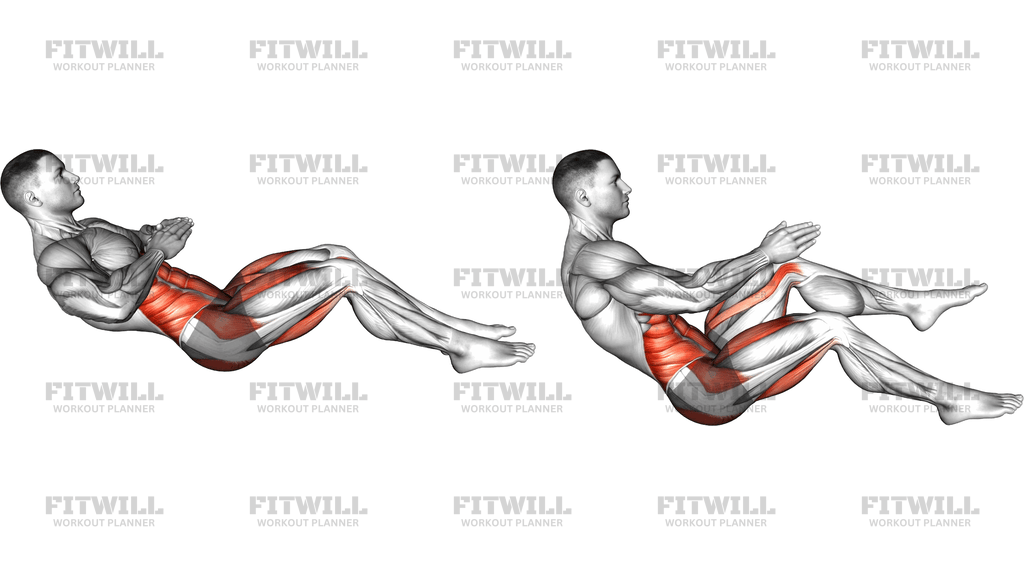
Mountain Climber Against Wall
Mountain Climber Against Wall is a plank-based core drill where your feet stay in contact with a wall behind you while your hands support you on the floor. Instead of the traditional floor version, the wall takes some of your body weight and anchors your feet, which changes the leverage noticeably. The result is a movement that feels more controlled and shoulder-friendly, while still demanding that you hold a rigid plank line as each knee drives forward toward your chest.
This version suits anyone who finds full floor mountain climbers too fast or too taxing on the wrists and shoulders, as well as lifters who want a slower, more deliberate core contraction. Because the wall stabilizes your lower body, you can focus on pulling each knee in with the lower abs and hip flexors rather than just sprinting your legs. It also works well as a regression for people building up to planks and climbing variations, or as a finisher when the shoulders are already fatigued.
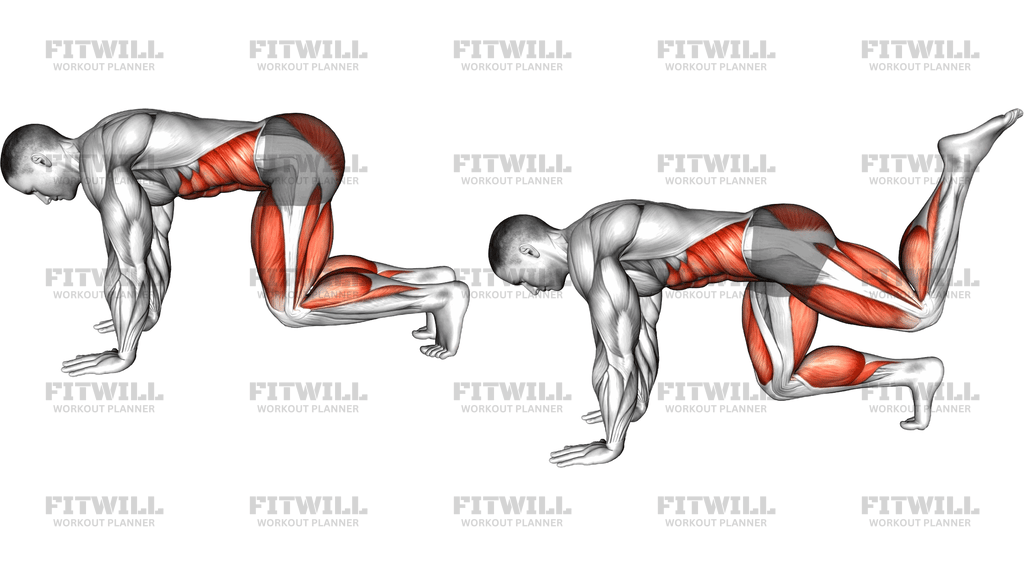
The primary work comes from the core, especially the rectus abdominis and deep stabilizers that keep your spine from sagging while one leg leaves its support point. Each knee drive is powered mainly by the hip flexors, while the shoulders, chest, and triceps hold you steady over your hands. Because you alternate legs, the obliques work continuously to stop your hips from rotating side to side.
Setup matters more here than in a standard mountain climber. Your distance from the wall determines how much load lands on your upper body and how much your feet assist you. The closer your hands are to the wall and the higher your feet sit, the easier the hold; stepping your hands further out increases the demand on the core and shoulders. Aim for a straight line from head to heels, with the balls of your feet pressed firmly into the wall so they do not slip.
To perform it well, brace your abs before the first rep, then drive one knee toward your chest without letting your hips lift or drop. Return that foot to the wall under control and switch legs. A steady rhythm beats rushing: if your lower back starts to arch or your hips pike upward, slow down or shorten your set. Keep your weight spread through your fingers and your elbows soft but not bent.
You will see this movement used in core circuits, warm-ups, and home workouts where no sliders or suspension equipment is available. It pairs naturally with planks, push-ups, and hollow holds. If the wall surface is smooth, train on a non-slip floor or place a mat under your hands, and check that your feet will not slide before you commit to a fast pace.
[ Workout Log & Planner ]
Put your next workout in Fitwill
Keep your plan and training log ready when you are.


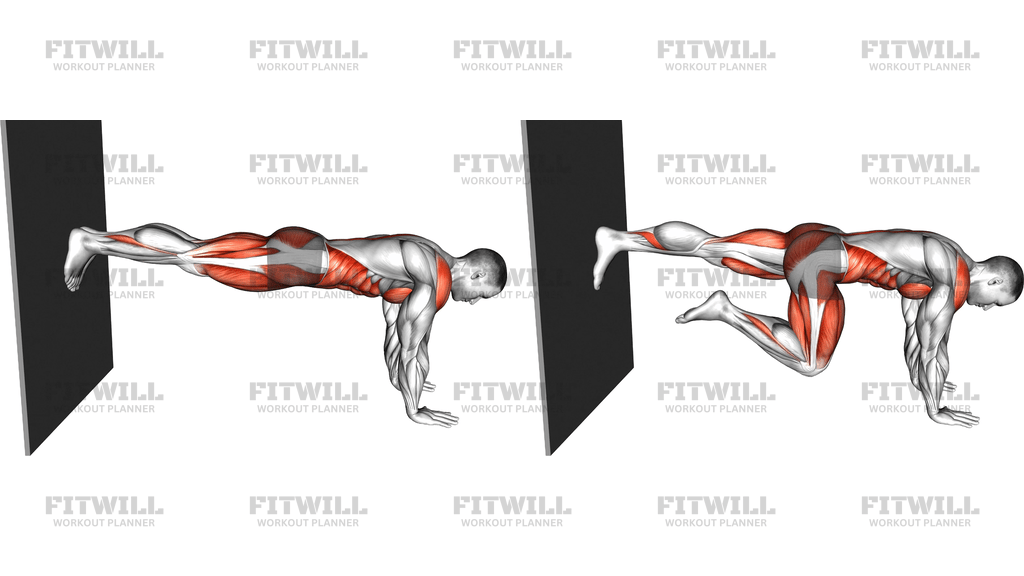
Instructions
- Face away from a clear wall and place your hands on the floor about shoulder-width apart, roughly two to three feet in front of the wall depending on your height.
- Walk your feet up behind you and press the balls of both feet flat against the wall so your body forms a straight, elevated plank line from head to heels.
- Spread your fingers, grip the floor, and stack your shoulders directly over your wrists with a soft bend in the elbows.
- Brace your abdominal wall and squeeze your glutes so your lower back is flat before you start moving.
- Keeping your hips level, pull one knee in toward your chest, letting the other foot stay pressed into the wall for support.
- Stop the knee drive when your thigh approaches your torso, keeping the movement smooth rather than jerky.
- Return the foot to its starting spot on the wall under control, then immediately drive the opposite knee forward.
- Alternate legs at a steady rhythm, exhaling as each knee comes in and inhaling as it returns.
- After your final rep, place both feet back against the wall, then carefully step or walk your hands back and stand up to reset.
Tips & Tricks
- If your feet slip down the wall mid-set, you are too far from it; move your hands closer so the contact angle is more vertical.
- Hips that pike toward the ceiling usually mean the core has stopped working — pull your ribs down and think about a long, flat line from head to heels.
- Drive the knee with your lower abs rather than just swinging the leg; the foot should leave and return to the same spot on the wall every rep.
- Keep your hips from twisting toward the moving knee by squeezing the glute on the support leg.
- Faster is not better in this variation — the wall gives you stability, so use it to make each knee drive slower and more deliberate.
- If your wrists complain, grip the edge of a mat or use fists on a padded surface instead of flat palms.
- Start with short sets of 20-30 seconds; the plank hold fatigues the shoulders quickly even though the legs are assisted.
- Do not let your head drop — keep your neck long and your gaze a few inches ahead of your hands to protect your upper back position.
Frequently Asked Questions
Which muscles does Mountain Climber Against Wall work most?
The core does most of the stabilizing work, with the rectus abdominis and deep stabilizers holding the plank while the hip flexors power each knee drive. The shoulders, chest, and triceps support your upper body throughout.
How is Mountain Climber Against Wall different from a regular floor mountain climber?
Your feet rest against a wall behind you, which anchors the lower body and reduces the load on your wrists and shoulders. This makes the drill slower and more controlled, so you can focus on the knee drive instead of speed.
How far should my hands be from the wall?
Start with your hands about two to three feet from the wall so your feet press in at a comfortable angle with a flat body line. Moving your hands further away increases the demand on your core and shoulders.
Is this a good beginner version of mountain climbers?
Yes, it is one of the easier setups because the wall supports your feet and removes the need for fast, coordinated leg switching. Beginners should focus on holding a flat plank line before increasing the pace.
Why do my hips rise when I drive a knee in?
That usually happens when the abs relax as one leg moves. Brace harder before each rep, and slightly slow the knee drive so the movement comes from your hip and trunk rather than momentum.
Can I use Mountain Climber Against Wall as cardio?
It can raise your heart rate if you speed up the leg switches, but the wall-supported setup is better suited to strength and core endurance. For a bigger cardio effect, progress to floor mountain climbers or add it to a circuit.
What should I do if my feet keep sliding down the wall?
Move your hands closer to the wall so your feet press in at a steeper angle, and make sure you are contacting it with the balls of your feet. A textured wall surface or bare feet on a grippy floor also help.
What can I substitute if no wall is available?
Standard floor mountain climbers, slow alternating knee drives in a plank, or planks with shoulder taps all train similar core stability. A bench can also work in place of a wall for foot support.
Are there any safety concerns with this exercise?
The main risks are wrist strain from bearing weight on flat palms and lower back arching when fatigue sets in. Keep sets short, use a mat under your hands if needed, and stop when your plank position breaks down.