Knee Drive To Leg Lift
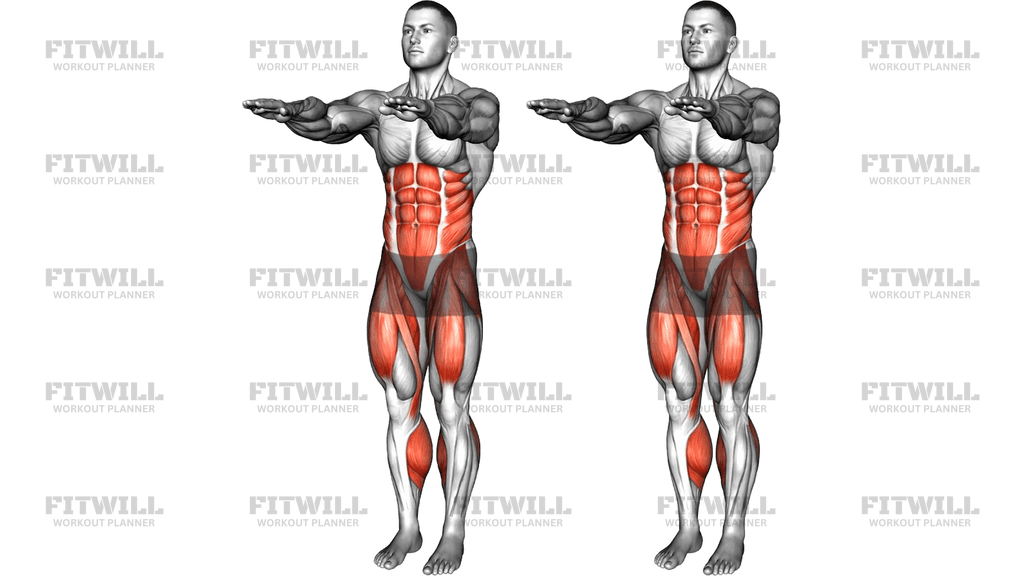
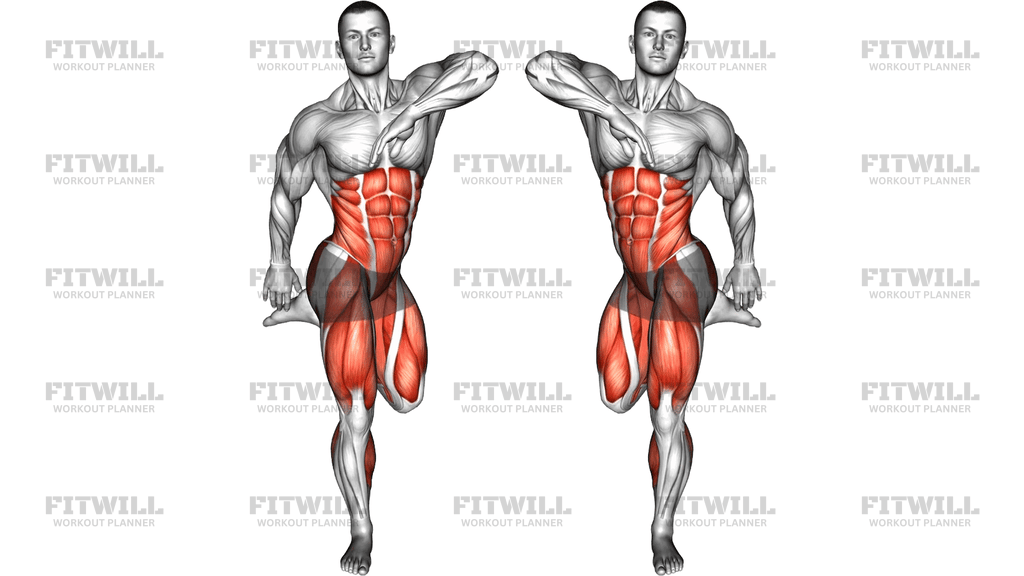
The Knee Drive To Leg Lift is a standing body weight core exercise that combines two hip movements into one flowing rep. You balance on one leg, drive the free knee up toward your chest while the opposite arm reaches overhead, then extend that same leg forward into a controlled lift before lowering it back down. Because you stay upright on a single support leg the entire time, your trunk has to work double duty: it powers the leg movements and keeps your torso from swaying or collapsing as your center of gravity shifts.
This movement is a good fit for anyone who wants core work that also challenges balance without getting down on the floor. It trains the abdominal wall, especially the lower portion, along with the hip flexors that lift the thigh and the obliques that stabilize against rotation. The standing leg gets quiet but real work too, as the glutes and hip stabilizers constantly correct your position while the free leg swings and extends.
The setup matters more than it looks. With one hand resting on your hip and the opposite arm reaching toward the ceiling, you create a long, tall line through your torso. If you start slouched or leaning sideways, the knee drive turns into a hip hike and the leg lift turns into a lower back arch. Standing tall with ribs stacked over the pelvis is what keeps the work in the abs and hips where it belongs.
Execution should feel like a rhythm rather than two separate tricks. Pull the knee up with intent, pause briefly at the top, then reach the leg out long and low in front of you without letting your torso lean back. The return is just as important: lowering the leg slowly under control is where most of the lower abdominal work actually happens, so resist the urge to drop it.
You will see this exercise in general fitness routines, warm-ups for lower body training, and home programs where no equipment is available. It also suits older trainees or anyone returning to exercise, because the balance demand can be scaled by standing near a wall or chair for light fingertip support. The main safety point is simple: if you start wobbling, reset on two feet rather than fighting through it with a twisted trunk, and keep the moving leg's range within what you can control without arching your back.
[ Workout Log & Planner ]
Put your next workout in Fitwill
Keep your plan and training log ready when you are.


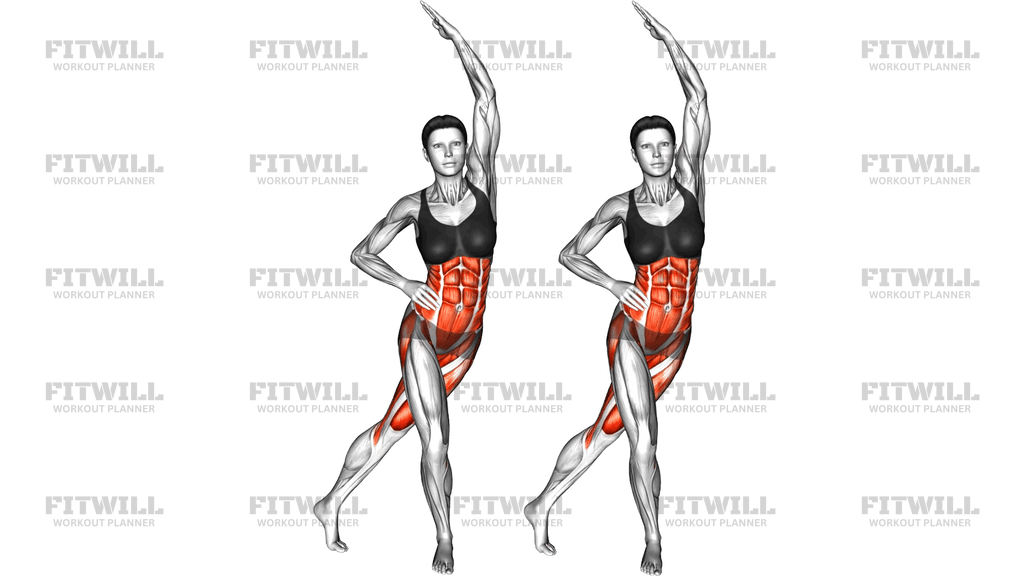
Instructions
- Stand tall with your feet hip-width apart, then shift your weight onto your right leg so your left foot hovers just off the floor.
- Place your left hand on your hip or lightly against your waist, and raise your right arm straight up overhead with your palm facing forward.
- Brace your abdominal wall and stack your ribs over your pelvis before you move, keeping a soft bend in the standing knee.
- Drive your left knee up toward your chest while your right arm stays reaching overhead, letting the opposite-side arm and knee coordinate the lift.
- Pause for a beat at the top of the knee drive without leaning your torso sideways or hiking the hip of the moving leg.
- From the top position, extend your left leg forward and up into a straight leg lift, reaching the heel long while your torso stays upright.
- Lower the extended leg back toward the floor slowly, keeping tension in your abs rather than letting the leg drop.
- Exhale as you drive the knee up and lift the leg, then inhale as you lower it back down with control.
- Complete your repetitions on the left leg, then switch sides so your right leg drives and your left arm reaches overhead.
- Between sets, stand on both feet, shake out your hips, and reset your posture before starting the next side.
Tips & Tricks
- If you hike the hip of the moving leg to get the knee higher, you are borrowing from the side of your waist instead of using the hip flexors and lower abs; shorten the range and lift only as high as your pelvis stays level.
- Watch that the overhead arm stays reaching upward throughout the rep. It tends to drop toward the head as you tire, which rounds the shoulder and shortens the trunk.
- Arching the lower back during the leg lift is the most common fault. Think about pulling your belly button toward your spine as the leg extends so the movement comes from the hip, not the spine.
- Keep the standing knee soft rather than locked. A locked knee makes balance harder and pushes you into swaying as the free leg moves.
- Pick a fixed point on the wall ahead of you to gaze at. A steady visual anchor noticeably reduces wobbling during the knee drive phase.
- Do not rush the transition between the knee drive and the leg lift. A one-second pause at the top keeps the pelvis controlled and doubles the balance benefit.
- If balancing is the limiting factor, stand beside a wall and rest two fingertips on it for light support rather than leaning into it.
- The moving leg should reach long and low in the lift phase, not swing up as high as possible. Height you gain by leaning back is not leg lift, it is back extension.
- Breathe steadily instead of holding your breath through the combined movement; exhaling on the drive helps the abs stay braced.
Frequently Asked Questions
What muscles does the Knee Drive To Leg Lift work?
The primary work comes from the abs, particularly the lower portion, along with the hip flexors that raise the thigh. The obliques stabilize your trunk, the glutes and hip stabilizers on the standing leg keep you level, and the shoulders work lightly to hold the overhead reach.
Is the Knee Drive To Leg Lift suitable for beginners?
Yes, as long as the balance demand is respected. Beginners should stand near a wall for fingertip support and use a smaller knee lift until the single-leg position feels steady.
Why does my lower back arch when I extend the leg in the Knee Drive To Leg Lift?
That usually means the abs have let go as the hip flexors take over. Brace your trunk before extending the leg, and reduce the height of the lift so your pelvis stays neutral throughout.
Should the knee drive and the leg lift be two separate movements or one motion?
They should flow together: drive the knee up, pause briefly at the top, then extend into the leg lift. Treat the pause as a control checkpoint rather than a full stop.
Which arm reaches overhead during the Knee Drive To Leg Lift?
The arm opposite the working leg reaches overhead. When the left knee drives and the left leg lifts, the right arm stays extended toward the ceiling with the left hand resting on the hip.
Can I do the Knee Drive To Leg Lift every day?
Because it uses only your body weight and moderate resistance, it can be practiced frequently, but treat it like any strength movement and allow normal recovery between harder sessions.
What can I substitute if single-leg balance is too difficult?
Perform the same knee drive and leg lift pattern standing with both hands on a sturdy chair back or with fingertips on a wall. The movement pattern stays the same while the stability requirement drops.
How many repetitions of the Knee Drive To Leg Lift should I do?
Eight to twelve controlled reps per side is a solid starting point. If your form breaks down and your torso starts swaying, stop the set rather than pushing out extra sloppy reps.
Do I need any equipment for the Knee Drive To Leg Lift?
No, the exercise uses only your body weight. An exercise mat is optional if you are training on a hard floor and want cushioning underfoot.