Single Leg Lateral Hop
The Single Leg Lateral Hop is a plyometric body weight drill in which you balance on one leg and repeatedly jump side to side, landing each hop on the same foot. It takes the basic idea of a lateral bound and makes it continuous, so every landing immediately becomes the takeoff for the next jump. The exercise appears simple, but hopping on one foot while moving sideways demands far more from your quads, glutes, calves, and hip stabilizers than a two-legged jump ever will.
This movement is especially valuable for athletes who cut, change direction, or push off one leg at a time: runners, basketball and tennis players, soccer players, and anyone training for sports that never let both feet work together. It also doubles as a balance and coordination drill, because the ankle, knee, and hip all have to control force in the frontal plane, which is the plane most people rarely train.
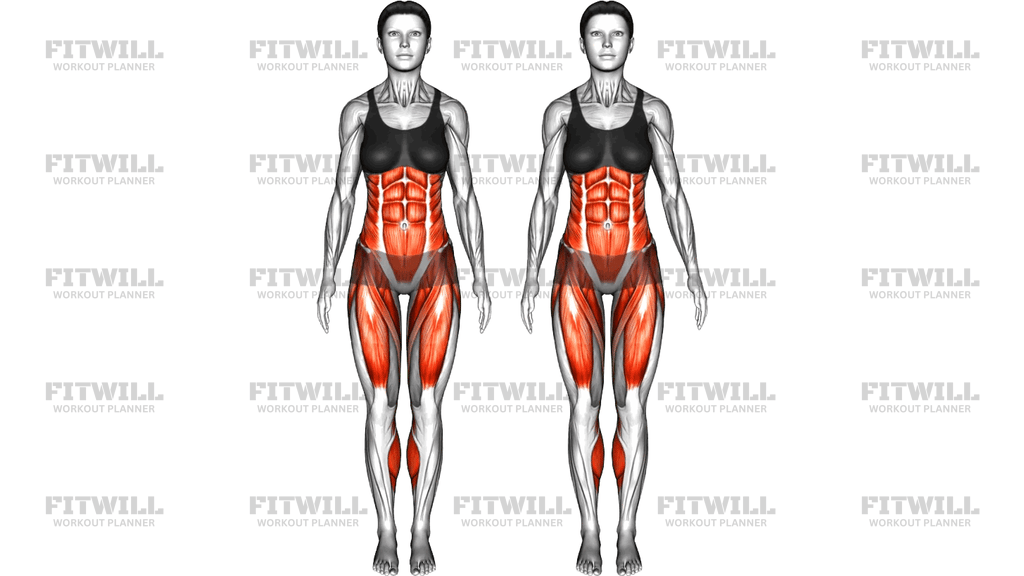
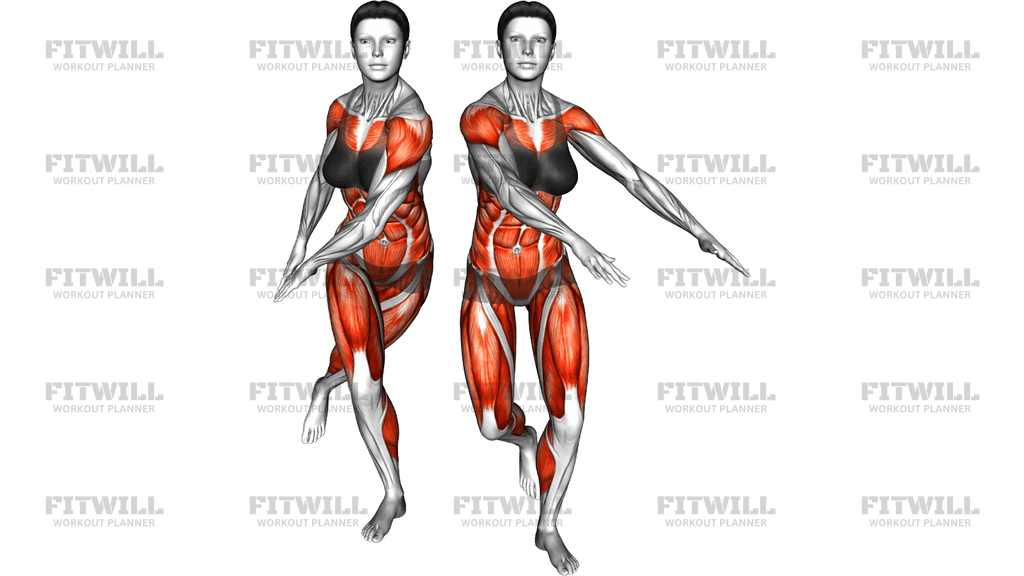
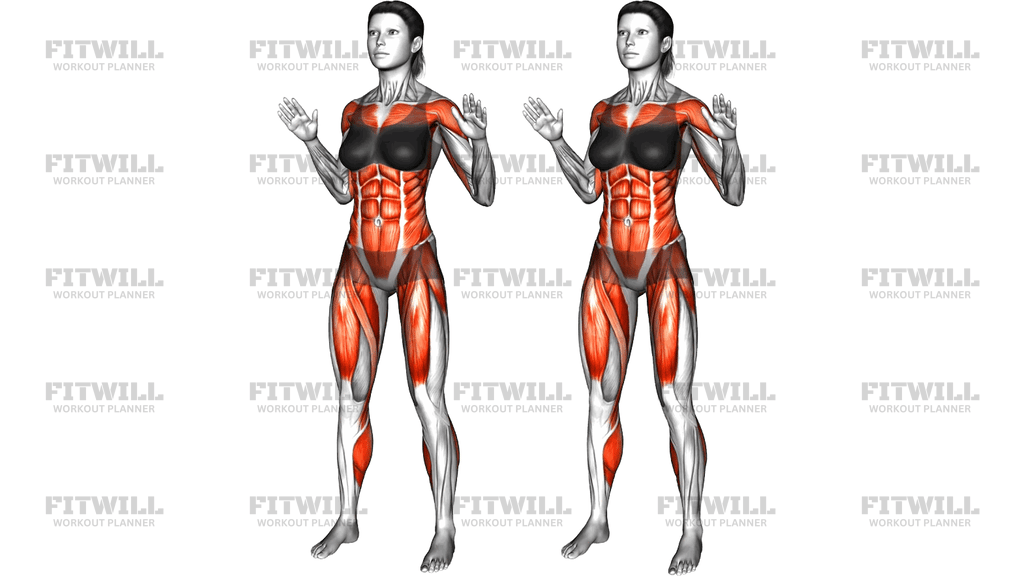
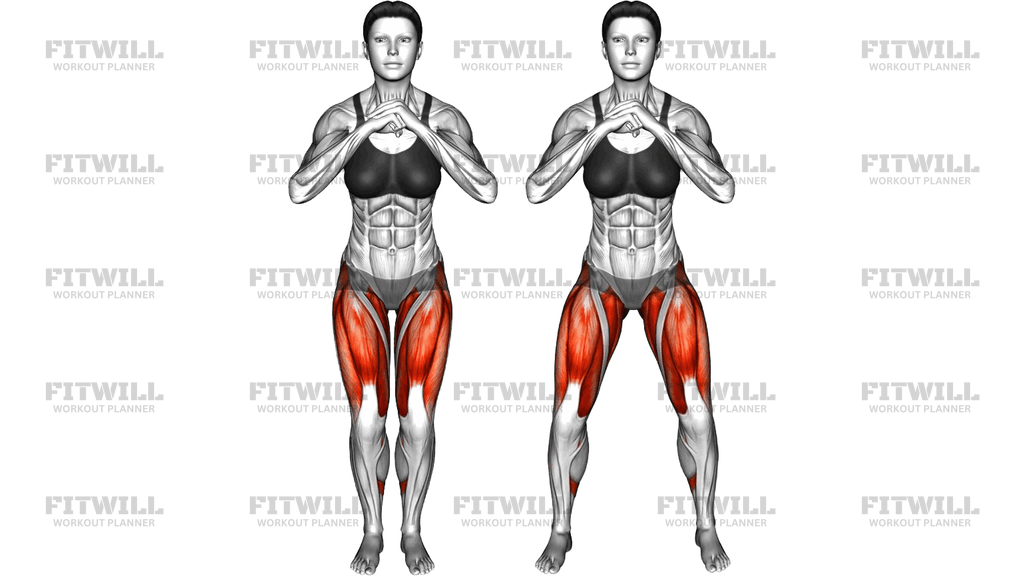
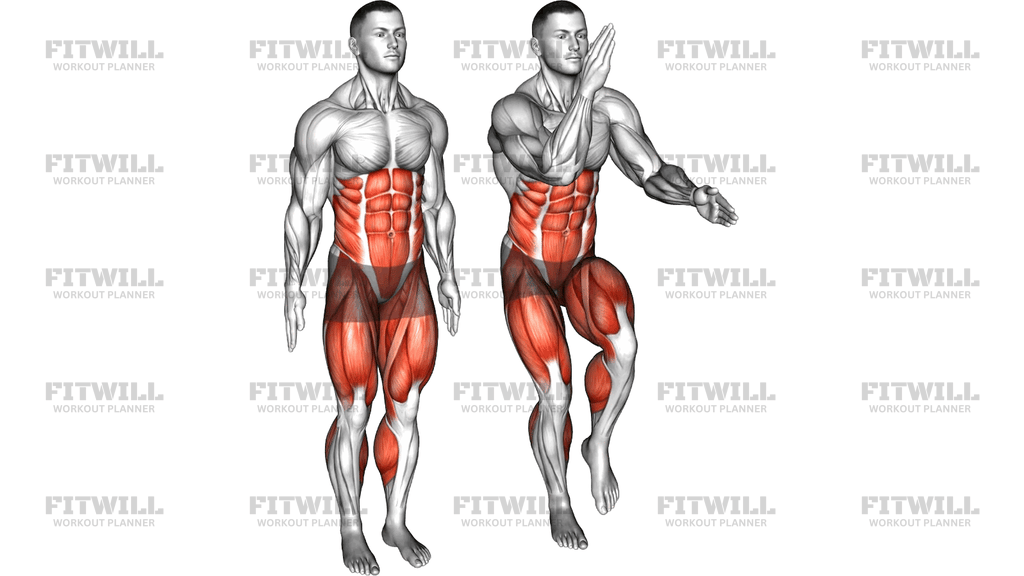
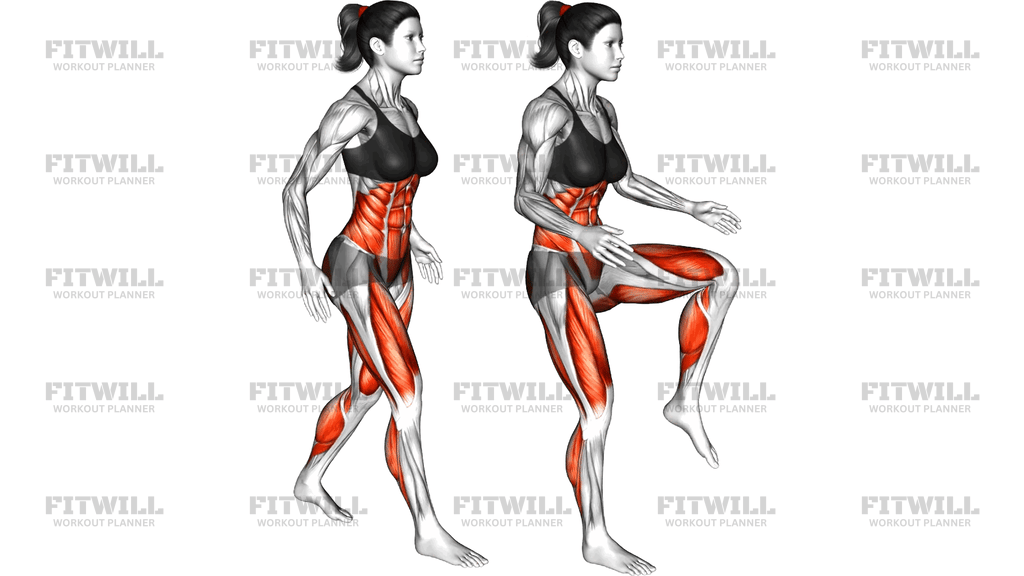
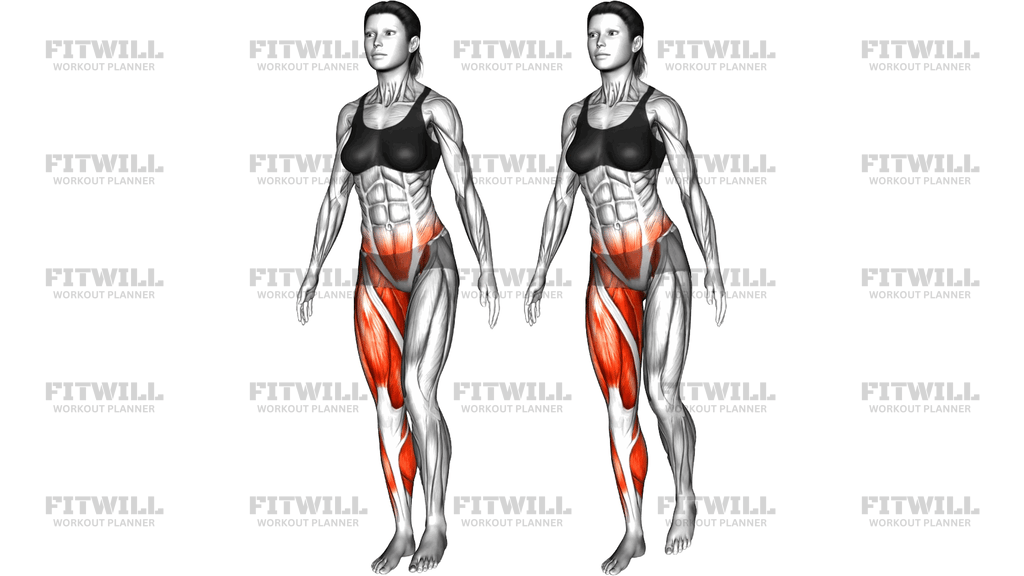
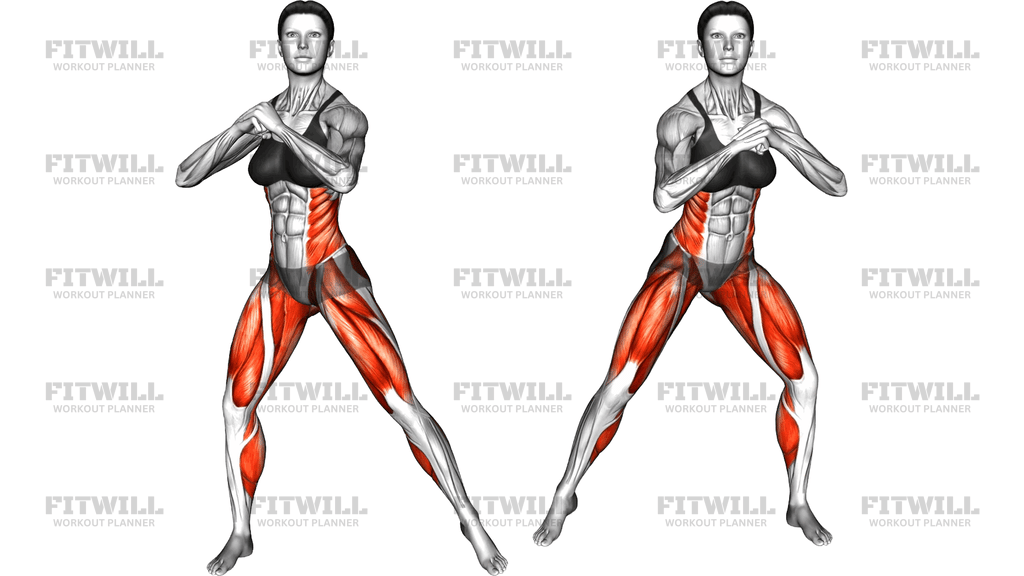
The key muscles at work are the quadriceps, which absorb and then re-deliver force on every landing, and the glutes, which control hip alignment and drive the push-off. The calves and ankle stabilizers handle the fine-tuned adjustments that keep you from rolling or wobbling, while the core stays braced to keep your torso stacked over your landing leg. Your arms contribute too, swinging across the body to help generate sideways momentum.
Setup matters because a lateral hop on one leg gives you a very small base of support. Start with a soft, level surface, keep the free foot lifted behind you, and pick a fixed point ahead to anchor your gaze. Distances should be modest at first; a hop of a few inches still challenges the ankle and hip stabilizers if you land with control.
To execute the hop well, bend the standing knee to about a quarter squat, then push off laterally and land softly on the same foot, letting the knee bend again to absorb the impact. Keep the knee tracking over the toes rather than caving inward, and keep your chest up so your weight stays through the midfoot and heel. Rebound quickly once you are stable, but never at the cost of a noisy, collapsing landing.
Because the exercise is high impact, it belongs early in a workout when you are fresh, or as part of a dedicated plyometric block. Start with short sets of five to eight hops per leg on a forgiving surface, and progress the distance, speed, or duration only after you can land quietly and hold your balance on every rep. Anyone with ankle, knee, or hip issues should build single leg strength first and clear the progression with a professional before adding repeated hopping.
[ Workout Log & Planner ]
Put your next workout in Fitwill
Keep your plan and training log ready when you are.


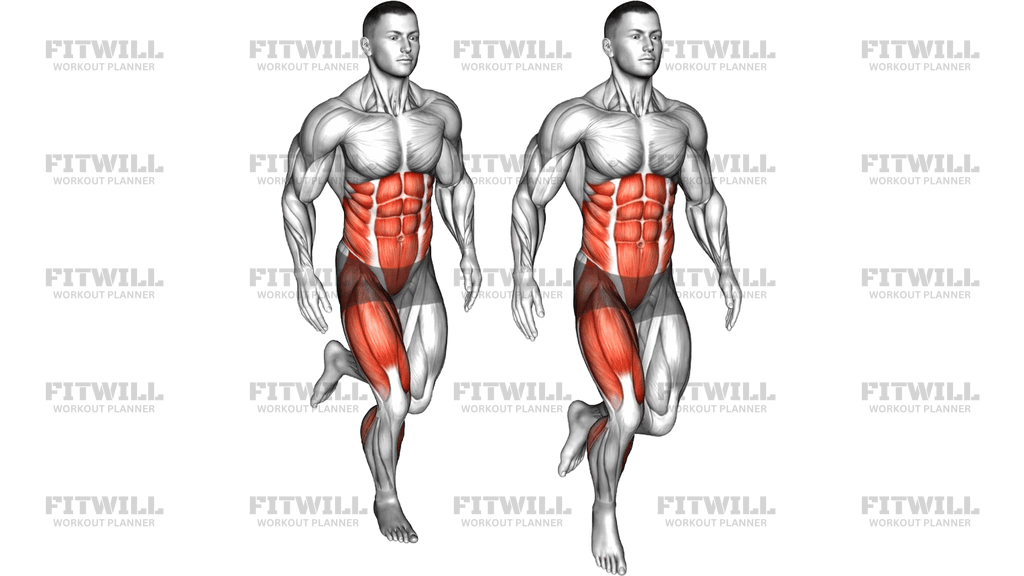
Instructions
- Stand on one leg with a soft bend in the knee, the free foot lifted slightly behind you, and your arms relaxed at your sides.
- Choose a landing target a few inches to the side, on a flat, non-slip surface such as a rubber gym floor or grass.
- Brace your core and pull your shoulders back so your torso stays stacked over your hips.
- Bend the standing knee into a shallow quarter squat, letting your arms swing across your body to load the jump.
- Push off the floor with the whole foot and hop sideways toward your target, keeping the free leg behind you.
- Land on the same foot, bending the knee immediately to absorb the impact while keeping the knee in line with your toes.
- Hold your balance for a brief moment on each landing until you can control the movement, then shorten that pause to make the hops continuous.
- Hop back to the starting line the same way, landing softly on the same foot each time.
- Exhale as you jump and inhale during the brief landing and reset, keeping your breathing rhythmic rather than held.
- Complete all hops on one leg, then set the free foot down, shake out your ankles, and switch sides.
Tips & Tricks
- A loud, slapping landing is the clearest sign you are absorbing force with your joints instead of your muscles; aim for quiet landings by bending the knee and sitting the hips back slightly.
- If the standing knee caves inward on landing, slow the drill down and consciously push the knee out over the little toe, since poor knee tracking under fatigue is the most common fault in this movement.
- Start with a very short hop distance. A controlled six-inch lateral hop builds ankle stability better than a wild twelve-inch hop you have to stumble out of.
- Keep the free foot from touching down between hops. If you keep tapping it down for balance, reduce the speed or distance until the standing leg can handle the full rep.
- Use your arms deliberately: swinging them across the body loads the hop and swinging them back out on the landing helps counterbalance your torso.
- Pick a fixed point at eye level to look at. Watching your feet tilts your chest forward and makes sideways balance noticeably harder.
- Stop the set as soon as your landings get sloppy. Ankle and knee control fade quickly in this drill, and each sloppy rep trains a bad pattern.
- Train it on grass, a rubber floor, or a mat rather than concrete while you are learning, and wear shoes with some cushioning to reduce landing stress.
- If your calf or ankle cramps or burns early, that is normal at first; build up with slower, paused hops before chaining reps together quickly.
Frequently Asked Questions
What muscles does the Single Leg Lateral Hop work?
The quadriceps and glutes do most of the absorbing and pushing, while the calves and ankle stabilizers control the landing. The core works isometrically to keep your torso from twisting each time you land.
Is the Single Leg Lateral Hop suitable for beginners?
Beginners should first be comfortable holding a single leg balance and doing slow lateral bounds before adding repeated hops. A good entry point is a small side-to-side hop with a full pause and balance check on every landing.
Why hop on one leg instead of doing regular two-legged lateral jumps?
Single leg hopping cuts your base of support in half, so the ankle, knee, and hip stabilizers have to handle all the force alone. This closely matches how you actually move in running and cutting sports, where push-off happens one leg at a time.
How far should I hop during the Single Leg Lateral Hop?
Start with just a few inches and only increase the distance once you can land quietly and hold your balance on every rep. Distance is a progression, not a requirement, and control matters more than range.
Should my knee stay bent between hops?
Yes, the standing knee should stay in a shallow bend the entire time. Landing with a straight leg sends impact straight into the joint instead of letting the quads and glutes absorb it.
What is the most common mistake in this exercise?
The most common mistakes are letting the knee cave inward on landing and touching the free foot down for balance. Both usually mean the hop distance or speed is too advanced for your current single leg control.
Can I substitute the Single Leg Lateral Hop if hopping hurts my knees?
Slow single leg lateral bounds, where you step or reach sideways and hold the landing for a few seconds, train the same stabilizers with far less impact. A stability-focused option like single leg stands on an unstable surface also helps build the base.
How many reps and sets should I do?
Start with two or three sets of five to eight hops per leg, resting fully between sets. Because this is a quality-of-landing drill, stop each set when your balance or landing control starts to slip rather than pushing to exhaustion.
When during my workout should I do this exercise?
Do it early in the session after your warm-up, while your nervous system and joints are fresh. Repeated hopping with tired legs greatly increases the chance of sloppy landings and rolled ankles.
Is it safe to do the Single Leg Lateral Hop on a hard floor?
Hard surfaces like concrete magnify the impact on your ankles and knees, so a rubber floor, grass, or a mat is a better choice while you are learning. Once your landings are consistently quiet and controlled, firmer surfaces become more manageable.