Deadlift Jump
The Deadlift Jump is a bodyweight plyometric exercise that combines the hip hinge pattern of a deadlift with an explosive vertical jump. You set up in a deadlift stance, hinge at the hips and knees to reach toward the floor, then drive through your feet and leap straight up, landing back into the hinge before repeating. Because there is no barbell involved, you can move fast and focus entirely on power output rather than load.
This movement is especially useful for athletes who sprint, jump, or change direction, since it trains the same hip-dominant triple extension—hips, knees, and ankles extending together—that produces speed on the field. It is also a smart introduction to jumping mechanics for lifters who pull from the floor, teaching them to finish the hinge aggressively instead of stalling at the top.
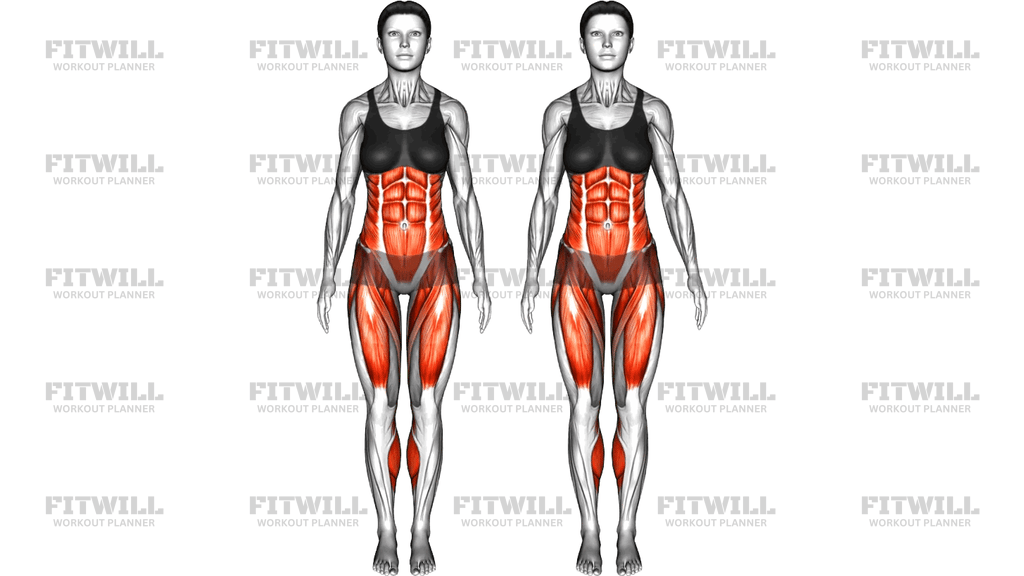
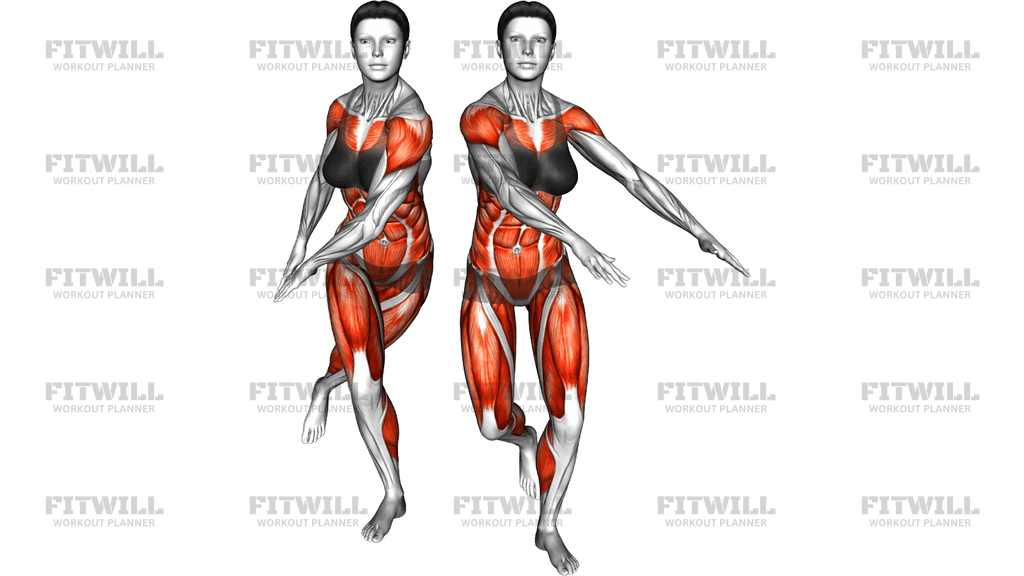
The main work comes from the glutes and hamstrings on the way down and the quads and calves on the way up, with the lower back and core working hard to keep the spine neutral through the hinge. The forearms and shoulders stay relaxed as the arms swing down toward the shins and back up for momentum. Expect a demanding cardio component as well, since repeated maximal jumps fatigue the nervous system quickly.
Setup matters more than it looks. A hip-width or slightly wider stance with the feet flat, shins vertical, and weight toward the midfoot keeps the hinge balanced so the jump goes straight up instead of forward. Reaching the hands toward the floor like you would reach for a barbell loads the hamstrings properly; rounding the lower back to reach deeper defeats the purpose and is the most common fault to avoid.
Execution comes down to one idea: load, then explode. Sit back into the hinge with control, feel the tension in the backs of the legs, then punch the floor away and extend tall in the air. Land softly on the balls of the feet, absorb into the hips, and reset the hinge before the next rep. Treat every jump as a quality rep—stop when height or form drops rather than grinding through fatigue.
The Deadlift Jump fits well as a warm-up primer before heavy deadlifts or squats, as a power block early in a lower-body session, or as a stand-alone conditioning drill in low volumes. Start with three to five sets of three to five jumps and progress by improving jump height, not by adding endless reps.
[ Workout Log & Planner ]
Put your next workout in Fitwill
Keep your plan and training log ready when you are.


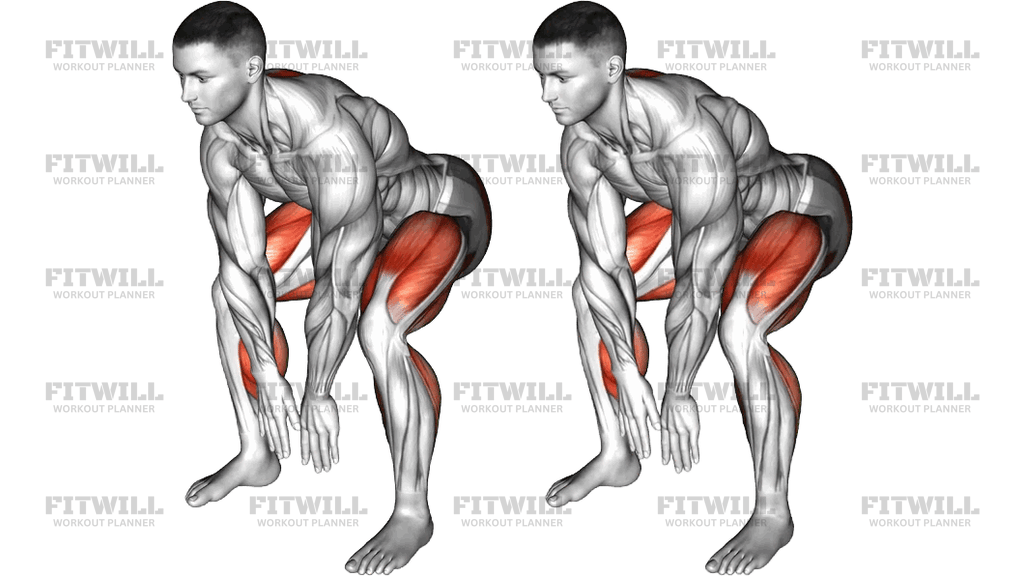
Instructions
- Stand with your feet hip-width to shoulder-width apart, toes pointing forward or slightly out, and your weight balanced over the midfoot.
- Push your hips back and hinge forward, letting your knees bend slightly, until your torso is angled down and your hands reach toward the floor just outside your shins, as if reaching for a barbell.
- Keep your back flat and your chest proud; your shins should be near vertical and your shoulders slightly ahead of your hips.
- Take a breath and brace your core to lock your ribcage and pelvis together before loading the jump.
- Swing your arms back behind you briefly, then drive them forward and up as you push the floor away through your whole foot.
- Jump vertically as high as you can, fully extending your hips, knees, and ankles and finishing tall with your arms overhead or at your sides.
- Land softly on the balls of your feet with bent knees, immediately sinking your hips back into the same hinge position to absorb the landing.
- Exhale at the top of the jump or after landing, then take a fresh breath and re-brace before the next rep.
- Pause briefly in the hinge to reset your back position, then repeat for the desired number of quality jumps.
- Stop the set when your jump height noticeably drops or your lower back starts to round at the bottom.
Tips & Tricks
- If your chest collapses and your lower back rounds at the bottom, reduce how deep you hinge—you only need to load the hips, not touch the floor.
- Jump up, not forward. If you drift toward your toes, shift your weight back to the midfoot at the bottom of the hinge before each rep.
- Do not squat the movement into a parallel squat; the Deadlift Jump should feel hip-dominant, with your hips traveling back rather than straight down.
- Keep your arms relaxed on the descent. Tense, rigid arms kill the arm swing that drives jump height.
- Land as quietly as you can. A loud, stiff landing means your knees and hips are not absorbing force—practice softer landings before adding reps.
- Treat each rep as a max-effort jump with a short reset. Slow, half-hearted repeated jumps turn this into a squat-endurance drill instead of a power drill.
- Rest 45-90 seconds between sets so your nervous system recovers; this exercise responds to quality, not fatigue.
- If your hamstrings feel nothing at the bottom, you are probably squatting or bending the knees too much—push the hips further back and soften the knees only slightly more.
- Do these on a firm, non-slippery surface and in flat or low-cushioned shoes to keep your footing stable through the hinge and landing.
Frequently Asked Questions
What muscles does the Deadlift Jump work?
The glutes and hamstrings do most of the loading during the hinge, while the quads and calves drive the jump itself. The lower back and core work statically to keep your spine neutral through both the hinge and the landing.
Is the Deadlift Jump suitable for beginners?
Yes, provided you can already hinge with a flat back and land softly from a small hop. Beginners should start with two or three sets of three jumps and focus on landing quality before increasing volume.
How is the Deadlift Jump different from a regular squat jump?
A squat jump starts from a deep, knee-dominant squat, while the Deadlift Jump starts from a hip-dominant hinge with the torso angled down and hands reaching toward the shins. This loads the hamstrings and glutes more heavily and mimics the first pull of a deadlift.
Should my hands touch the floor at the bottom of the Deadlift Jump?
No, the reach toward the floor is a positioning cue, not a target. Your back must stay flat—if touching the floor forces your lower back to round, stop the reach higher up, around mid-shin.
How many reps and sets of Deadlift Jumps should I do?
Three to five sets of three to five maximal jumps works well for power, with full recovery between sets. Because each rep is explosive, stop the set as soon as jump height or back position starts to deteriorate.
Where should the Deadlift Jump fit in my workout?
Place it early in a lower-body session, either as a primer before heavy deadlifts or squats or as the main power exercise after your warm-up. Doing it fatigued at the end of a workout defeats its purpose.
What is the most common mistake in the Deadlift Jump?
Rounding the lower back at the bottom while chasing a deeper reach is the biggest fault. The second is landing stiff-legged; both are fixed by hinging shallower and sinking the hips back on every landing.
Can I do the Deadlift Jump with a barbell or dumbbells?
Adding load is possible for advanced lifters, but the bodyweight version is the safest and most effective starting point because it lets you jump at full speed. Master the unweighted version before considering any external load.
Is it safe to do Deadlift Jumps every day?
Daily high-effort jumping is not recommended because the landing forces and nervous system demand add up quickly. Two to three sessions per week with at least a day between them is a sustainable frequency.
My knees cave inward when I jump—how do I fix that?
Focus on spreading the floor with your feet as you drive up and think about jumping through a point directly overhead. If the issue persists, add basic glute and hip work and reduce jump volume until the pattern cleans up.