Somersault Stand Up
The Somersault Stand Up is a bodyweight movement taken straight from gymnastics and physical education class: you tuck, roll backward onto your upper back, and use the momentum of the roll to carry you up into a standing position without using your hands. It blends a controlled backward roll with an explosive, coordinated transition to your feet, which makes it as much a skill drill as a conditioning exercise.
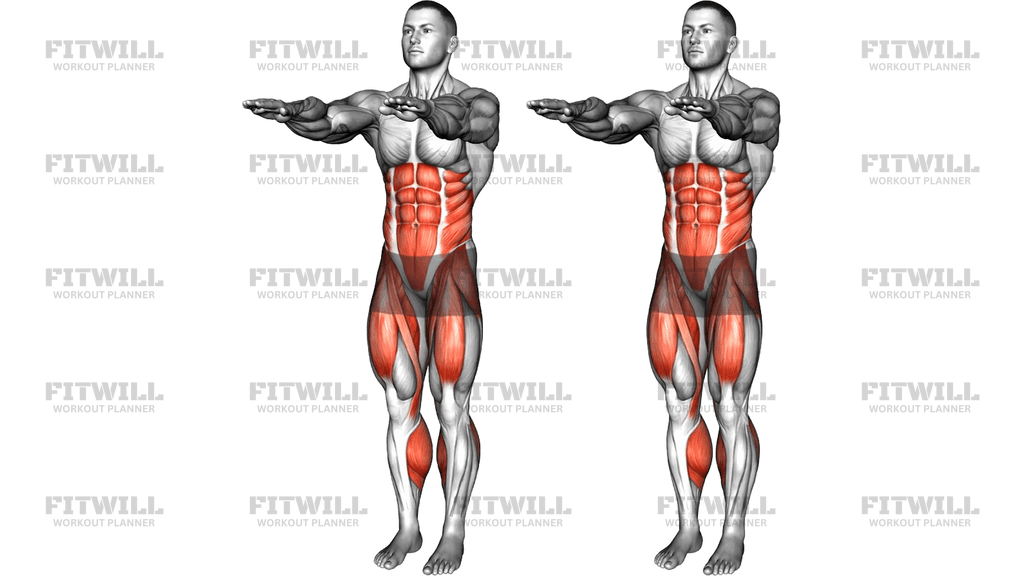
Because you cannot push off the floor with your hands, your core has to do most of the work. The abs and hip flexors drive the tuck and pull your hips over your shoulders during the roll, then your quads and glutes take over as you extend from a deep crouch to a full stand. Balance and spatial awareness are trained heavily too, since you spend a moment upside down with your weight over your shoulders before your feet come back under you.
This movement is useful for a wide range of people, not just gymnasts. It teaches beginners how to roll safely, which is a genuinely practical skill, and it gives more advanced trainees a low-impact way to build core control, coordination, and full-body timing. It also works well in circuit training or warm-ups, where a few repetitions raise your heart rate and wake up your midsection and legs at the same time.
Setup matters more than people expect. Rolling on a mat or a soft, clear surface gives your spine a friendly landing zone, and leaving enough space behind you prevents collisions. Your starting crouch should be compact, hands positioned near the floor to protect your neck as you roll over your upper back rather than directly onto your head.
To execute it well, think in two phases. The roll itself should be round and smooth: chin tucked, shoulders rounded, weight traveling along the spine from hips to shoulders. The stand-up is the harder half — as your feet touch down, you have to plant them close to your hips and drive through the floor aggressively enough to rise without leaning on your hands. Hesitate at the bottom and you will stall or rock backward.
If you are new to it, practice plain backward rolls first, then add the stand once the roll feels automatic. Keep repetitions modest at the start; the movement is more demanding on coordination than raw strength, and sloppy, rushed reps are where neck or lower back strain creeps in. Done with control on a proper surface, the Somersault Stand Up is a simple, equipment-free way to build rolling confidence, core strength, and athletic movement quality.
[ Workout Log & Planner ]
Put your next workout in Fitwill
Keep your plan and training log ready when you are.


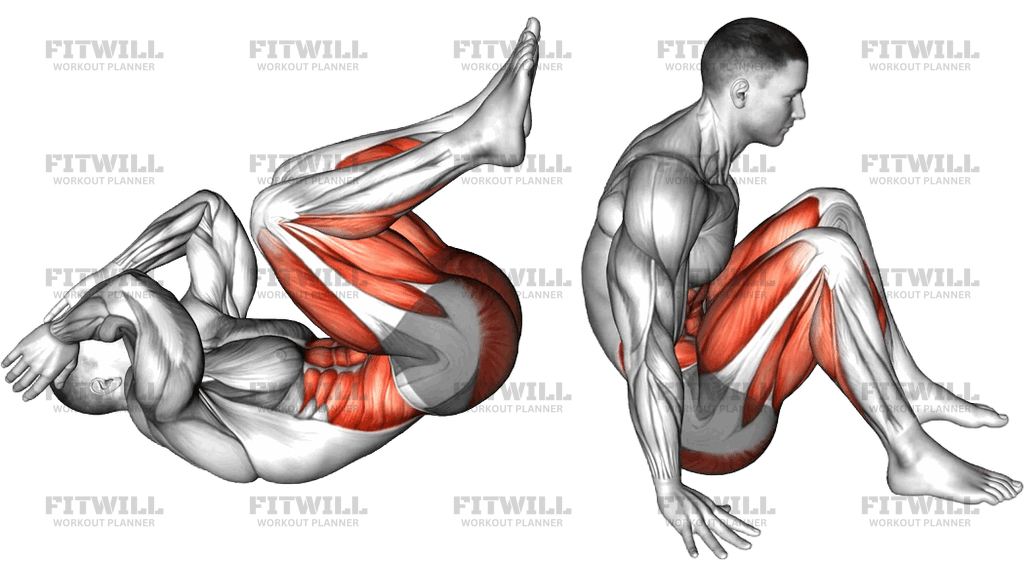
Instructions
- Find a clear patch of soft flooring, ideally an exercise mat, with several feet of open space behind you.
- Squat down deeply, knees bent and feet about hip-width apart, and place your hands on the mat beside your shoulders with fingers pointing forward to guard your neck.
- Tuck your chin firmly to your chest and round your upper back so your body forms a rounded ball rather than a flat board.
- Push gently off your feet and roll backward, letting your weight travel along your spine from your hips to your rounded upper back — never onto the top of your head.
- Keep your knees pulled tight to your chest and your hands near your shoulders throughout the roll to protect your head and keep the rotation smooth.
- As your feet swing back down toward the floor, plant them flat and close to your hips so you land in a deep, compact crouch.
- Immediately drive through your heels and extend your hips and knees to rise straight up to a full standing position without touching the floor with your hands.
- Exhale as you roll back and breathe out again on the drive up, avoiding held breath during the transition.
- Stand fully tall with hips open before resetting, then walk back to your starting spot and squat down for the next repetition.
Tips & Tricks
- The most common stall point is planting the feet too far from the hips after the roll — if you keep rocking backward at the bottom, pull your feet in tighter before you push up.
- If the roll feels bumpy or flat, you are not tucking enough; an aggressive chin tuck and rounded back create the rounded shape that makes the roll smooth.
- Do not look up mid-roll to see where you are going — lifting the head straightens the neck and transfers your weight onto the top of your head.
- Practice plain backward rolls on a mat until the rotation feels automatic before adding the stand-up portion.
- Keep your hands close to your shoulders the whole time; they are there to shield your neck and catch you if the roll goes off-line, not to push off the floor.
- If you tip sideways during the roll, your weight is shifting off-center — check that both feet push off evenly and your knees stay pulled in symmetrically.
- Speed matters only in the stand-up phase; roll slowly and under control, then explode from the crouch to standing.
- On hard floors, double up the mat or skip the exercise entirely — repeated rolling on an unforgiving surface is uncomfortable for the spine.
- Stop and reset rather than fighting a half-finished roll; twisting out of a stalled roll with a rounded back is how lower back strains happen.
Frequently Asked Questions
What muscles does the Somersault Stand Up work?
The abs and hip flexors drive the tuck and the roll, while the quads and glutes handle the explosive transition from crouch to standing. Your stabilizers throughout the trunk and shoulders work to keep you rounded and controlled the whole way.
Is the Somersault Stand Up suitable for beginners?
Yes, as long as you start on a mat and master a plain backward roll first. Beginners should focus on the smooth, rounded roll before adding the stand-up, which is the more demanding half of the movement.
Why do I keep falling back after the roll instead of standing up?
Your feet are almost certainly landing too far from your hips, which puts you behind the balance point. Pull the feet in tight to form a compact crouch, then drive aggressively through the heels to shift your weight forward over your feet.
Do I need any equipment for the Somersault Stand Up?
No equipment is required, but an exercise mat or other soft surface is strongly recommended. Your upper back and shoulders roll directly over the floor, and a cushioned surface makes repeated reps far more comfortable.
Is it dangerous for my neck?
It is safe when done correctly because your weight rolls over your rounded upper back, not the top of your head. Keep your chin tucked to your chest and your hands near your shoulders the entire time, and avoid rolling on hard surfaces.
How is the Somersault Stand Up different from a regular backward roll?
A backward roll ends on your feet with your hands helping to push you over, while the Somersault Stand Up requires you to rise all the way to standing without hand support. That makes the stand-up phase a much bigger test of leg strength and timing.
What can I do if I cannot stand up without using my hands yet?
Start by letting one or both hands lightly touch the floor for balance on the way up, and gradually reduce the support as your foot placement and drive improve. Practicing deep bodyweight squats and crouch-to-stand transitions also builds the specific strength you need.
How many repetitions should I do?
Quality matters far more than volume here — start with 5 to 8 clean repetitions per set. The movement is demanding on coordination, and once your rolls get sloppy you are better off resting than piling on messy reps.
Can I do the Somersault Stand Up in a circuit or warm-up?
It works well in both settings because it raises your heart rate while rehearsing a useful movement skill. Just make sure your circuit spot has clear floor space behind you and a mat down before you start rolling.