Assisted Partial Range Inverse Leg Curl
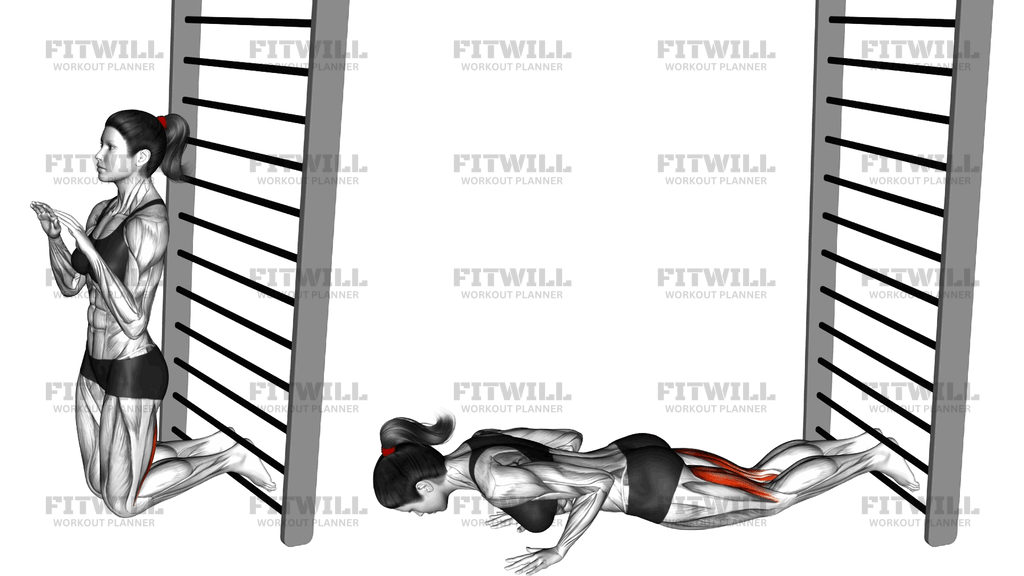
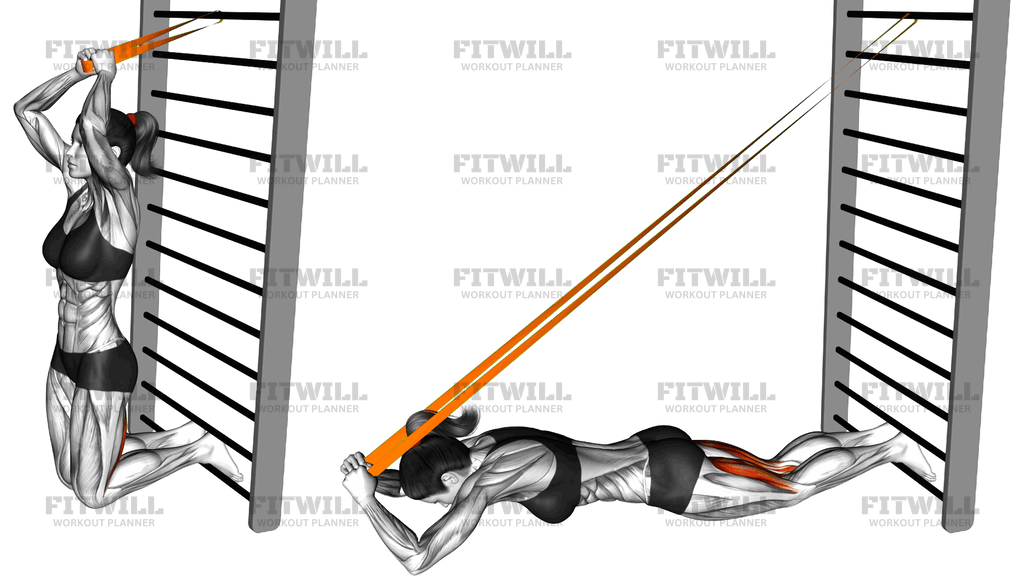
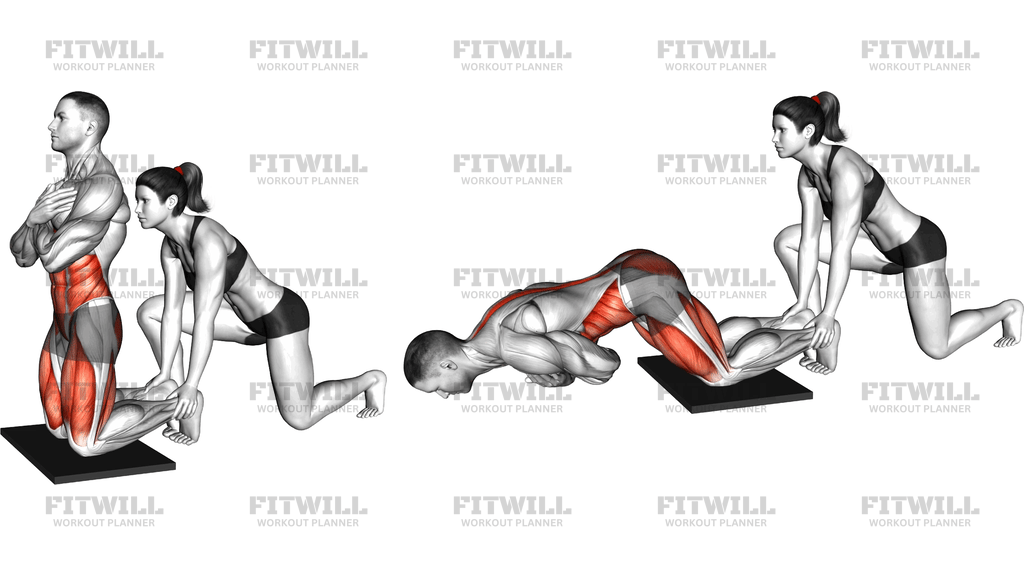
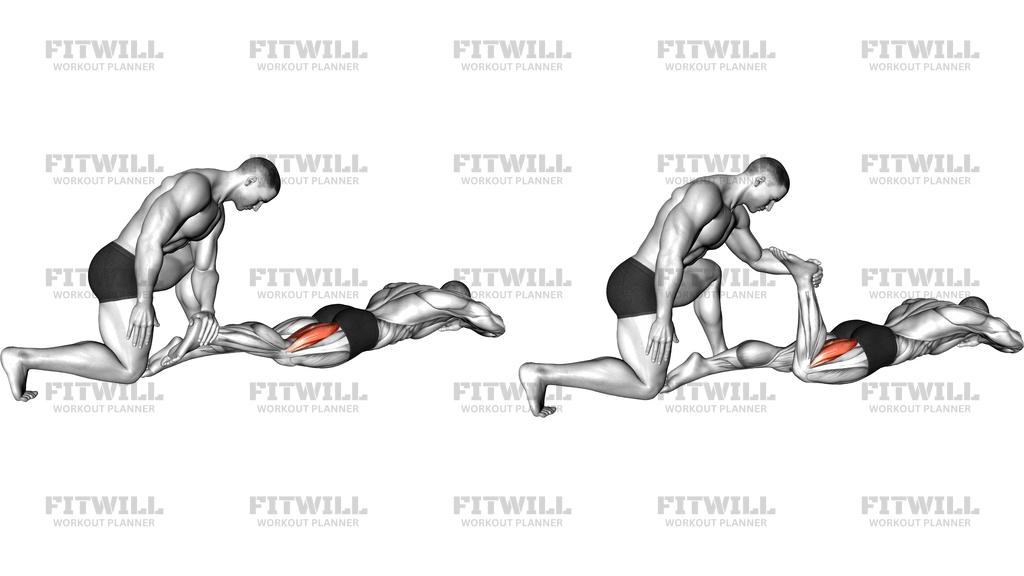
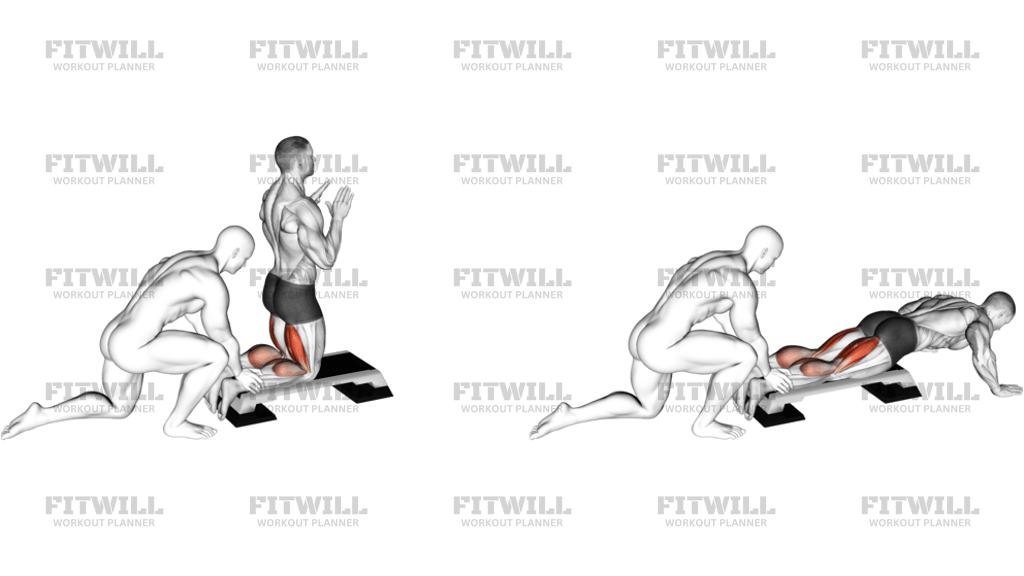
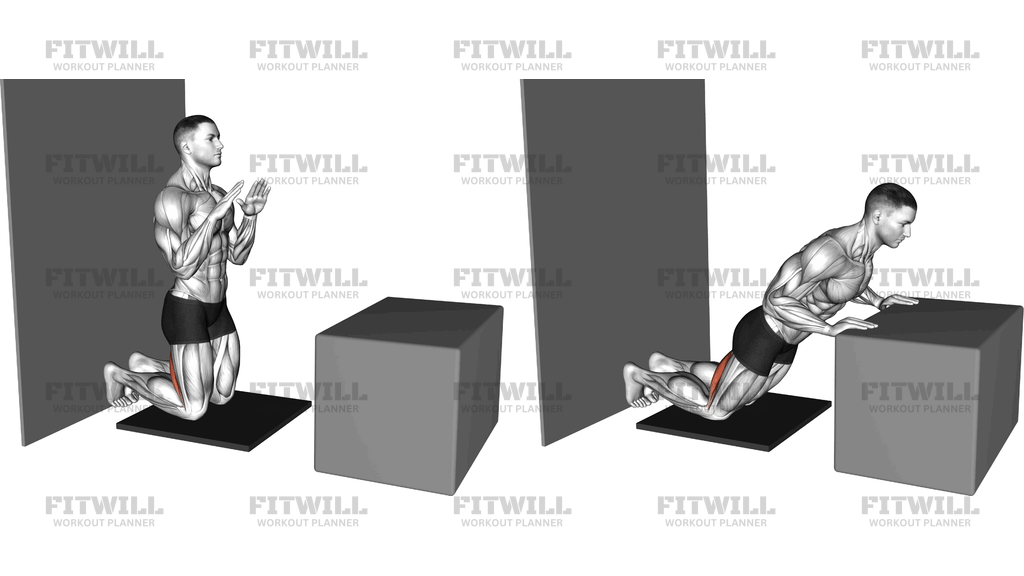
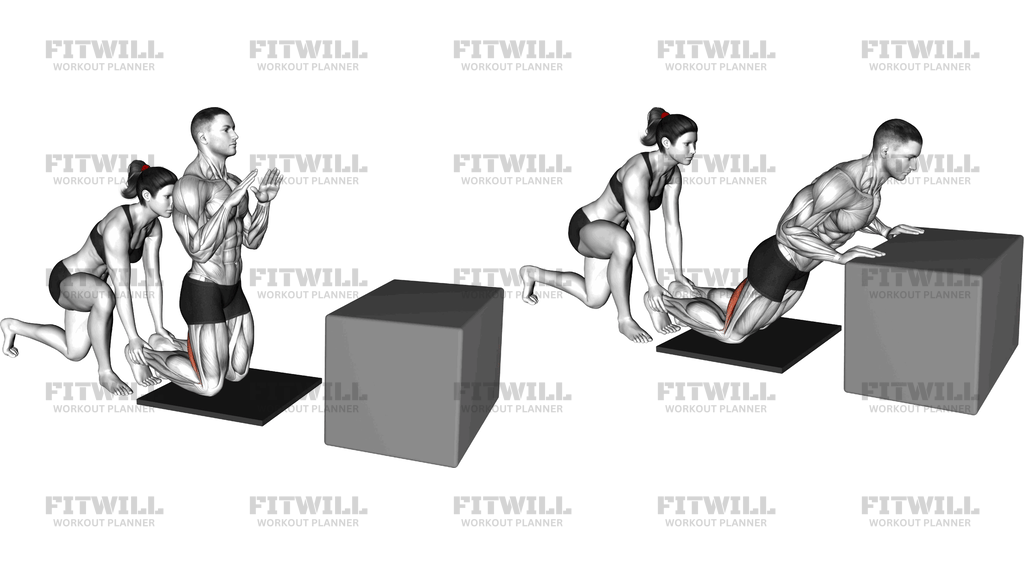
The Assisted Partial Range Inverse Leg Curl is a kneeling, partner-assisted hamstring exercise that bridges the gap between basic leg curls and the much more demanding full Nordic curl. You kneel on a mat with a partner anchoring your ankles to the floor, place your hands on a sturdy box or bench in front of you for support, and lower your torso forward under control before pushing back up. The hands-on box limit how far you travel, which makes the movement manageable while still loading the hamstrings hard.
The muscle being trained here is the hamstring group, which works eccentrically and isometrically to stop your torso from falling forward as your knees stay fixed. Because your body angles forward from the knees, the hamstrings must resist hip flexion and knee extension at the same time. Your glutes and core also stay active to keep a straight line from shoulders to knees, and the calves assist in holding the ankle position against the partner's grip.
This version is aimed at people who cannot yet control a full inverse leg curl or Nordic curl to the floor. That includes most lifters, since unassisted Nordics are extremely demanding even for well-trained athletes. The partial range and hand support let you spend time under tension in the strongest part of the movement while building the eccentric strength needed to eventually earn the full version.
Setup details matter more than most people expect. The partner must pin your ankles firmly against the floor, ideally with the tops of your feet flat and heels pressed down, or the whole exercise collapses into an awkward push-up. The box height determines how much help your arms provide and how far you descend, so set it where you can lower slowly for at least three to five seconds without collapsing.
To execute it well, keep your hips extended and your body rigid like a plank as you lean forward from the knees. Descend only to the depth you can control, catch yourself with light pressure on the box, then push back to the tall kneeling position while your hamstrings continue working. Avoid bending at the hips or letting your lower back round, since that shifts work away from the hamstrings and toward the spine.
Use this exercise in lower body sessions as a hamstring builder, as a regression on the path to full Nordic curls, or as a low-volume accessory for sprinting and running durability. Start with a few sets of three to six controlled reps, because the eccentric loading creates more soreness than typical curl variations. Stop the set as soon as your torso starts dropping instead of lowering on purpose, as sloppy reps here tend to come straight from the lower back.
[ Workout Log & Planner ]
Put your next workout in Fitwill
Keep your plan and training log ready when you are.


Instructions
- Kneel on an exercise mat with your knees about hip-width apart and the tops of your feet flat against the floor.
- Have your partner kneel behind you and pin both of your ankles firmly down against the mat, gripping over your heels and lower calves.
- Position a sturdy box or bench directly in front of you at a height that lets your arms catch your torso at your chosen depth, and place your palms flat on it with elbows slightly bent.
- Tighten your glutes and brace your core so your body forms one straight line from head to knees before you lean anywhere.
- Slowly lean forward from the knees, keeping your hips extended and your torso rigid, and lower yourself under control toward the box.
- Stop at your partial range point and catch your upper body with light pressure on the box for a brief moment.
- Push through the box to drive yourself back up to the tall kneeling position, letting the hamstrings do the work rather than simply collapsing onto your hands.
- Exhale as you return to the top and inhale on the way down, keeping the breath steady rather than holding it through the descent.
- Complete the rep, reset your brace and hip position at the top, and repeat for your planned reps before switching roles with your partner.
Tips & Tricks
- The most common failure point is hinging at the hips, where the torso folds and the lower back rounds. Keep your glutes squeezed the whole set so your shoulders, hips, and knees stay in one line.
- If your heels pop up off the floor, your partner's grip is too loose. Ask them to press down over your heels and the tops of your feet, not just hold your calves.
- Set the box height so the last few inches of descent are the hardest but you never free-fall into your hands. Lower the box over time to lengthen the partial range.
- Descend for three to five seconds on every rep. Rushing the lowering phase turns this into a push-up off the box and removes most of the hamstring work.
- Expect your arms to contribute, but aim to use them less each week by pushing off more lightly. The goal is hands as a safety brake, not a crutch.
- Do these early in your hamstring work while fresh. Eccentric strength drops fast mid-set, and a tired torso drop is hard to stop safely.
- Keep your neck neutral by looking at the box rather than craning up toward the mirror as you lean forward.
- Put a folded towel under your knees if the mat alone feels uncomfortable, since your full weight rests on them at the start of every rep.
- Start with just three to five reps per set. Delayed soreness from the eccentric loading is much stronger than with machine leg curls, so ramp volume gradually.
Frequently Asked Questions
Which muscles does the Assisted Partial Range Inverse Leg Curl work?
The hamstrings are the primary movers, working to control your torso as it leans forward from fixed knees. The glutes and core stabilize your body line, and the calves help hold the ankle position against your partner's grip.
How is this different from a full Nordic curl or inverse leg curl?
In a full version you lower all the way toward the floor without your hands catching you, which demands far more eccentric hamstring strength. Here the box shortens the range and your arms provide assistance, making the movement achievable earlier in your training.
Can beginners do the Assisted Partial Range Inverse Leg Curl?
Yes, and it is actually one of the best entry points to kneeling hamstring work. Beginners should use a higher box so the descent is short and always have the partner anchor the ankles securely.
How high should the box be in front of me?
Set it at the depth where you can still lower yourself slowly for three to five seconds without collapsing. Most people start with the box around thigh to waist height and lower it as strength improves.
What is the most common mistake in this exercise?
Bending at the hips so the torso folds forward instead of the whole body leaning as one rigid line. This takes tension off the hamstrings and loads the lower back, so squeeze the glutes throughout the set.
What should my partner actually hold during the setup?
Your partner should pin your ankles down against the mat, pressing over your heels and the tops of your feet. A loose grip on the calves lets the heels lift and makes the movement unstable.
How many reps should I do?
Keep sets in the three to six rep range at first because the eccentric loading causes significant soreness. Two to four quality sets with a slow lowering phase beat higher-rep sloppy sets.
What can I use if I have no partner to anchor my ankles?
You can wedge your heels under a loaded barbell in a rack, use a heavy bench leg, or loop your feet under sturdy fixed equipment. Any anchor that keeps your heels flat and immovable will work.
Is it safe for my knees or lower back?
For most healthy trainees the knees stay fixed and stable, but the kneeling position and eccentric load demand control. Use a padded mat under your knees, keep the hips extended, and stop if you feel pinching at the knee or strain in the lower back.
How do I progress past the partial range version?
Gradually lower the box height, reduce how hard you push off it, and slow the descent further. Once you can control a deep lowering and pull back without meaningful hand assistance, you are ready to attempt a full inverse leg curl.