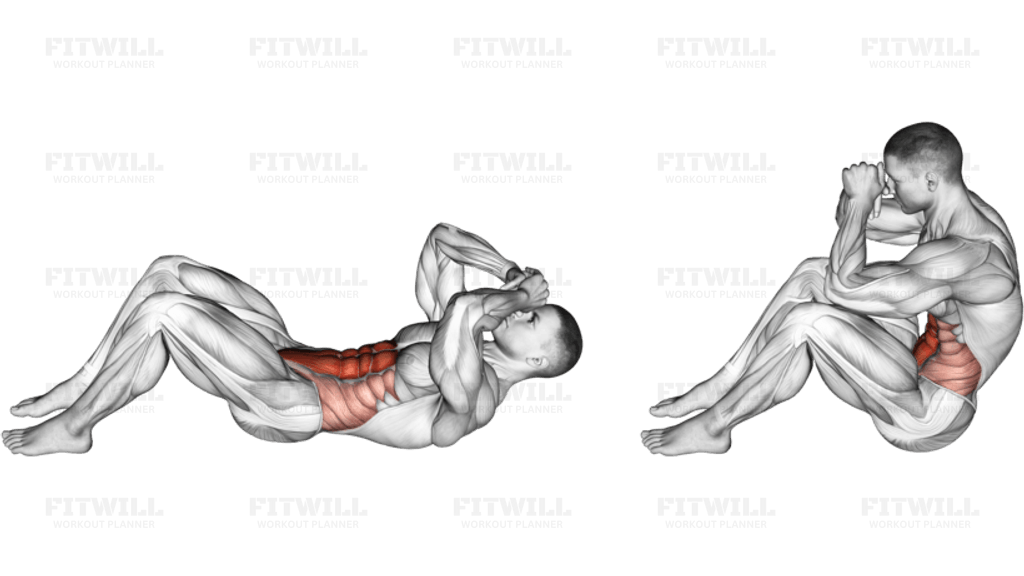
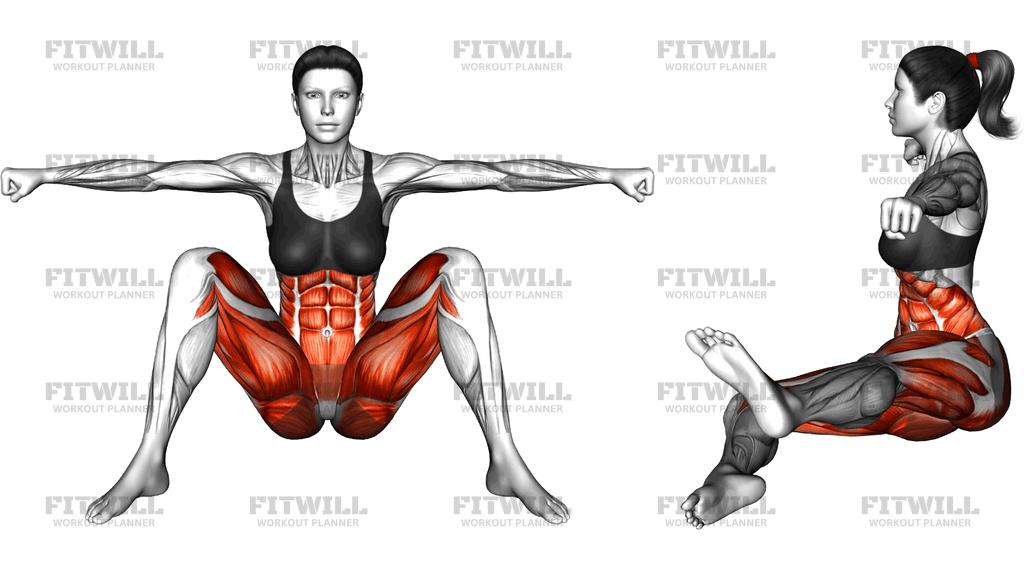
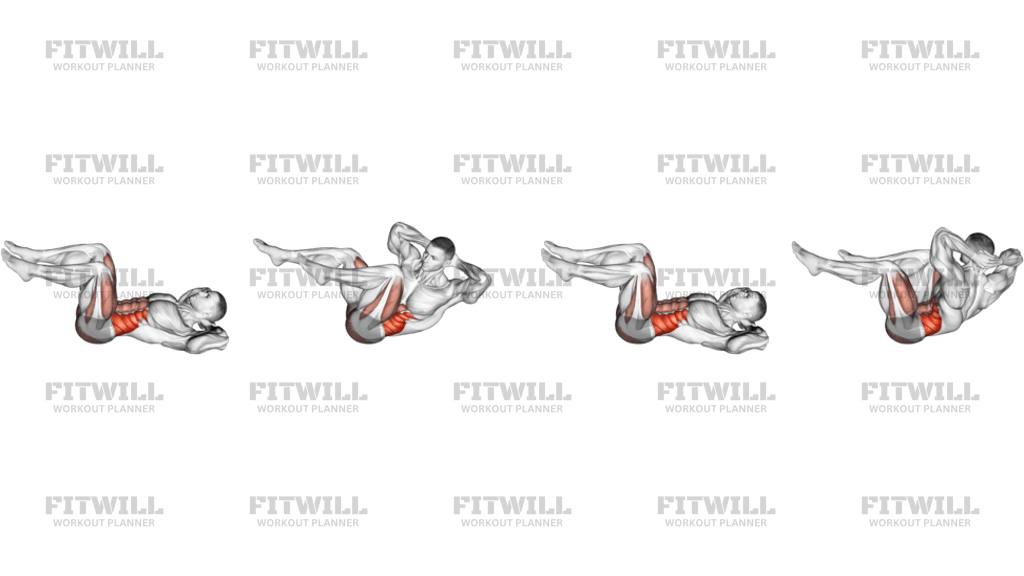
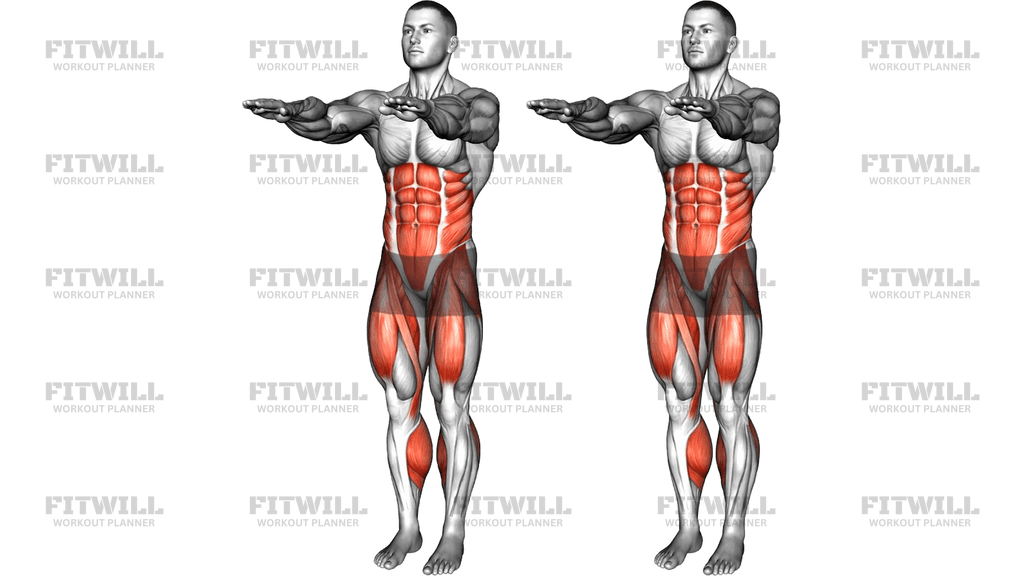
Squat And Double Knee To Elbow
The Squat And Double Knee To Elbow is a bodyweight combination movement that links two patterns most people already know — a squat and a standing knee raise — into one continuous rep. You drop into a bodyweight squat, and as you drive back up to standing, you pull both knees up toward your elbows in one explosive lift before lowering your feet and flowing into the next squat. Because the whole thing is done in place with no equipment, it works as a strength move, a conditioning drill, or a warm-up primer depending on how hard you push it.
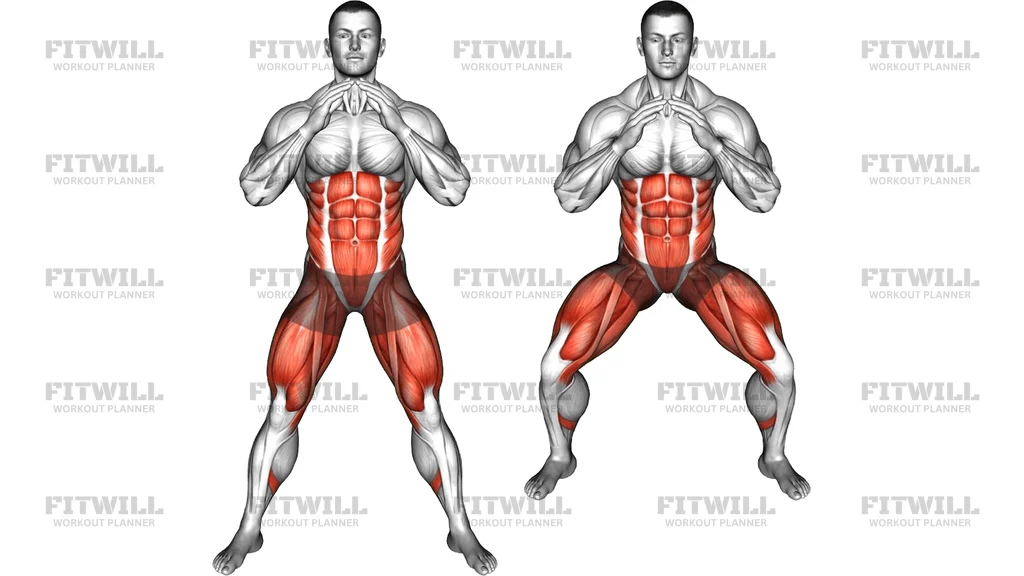
The muscles doing the most work here are the abdominals and hip flexors, which lift and control the knees, while the quads and glutes handle the squat and the upward drive. Your calves, lower back, and shoulders also stay busy stabilizing you as you move from a wide, grounded stance into a brief single-leg balance on every rep. That constant shifting of your base is exactly what makes this harder than it looks on paper.
Setup matters more than people expect. A stance about shoulder-width or slightly wider gives you a stable platform for the squat, and keeping your hands raised near chest or elbow height gives your knees a clear target. If your hands hang at your sides, the knee drive loses its target and you end up doing two separate exercises instead of one connected rep.
Execution comes down to rhythm and control. Squat down with your chest tall and knees tracking over your toes, stand up forcefully, and as you reach full extension, snap both knees up toward your elbows without letting your torso collapse forward. Lower your feet under control, reset your stance briefly if needed, and descend into the next rep. Breathing out on the knee drive helps you brace harder when the abs are working hardest.
This movement fits well into circuit training, home workouts, martial arts and combat-sport conditioning, and general fat-loss programming where you want a high-effort bodyweight option with no setup time. If balance or mobility is a limit, you can slow the tempo, reduce the squat depth, or bring each knee up one at a time until the full version feels solid.
[ Workout Log & Planner ]
Put your next workout in Fitwill
Keep your plan and training log ready when you are.


Instructions
- Stand with your feet about shoulder-width apart, toes turned out slightly, and your weight spread across the whole foot.
- Raise both hands in front of your chest with your elbows bent and pointing forward or slightly down, so your knees have a target to drive toward.
- Brace your core and pull your shoulder blades back so your chest stays tall before you start moving.
- Push your hips back and bend your knees to lower into a squat, keeping your knees tracking in line with your toes and your heels planted.
- Drive through the floor to stand up forcefully, exhaling as you rise.
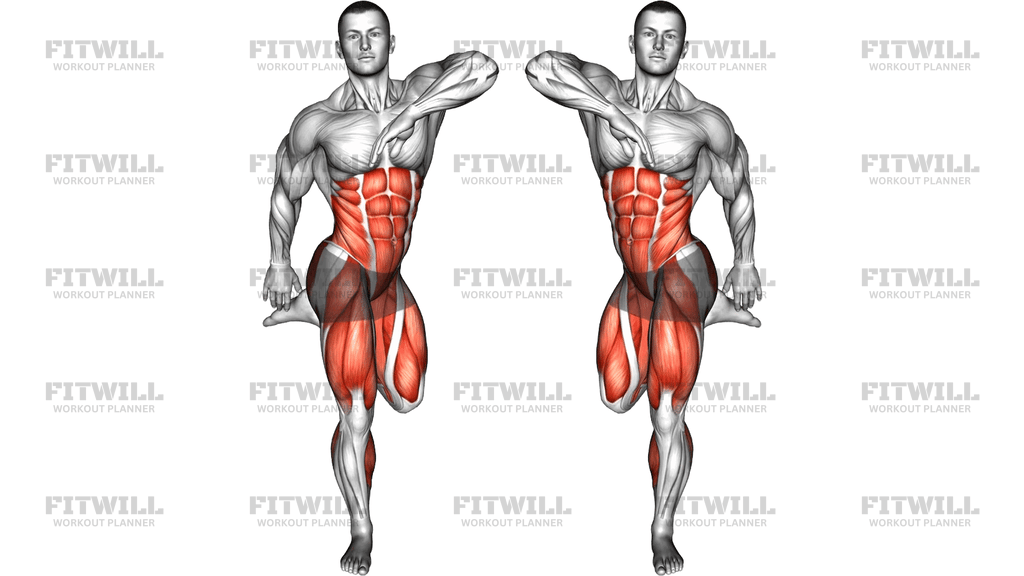
- At the top of the squat, pull both knees up together toward your elbows, crunching your abs and rounding your lower back slightly to lift your knees as high as your mobility allows.
- Lower both feet back to the floor under control and settle into your starting stance for a brief moment.
- Inhale on the way down into the next squat and repeat for your target reps, keeping the squat and knee drive connected as one flowing rep.
- Stop the set when you can no longer keep your chest tall or lift your knees cleanly, and step out of the movement rather than losing posture mid-rep.
Tips & Tricks
- The most common fault is letting your chest fall onto your thighs during the knee drive. Think ribs down and abs tight rather than reaching your elbows down to your knees.
- If your heels lift in the squat, widen your stance slightly or turn your toes out a few more degrees before adding reps.
- Do not rush the descent. A fast squat followed by a flopped knee raise turns this into a lower-back exercise instead of an ab exercise.
- Keep your elbows high and hands near chest height the whole set. Hands drifting down gives your knees nothing to aim for and shortens the crunch.
- Point your toes down slightly during the knee drive to keep your feet compact and make the lift smoother.
- If you wobble when both knees come up, briefly widen your base in the squat portion and re-grip your stance before each knee lift.
- Exhale sharply on the knee drive. This is the hardest part of the rep and the moment your brace matters most.
- Start with a half-depth squat if tight hips or ankles stop you from keeping a neutral spine at full depth, then add depth as mobility improves.
- For conditioning, prioritize consistent knee height on every rep over total speed. Sloppy, low knee raises defeat the purpose of the movement.
Frequently Asked Questions
What muscles does the Squat And Double Knee To Elbow work?
The abs and hip flexors do the main work of lifting your knees, while the quads and glutes power the squat. Your lower back, calves, and shoulders contribute stability as you shift between the wide squat stance and the knee lift.
Is the Squat And Double Knee To Elbow suitable for beginners?
Yes, with adjustments. Beginners can reduce the squat depth, bring one knee up at a time, or hold onto a sturdy support during the knee drive until balance and hip flexor strength improve.
Should both knees come up at the same time or one after the other?
The standard version lifts both knees together toward both elbows, which demands more core control and a brief one-leg balance. The alternating version is a legitimate easier regression if lifting both at once compromises your posture.
Why do my lower back and not my abs feel this exercise?
This usually happens when you lean your chest forward and let your elbows drop to meet your knees instead of crunching your ribs down. Keep your elbows fixed near chest height and let your abs pull the knees up, and lower your feet with control.
Can I do the Squat And Double Knee To Elbow every day?
Since it is a bodyweight movement, moderate volumes can be performed frequently, especially for warm-ups or conditioning. If your hips or abs are noticeably sore, give them a recovery day as you would with any strength work.
What can I substitute if I cannot balance during the double knee drive?
Perform a squat followed by an alternating standing knee-to-elbow raise, or hold a door frame or rack lightly for balance during the knee lift. Both options keep the same squat-plus-crunch pattern while reducing the balance demand.
How deep should the squat be in this movement?
Go as deep as you can while keeping your chest tall, heels down, and spine neutral. A controlled parallel squat is ideal, but a solid quarter or half squat is better than a deep squat with a rounded back.
Is this exercise good for burning calories and conditioning?
It can be, because it combines a large lower-body pattern with an explosive core drive and keeps you moving continuously. Performed in higher-rep sets or circuits, it raises your heart rate quickly for a no-equipment movement.
Do I need to warm up before doing the Squat And Double Knee To Elbow?
A short warm-up is wise, especially for the hips, ankles, and knees. A few bodyweight squats, leg swings, and standing knee raises prepare the exact joints this movement loads before you work at full intensity.