Alternate Frog Crunch
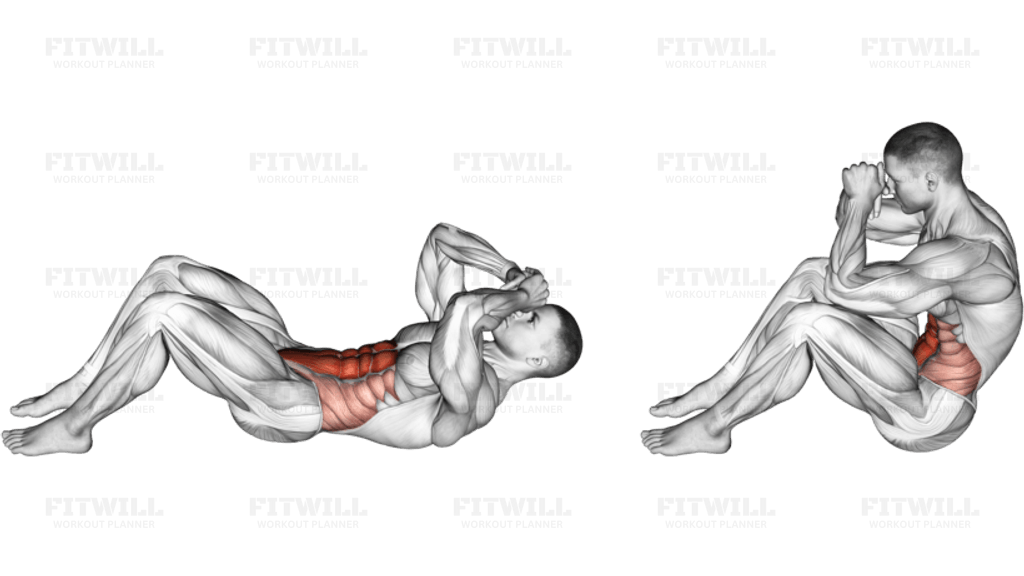
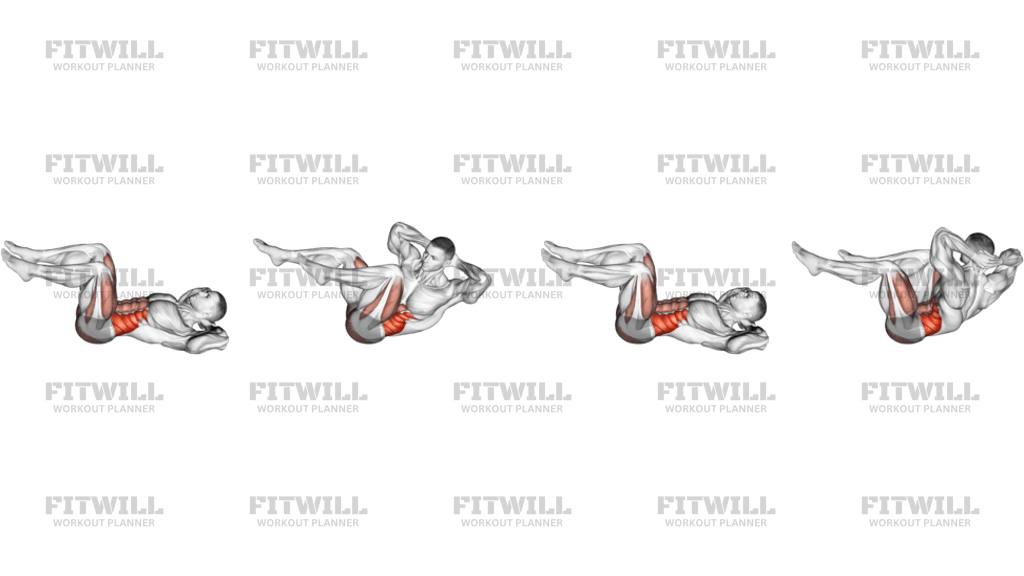
The Alternate Frog Crunch is a floor-based abdominal exercise performed from a supine position with the soles of the feet pressed together and the knees dropped open to the sides, the classic frog-leg position. From there, you crunch the upper body off the floor while reaching one hand toward the opposite side, then repeat on the other side, working the front of the abs and the obliques in an alternating rhythm. Because the legs are fixed in the open-knee position, the hip flexors contribute less than in a straight-leg sit-up, which pushes more of the work into the abdominal wall itself.
This variation suits anyone who wants a floor crunch that adds rotational emphasis without equipment. The frog-leg stance shortens the adductors and tilts the pelvis in a way that many people find more comfortable on the lower back than a long-legged sit-up, making it a practical choice for home workouts, warm-up circuits, and ab finishers. It also fits well into programs for people who already do standard crunches and want a fresh angle on the same muscles.
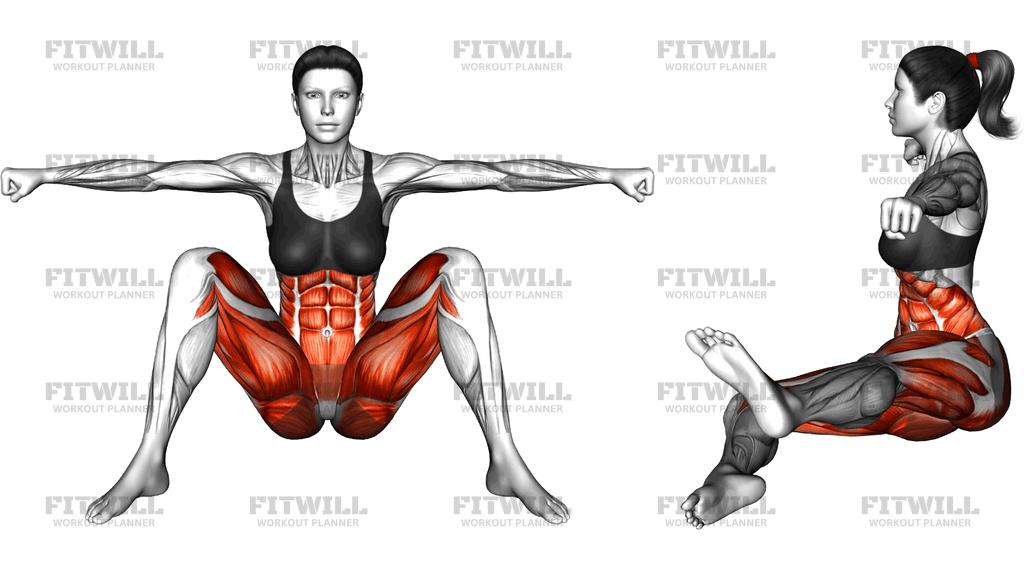
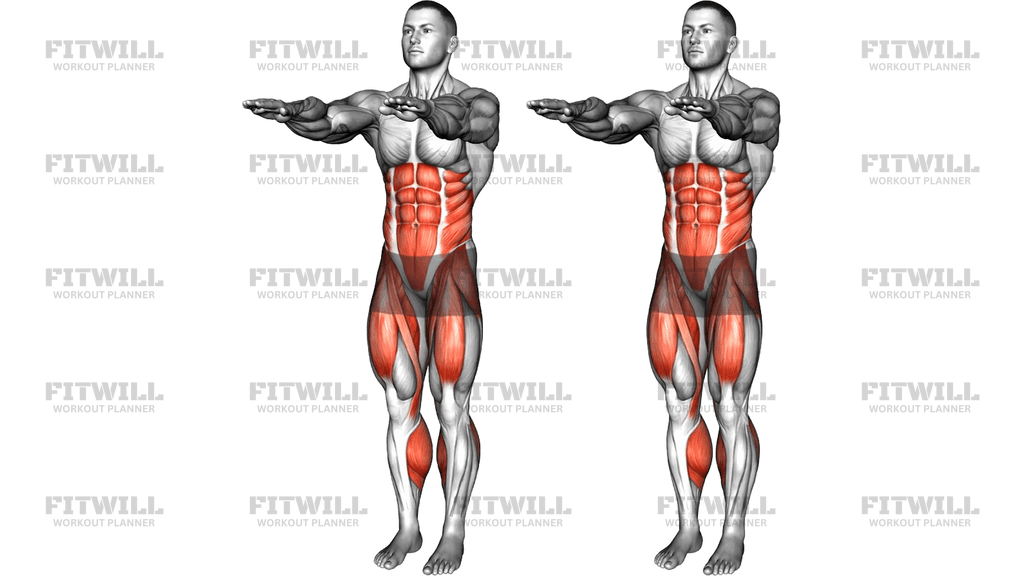
The primary muscles worked are the rectus abdominis, which flexes the spine as you curl up, and the obliques, which drive the alternating reach and control the slight rotation of the torso. The lower abs help tilt the pelvis and stabilize the legs, while the hip flexors assist as you rise. The adductors and outer hips work statically to hold the frog-leg position, and the shoulders get a small endurance demand from keeping the arms extended overhead at the start.
Setup matters more than most people expect. Lie back with your feet drawn in close to your hips and the soles of the feet together, letting the knees fall outward as far as your hips allow comfortably. Extend both arms overhead and relax them toward the floor. This starting position anchors the legs so they stay quiet throughout the set; if the knees drift or the hips roll, the abs stop doing the work.
To execute well, exhale as you curl the head and shoulders up in a smooth peel, leading with one hand as it sweeps up and reaches toward the opposite knee or past the outside of the opposite hip. Lower that side under control, then repeat with the other arm, keeping the feet and knees in place the entire time. The movement should come from the ribs curling toward the pelvis, not from yanking the head forward or bouncing off the floor.
A few practical points keep this safe and productive. Move at a pace you can control on the way down, since the lowering half is where most of the muscle work happens. If your neck tires before your abs, support the back of the head lightly with the resting hand rather than pulling on it. Start with eight to twelve reaches per side and build volume as your control improves.
[ Workout Log & Planner ]
Put your next workout in Fitwill
Keep your plan and training log ready when you are.


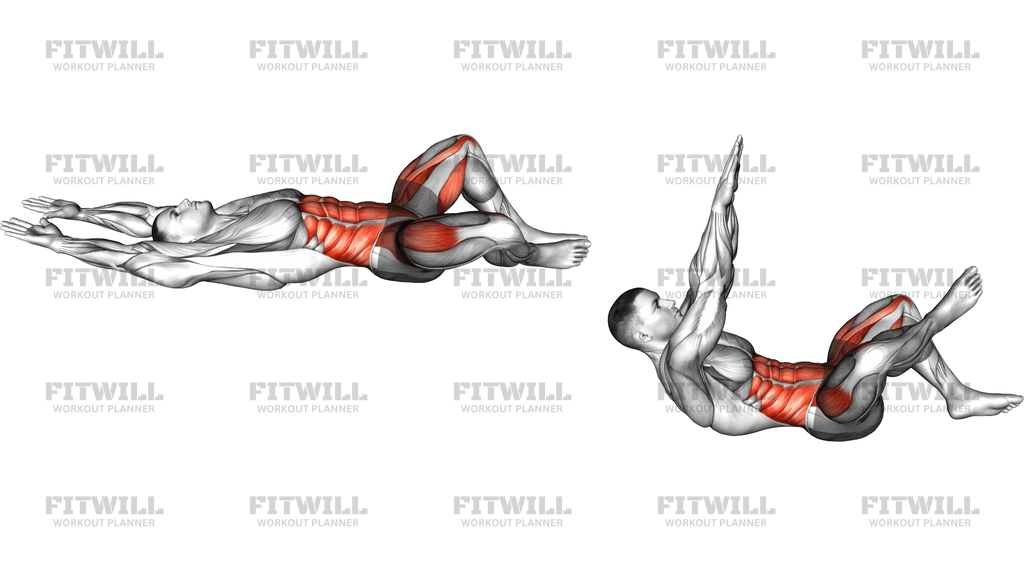
Instructions
- Lie on your back on an exercise mat with your knees bent and feet drawn in toward your hips.
- Press the soles of your feet together and let both knees drop open toward the floor, settling into the frog-leg position with the legs relaxed and still.
- Extend both arms straight overhead with the palms facing up, and rest them lightly on the floor behind or beside your head.
- Brace your abdominals gently and draw your ribs down toward your pelvis before you start moving.
- Exhale and curl your head, shoulders, and upper back off the floor, sweeping one hand up and across toward the opposite knee so your torso rotates slightly to that side.
- Pause briefly at the top with the abdominal wall fully contracted and the reaching hand at its highest point.
- Inhale and lower that side back down slowly, returning the arm toward the floor without letting your head or shoulders slam down.
- Repeat the curl and reach with the other hand toward the opposite knee, keeping the feet, knees, and hips exactly where they started.
- Continue alternating sides for equal repetitions, breathing out on every curl up and in on every lowering.
- When the set is finished, release the frog-leg position by straightening the legs and shaking out the hips before your next exercise.
Tips & Tricks
- If your knees float up toward each other during the set, your hips are cheating; recheck that the soles of the feet stay glued together and the knees stay wide before each rep.
- Pulling on the head with the reaching hand is the most common fault here — the hand should lead with the fingertips, and if the neck strains, rest the non-working hand behind the head for support instead.
- The rotation should be small and deliberate; if your elbow swings wildly, you are turning the reach into a momentum move and the obliques stop doing the work.
- Keep the lower back in contact with the floor as long as possible on the way up; if it arches and gaps early, you are extending the spine instead of flexing the abs.
- Slow the lowering phase to two or three seconds per side — most people drop fast and lose the eccentric tension that makes the Alternate Frog Crunch effective.
- If the frog-leg position pinches at the front of the hips, let the knees sit slightly higher rather than forcing them toward the floor; the range of the knees does not change the ab work.
- Do not hold your breath on the hard reps; exhaling on the curl actually helps the abs shorten fully.
- If both sides feel uneven, slow down and match the reach height on the weaker side rather than letting the strong side set the pace.
- For a harder version, hold the top position of each reach for a full second instead of rushing straight into the next rep.
Frequently Asked Questions
Which muscles does the Alternate Frog Crunch target?
It primarily works the rectus abdominis, with strong involvement from the obliques due to the alternating reach and slight torso rotation. The lower abs, hip flexors, and inner thigh muscles assist or hold the frog-leg position statically.
Why are the soles of the feet pressed together in the Alternate Frog Crunch?
The frog-leg position anchors the legs so they stay still while the torso crunches, which reduces hip flexor dominance and keeps the emphasis on the abdominal wall. Many people also find it more comfortable for the lower back than a straight-legged sit-up.
Is the Alternate Frog Crunch suitable for beginners?
Yes, as long as the range is kept modest. Beginners can start by lifting only the head and shoulders with a short reach and build up to a fuller curl as core control improves.
How is the Alternate Frog Crunch different from a regular crunch?
The frog-leg base changes the pelvis position and adds an alternating, slightly rotational reach, so the obliques get more work than in a straight up-and-down crunch. The fixed legs also stop you from using a leg swing for momentum.
Should I reach with both hands at the same time or one at a time?
One at a time — the alternating pattern is what gives this exercise its name and its oblique emphasis. Reaching with both hands turns it back into a standard frog crunch.
My neck hurts when I do the Alternate Frog Crunch. What should I change?
Stop pulling with the reaching hand and let the curl come from the ribs. If the neck still fatigues early, lightly support the back of your head with the resting hand and shorten the range until your abs are strong enough to lead the movement.
What can I use instead of the Alternate Frog Crunch?
A standard frog crunch, a bicycle crunch, or a cross-body crunch all train similar muscles. Each substitutes well if the open-knee position or the alternating reach does not suit you.
How many reps of the Alternate Frog Crunch should I do?
Eight to twelve reaches per side is a good starting point, done for two or three sets with strict control. Since it is a body weight movement, you can also use higher reps once the form is solid.
Is it safe to do the Alternate Frog Crunch every day?
For most healthy people, controlled body weight ab work can be done frequently, but treating it like any strength exercise with rest days leads to better progress. Stop if you feel sharp pain in the spine or hips rather than normal muscle effort.
Do I need a mat for the Alternate Frog Crunch?
A mat is recommended because you are lying on your back with your spine and head in contact with the floor for the whole set. Any non-slip surface soft enough to cushion the shoulder blades works fine.