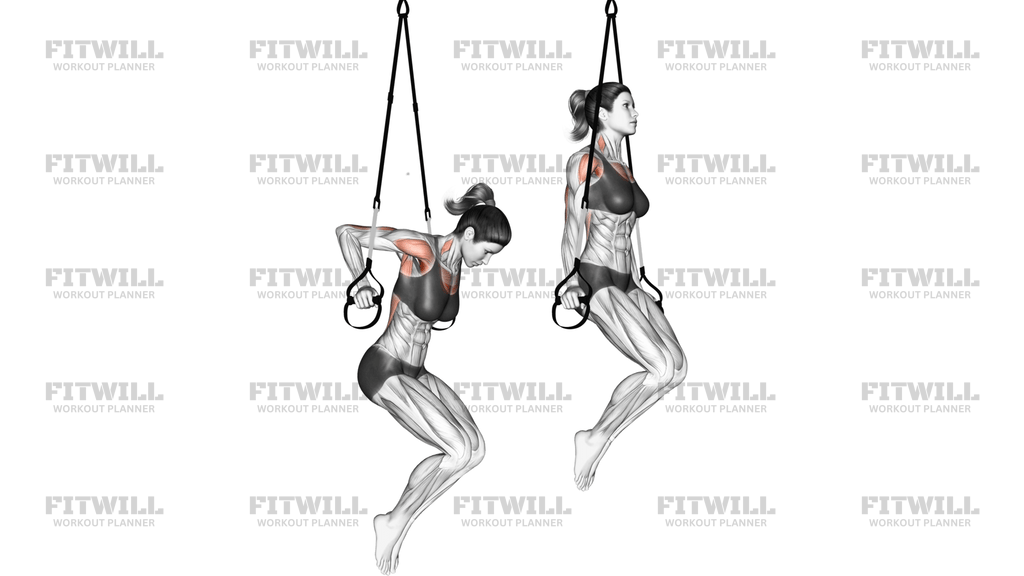
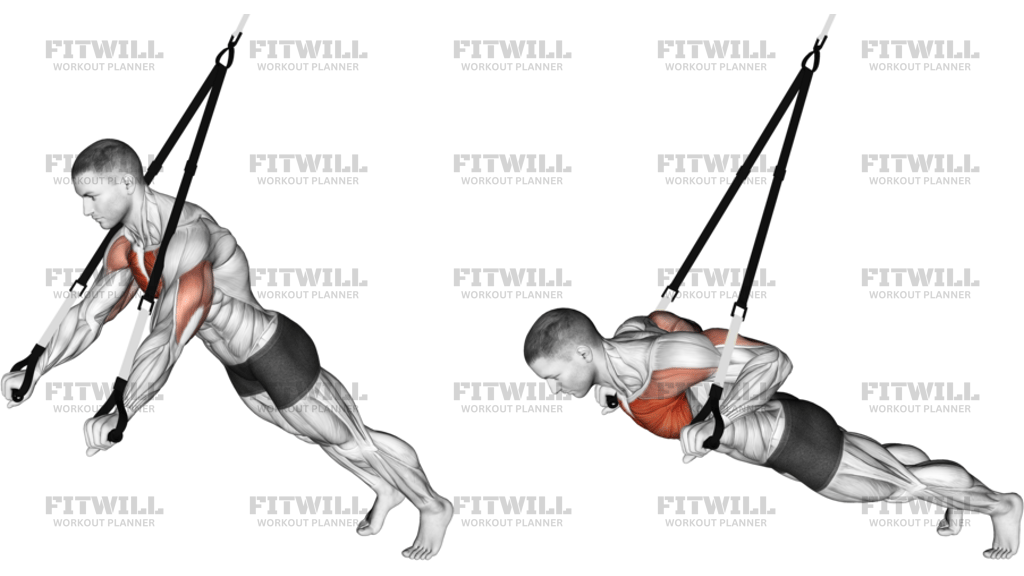
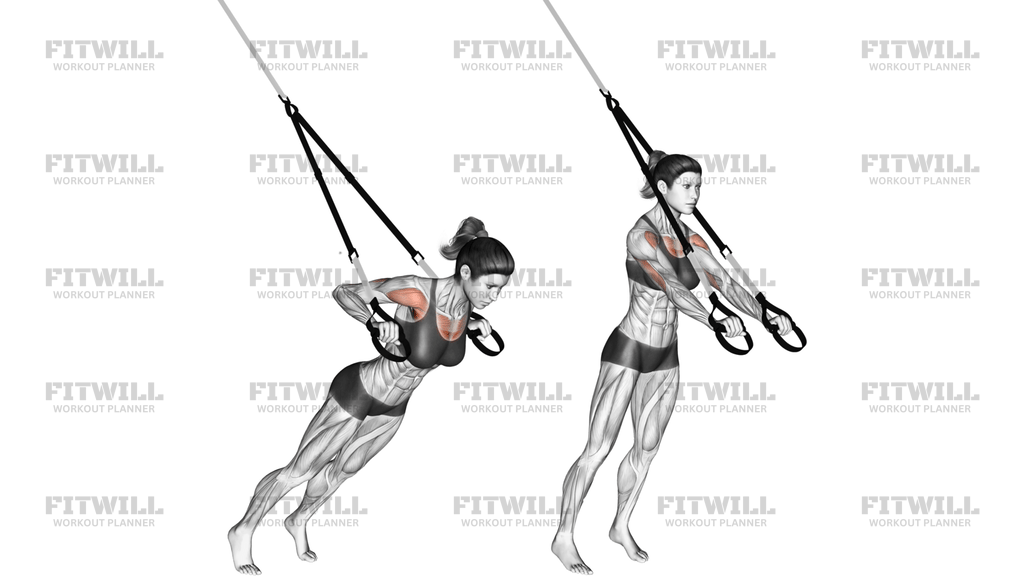
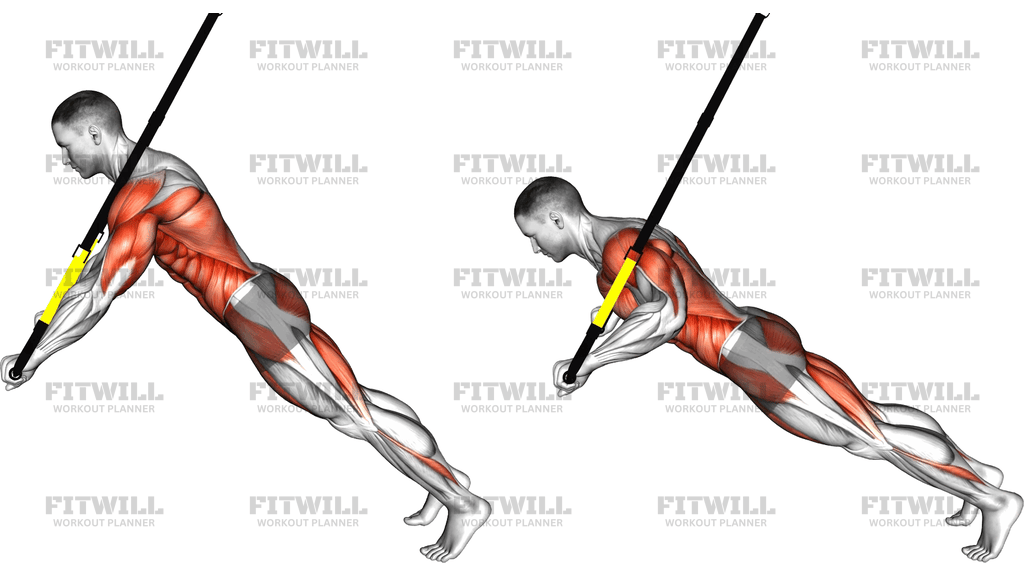
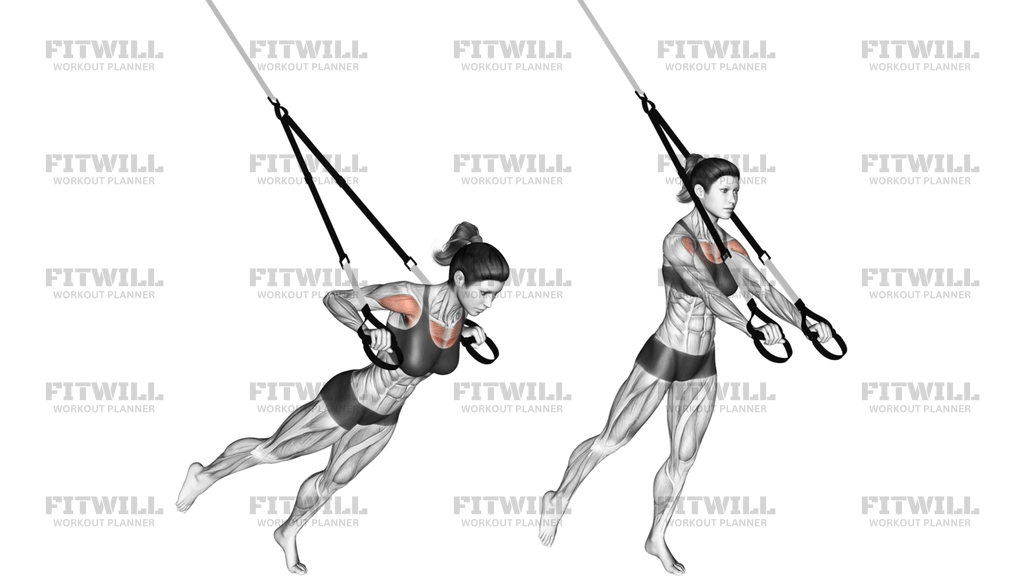
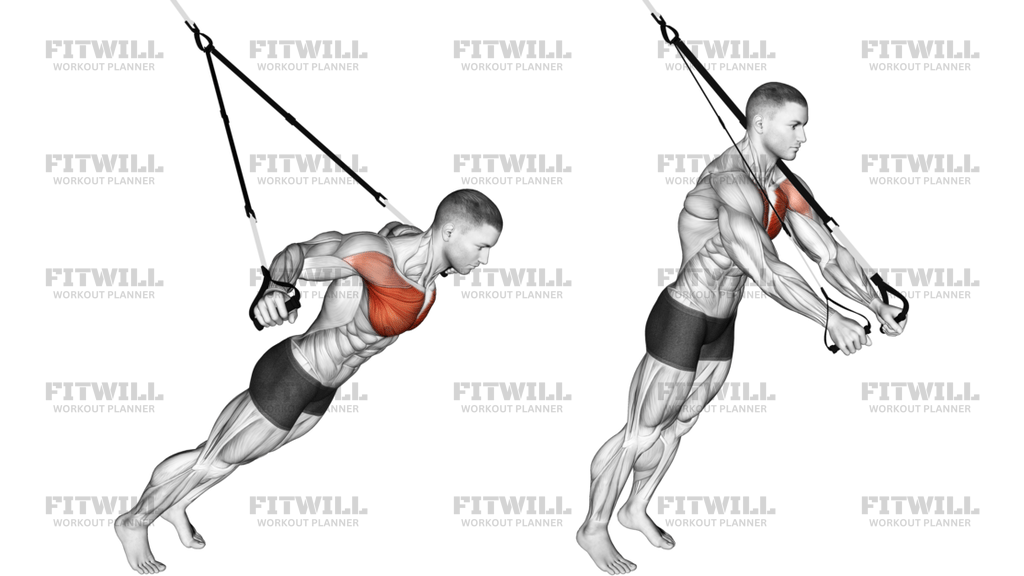
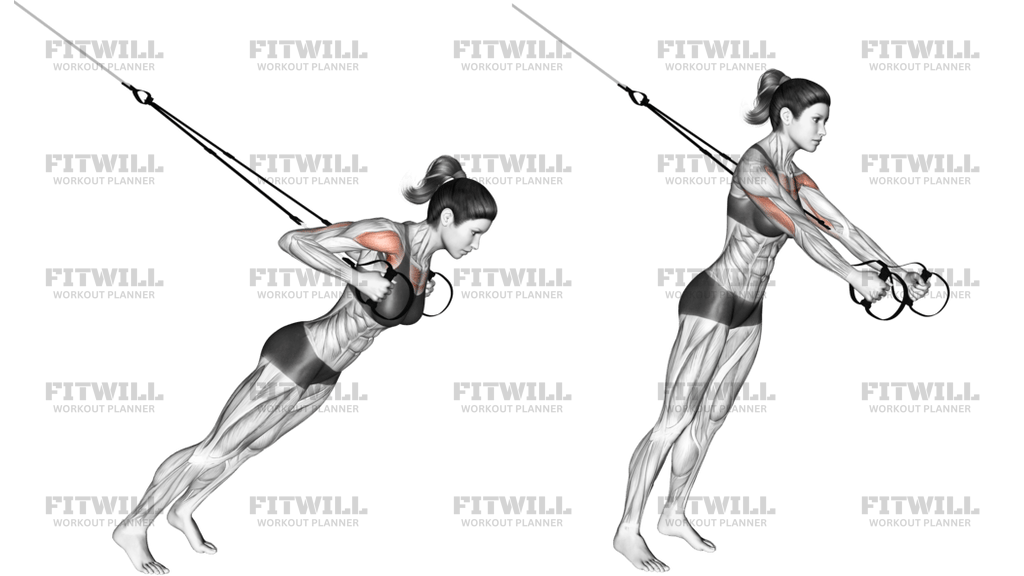
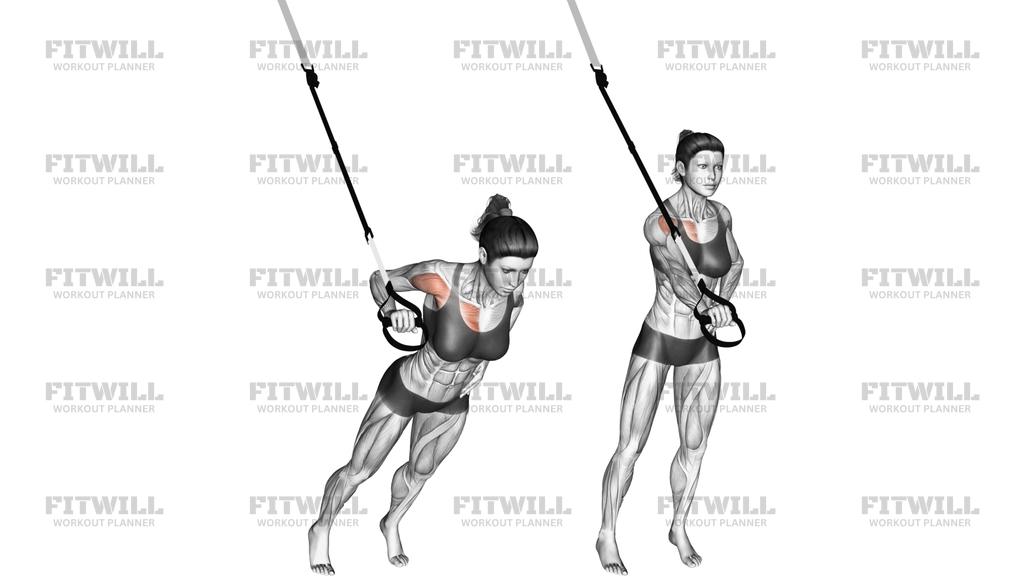
Ring Archer Push Up
The Ring Archer Push Up takes one of the hardest bodyweight push-up variations and makes it even more demanding by performing it on unstable gymnastic rings. In this movement you hold a push-up position with the rings set a few inches off the floor, then shift your weight over one arm while the opposite arm straightens out to the side — the classic archer pattern. The working side bends and lowers your chest toward its ring while the extended arm stays long, creating a strong stretch through the pec before you press back to center.
This is an advanced exercise aimed at people who already own solid ring push-ups and strict push-ups with clean form. It is especially useful for calisthenics athletes working toward one-arm push-ups, since the archer pattern teaches you to load one side heavily while the other arm only stabilizes. The rings add two extra challenges a floor archer push-up cannot: the straps can shift laterally under you, and your pressing hand must actively grip and control the ring instead of resting on a stable surface.
The primary load lands on the chest of the working arm, with heavy involvement from the triceps and front shoulders as they press the torso back up. Because the extended arm pulls against the strap and the torso shifts sideways, the core — especially the obliques — works hard to stop your hips from rotating or sagging. The serratus anterior and scapular stabilizers also get meaningful work controlling the shoulder blade on the bending side.
Setup matters more here than in most push-up variations. Hang the rings low enough that your chest can approach the working ring without touching the floor, and set your hands wider than a standard push-up so the extended arm has room to straighten fully. Grip the rings with your fingers wrapped over the top edge and keep your wrists stacked. A body line that is too loose turns the movement into a twisting, shoulder-straining mess, so brace hard before every rep.
To execute well, think of the rep as a diagonal shift and press rather than a simple up-and-down. Push your torso sideways over the working arm as you lower, let the other arm glide out long along the strap, and touch your chest close to the working ring before pressing back to the center position. Move slowly enough that you can stop the rings from swinging. The extended arm should assist only through tension, not by bending to push the floor away.
A few practical safety points: build up with floor archer push-ups first, keep rings close to the ground so a slip means a short fall, and stop the set the moment your hips start twisting or your extended shoulder feels pinched. Two to four hard sets of low reps fits this exercise better than chasing high volume.
[ Workout Log & Planner ]
Put your next workout in Fitwill
Keep your plan and training log ready when you are.


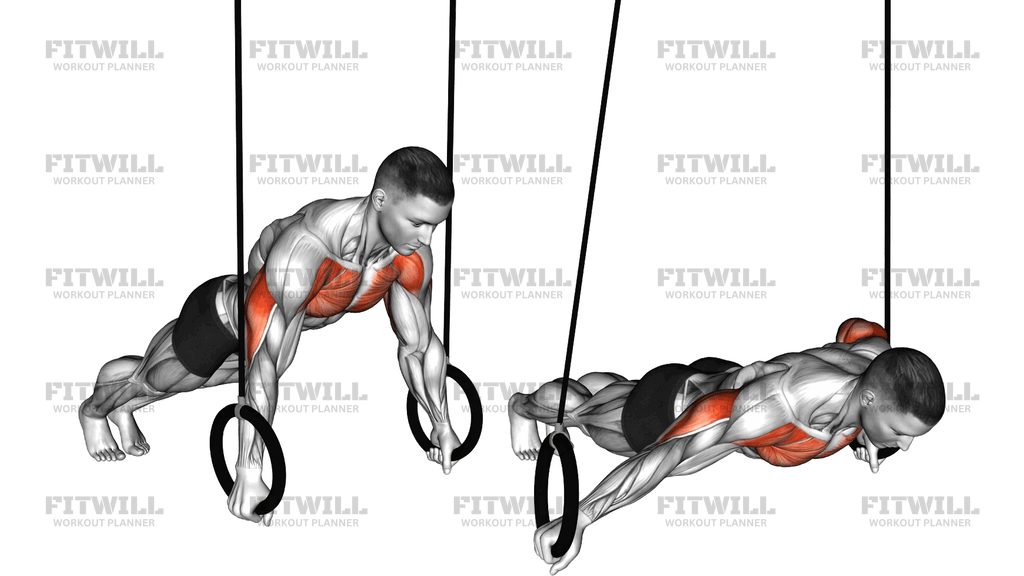
Instructions
- Set both gymnastic rings to hang a few inches above the floor, roughly shoulder-width apart or slightly wider, so the straps have minimal slack.
- Take a firm grip on each ring with your fingers wrapped over the top edge and walk your feet back into a high plank with your hands wider than shoulder-width, arms straight.
- Squeeze your glutes, brace your abs, and tuck your pelvis slightly so your body forms one straight line from head to heels.
- Shift your torso sideways over your right ring as you begin bending the right elbow, letting your left arm straighten out long to the side along its strap.
- Lower until your chest comes close to the right ring and you feel a stretch across the right pec, keeping the left arm extended and only lightly gripping its ring.
- Press through the right ring to drive your torso back up and toward center until both arms return to straight and you are back in the wide plank.
- Complete all reps on one side, then switch so the left arm becomes the working arm and the right arm extends.
- Exhale as you press back to center and inhale as you lower into each rep.
- Reset your brace and stop any ring swing before starting the next rep.
Tips & Tricks
- If the working ring drifts inward as you lower, point your fingers slightly outward and think of pressing the ring down and slightly out — the straps rotate easily when grip pressure is uneven.
- A common mistake is bending the extended arm to help with the press. Keep that elbow locked and let the working arm do the lifting; if you cannot, raise the rings higher to reduce the load.
- Keep your shoulders square-ish to the floor rather than fully rotating open. Some torso turn is natural, but letting your chest face sideways turns this into a one-arm push-up roll and strains the extended shoulder.
- Stop your hips from twisting by squeezing the glutes and thinking about driving the toes of your far leg into the floor.
- Lower the rings almost to the floor and keep your feet wider than normal for a more stable base — the higher the rings, the more the straps sway and the harder balance becomes.
- Your chest should travel toward the working ring, not straight down. If you descend vertically, you are doing a plain ring push-up with a wider stance.
- If your wrists ache, reduce the angle by raising the ring height rather than letting the ring rotate freely under your palm.
- Master strict floor archer push-ups first; jumping straight to the ring version usually produces hip sag and half-range reps.
- Film yourself from the front — you will quickly see whether your extended arm is actually straight or quietly bending a few degrees each rep.
Frequently Asked Questions
What muscles does the Ring Archer Push Up work?
The chest of the working arm does most of the pressing, supported heavily by the triceps and front shoulders. The obliques and deep core stabilize your torso against the sideways shift and keep the hips from rotating.
Is the Ring Archer Push Up suitable for beginners?
No — it is an advanced variation. You should be able to perform strict ring push-ups and floor archer push-ups with good form before attempting it, and even then start with the rings set higher to reduce the load.
How high should I set the rings for the Ring Archer Push Up?
Set them a few inches off the floor so your chest can approach the working ring without hitting the ground. Lower settings make the movement harder and less stable, so raise them if your form breaks down.
Why does one arm stay straight during the Ring Archer Push Up?
The straight arm is what makes it an archer pattern — it shifts nearly all the pressing load onto the working side while only assisting through tension and grip. This is the same overload logic used to progress toward one-arm push-ups.
How is this different from a floor archer push-up?
The rings are unstable and can shift or rotate, so your grip, wrists, and shoulder stabilizers work far harder, and the straps can swing if you move carelessly. The floor version lets you push against a fixed surface, making it a better starting point.
My rings swing side to side during the Ring Archer Push Up. How do I fix it?
Slow down, keep your body line rigid, and control the return to center instead of letting the press snap you back. Wider feet and shorter straps also dampen swing considerably.
Can I substitute the Ring Archer Push Up with anything simpler?
Yes — floor archer push-ups, ring push-ups with a staggered hand position, or ring archer push-ups with the rings raised onto a low table height all train the same pattern at a more manageable intensity.
Should my extended arm touch or slide along the strap?
Let the inside of your extended arm rest lightly against or glide near the strap so it stays in line. Reaching too far past the strap over-stretches the shoulder and reduces your control.
How many reps and sets should I do of the Ring Archer Push Up?
Because the load per side is high, work in low rep ranges — around 3 to 6 reps per arm for 2 to 4 sets — and prioritize clean body line over total volume. Stop the set when your hips start twisting or your press slows noticeably.
Are Ring Archer Push Ups safe for the shoulders?
They are safe when you keep the extended elbow straight, avoid letting the torso rotate fully open, and stay within a chest-to-ring range you control. Sharp pinching in the extended shoulder is a signal to stop and regress to an easier variation.