Ring Back Lever
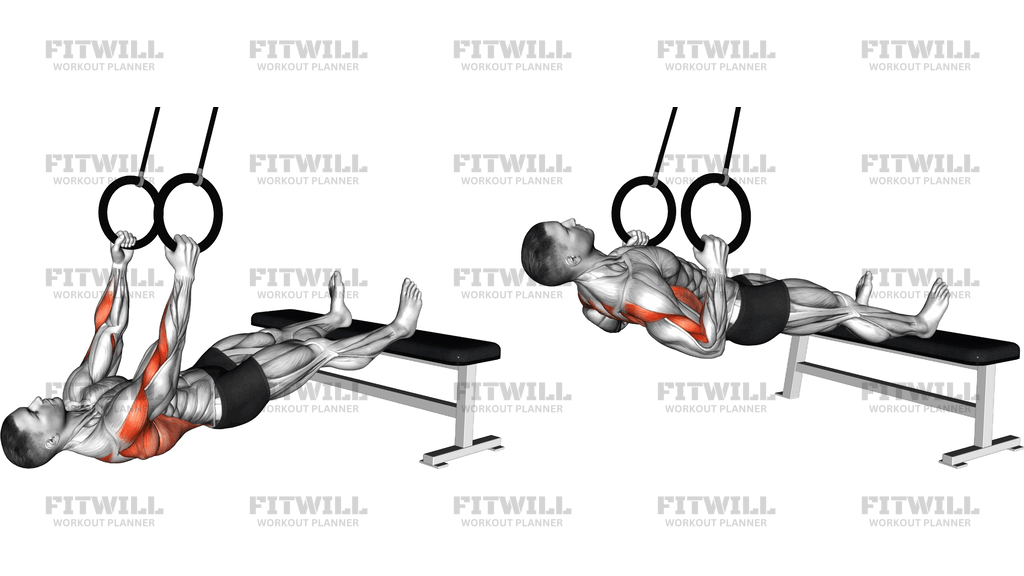
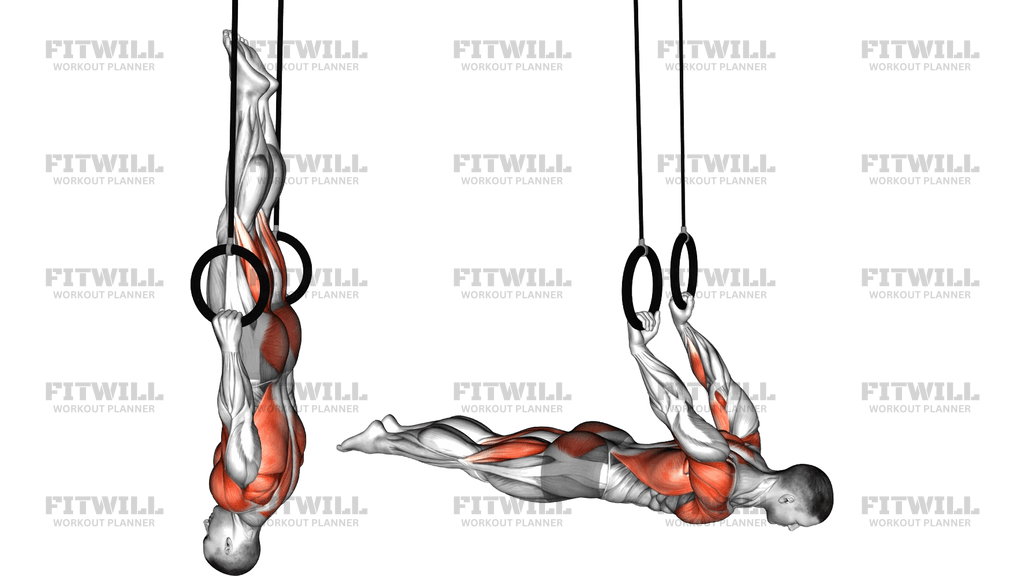
The Ring Back Lever is a straight-arm static hold in which you suspend yourself from gymnastic rings with your body turned face-down and held parallel to the floor. Your hands stay behind your hips, arms extended, and your entire body line — from shoulders through heels — floats horizontally while the straps take your weight. It is one of the classic foundational holds from gymnastic strength training, and the rings version is more demanding than a bar version because the straps can shift and swing under you, forcing constant small corrections through the shoulders and trunk.
This hold is best suited to intermediate trainees who already have solid pulling strength — comfortable hanging, rows, and ideally some experience with tuck or advanced tuck lever progressions. The Ring Back Lever loads the posterior chain heavily: the lats and upper back work to pull the shoulders down and hold them packed, the rear shoulders stabilize the shoulder joint in extension, the glutes and spinal extensors keep the hips and legs from sagging, and the whole trunk braces to hold a straight line. The biceps also take significant stress at long length because the arms stay straight behind the body, which is why tendon conditioning is part of learning this skill safely.
Setup matters more than most people expect. Ring height determines how easy it is to mount and dismount — rings set around hip to chest height let you step or jump into an inverted hang and bail cleanly by rotating back under. Grip the rings with a full wrap, not just the fingers, and keep a slight outward turn in the rings so your wrists and elbows track comfortably. A loose grip or straps set too wide are the two setup errors that cause most failed attempts.
Execution is a rotation, not a pull-up. From the inverted hang, you lower your legs forward and down in front of the rings, rotating around the shoulder axis until your body reaches horizontal, face toward the floor. The shoulders stay pulled down away from the ears the entire time — if they creep up toward the straps, the hold collapses quickly. To finish the rep, pull back over the top by curling the hips up and returning to the inverted hang, or safely lower or drop out of the position.
In practice, the Ring Back Lever is used as a skill-strength hold in calisthenics and gymnastics strength programs, typically trained in short sets of 5 to 15 seconds at near-maximal effort. It also serves as a gateway to harder straight-arm elements and builds the shoulder extension strength and body tension that carry over to ring muscle-ups, front levers, and planche work. Because the biceps tendon takes unusual loading, progress gradually: start with tuck or straddle versions, hold only as long as you can keep the shoulders packed, and treat any elbow or shoulder discomfort as a signal to regress rather than push through.
[ Workout Log & Planner ]
Put your next workout in Fitwill
Keep your plan and training log ready when you are.


Instructions
- Set the rings to roughly hip or chest height so you can reach them from the floor and bail safely if needed.
- Stand facing away from the anchor point, reach back, and take a full overgrip on the rings with your hands about shoulder-width apart, thumbs wrapped around the ring material.
- Step or jump up into an inverted hang, letting your body hang upside down with arms straight and shoulders pressed down away from your ears.
- Brace your trunk, squeeze your glutes, and point your legs so your whole body forms one rigid line.
- Begin lowering your legs forward and down in front of the rings, rotating around the shoulders until your body is horizontal and face-down, with your hands behind your hips.
- Hold the horizontal position with arms extended, actively pulling the rings down toward your hips to keep the shoulders packed and the body flat.
- To end the rep, curl the hips up and pull back over the top into the inverted hang, keeping the arms straight.
- Exhale steadily through the descent and hold — do not hold your breath for long static sets.
- Lower out of the inverted hang under control or step down cleanly, shake out the arms and shoulders, and reset before the next attempt.
Tips & Tricks
- Turn the rings slightly outward at the top of the grip; a neutral or inward-turned ring jams the wrists and makes the hold feel far heavier than it should.
- The most common failure point is the shoulders rising toward the straps as you reach horizontal — cue yourself to pull the rings down toward your hips the whole time.
- If your hips sag below the line of your shoulders, your glutes and spinal extensors are switching off — squeeze the legs together and point the toes to re-tension the whole chain.
- Bent arms make the hold easier but shift stress into a position that can aggravate the elbows; progress with tuck or straddle versions rather than shortening the lever by bending the elbows.
- Keep the head neutral, looking slightly down at the floor rather than craning the neck forward, which tends to break the upper-back position.
- A false grip is not required and usually makes ring back lever work harder to hold — a standard full-thumb wrap is the cleaner choice.
- Because the biceps work at long length, keep early sessions to short holds of a few seconds and leave reps in reserve while the elbows adapt.
- Film from the side: a straight line from shoulder to ankle is the standard, and small piking or sagging is much easier to spot on video than while holding.
- If you feel swinging between attempts, reset fully with your feet on the floor rather than trying to recover mid-air — mounting fresh keeps the movement pattern clean.
Frequently Asked Questions
Which muscles does the Ring Back Lever work most?
The primary work comes from the lats and upper back holding the shoulders packed, with strong contributions from the rear shoulders, glutes, spinal extensors, and trunk. The biceps also work hard at long length because the arms stay straight behind the body.
Can beginners train the Ring Back Lever?
Most beginners should start with tuck, advanced tuck, or straddle back lever progressions on rings or a low bar, plus solid hanging and rowing strength first. Jumping straight to the full horizontal hold usually leads to sagging hips, shrugged shoulders, and excessive elbow stress.
How high should the rings be set for the Ring Back Lever?
Set the rings around hip to chest height so you can jump into the inverted hang and step down safely between attempts. Rings set too low force awkward mounts, and rings too high make bailing harder.
Why do my shoulders creep up toward the straps during the Ring Back Lever?
That shrug means the lats and upper back have stopped pulling, usually because the hold is at the edge of your current strength. Regress to a shorter lever — tuck or straddle — and focus on actively pressing the rings down toward your hips throughout the hold.
Is the Ring Back Lever harder on rings than on a bar?
Yes, because the rings can shift and swing, so you must constantly stabilize the shoulder and wrist position as well as hold the body line. The bar version removes that instability and is a reasonable first step before the rings.
How long should I hold the Ring Back Lever?
Short, high-quality sets of 5 to 15 seconds work best for a maximal static hold, accumulating total time over several sets. If form breaks after a few seconds, the position is too advanced for productive training.
My hips keep sagging below horizontal — what causes this?
The glutes and lower back extensors are not holding tension, often combined with soft, separated legs. Squeeze the legs together, point the toes, and drive the hips up toward the line before you lower into the hold.
Are there good substitutions for the Ring Back Lever?
Bar back levers, back lever work on low rings set close to the floor, and German hang rotations all train the same shoulder extension and posterior-chain tension. These are useful if ring stability is currently the limiting factor.
Is the Ring Back Lever safe for the elbows?
The straight-arm position loads the elbow joint and biceps tendon significantly, so gradual progression is essential. Keep early holds short, avoid training through sharp elbow or shoulder pain, and build volume slowly over weeks rather than sessions.
Should the arms be completely straight in the Ring Back Lever?
Yes, the standard position calls for extended arms with the hands behind the hips. Bending the elbows shortens the hold and changes the loading, so use an easier progression instead of bending the arms to reach horizontal.