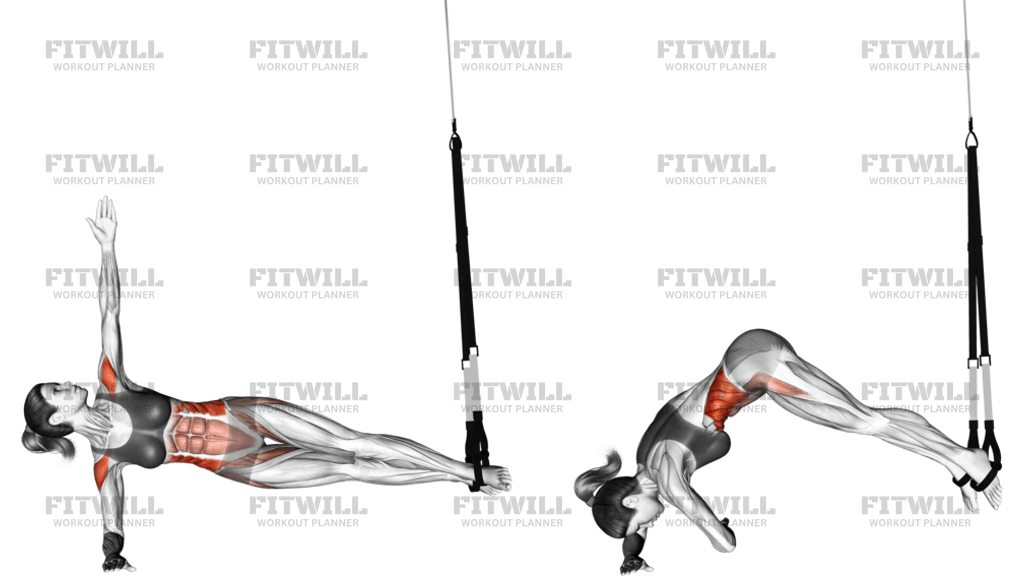
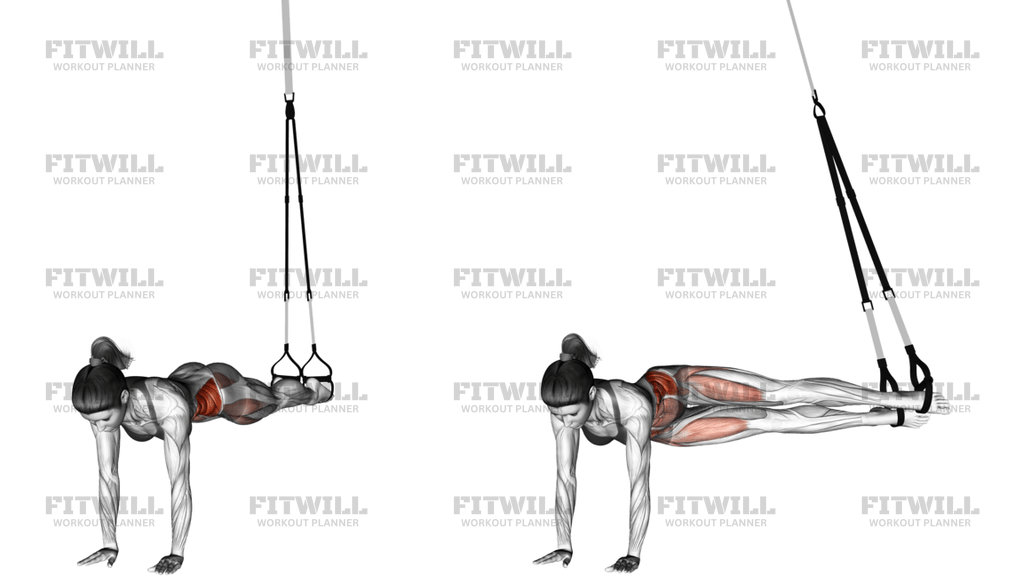
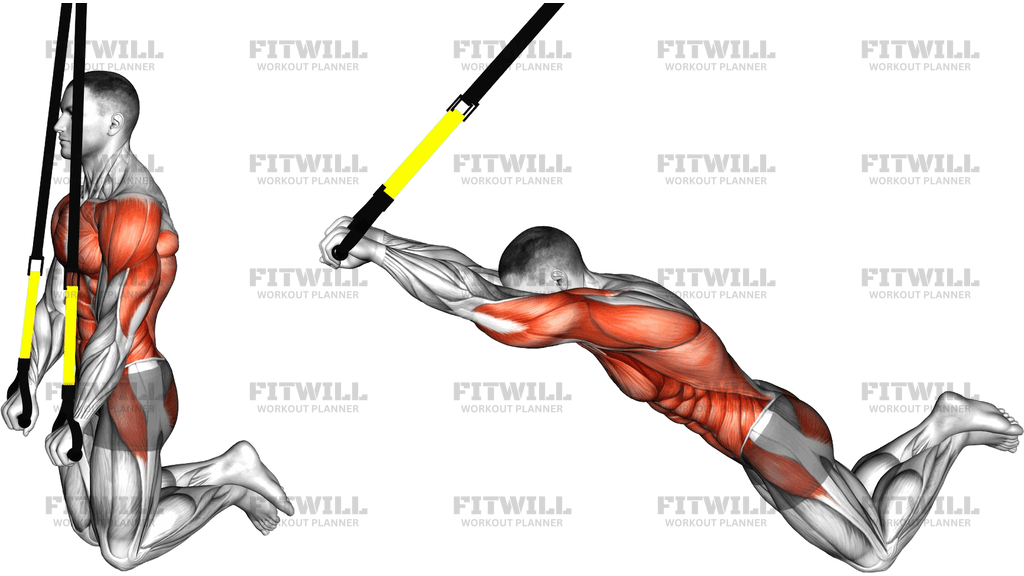
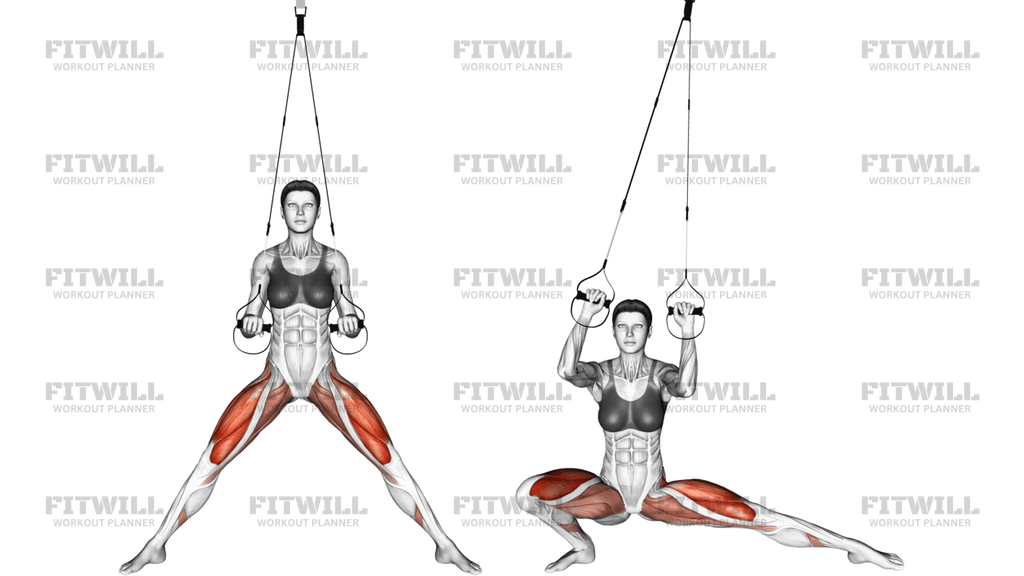
Suspension Twist
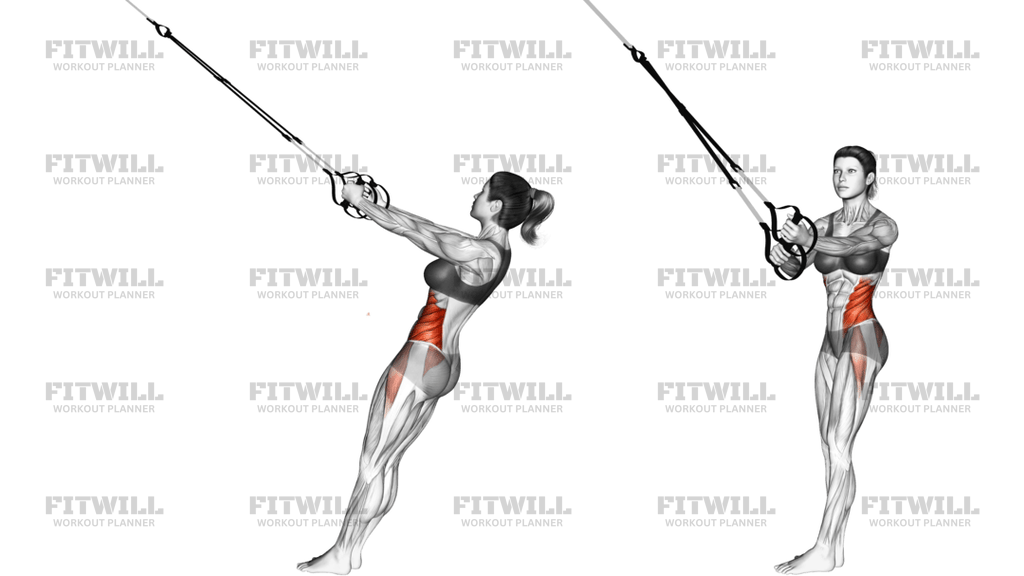
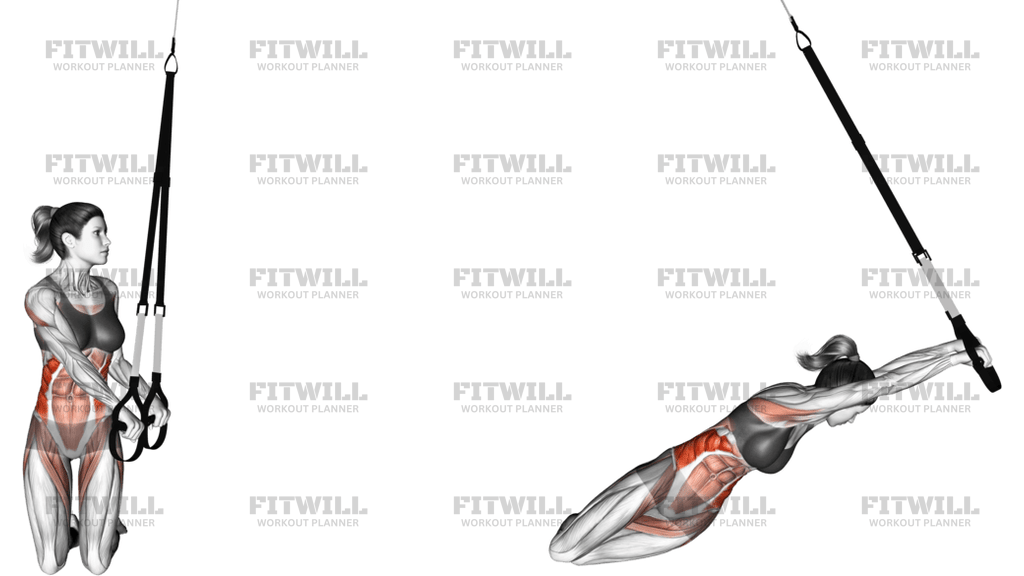
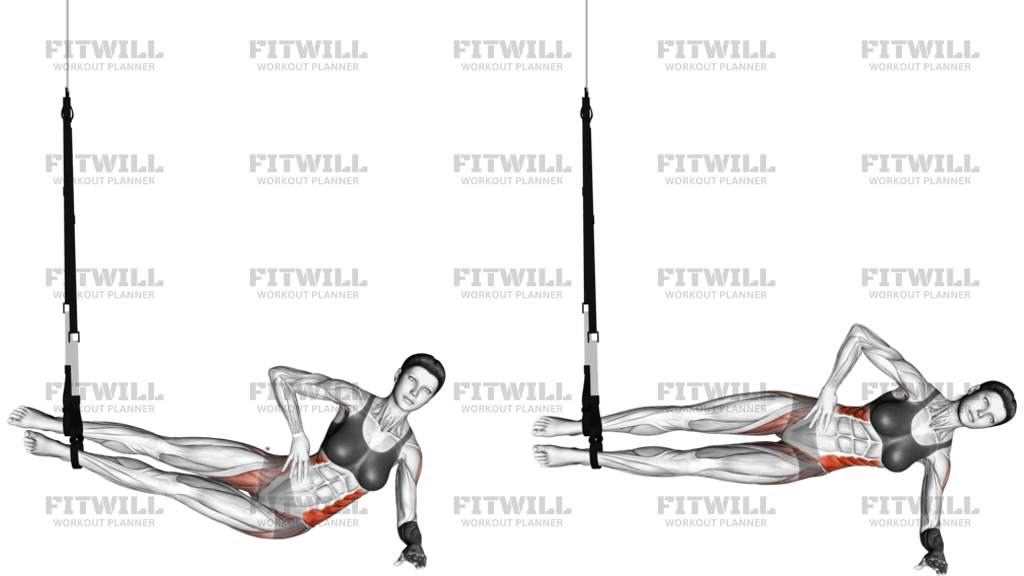
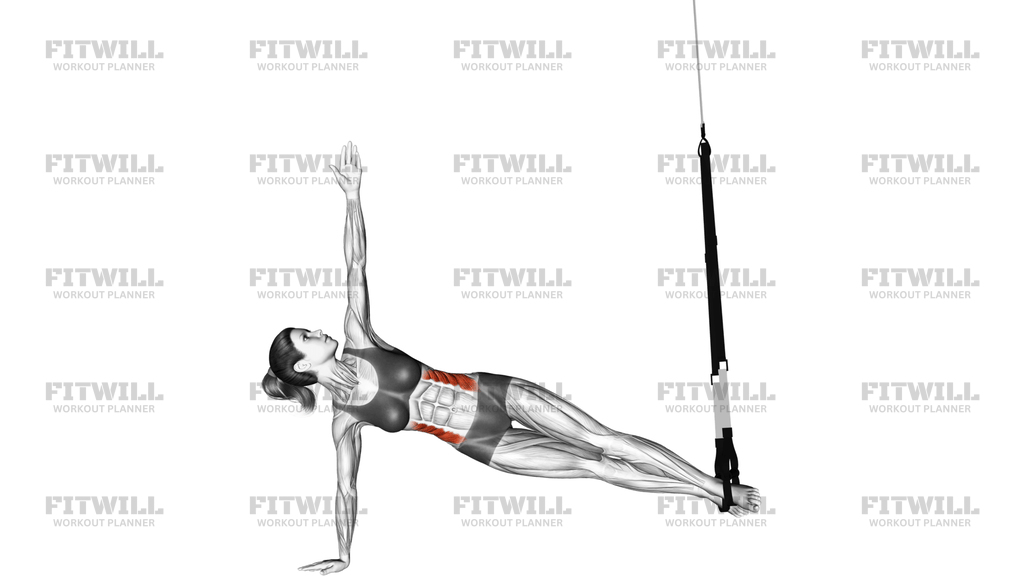
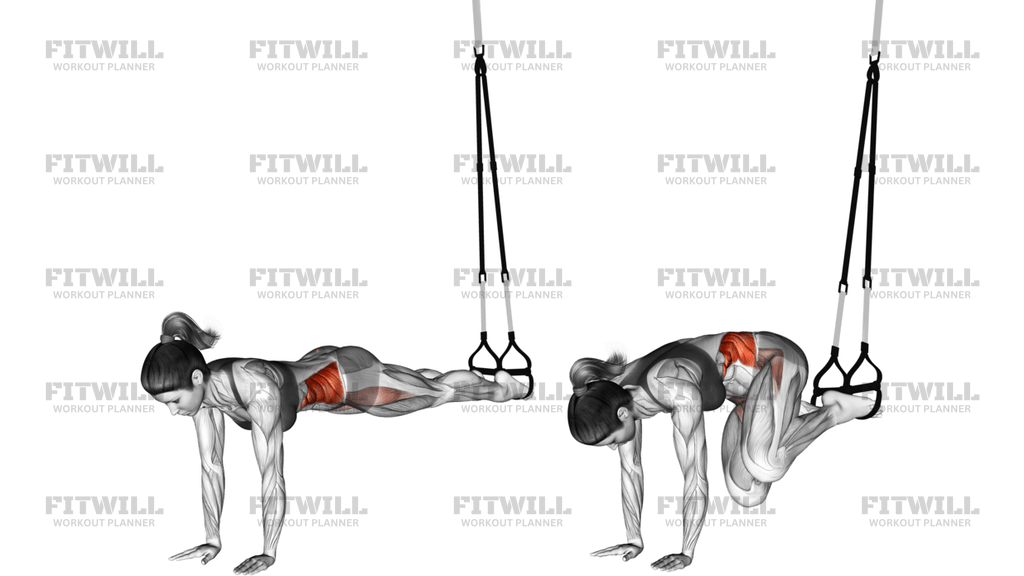
Suspension Twist is a standing suspension-trainer core exercise that builds rotational control through the waist rather than through the arms. With the straps anchored high and your body leaning back under tension, the movement challenges the obliques to manage twist, anti-twist, and posture at the same time. That makes it a useful accessory for core training, warmups, athletic preparation, and any session where you want trunk control without loading the spine heavily.
The setup matters because the body angle changes how much tension reaches the torso. Step far enough from the anchor that the straps stay taut when your arms are extended, then set your feet in a stable stance and keep your ribs stacked over your pelvis. If you start too upright, the exercise turns into a small arm motion; if you lean back too far, you usually lose control through the lower back and hips. The right starting position lets the rotation come from the trunk while the shoulders stay organized.
During each repetition, keep a long line from your hands through your torso and rotate under control rather than yanking the handles. The hands travel across the body as the rib cage turns, and the hips should follow only as much as needed to keep the motion smooth. The obliques do the main work, while the deep abdominals and lower back help you resist unwanted sway. If the shoulders start shrugging or the elbows bend to create range, the set is usually drifting away from the intended pattern.
Suspension Twist is best used when you want to train core strength with a balance of movement and stability. It can fit as a light activation drill before heavier lifts, as part of a circuit, or as a lower-impact alternative to loaded rotational work. Because the straps add instability, the exercise rewards deliberate tempo and clean foot pressure more than a large range of motion. The goal is to keep the torso in control from the first rep to the last, not to swing farther each time.
Safety is mostly about staying honest with the range you can control. Keep the neck relaxed, let the feet pivot if the twist gets deep, and stop the set if the rotation turns into lumbar overextension or swinging from the shoulders. A lighter body angle and smaller twist are often the better choice for beginners. When the movement stays smooth, Suspension Twist becomes a precise way to train the obliques, trunk stability, and rotational control without overloading the spine.
[ Workout Log & Planner ]
Put your next workout in Fitwill
Keep your plan and training log ready when you are.


Instructions
- Attach the suspension straps overhead, grab a handle in each hand, and walk your feet back until the straps are taut with your arms straight in front of your chest.
- Set your feet about hip-width apart, lean back to create tension, and keep your body in one long line from your hands through your hips to your heels.
- Square your shoulders to the anchor, soften your knees, and brace your midsection before you begin the first twist.
- Rotate your rib cage and shoulders to one side while keeping your arms long and the handles moving together across your body.
- Let your feet pivot naturally if you need more range, but keep the movement driven by the trunk rather than by a big hip sway.
- Pause briefly at the end of the twist when the handles are farthest across your body and your torso is still stacked.
- Return slowly to the center under control, keeping tension in the straps instead of letting yourself spring back.
- Repeat to the other side or for the planned reps, breathing out on the twist and inhaling as you come back to center.
- When the set is done, step forward and take tension off the straps before releasing the handles.
Tips & Tricks
- A smaller body angle usually makes the twist more honest; if you feel the shoulders taking over, step closer to the anchor.
- Keep the elbows soft but mostly extended so the movement comes from the torso instead of turning into a row.
- If your lower back arches as you twist, shorten the range and keep your ribs stacked over your pelvis.
- Let the feet pivot instead of forcing the knees to stay locked in place through the whole rotation.
- Think about turning the sternum and rib cage toward the side handle, not just moving the hands.
- Use a slow return to center; the eccentric phase is where the obliques have to control the unwind.
- Stop the set if the straps start swinging wildly, because that usually means you have lost trunk tension.
- A light, steady breathing rhythm helps keep the twist controlled and prevents you from holding your breath through the rep.
- If the handles drift upward toward shoulder height, reset and start again with the straps at a more stable chest-level line.
Frequently Asked Questions
What muscles does Suspension Twist train most?
The main target is the obliques, with help from the deeper abdominals and the muscles that keep your trunk from collapsing as you rotate.
Is Suspension Twist a good beginner exercise?
Yes, if you keep the lean shallow and the twist small. Beginners should focus on staying steady in the straps rather than chasing a big range.
Should my hips twist too?
A little hip follow is normal, but the main rotation should come from the rib cage and waist. If the hips are spinning hard, the straps are probably too unstable or the range is too big.
How far should I lean back on Suspension Twist?
Lean back only until the straps are taut and you can hold a straight line through your body. More lean makes the exercise harder, but too much lean usually turns it into a balance fight.
What is the biggest form mistake?
Swinging the handles with bent arms is the most common mistake. Keep the arms long and let the trunk create the twist so the obliques stay in charge.
Can I do Suspension Twist if my lower back gets irritated easily?
Use a smaller range, keep the ribs stacked, and avoid forcing extra rotation through the lumbar spine. If the back still feels it more than the waist, pick a more stable core drill instead.
How can I make Suspension Twist harder?
Step farther from the anchor, lean back a little more, or slow the return to center. You can also pause longer at the end of each twist without letting the straps swing.
What should I feel at the end of each rep?
You should feel the side of the waist working to control the twist, along with steady tension through the front of the core. If the effort is mostly in the shoulders, adjust the angle or shorten the range.