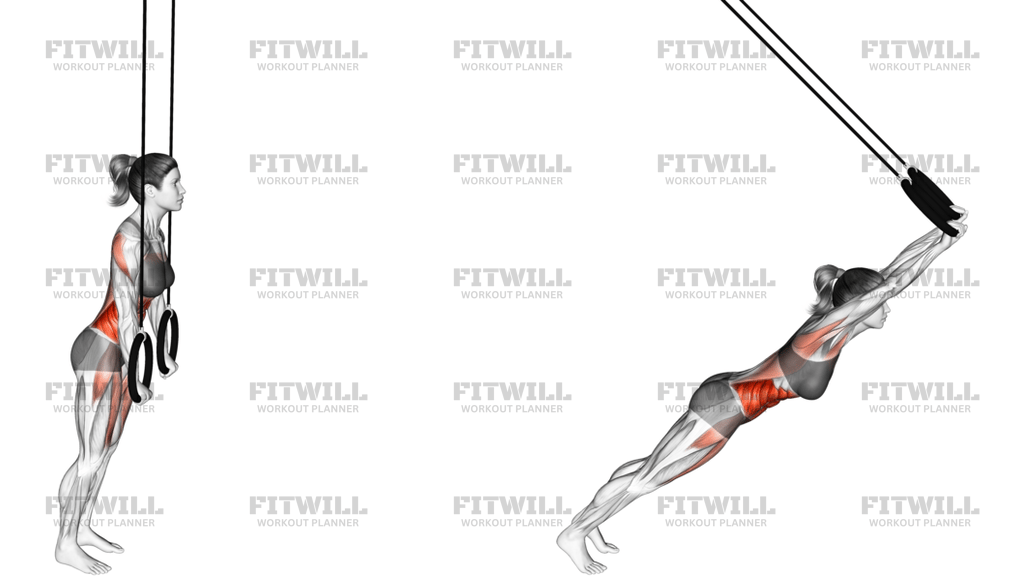
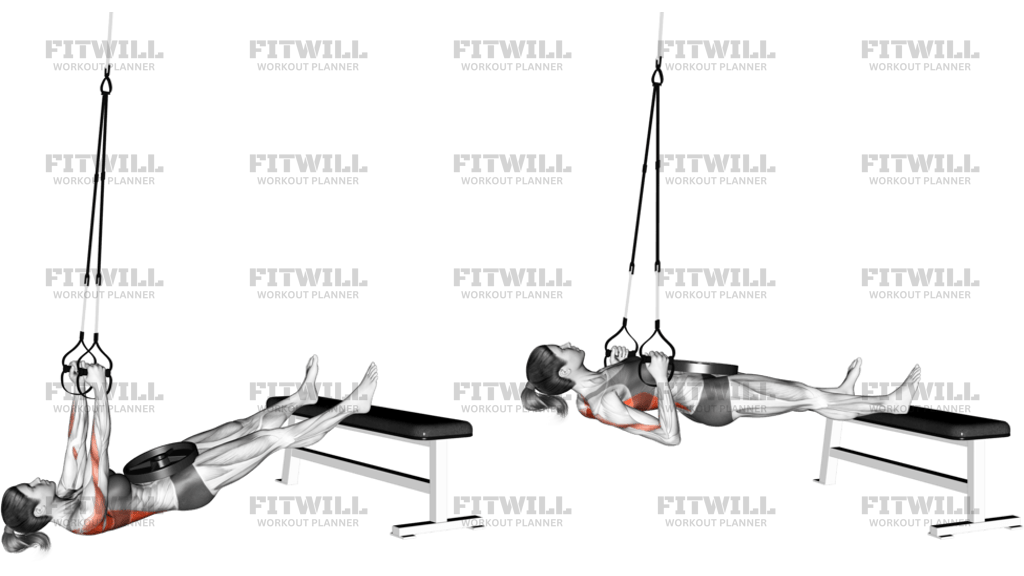
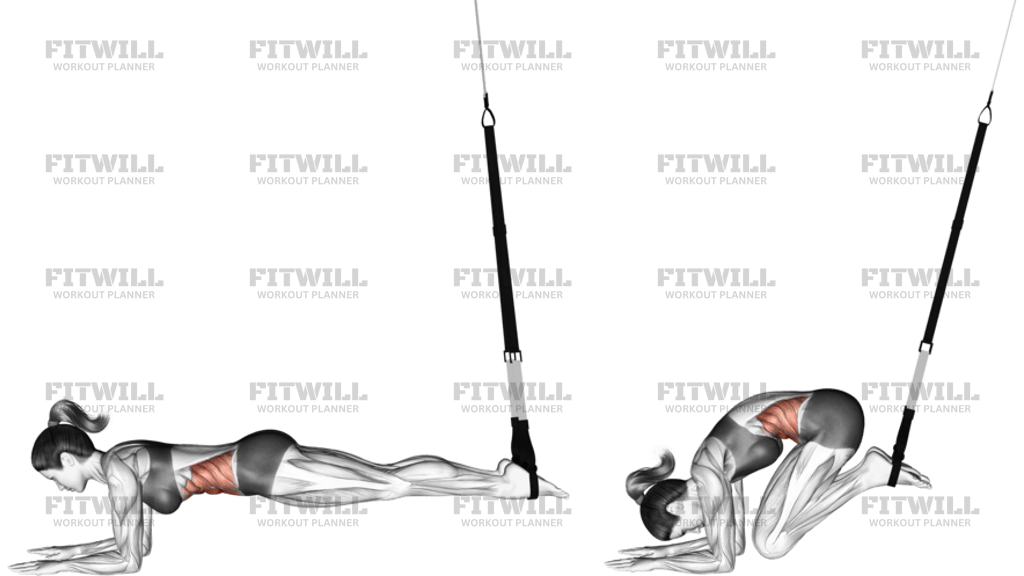
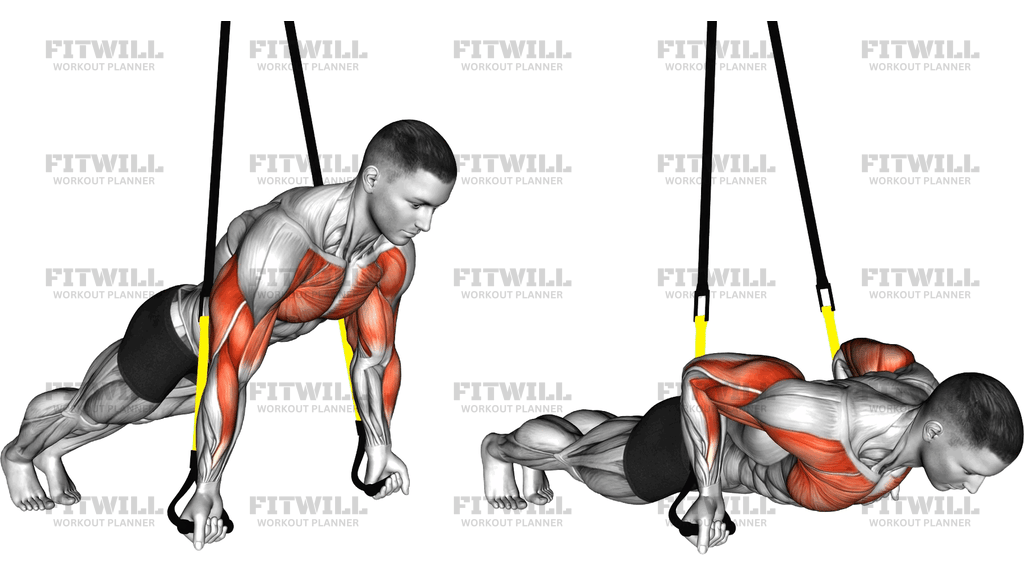
Ring Planche
The Ring Planche is one of the most demanding static holds in gymnastics strength training. From a support position on still rings, you lean your shoulders forward past your hands and lift your entire body so it hovers above the rings — legs extended in the full version, knees tucked against the chest in the tucked progression shown here. Because rings hang freely from the straps, every wobble has to be corrected by your own joints, which makes this movement far less forgiving than the same hold on parallel bars or the floor.
This exercise is aimed at intermediate and advanced trainees who already own a solid ring support hold, ring dips, and a comfortable tuck planche on parallettes or the floor. Calisthenics athletes, gymnasts, and anyone chasing serious straight-arm pressing strength will get the most out of it. It is not a beginner movement, and treating it as one is the fastest way to strain a shoulder or elbow.
The Ring Planche primarily loads the shoulders, especially the front delts, along with the chest and triceps working in a straight-arm press. The core — from the rectus abdominis through the deep stabilizers — locks the pelvis and spine into position, while the forearms and grip manage the rings the whole time. Unlike many pressing movements, the elbows stay locked, so the stress runs through the connective tissue of the elbows, wrists, and shoulders. That tissue adapts slowly, which is why planche work is programmed in short, low-repetition holds rather than long grinding sets.
Setup matters more here than on fixed apparatus. Ring height, strap length, and grip position determine whether your center of mass can actually travel over your hands. Set the rings so your hands hang at roughly hip height when you stand beside them, and check that the straps are even and not twisting. A proper support hold — arms locked, shoulder blades pushed down and slightly forward, rings turned slightly outward — is the platform every planche attempt is built on.
To execute the hold, press the rings down hard and lean forward gradually, letting your shoulders drift past your wrists while your hips rise. In the tucked version, pull your knees in close to your chest so your hips stack above or slightly ahead of your hands, and balance there with your arms completely straight. The breathe-and-hold rhythm is slow and controlled; you will fight the straps shaking under you, and staying calm through that shake is a trainable skill in itself.
Use the Ring Planche as a peak static skill in your session, not as fatiguing volume. Short sets of 3 to 10 seconds, performed fresh with full rest between attempts, build the straight-arm strength this hold demands. Always lower back into the support position under control rather than dropping out of the hold, and stop the session the moment your form degrades or your shoulders start complaining.
[ Workout Log & Planner ]
Put your next workout in Fitwill
Keep your plan and training log ready when you are.


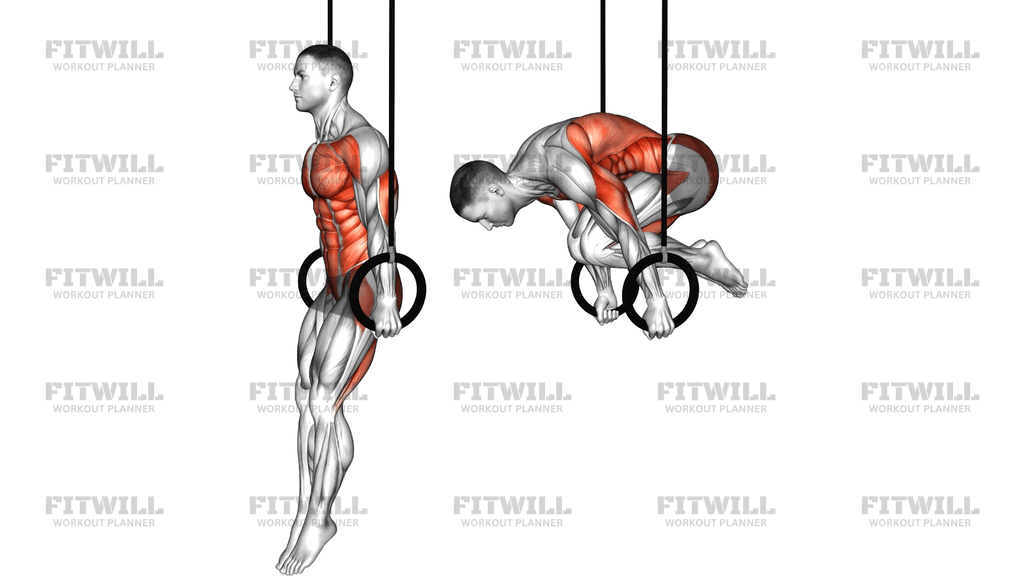
Instructions
- Set the rings so they hang at about hip height and adjust the straps to equal length, checking that neither ring is twisted.
- Take a firm full grip with your thumbs wrapped around the rings, jump or press into a support hold, and lock your elbows with your shoulder blades pressed down and forward.
- Brace your core and squeeze your glutes so your body is one solid piece before you attempt any lean.
- Press the rings down and lean your shoulders forward past your wrists, keeping your arms completely straight as your weight shifts over your hands.
- Tuck your knees in tight toward your chest and let your hips rise until they sit above or slightly in front of your hands, with your upper back rounded slightly forward.
- Find the balance point where your hands sit directly under your center of mass, and hold it with steady, shallow breathing — never hold your breath through the shake.
- Keep the rings turned slightly outward and press them toward each other to tame the instability of the straps.
- To finish, lower your legs slowly back down and control your shoulders back behind your wrists until you return to the support hold.
- Rest fully between attempts — 90 seconds to 3 minutes — and reset your grip and support position completely before the next hold.
Tips & Tricks
- Most failed attempts come from leaning too fast. Move your shoulders past your wrists in small increments over weeks; the balance point is much further forward than beginners expect.
- Bent elbows are a red flag on rings. If your arms bend under load, you are either too fatigued or skipping progressions — both lead to elbow trouble, so cut the set.
- Sinking between the shoulder blades turns the hold into a ring dip top position. Actively push the rings away and keep your upper back rounded to stay in planche position.
- Letting your hips drift behind your hands is the classic tucked-planche error. Film yourself from the side; your hips should stack over your wrists, not trail behind them.
- If the straps shake violently, you are correcting with big movements. Make tiny wrist and finger pressure adjustments instead of wrestling the rings back to center.
- A false grip is not needed for the Ring Planche — a normal full grip with thumbs wrapped is stronger and safer for straight-arm loading.
- Practice the tucked hold on parallettes or the floor first. If you cannot hold a stable tuck planche on solid ground, the rings version will only teach you to fall.
- Keep sessions short and fresh. Planche holds before ring dips or heavy pressing fatigue your stabilizers and turn a skill session into a risky one.
- Warm up your wrists, elbows, and shoulders with straight-arm support holds and planche leans before attempting the full tucked position.
Frequently Asked Questions
What muscles does the Ring Planche work?
The front delts carry most of the load, supported heavily by the chest and triceps in a straight-arm press. Your core locks the body together and your forearms and grip control the rings throughout the hold.
Can beginners train the Ring Planche?
Not directly. Beginners should build a ring support hold, ring dips, and a floor or parallette tuck planche first, since straight-arm loading on unstable rings stresses the elbows and shoulders quickly.
Why is the Ring Planche harder than a planche on bars or floor?
Rings hang freely, so they can twist, drift, and swing under you. Your shoulders, elbows, and grip must constantly correct that instability, adding a control demand that fixed apparatus does not have.
How high should the rings be set for the Ring Planche?
Set them so your hands are around hip height when you stand beside them. This lets you mount into a support hold safely and gives you room to bail by lowering your feet to the floor.
Should I train the tuck planche or go straight to the full Ring Planche?
Start with the tuck shown in the tucked-knees version and only extend toward advanced tuck and full planche once you can hold the tuck solidly for 10 to 15 seconds. Jumping ahead usually means bent arms and hips sagging behind the hands.
My elbows ache after Ring Planche attempts — what should I change?
Reduce hold duration, make sure your elbows are fully locked during every attempt, and spend more time on easier straight-arm work like planche leans and support holds. Persistent elbow pain is a signal to back off entirely for a while.
How long should I hold the Ring Planche in a set?
Aim for quality over duration — sets of 3 to 10 seconds with full rest between attempts. When you can no longer hold the position with straight arms and hips over your hands, end the session.
What can I substitute if I don't have rings yet?
Parallette or floor tuck planche, planche leans against a wall or on rings, and advanced tuck holds on low parallettes all build the same straight-arm pressing strength with less instability.
How do I bail out safely if I lose balance in the Ring Planche?
Lower your legs and drop your hips back through the rings into a support hold, or step your feet down to the floor. Never try to muscle the rings back to center mid-fall, and avoid bailing with soft, bent arms.