Bodyweight Heel Elevated Bulgarian Split Squat
The Bodyweight Heel Elevated Bulgarian Split Squat is a single-leg squat variation where your rear foot rests on a flat bench behind you and your front heel sits on a small block or wedge. The two setups work together: the bench behind you lengthens the working range of the front leg, while the heel elevation shifts more of the load onto the quadriceps and lets you sit deeper into the rep without the ankle limiting you. Because there is no external weight, all you need is a bench, a low block, and enough floor space to split your stance.
This movement is useful for a wide range of trainees. Beginners use it to learn single-leg control before touching loaded split squat variations, and more experienced lifters use it as a high-effort quad exercise when they want to challenge the legs with bodyweight only. It also suits home gym settings, hotel workouts, and deload weeks, since a bench-height rear foot and a modest heel wedge are easy to find or improvise.
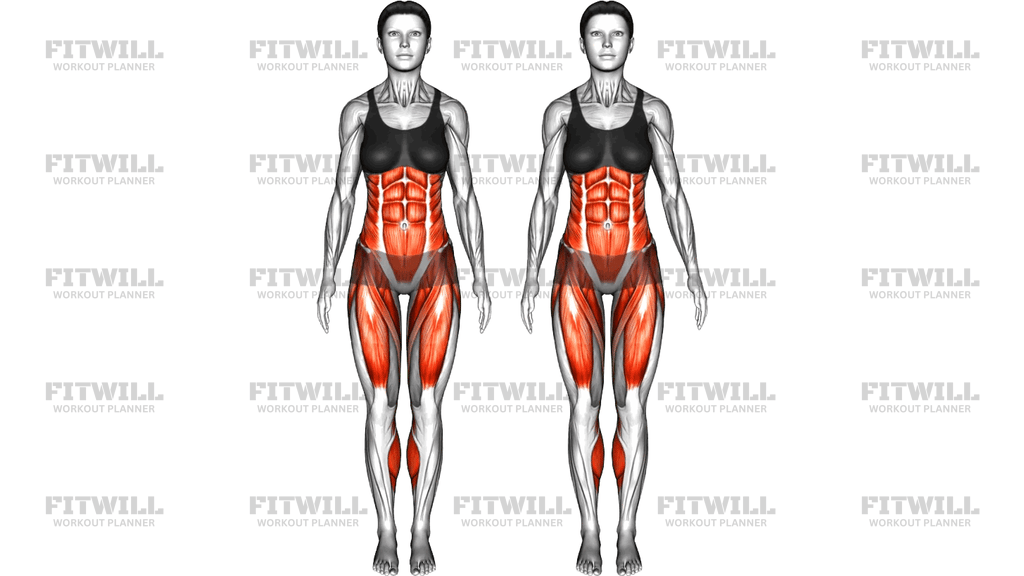
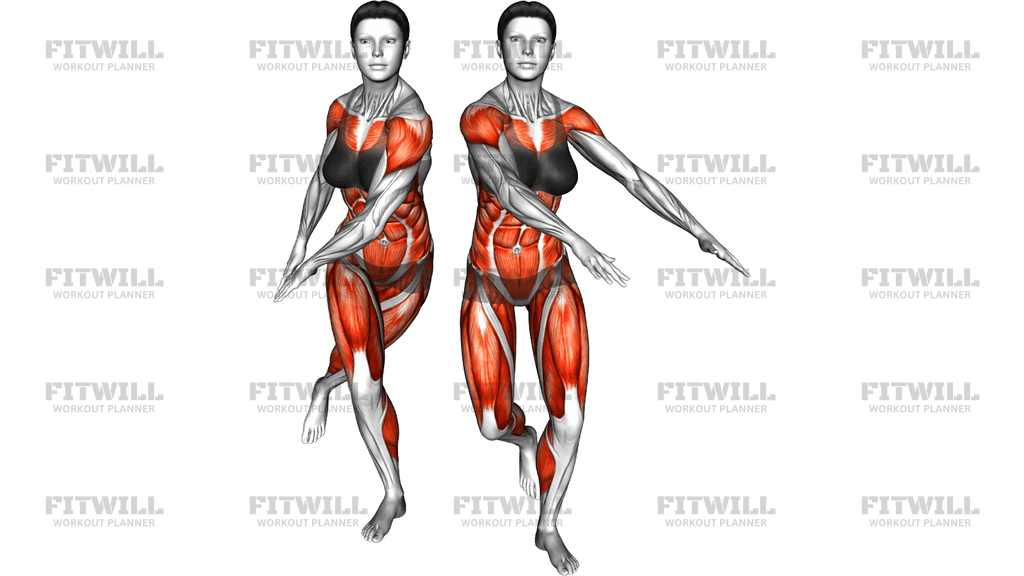
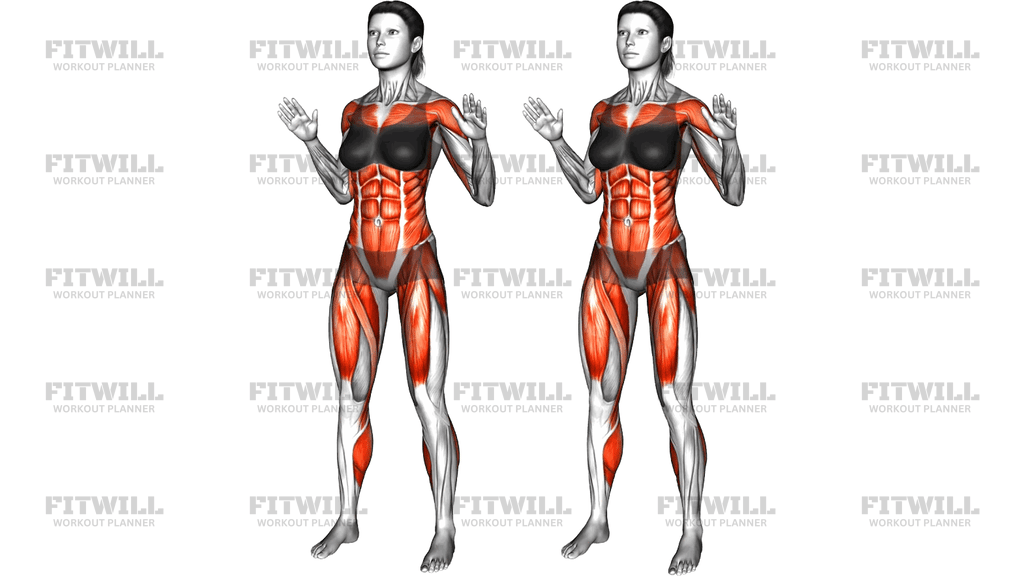
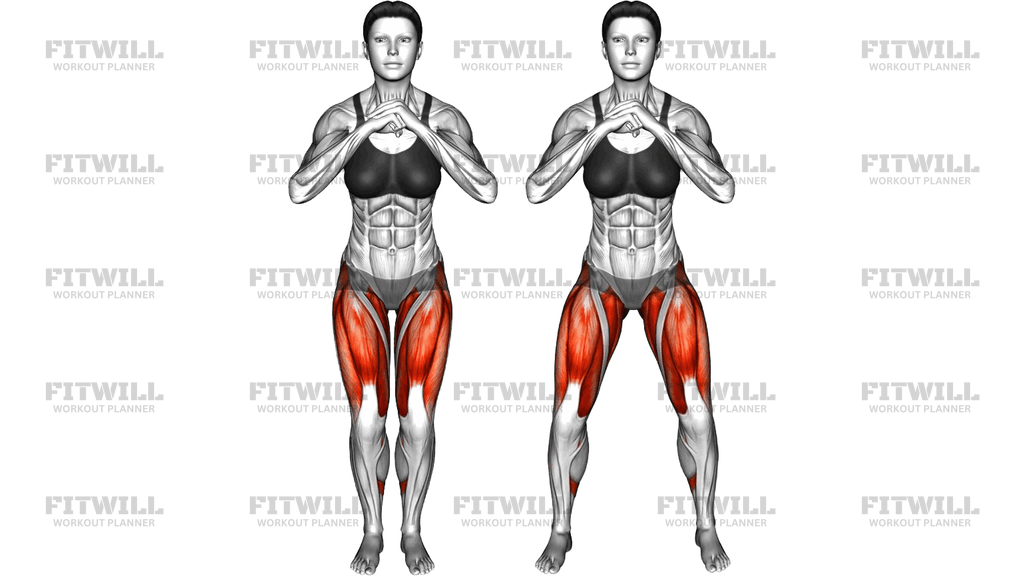
The main targets are the quadriceps of the front leg, with the glutes and hamstrings assisting as you drive up, and the adductors and calf complex stabilizing through the bottom. Elevating the heel increases knee flexion at the bottom position, which places a greater demand on the quads, particularly around the knee. The rear leg mostly serves as a kickstand, though the hip flexors of that leg get a light stretch as it extends behind you on the bench.
Setup details matter more here than in a standard split squat. The distance from bench to front foot determines whether you stress the quads (shorter stance, more upright torso, deeper knee bend) or the glutes and hamstrings (longer stance, more hip hinge). A heel wedge of roughly two to four centimeters is usually enough; going too high can push the knee into an uncomfortable position. Keep the rear foot laced over the bench edge or placed with the toes tucked, whichever feels stable for your ankle.
To execute well, drop straight down rather than forward, letting the front knee travel over or slightly beyond the toes while your torso stays tall. Lower until the rear knee hovers just above the floor or until your front thigh reaches at least parallel, then press the floor away through the whole front foot, keeping some pressure on the elevated heel. Move at a speed you can control on the way down; the eccentric is where most of the strength benefit lives in a bodyweight version.
A few practical points keep this exercise safe and productive. Balance is the usual limiter, so keep your hands free or lightly touch a wall until you are steady. Make sure both knees tolerate the depth without pinching, and stop short of the floor if depth causes discomfort at the front of the knee. Split the work evenly by completing all reps on one side before switching, and count reps so the weaker leg sets the standard.
[ Workout Log & Planner ]
Put your next workout in Fitwill
Keep your plan and training log ready when you are.


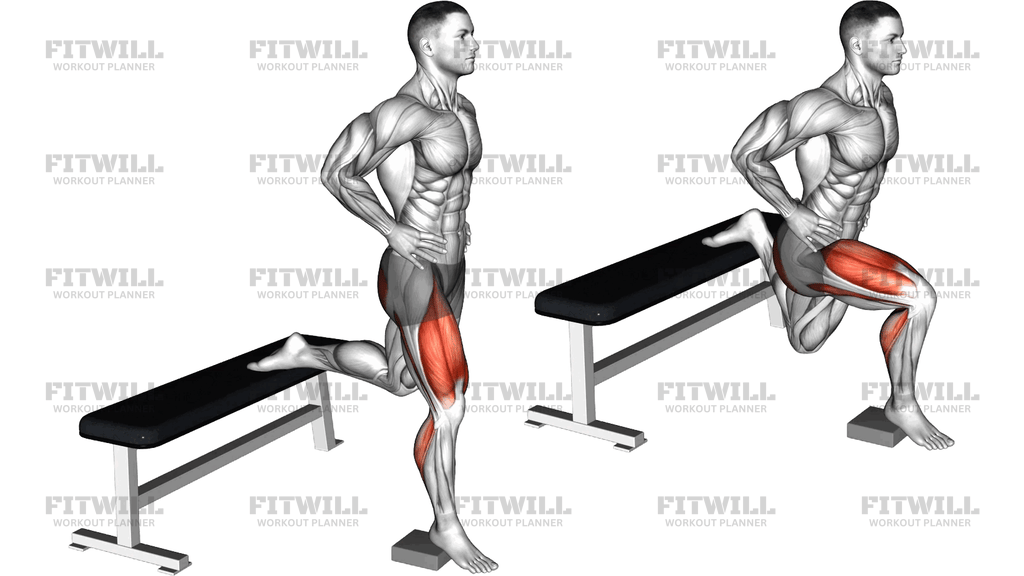
Instructions
- Place a flat bench behind you and set a low block, wedge, or weight plate on the floor where your front foot will go.
- Stand facing away from the bench, place the top of your rear foot on the bench edge, and position your front foot far enough forward that your shin stays roughly vertical at the bottom, with the heel resting on the block.
- Set your hands on your hips or let them hang at your sides, and stand tall with your chest up and eyes forward.
- Brace your core and squeeze the glute of the rear leg to lock in a stable pelvis before you descend.
- Bend the front knee and lower your hips straight down, letting the rear knee drop toward the floor while your torso stays upright.
- Descend until your front thigh is at least parallel to the floor or your rear knee is just above the ground, keeping the front heel in contact with the block.
- Press through the entire front foot, including the elevated heel, and push the floor away to stand back up without shifting weight onto the rear leg.
- Exhale as you drive up, inhale as you lower, and finish the rep with the front leg extended but not locked hard.
- Complete all planned reps on one leg, step the rear foot off the bench, then set up on the other side.
- Reset your stance and brace between sets so every rep starts from the same balanced position.
Tips & Tricks
- If your front knee drifts inward as you descend, think about spreading the floor with your foot and tracking the knee over your second toe.
- A stance that is too short forces the knee far past the toes and can feel pinchy; step the front foot a few centimeters forward until the bottom position is smooth.
- Keep the weight on the front leg at all times. If you feel the rear foot pushing into the bench on the way up, you are using the back leg to help and reducing the work on the front quads.
- Do not bounce out of the bottom. Pause for a beat with the rear knee near the floor to keep tension on the front leg and improve control.
- If your rear ankle feels cramped with the foot laced over the bench, tuck the toes under and rest the ball of the foot on the bench instead.
- Hold a light touch on a wall or rack with one hand if balance fails before your legs do, then wean off the support as you get steadier.
- Keep the torso vertical rather than leaning forward. A forward lean turns this into more of a hip-dominant exercise and reduces the quad emphasis the heel elevation is there to create.
- If the block is too high and your heel or knee complains, lower it. A small elevation is enough to deepen the knee angle without forcing the joint to its end range.
- Match reps side to side rather than doing more reps on your stronger leg, otherwise imbalances grow over time.
Frequently Asked Questions
What muscles does the Bodyweight Heel Elevated Bulgarian Split Squat work?
The quadriceps of the front leg do most of the work, with the glutes and hamstrings assisting on the way up. The adductors, calves, and core stabilize the body throughout the rep.
Why elevate the front heel in this exercise?
Raising the heel lets the front knee travel further forward over the toes, which increases knee flexion at the bottom and allows a deeper rep when ankle mobility is limited. This shifts more of the effort onto the quads.
How far should my front foot be from the bench?
Start with a distance that lets your front shin stay close to vertical at the bottom, usually about two to three foot-lengths from the bench. A shorter stance biases the quads, while a longer stance involves more glute and hamstring.
Is the Bodyweight Heel Elevated Bulgarian Split Squat good for beginners?
Yes, it is a practical way to build single-leg strength and balance without external load. Beginners can shorten the range at first and lightly hold a wall for balance until the movement feels stable.
My back knee hurts when it approaches the floor. What should I change?
Stop the descent a few centimeters higher rather than forcing the knee to the ground, and check that the rear foot rests comfortably on the bench. If direct pressure on the kneecap is the issue, place a folded mat or pad under the knee path.
What can I use if I do not have a bench?
Any stable surface around knee height works, such as a sturdy chair, a low box, or the edge of a bed. For the heel elevation, a weight plate, thick book, or small wedge will do the job.
How is this different from a regular Bulgarian split squat?
The heel elevation increases the range of knee flexion and makes the exercise more quad-dominant, whereas a flat-front-foot version relies more on ankle mobility and involves relatively more glute and hamstring contribution.
How many reps and sets should I do?
Because the load is limited to your bodyweight, moderate to higher rep ranges work well, such as three sets of eight to fifteen reps per leg. Progress by slowing the descent, adding a pause at the bottom, or increasing reps over time.
Should my front knee go past my toes?
With an elevated heel, some forward knee travel is expected and is fine as long as the movement stays pain-free and controlled. If you feel pinching at the front of the knee, reduce the heel height or shorten the depth slightly.