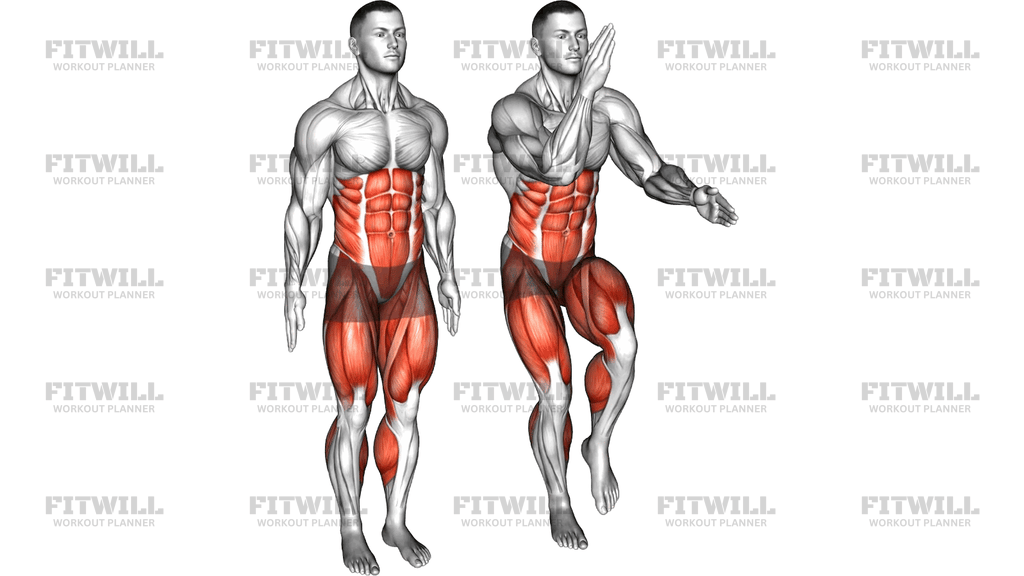
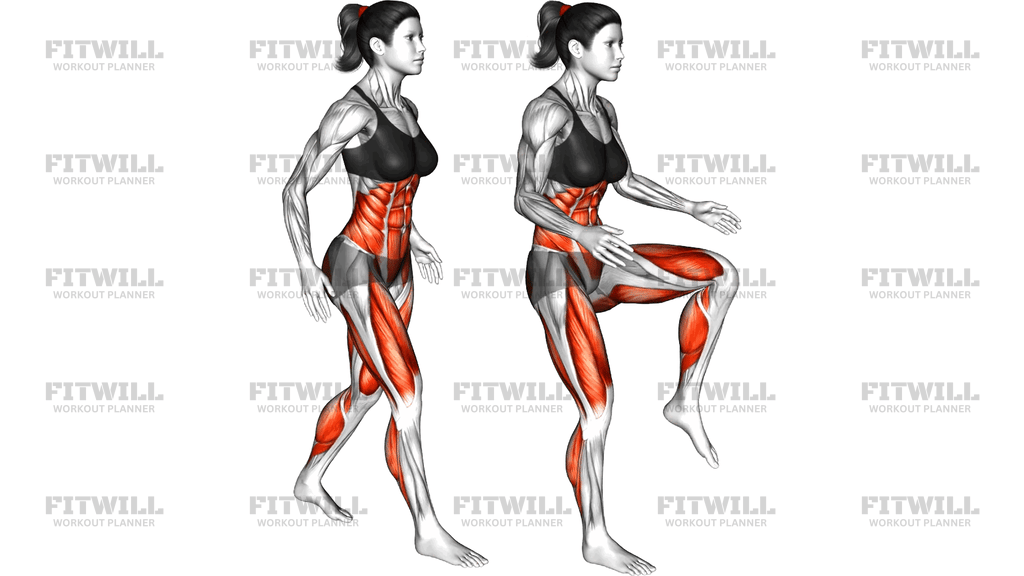
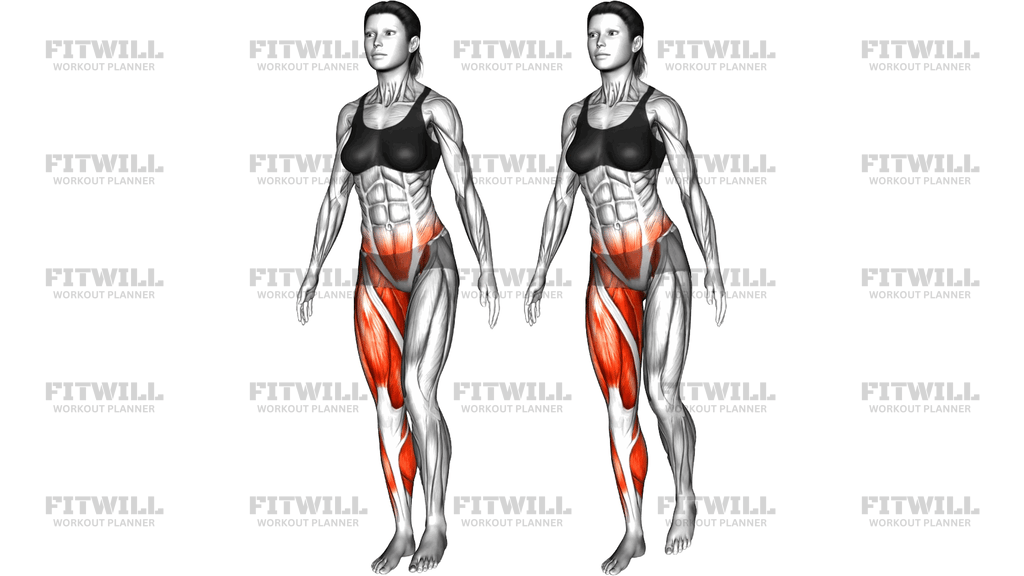
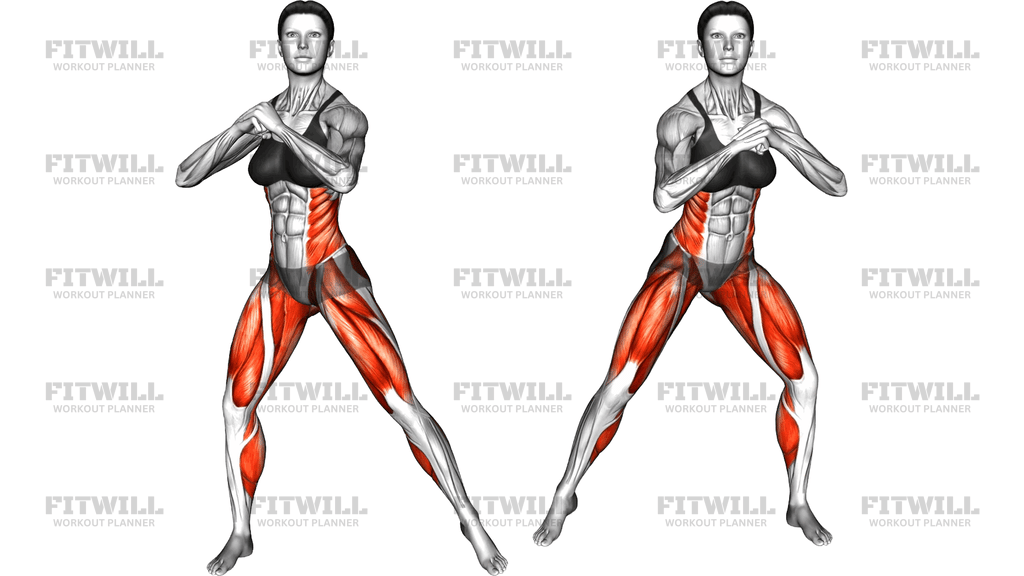
Squat Jack
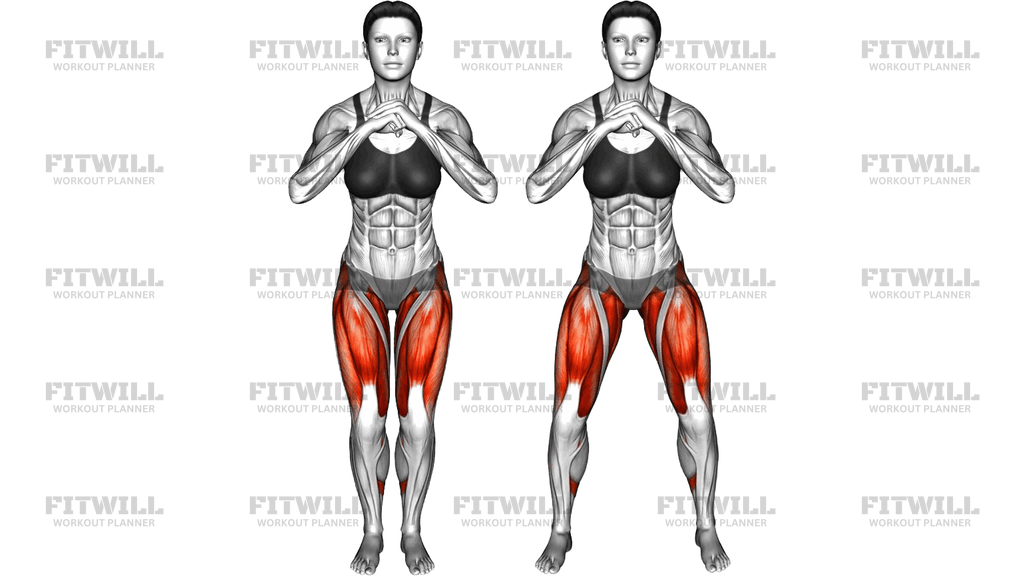
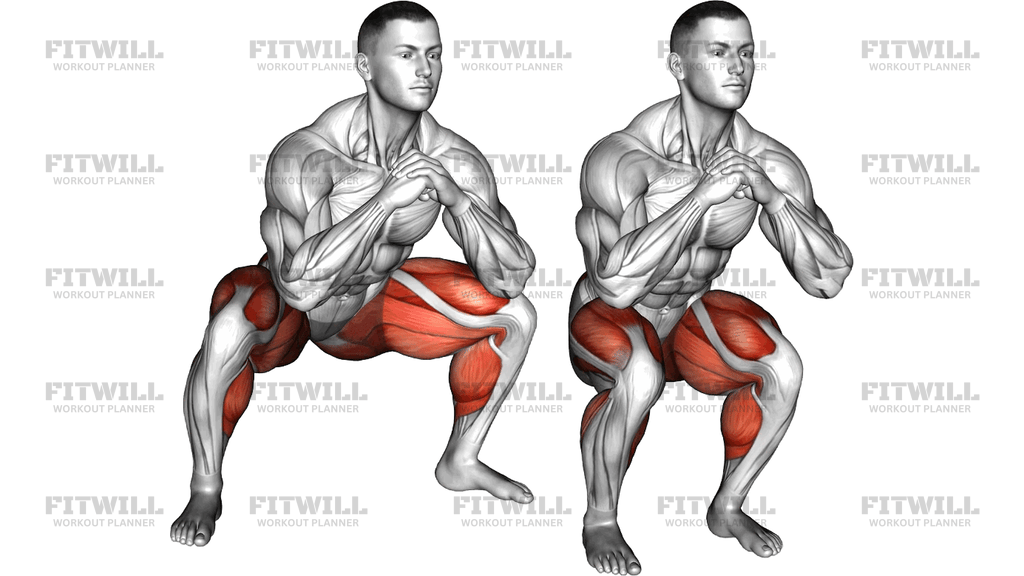
The Squat Jack is a body weight conditioning move that combines the footwork of a jumping jack with the lower body demand of a wide-stance squat. From a standing position with your feet together, you jump your feet out wide and immediately sink your hips down into a low squat, then jump your feet back together to complete one rep. Because every rep ends in a squat position, you get both an explosive element and a strength element in a single continuous rhythm.
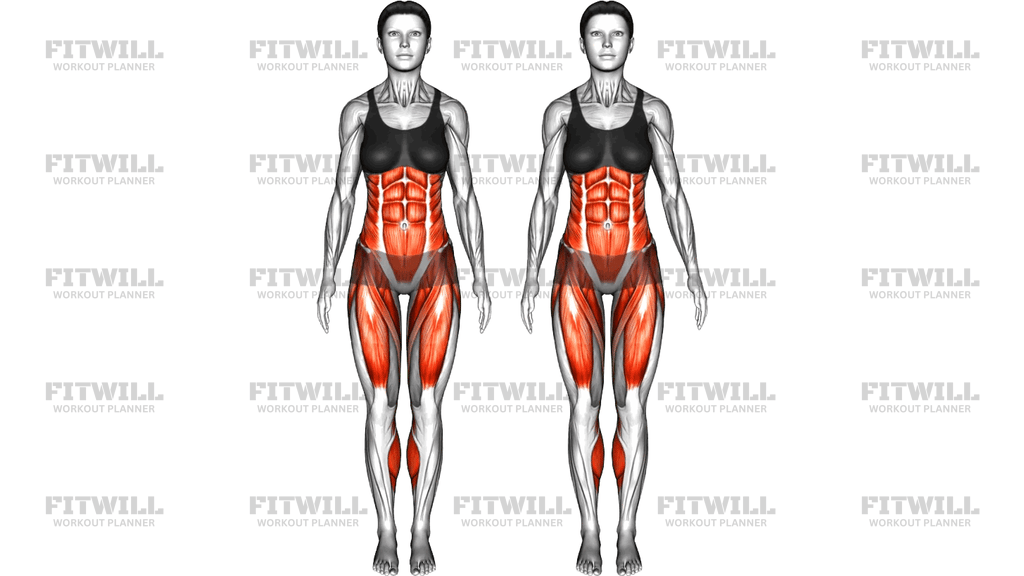
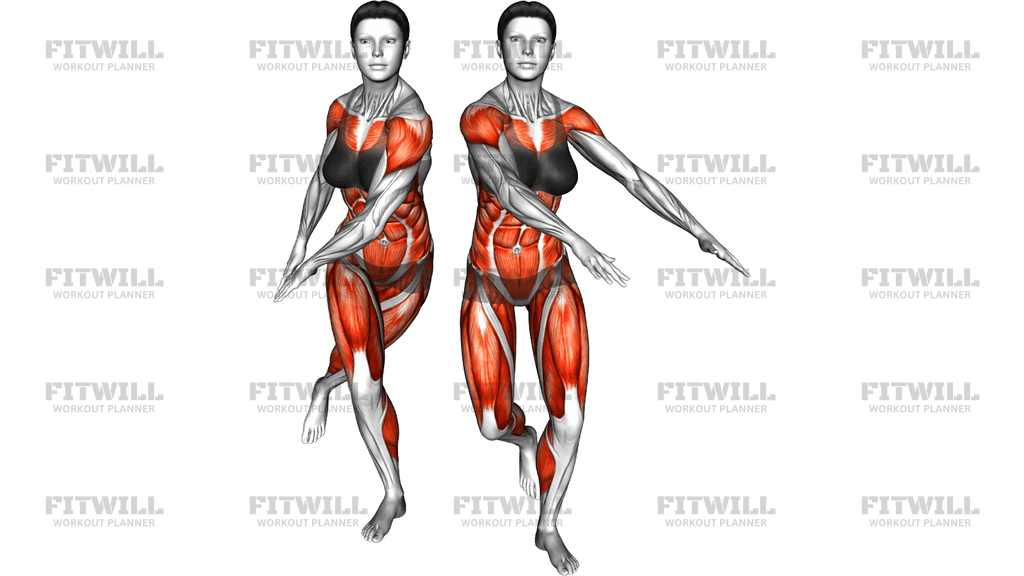
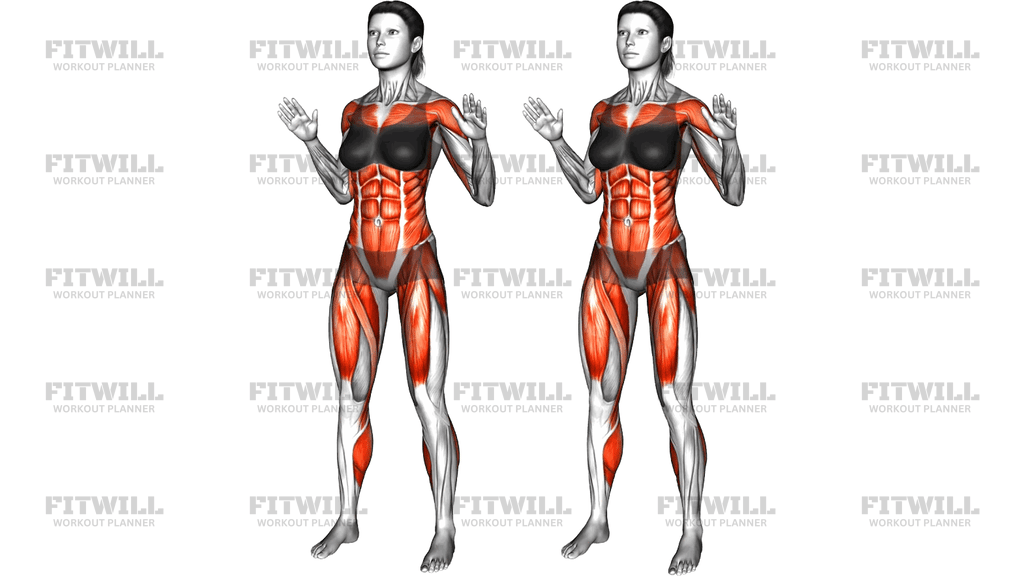
This movement earns its place in warm-ups, circuit training, and conditioning intervals. The wide jump recruits the quads and glutes as you decelerate and lower, while the adductors along the inner thigh work hard to control the wide stance and pull you back in. Your calves absorb each landing, and your core stays busy keeping your torso upright through every impact. It also drives your heart rate up quickly, which is why it pairs so well with exercises like mountain climbers, burpees, or jump rope in a metabolic circuit.
Setup matters more than people expect. The wide position should land with your feet roughly one and a half shoulder-widths apart, toes turned slightly outward so your knees can track in line with them. If your feet land too narrow, you never reach a true squat depth; if they land too wide or with knees caving inward, you place unnecessary stress on the knees and hips. Keep your weight spread across the whole foot with a slight bias toward the heels, chest lifted, and hands clasped in front of your chest for balance.
Execution is about rhythm and control, not speed alone. Land softly by bending the knees the moment your feet touch the floor, letting the hips travel straight down rather than letting the torso pitch forward. Pause briefly at the bottom if you are new, then jump the feet back together under control. As you become comfortable, the pause shortens and the movement becomes one fluid cycle: out and down, up and in.
Because it requires no equipment and very little space, the Squat Jack is easy to program anywhere. Beginners can remove the jump entirely, stepping one foot out at a time into the squat and stepping back in, which keeps the same muscle demand while reducing impact. More advanced trainees can add tempo, hold the bottom squat for two to three seconds per rep, or wear a weighted vest. Whatever the variation, the key safety point is the same: control the landing, keep the knees tracking over the toes, and stop when your squat depth or landing quality starts to break down.
[ Workout Log & Planner ]
Put your next workout in Fitwill
Keep your plan and training log ready when you are.


Instructions
- Stand tall with your feet together, arms relaxed at your sides or hands clasped in front of your chest, and set your gaze on a fixed point forward.
- Brace your core by tightening your midsection as if bracing for a light punch, and keep your ribcage stacked over your hips.
- Jump both feet out to the sides at the same time, landing roughly one and a half shoulder-widths apart with toes turned out about 15 to 30 degrees.
- As your feet land, immediately push your hips back and bend your knees to sink into a low wide squat, keeping your chest upright and your weight toward your heels.
- Let your knees travel outward over your toes in the bottom position, and optionally let your inner elbows brush inside your knees to confirm proper tracking.
- Drive through the floor to stand up out of the squat, then jump both feet back together to return to the narrow starting stance.
- Breathe in as you jump out and lower into the squat, and breathe out forcefully as you drive up and jump back in.
- Land softly on the return jump with soft knees rather than stiff legs, absorbing impact through the hips and calves.
- Reset your stance and brace for each rep if you are learning the movement; once comfortable, link reps into a smooth, continuous rhythm.
- Finish the set by stepping your feet together and standing fully upright to release the tension in your legs and hips.
Tips & Tricks
- The most common fault is landing with feet too close together, which turns the squat into a shallow dip. Aim for a stance wide enough that your hips drop below your knees when you lower.
- Watch for knees caving inward on the landing. Cue yourself to push your knees outward over your pinky toes as you drop into the squat.
- If your heels lift off the floor at the bottom, your stance is too narrow or your ankles are tight. Widen slightly and turn the toes out more so your heels can stay grounded.
- Loud, heavy landings are a sign you are absorbing impact with stiff joints. Practice quiet reps: your feet should barely make a sound when they touch down.
- Do not let your chest fall forward and your back round as fatigue builds. Hands clasped at chest height gives you a reference point; if your hands drop toward your knees, reset your posture.
- Slow the tempo down before adding speed. One clean Squat Jack with a real squat depth teaches your body more than five rushed, shallow reps.
- If jumping bothers your knees or you are training on a hard surface, switch to step-out squat jacks: step one foot out into the squat, bring it back, and alternate sides.
- Keep the return jump deliberate. Many people jump out with control but snap the feet back together sloppily, which wastes the inner thigh work on the way in.
- A thin mat or sprung floor helps if you are doing high-rep sets, but avoid thick soft mats that wobble under your feet during the landing.
Frequently Asked Questions
What muscles does the Squat Jack work?
The Squat Jack primarily targets the quads and glutes, with heavy involvement from the inner thighs (adductors) controlling the wide stance. The calves absorb each landing and the core stabilizes your torso through every rep.
Is the Squat Jack a strength exercise or a cardio exercise?
It sits in between: the repeated jumps elevate your heart rate like a cardio move, while the deep wide-stance squat builds lower body strength and endurance. In practice, most people use it for conditioning and warm-up circuits.
How wide should my feet land during a Squat Jack?
Aim for roughly one and a half shoulder-widths, wide enough that your hips can sink into a deep squat with your heels flat. Your toes should point slightly outward so your knees can track in the same direction.
Can beginners do Squat Jacks without jumping?
Yes. Step one foot out into the wide squat, then step it back and alternate sides, or step both feet out at once without leaving the floor. This keeps the same squat and inner thigh demand while removing the impact.
Why do my knees hurt when I do Squat Jacks?
The most likely causes are knees caving inward on the landing, landing too stiff-legged, or squatting deeper than your current mobility allows. Focus on soft landings, push your knees outward over your toes, and reduce depth or switch to step-outs if discomfort continues.
How many Squat Jack reps should I do?
For conditioning, work in timed intervals of 20 to 40 seconds or sets of 10 to 20 reps. Stop the set when your squat depth or landing quality noticeably drops, since sloppy reps train bad habits.
What can I substitute for the Squat Jack?
Sumo squats, regular jumping jacks, or step-out side squats all work depending on your goal. Choose a sumo squat for strength without impact, or a plain jumping jack if you want the cardio with less squat demand.
Should my heels stay down in the bottom of the Squat Jack?
Yes, keep your heels grounded and your weight spread across the whole foot with a slight bias toward the heels. If your heels lift, widen your stance slightly and turn your toes out more.
Do I need any equipment or a mat for Squat Jacks?
No equipment is required, just enough floor space to jump your feet out wide without obstruction. A firm, slightly forgiving surface like a thin mat or wooden floor is ideal; avoid very thick, soft mats that destabilize your landings.