Bodyweight Single Leg Squat
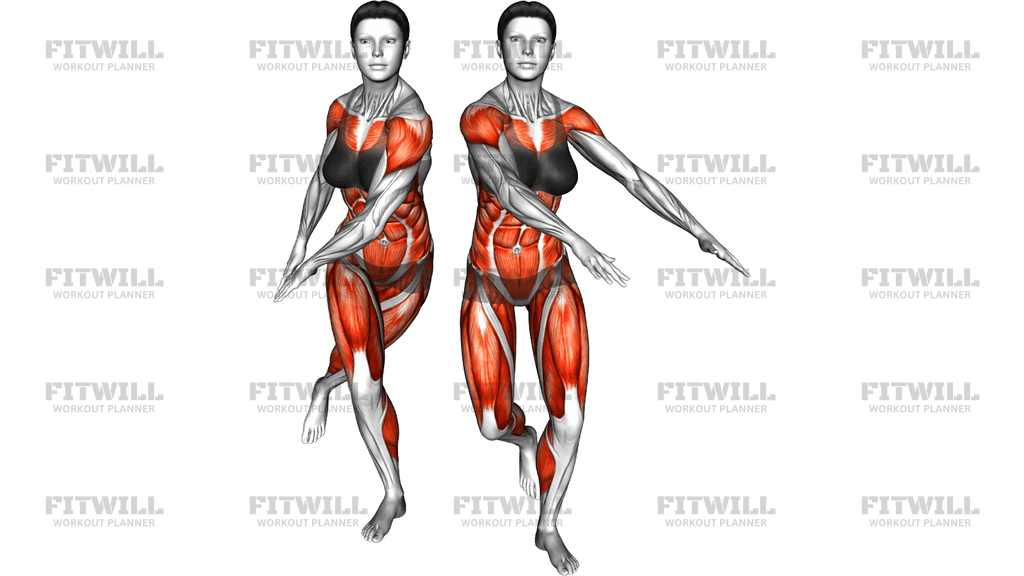
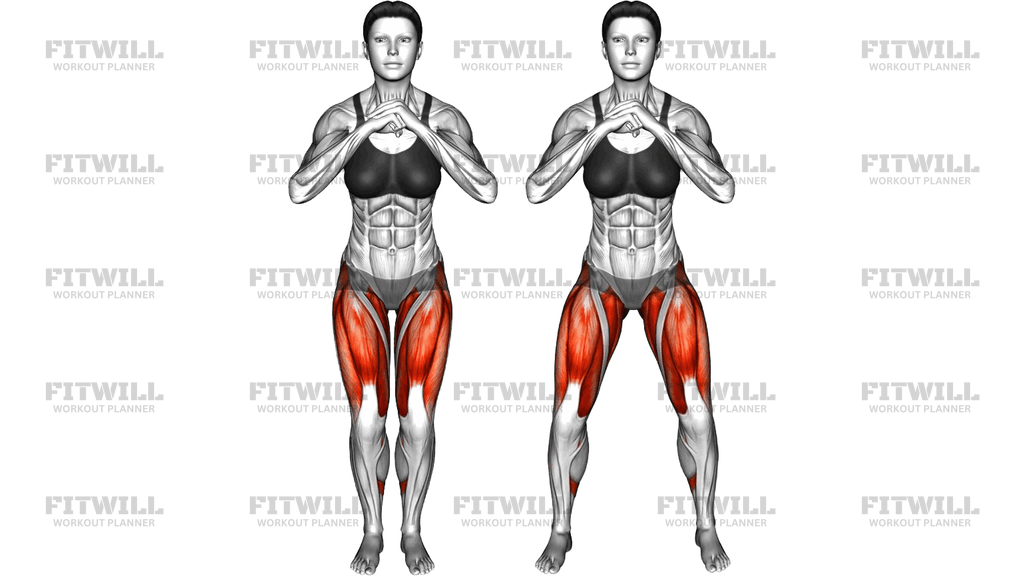
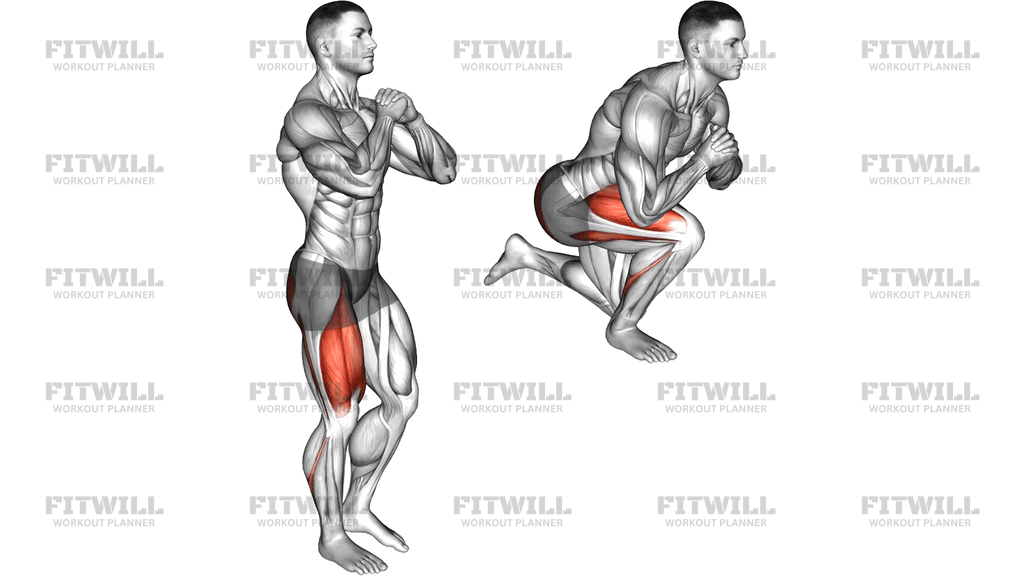
The Bodyweight Single Leg Squat is a unilateral lower body exercise where you lower into a squat on one leg while the other leg stays off the floor, usually bent behind you as in the setup shown here. Unlike a two-legged squat, the entire load of your torso lands on one limb, which makes the working leg dramatically stronger through the quads, glutes, and stabilizing muscles around the knee, hip, and ankle. Hands are typically clasped in front of the chest to help counterbalance the backward shift of the hips as you descend.
This movement is useful for almost anyone who wants stronger, more balanced legs without equipment. Because each leg works independently, it exposes and corrects side-to-side differences that a regular squat hides. Runners, martial artists, and field sport athletes use it to build single-leg control, and lifters use it as a bodyweight benchmark before adding load to unilateral work.
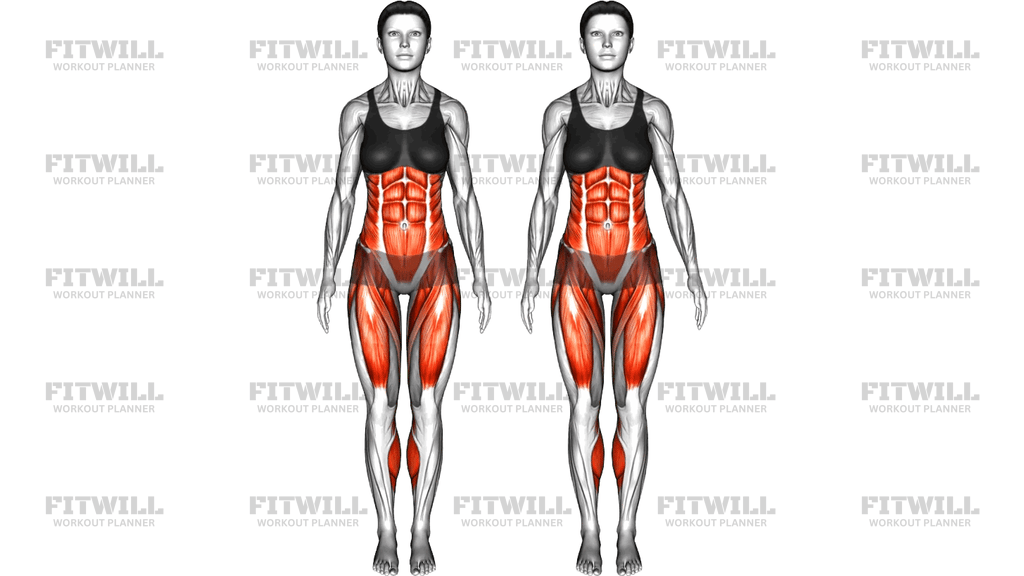
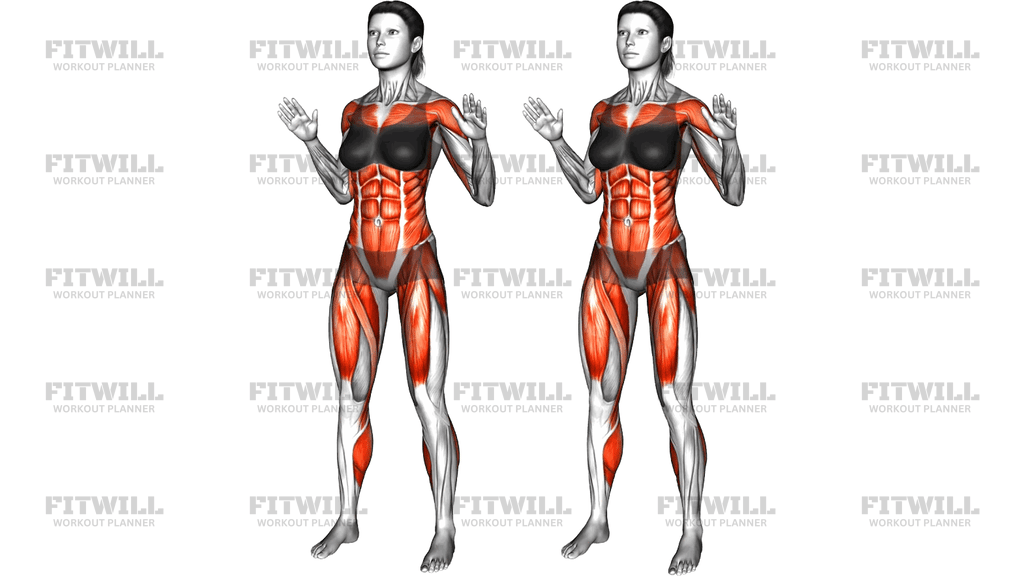
The main strength demand falls on the quadriceps, which light up strongly as the knee travels forward over the foot. The glutes handle hip extension on the way back up and stabilize the pelvis so it doesn't drop toward the lifted leg. Deep hip and ankle stabilizers work the whole time to keep your balance, and the core braces to hold your torso upright as you sink down.
Setup matters because your balance window is narrow. You need a foot planted flat, your weight centered over the midfoot, and your non-working leg positioned so it doesn't drag or swing. Starting with the free leg bent behind the body, as shown, is more forgiving than holding it straight ahead and is the right version to learn first.
To execute well, shift your weight onto the working leg, brace your torso, and push the hips back as the knee bends and travels forward. Keep the heel glued to the floor and let the torso lean slightly ahead of the knee rather than rounding. Descend as deep as you can control, then drive through the whole foot to stand back up without letting the free leg touch down.
A practical safety point: stop at the depth where your heel stays down, your knee tracks over the middle of the foot, and you can reverse smoothly. If you can't control the bottom position yet, squat to a bench or box set at the depth you can handle and stand back up from it, lowering the height over time as your strength and balance improve.
[ Workout Log & Planner ]
Put your next workout in Fitwill
Keep your plan and training log ready when you are.


Instructions
- Stand tall with your feet roughly hip-width apart and your arms relaxed at your sides.
- Shift all your weight onto one foot and lift the other foot off the floor, bending that knee so the foot hangs behind your body near the working ankle.
- Clasp your hands together in front of your chest with your elbows bent, keeping them close to your torso as a counterbalance.
- Brace your abdominal muscles and keep your chest lifted, setting your gaze on a fixed point ahead of you.
- Push your hips back and bend the working knee, letting it travel forward over your toes while keeping the entire foot flat on the floor.
- Lower until your thigh is near parallel to the floor or as deep as you can control with the heel down, keeping the free leg lifted and behind you.
- Drive through the heel and midfoot to straighten the leg and return to a full standing position without letting the free leg touch down.
- Exhale as you stand up and inhale on the way down, keeping your breathing steady rather than holding it through the descent.
- Complete your repetitions on one leg, then switch sides and match the number of reps on the other leg.
- Reset your stance and balance between reps or between legs, especially as fatigue makes wobbles more likely.
Tips & Tricks
- If your heel lifts off the floor as you descend, you've gone past your current ankle range — stop at the depth where the heel stays planted and build up gradually rather than bouncing into the bottom.
- A common mistake is letting the knee cave inward toward the big toe side. Actively press the knee out over the middle of the foot as you lower.
- Don't rush the lowering phase. Dropping quickly into the bottom is usually what causes balance loss; a slow three-count descent gives the stabilizers time to catch up.
- Keep the free foot behind your body instead of letting it swing forward — it acts like a pendulum and will pull you off balance if it drifts.
- If you pitch forward and can't stay up, reach your clasped hands slightly higher toward your chest as you descend; the counterweight helps offset your hips going back.
- Use a doorway, squat rack upright, or wall for a light fingertip touch when learning. Reduce the assistance over weeks rather than relying on it indefinitely.
- Practice near a bench set to your current depth: tap your hips to it lightly at the bottom and stand back up, then lower the surface as your depth improves.
- Expect the weaker leg to limit your reps. Always start with it and match the volume on the stronger side rather than doing more reps there.
- If your standing foot rolls to the outside edge, think about gripping the floor with your toes and spreading them to keep the foot domed and stable.
Frequently Asked Questions
Which muscles does the Bodyweight Single Leg Squat work the most?
The quadriceps do the largest share of the work as the knee bends and travels forward. The glutes extend the hip on the way up, while the calves, deep hip stabilizers, and core work to keep you balanced on one foot.
How is the Bodyweight Single Leg Squat different from a pistol squat?
In this version the non-working leg stays bent behind the body with the hands at the chest, which keeps your center of gravity easier to manage. A pistol squat holds the free leg straight out in front, demanding far more mobility and balance.
Can beginners do the Bodyweight Single Leg Squat?
Yes, but most beginners should start with a bench or box behind them and lower to the height they can control. Assisted versions using a doorway or rack for fingertip support are a normal starting point, not a shortcut.
Why do I keep falling backward during the Bodyweight Single Leg Squat?
Falling backward usually means the hips are shifting back too far for your current ankle mobility or your weight is sitting behind the midfoot. Lean your torso slightly forward and keep your clasped hands at chest height to pull your center of mass over the working foot.
How deep should I go in the Bodyweight Single Leg Squat?
Go as deep as you can while keeping your heel flat, your knee tracking over the middle of the foot, and a smooth reversal at the bottom. Depth increases over time; forcing below your control range just breaks form.
My knee hurts when doing the Bodyweight Single Leg Squat. What should I check first?
Check that your knee tracks over the middle of your toes instead of caving inward, and that your heel stays down. If discomfort persists, reduce the depth and volume, and consult a professional before continuing.
What can I use instead of the Bodyweight Single Leg Squat if it's too hard?
Bulgarian split squats, step-ups, and rear-foot-elevated split squats train the same single-leg strength with more stability. A box squat to a high surface is the closest stepping stone to the full movement.
How many repetitions of the Bodyweight Single Leg Squat should I aim for?
Most people benefit from sets of 3 to 8 controlled reps per leg once the full version is achievable. While learning, multiple low-rep sets with full balance resets beat pushing to wobbly failure.
Should I hold onto something when doing the Bodyweight Single Leg Squat?
A light fingertip touch on a doorway or rack is fine while you build balance, but keep the assistance minimal so the working leg still carries your full load. Aim to reduce and remove it over time.