Barbell Bent Arm Pullover
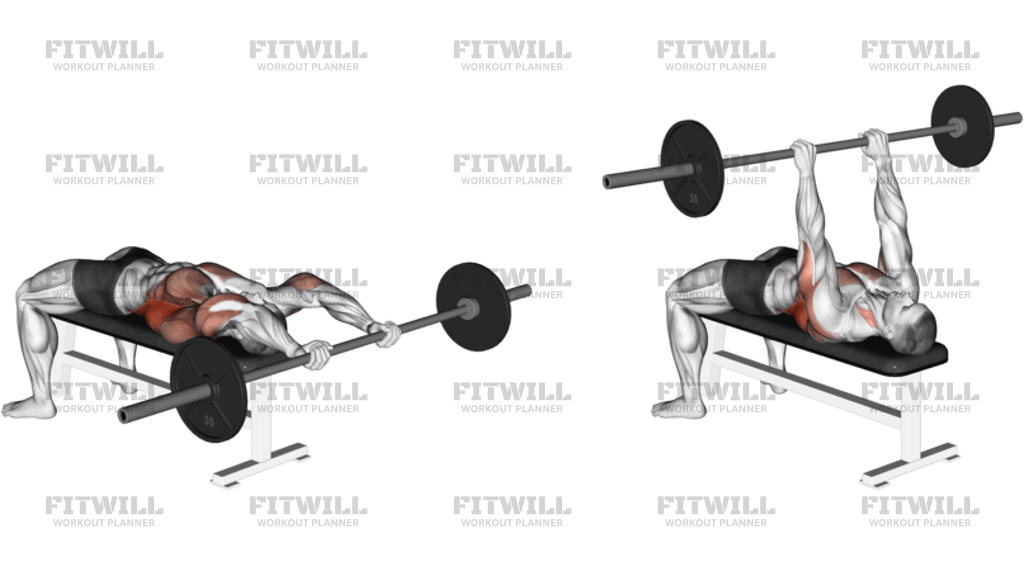
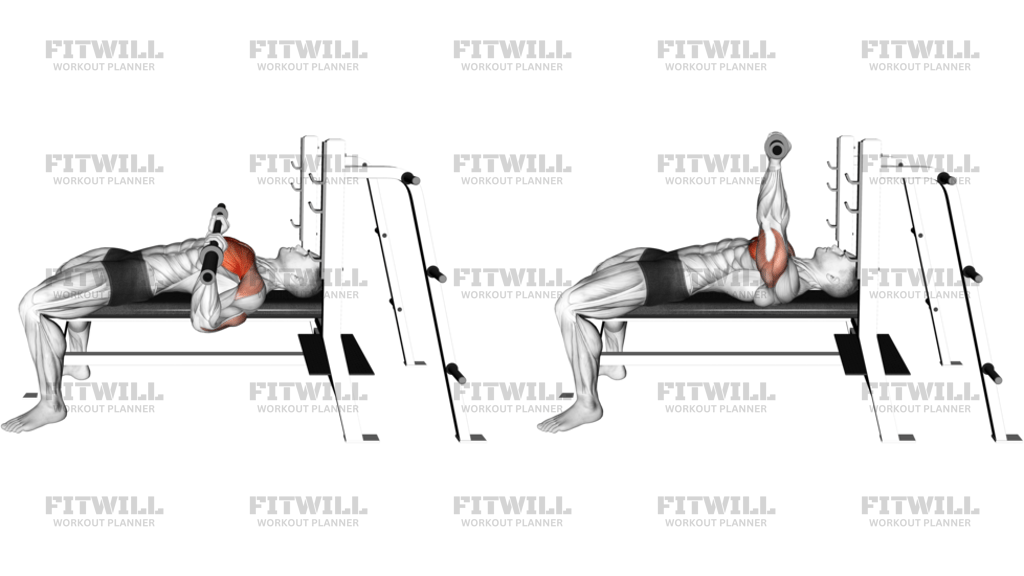
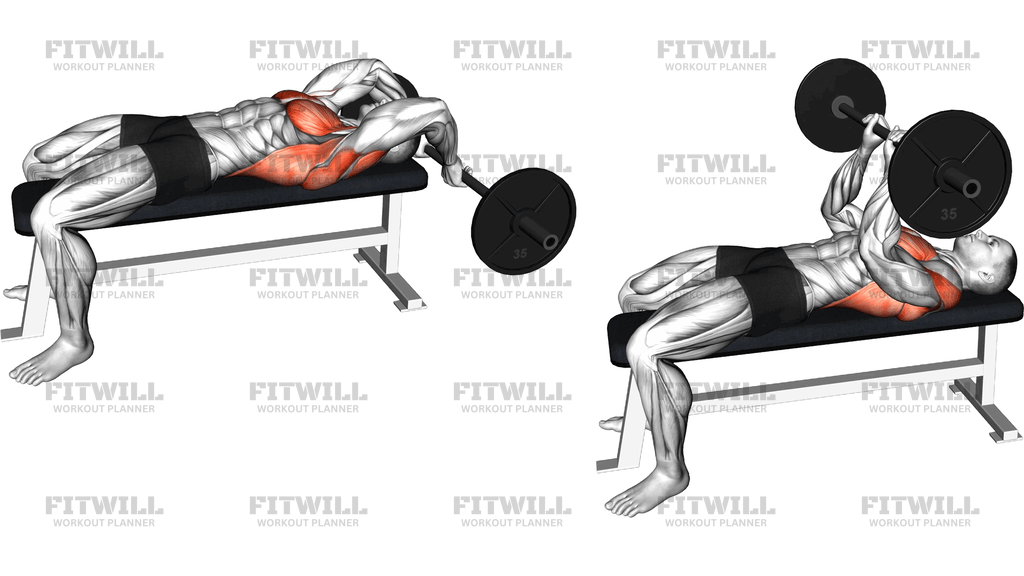
The Barbell Bent Arm Pullover is a classic upper-body movement performed lying across a flat bench with a barbell held in both hands. Unlike the straight-arm version, you keep a fixed bend in the elbows throughout, which shortens the lever slightly and lets you handle more load while still sweeping the bar in a wide arc from over your chest to behind your head and back. The highlighted areas in the movement are the lats and the chest, with the triceps and serratus anterior working to control the bar.
This lift suits lifters who want to build width and expansion through the back and rib cage area without needing a pull-up bar or cable station. Because the elbows stay bent, it is friendlier to the shoulder joint than many straight-arm variations, making it a reasonable choice for intermediate lifters who find the straight-arm version uncomfortable. It also works well as a finishing movement after rows or pulldowns when the lats are already warm and fatigued.
Setup matters more here than in most accessory lifts. Your position on the bench determines whether the bar travels in a safe arc or drifts toward your face. Lying with only your upper back supported, feet planted firmly on the floor, keeps the torso stable and lets the rib cage open as the bar goes back. The grip should be narrower than shoulder width or roughly shoulder width so the wrists stay stacked over the elbows.
To execute it well, think of the movement as an arc, not a press. Lower the bar in a smooth curve back over your face and head until your upper arms are in line with your torso or slightly past, then pull it back over your chest the same way. The elbows stay at the same angle from start to finish; if they open or close, the exercise turns into a partial skull crusher or a press and you lose the intended stretch on the lats and chest.
Common use cases include back-focused hypertrophy days, old-school chest and back supersets, and programs that emphasize thoracic expansion and rib cage mobility. Keep the weight conservative at first. A loaded barbell behind your head leaves no room for sloppy reps, so control the descent on every single repetition.
[ Workout Log & Planner ]
Put your next workout in Fitwill
Keep your plan and training log ready when you are.


Instructions
- Set a barbell on the floor at the head of a flat bench, or have it handed to you once you are in position. Load a conservative weight to start.
- Lie across the bench with only your upper back and shoulders supported, hips lowered below the bench level, and both feet flat on the floor about hip-width apart for stability.
- Grip the bar with an overhand grip at roughly shoulder width or slightly narrower, and press the bar up to hold it directly over your chest with your arms extended.
- Bend your elbows to a fixed angle of about 45 to 90 degrees and keep that angle locked for the entire set. Brace your core so your lower back does not arch excessively.
- Lower the bar in a smooth arc back over your face and past the top of your head until your upper arms are roughly in line with your torso, feeling a stretch across the lats and chest.
- Pause briefly at the bottom, then reverse the arc and pull the bar back over your chest by driving the elbows down and forward, keeping the elbow bend unchanged.
- Exhale as you pull the bar back to the top position over your chest, and inhale as you lower it behind your head.
- At the end of the set, bring the bar back to the lockout position over your chest, then sit up carefully and either set the bar on the floor or a rack rather than rolling off the bench with it.
Tips & Tricks
- Keep the elbow angle frozen from first rep to last. If the elbows straighten on the way down, the bar becomes much harder to control behind your head and the triceps take over.
- Start with a lighter plate load than you think you need. The bottom position puts the bar over your face and throat, so the first few sessions are about learning the arc, not loading plates.
- If your hips drop too far toward the floor, the arc gets shorter and the stretch on the lats disappears. Keep the torso bridged between the bench and your feet.
- Avoid bouncing the plates at the bottom. The stretch reflex hides the lat contraction and encourages jerky reps with a loaded bar near your head.
- Grip the bar firmly with the whole hand. A loose fingertip grip is one of the most common causes of a slipped bar in this movement.
- If you feel pinching in the front of the shoulder at the bottom, shorten the range slightly and stop the bar once your upper arms reach torso level rather than forcing depth.
- Think about pulling the elbows toward your hips on the way up rather than pushing the bar. This keeps the lats driving the movement instead of the triceps pressing it.
- Keep your head neutral on the bench. Craning the neck to watch the bar shifts tension to the traps and makes the arc harder to judge.
Frequently Asked Questions
What muscles does the Barbell Bent Arm Pullover work?
The main movers are the lats, with strong assistance from the chest as the bar sweeps overhead. The triceps hold the bent-elbow position isometrically, and the serratus anterior and core stabilize throughout.
How is the bent arm version different from the straight arm pullover?
Keeping the elbows bent shortens the lever, so you can use more weight and the triceps take on a stabilizing role instead of the elbows staying locked. Many lifters also find the bent arm version gentler on the shoulders.
Is the Barbell Bent Arm Pullover safe for beginners?
Beginners can do it, but they should start with a very light load or an empty bar and ideally practice with a spotter, since the bar travels over the face and throat. Mastering the arc before adding weight is essential.
Should my hips be on the bench or off it?
Only your upper back should rest on the bench, with hips lower than the bench and feet planted on the floor. This creates the slight bridge that lets the rib cage expand and the lats stretch fully.
Why do my triceps burn more than my lats during this exercise?
That usually means your elbow angle is changing and you are pressing or extending the bar instead of arcing it. Lock the elbow bend in place and focus on driving the elbows down and forward on the pull.
What can I use instead of a barbell for pullovers?
A single dumbbell held in both hands works well and reduces the balance demands, while a cable pullover or a resistance band pullover keeps constant tension with less risk if you fail a rep.
How wide should my grip be on the bar?
Use a grip about shoulder width or slightly narrower. A wider grip makes it harder to keep the wrists stacked over the elbows and reduces control of the bar behind your head.
Does the Barbell Bent Arm Pullover expand the rib cage?
The deep stretch position with the hips below the bench opens the thoracic area, which is why the lift has a long tradition in rib cage focused training. Treat any structural claims skeptically, but the stretch itself is valuable.
How many reps and sets should I do?
Because control matters more than load, most lifters get the most from 2 to 4 sets of 8 to 15 reps with moderate weight, placed at the end of a back or upper-body session.