Side Shuffle Swing
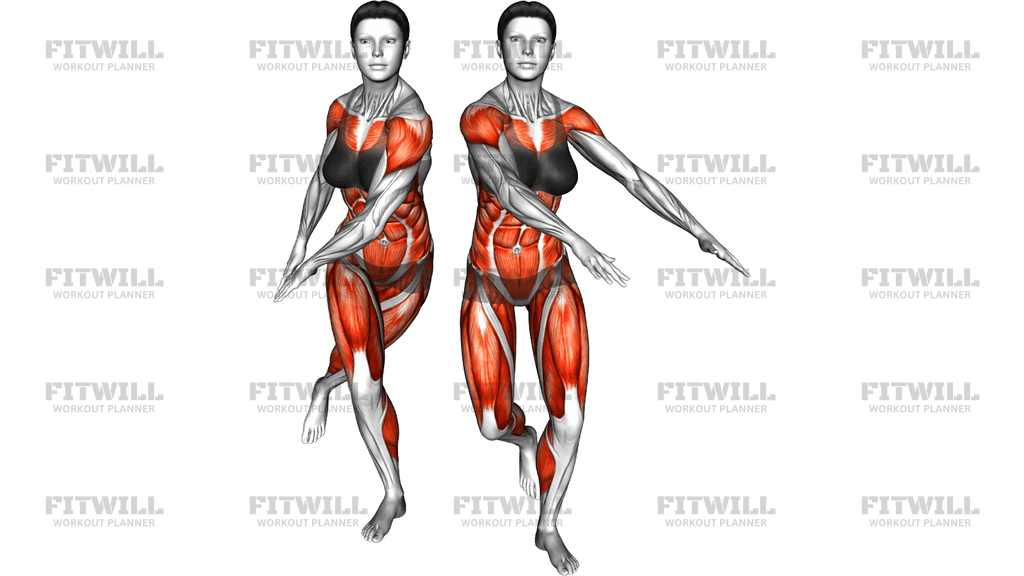
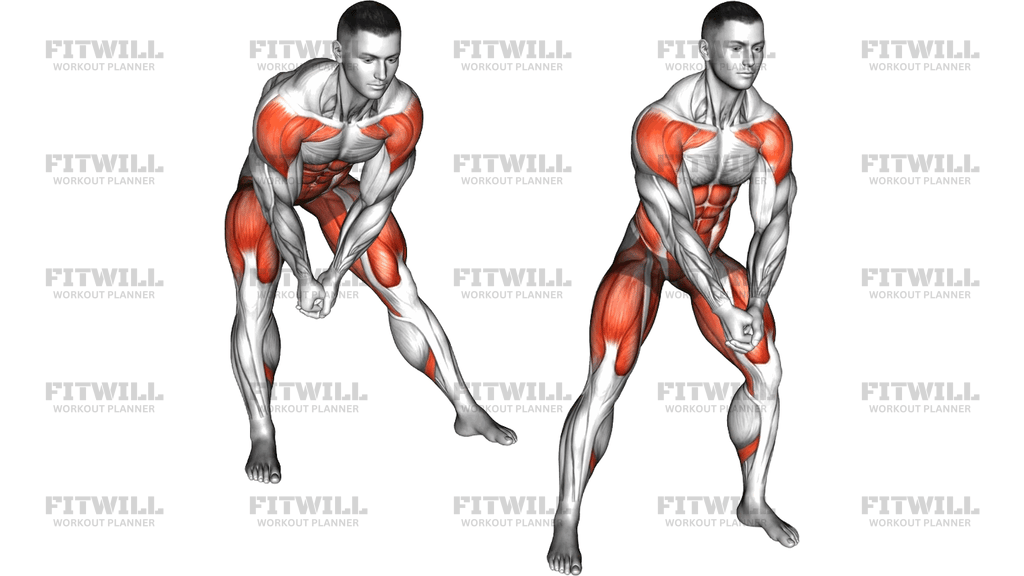
The Side Shuffle Swing is a dynamic bodyweight drill that blends a lateral shuffle with a rhythmic swing of the clasped arms. You stand with your feet in a wide stance, hinge forward slightly from the hips, and then shift your weight side to side. As you settle onto one leg, the opposite leg extends straight out to the side with the toes up, and your clasped hands swing down and across toward that working leg. Push back to center and repeat on the other side, creating a continuous, flowing side-to-side pattern.
This movement is especially useful as a warm-up before lower-body training, sprint work, or any sport that demands quick lateral changes of direction. It wakes up the glutes, inner thighs, and hip stabilizers that often stay dormant during straight-ahead exercise, and the arm swing adds a coordination element that ties the upper and lower body together. Because it requires no equipment and little space, it also works well as a low-impact conditioning drill in circuits or between strength sets.
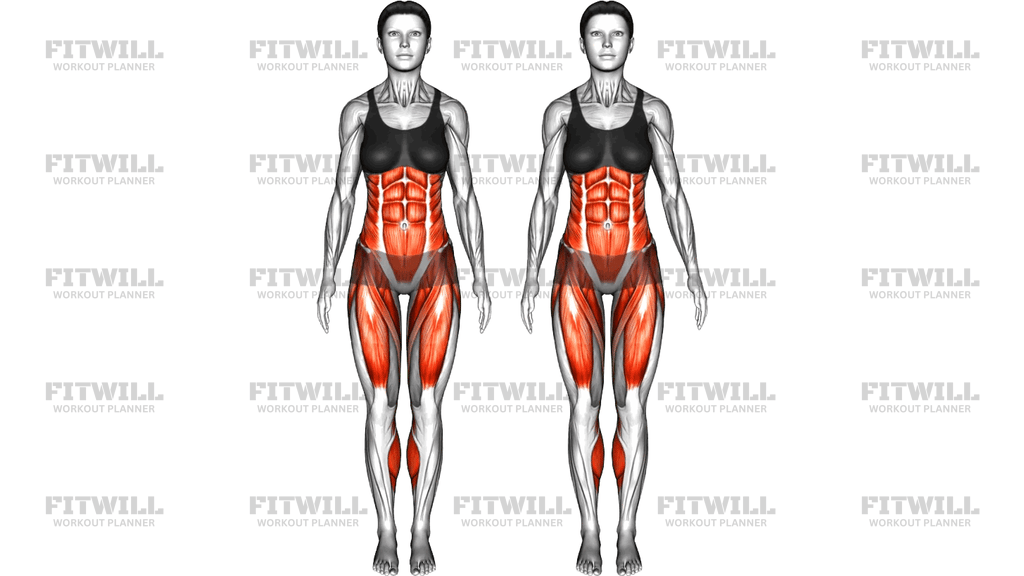
The main muscles working are the glutes and quads of the leg you load each rep, with the inner thighs controlling the wide stance and the calf and foot stabilizing balance. Your core works to keep the torso hinged and controlled as the arms swing, and the lower back stays engaged to hold a flat, strong hinge position rather than a rounded spine.
Setup matters because the hinge is the backbone of the whole pattern. If you stand too upright, the movement turns into a shallow side bend and the hips stop doing the work. If you round your back or let your knees collapse inward as you shift, you lose the benefit and load passive structures instead of muscle. A soft knee bend, a braced trunk, and feet wide enough to allow a genuine weight shift will set you up correctly.
To execute well, think of each rep as a pendulum: weight flows from one leg to the other, the extended leg reaches with a straight knee and relaxed foot, and the clasped arms follow the momentum rather than being muscled. Keep the swing smooth and continuous instead of pausing at the top of each rep. The tempo should feel athletic but controlled, roughly one swing per second or slightly slower while you are learning.
Common use cases include dynamic warm-ups, glute and hip activation, lateral agility preparation for field and court sports, and low-impact cardio for people who want to avoid jumping. If you feel the movement only in your knees or lower back, shorten the range, reduce the swing speed, and re-focus on pushing the hips back and keeping the loaded knee tracking over the foot.
[ Workout Log & Planner ]
Put your next workout in Fitwill
Keep your plan and training log ready when you are.


Instructions
- Stand with your feet roughly one and a half shoulder-widths apart, toes pointing forward or turned slightly out, and clasp your hands together with your arms extended down in front of your thighs.
- Hinge forward from the hips about 30 to 45 degrees, soften both knees, and keep your back flat and chest open rather than rounded.
- Brace your core lightly as if preparing for a gentle nudge to the side, and let your clasped arms hang relaxed beneath your shoulders.
- Shift your weight fully onto your right leg, bending it deeper while pushing your hips back, and let your left leg extend straight out to the side with the foot flexed toes-up.
- As you settle onto the right leg, swing your clasped hands down and across toward the right thigh, letting the arms follow the momentum of the shift.
- Push through the right foot to drive back to center, rising slightly out of the hinge as your weight passes through the middle.
- Repeat the same pattern onto the left leg, bending the left knee, extending the right leg out to the side, and swinging your hands toward the left thigh.
- Continue alternating side to side in a smooth, continuous rhythm, exhaling as you shift and inhaling as you return through center.
- Keep your gaze forward and your neck relaxed throughout so the hinge comes from the hips, not from collapsing the upper back.
- When finished, stop the swing by bringing both feet back to center, stand tall, and take a breath before your next set.
Tips & Tricks
- A common mistake is bending sideways through the waist instead of hinging at the hips; think about pushing your hips back and to the side rather than reaching your shoulder toward your knee.
- If your extended foot slaps or drags the floor, the reach leg is going too wide too fast; shorten the reach slightly until you can keep the straight knee and toes-up position under control.
- Let the arms swing like a pendulum instead of pulling them with the shoulders, forcing the swing usually means the hips are not driving the weight shift.
- Watch for the loaded knee caving inward as you settle onto it; cue your knee to track over your little toe to keep the glutes and inner thighs working together.
- If your lower back rounds during the hinge, reduce the forward lean a few degrees and focus on a long, flat spine before adding speed.
- Keep your heels down on the loaded leg; rising onto the ball of the foot turns the drill into a balance exercise and takes tension off the glutes.
- Start with slow, exaggerated shifts for the first few reps of each set, then build tempo once the pattern feels automatic.
- If balance is shaky, narrow your starting stance a little; a stance that is too wide makes the weight shift harder to control, not easier.
- In a warm-up, aim for a smooth continuous flow rather than maximal depth; save the deeper hinge and longer reaches for when the hips are fully warm.
Frequently Asked Questions
What muscles does the Side Shuffle Swing work?
The glutes and quads of the loaded leg do most of the work, with the adductors of the inner thighs controlling the wide stance. Your core and lower back stabilize the hinged torso, and the calves and foot muscles handle balance.
Is the Side Shuffle Swing good for beginners?
Yes, it is low-impact and equipment-free, so beginners can learn it quickly. Start with a narrower stance, a shallower hinge, and slow shifts before adding speed or depth.
Should my arms stay straight during the swing?
Keep your hands clasped and your arms essentially straight but relaxed, letting them swing with the momentum of your weight shift. Muscling the arms with the shoulders defeats the flowing rhythm of the drill.
Why does my extended leg need a straight knee and toes-up foot?
That position lengthens the inner thigh and hamstring of the reaching leg and forces the loaded leg to control the shift, which is where the lateral hip strength benefit comes from. A bent, lazy reach leg turns it into a simple side step.
How is the Side Shuffle Swing different from a lateral lunge?
A lateral lunge is a discrete strength rep with a deep bend and usually a load, while the Side Shuffle Swing is a continuous rhythmic shift with a moderate hinge and a swinging arm action. It is closer to an activation and warm-up drill than a heavy strength exercise.
How many reps should I do?
For warm-ups, 10 to 20 total swings per side at a controlled tempo works well. In a conditioning circuit, go for time, such as 30 to 45 seconds of continuous shuffling.
My lower back gets sore doing this. What should I change?
You are most likely rounding your spine instead of hinging from the hips, or leaning too far forward. Lift your chest slightly, re-brace your core, and keep the back flat with the fold coming from the hip crease.
Can I use the Side Shuffle Swing as cardio?
Yes, when performed continuously at a brisk tempo it raises the heart rate while staying low-impact, making it a good option if you want lateral movement without jumping.
What can I substitute if the movement bothers my knees?
Reduce the depth of the bend on the loaded leg and keep the weight shift smaller, or try a hip hinge with a simple arm swing in place while your knees adapt. If knee discomfort persists during side-to-side loading, get it assessed before continuing.
How wide should my stance be to start?
Start about one and a half shoulder-widths apart, wide enough that you can shift fully onto one leg while the other reaches out. If you feel wobbly or your knees twist inward, narrow the stance slightly and rebuild from there.