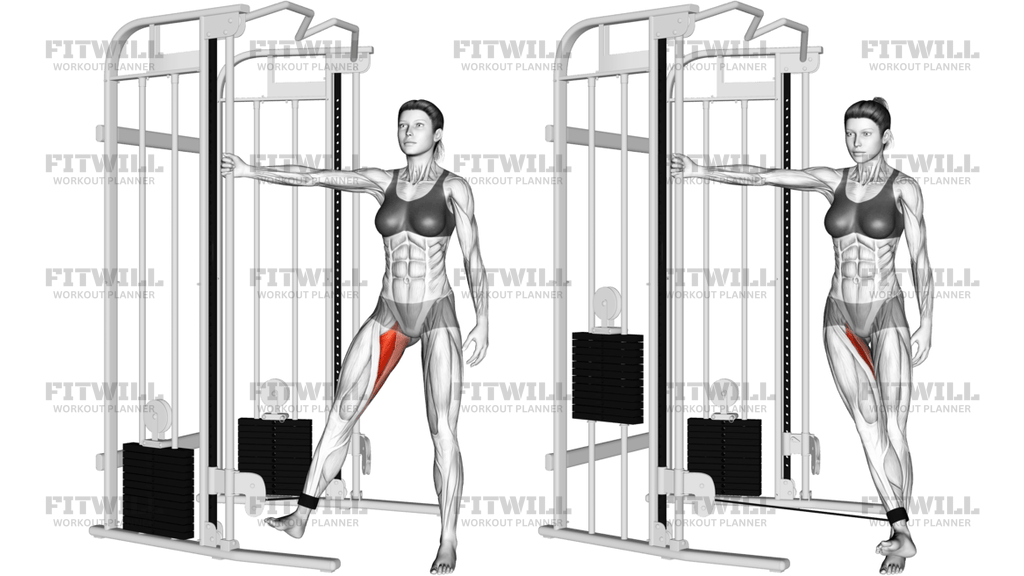
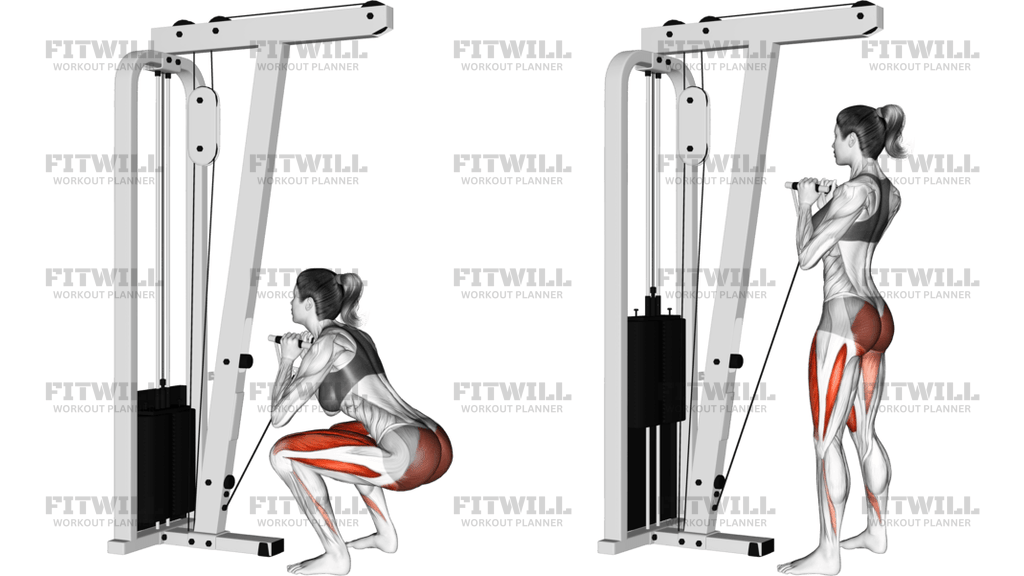
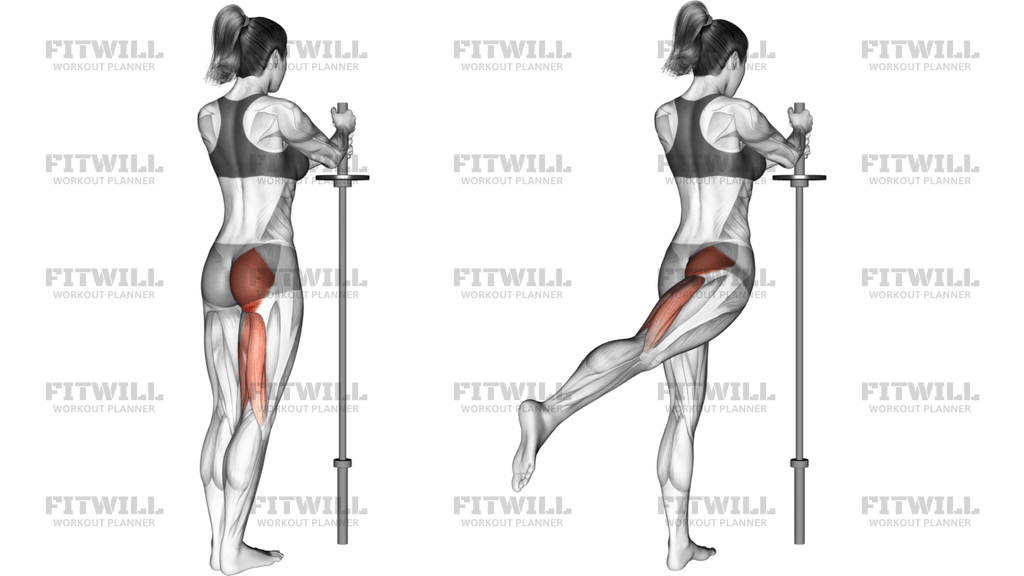
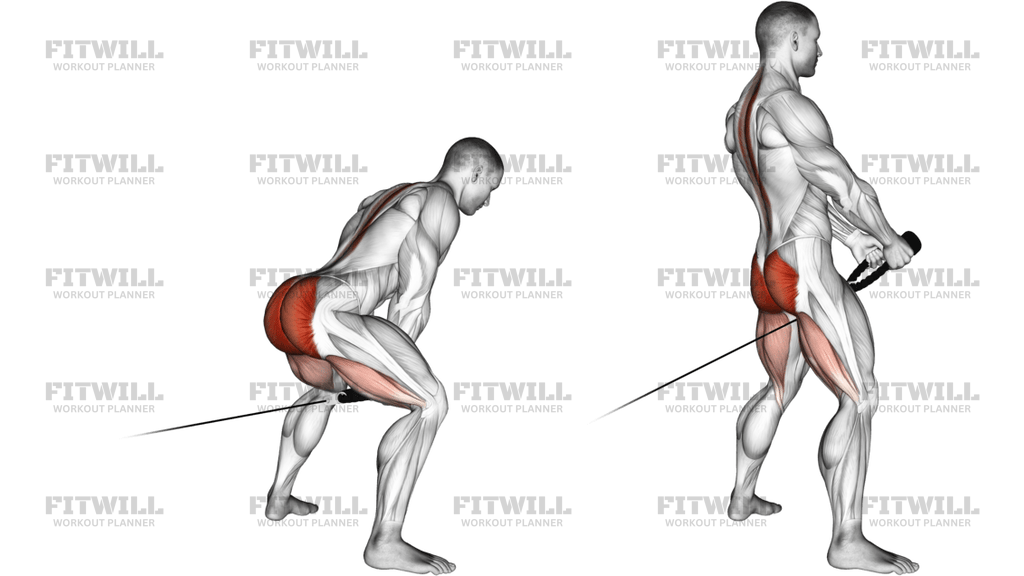
Cable Kneeling Glute Kickback
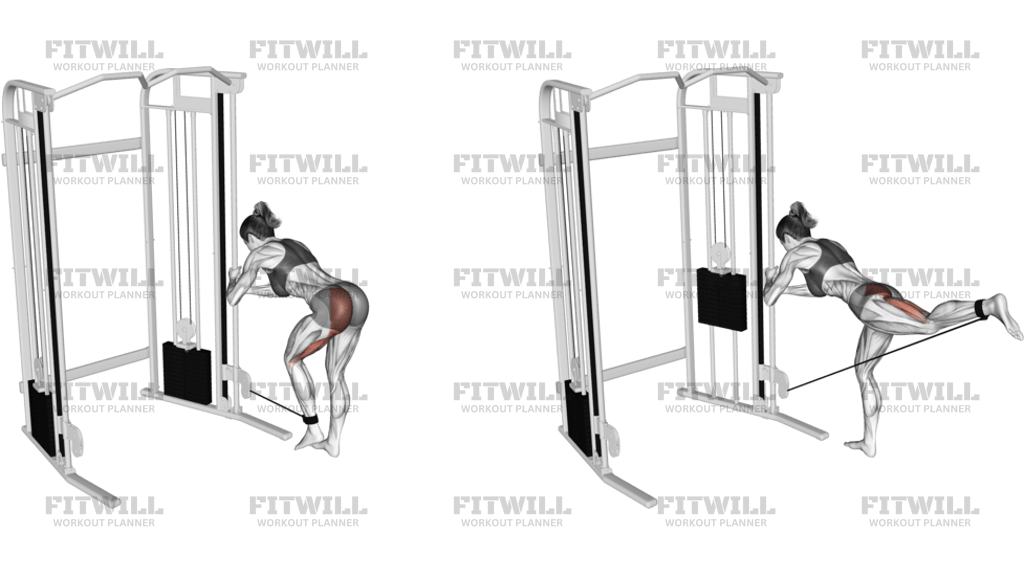
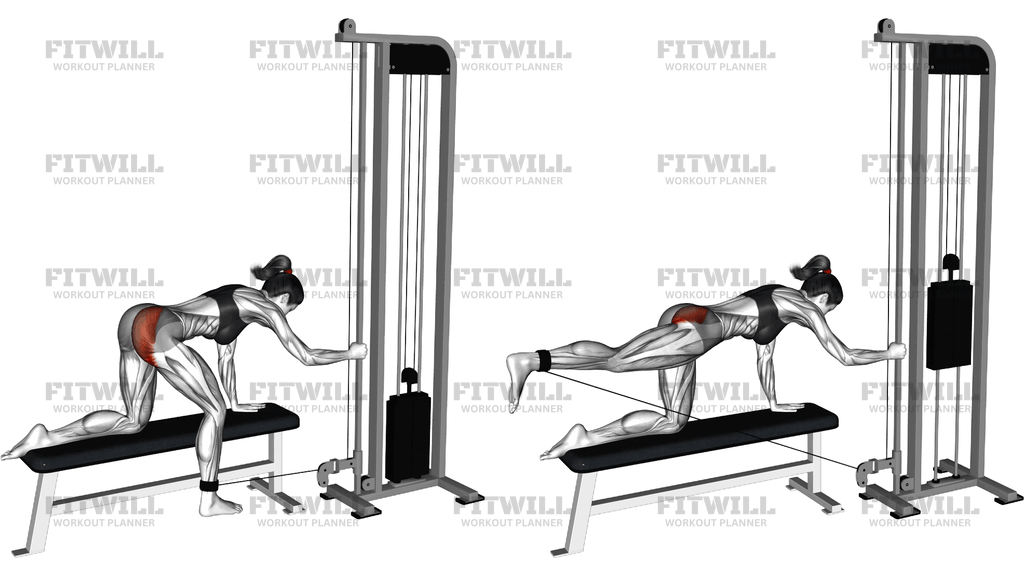
The Cable Kneeling Glute Kickback is a single-leg hip extension exercise performed with one knee resting on a flat bench, both hands planted on the bench for support, and an ankle strap connected to the low pulley of a cable machine. From this kneeling position, you drive the strapped leg back and up behind you against the cable's resistance, then control it back under your hip. The cable keeps tension on the glute through the entire arc, which is the main advantage over bodyweight versions of the kickback where the resistance fades at the start of the movement.
This exercise targets the gluteus maximus as the primary mover, with the hamstrings assisting on the extension and the gluteus medius and core working to keep your pelvis level and your torso stable. Because you are supported by the bench, your lower back is less loaded than in standing kickbacks, making it easier to focus on squeezing the glute rather than fighting for balance.
The setup matters more than people expect. The distance between the bench and the pulley determines how much tension you start with and how the pull angle hits your hip. Set up far enough back that the strap already has light tension when your working knee is on the bench, but not so far that the cable yanks your leg forward. Also keep the low pulley setting so the resistance pulls the leg down and back rather than dragging it sideways.
Execution should be deliberate: brace your trunk, keep your hips square to the bench, and think about pushing the heel toward the ceiling behind you rather than simply swinging the leg up. The top of the rep is a strong glute squeeze with the leg roughly level with your hip, not a hyperextended lower back. Slow the return so the cable does not snap your leg back down.
It fits well as an accessory movement after heavier hip-dominant lifts like squats, deadlifts, or hip thrusts, or as a focused glute builder on its own. It is also a practical choice for people who feel standing kickbacks in their lower back, since the bench support makes it easier to stay in a neutral spine. Use moderate weight, higher repetitions, and strict form, because the glutes respond better to a full, controlled squeeze than to heavy, rushed reps.
[ Workout Log & Planner ]
Put your next workout in Fitwill
Keep your plan and training log ready when you are.


Instructions
- Set a flat bench a few feet in front of a cable machine's low pulley and attach an ankle strap to one ankle, then clip the strap to the pulley.
- Face the pulley and place both hands on the bench, then kneel onto the bench so your non-working knee is supported and your other foot rests on the floor. Slide back until the cable has light tension with your strapped knee bent under your hip.
- Stack your shoulders over your wrists and keep a soft bend in the supporting arms. Brace your abdominal muscles and set your spine in a neutral line from head to hips.
- Exhale and extend your strapped hip, driving the leg back and up behind you with the knee slightly bent, leading with the heel.
- Finish the rep with the leg roughly parallel to the floor and squeeze the glute hard at the top for a beat. Avoid arching your lower back to gain extra height.
- Inhale and lower the leg under control, resisting the cable's pull until the knee returns under your hip without letting the weight stack slam down.
- Keep your hips square to the bench throughout the set so the cable pulls straight back from your hip rather than twisting your pelvis open.
- Complete all reps on one leg, then unclip or reposition the strap and repeat on the other side.
- Adjust the pin weight so the last two reps of each set are challenging but still performed with a two-second top squeeze and a controlled return.
Tips & Tricks
- If your torso twists toward the pulley as the leg swings back, grip the bench harder and think about pushing the shoulder on the working side down into the bench.
- A common mistake is letting the cable pull the working knee forward and lose tension between reps. Keep light tension on the strap even in the bottom position.
- Do not chase height. Once your lower back starts arching and your ribs flare to lift the foot higher, the glute has already stopped doing the work.
- The knee should stay softly bent for the whole set. Kicking the lower leg straight turns the rep into a hamstring-dominant swing.
- If the cable rubs against your calf or the bench, you are either too close to the pulley or kicking across your midline. Reset your distance so the cable travels in line with your hip.
- Pause for a full second at the top of each rep. The glute contraction at end range is where this exercise earns its keep, not the speed of the kick.
- Start lighter than you think you need. The kneeling position gives you great leverage, so it is easy to load too much and start jerking the stack.
- Point your toes slightly and push through the heel to keep the emphasis on the hip extensors instead of the calves.
- If your supporting wrist aches, shift your hand slightly forward on the bench so more weight sits over the palm rather than the wrist crease.
Frequently Asked Questions
What muscles does the Cable Kneeling Glute Kickback work?
The gluteus maximus does most of the work as you extend the hip against the cable. The hamstrings assist, while the gluteus medius and core stabilize your pelvis and trunk.
Why kneel on a bench instead of doing standing kickbacks?
The bench supports your torso and takes balance out of the equation, which makes it easier to keep a neutral spine. Many people who feel standing kickbacks in their lower back find the kneeling setup more comfortable.
How high should my leg go at the top of the Cable Kneeling Glute Kickback?
Aim for the leg to finish roughly level with your hip, or just slightly above. If you have to arch your lower back to lift the foot higher, you are stealing work from the glute.
How far from the cable machine should I place the bench?
Position the bench so the strap already has light tension when your knee is on the bench and your knee is bent under your hip. Too close and the cable goes slack; too far and it drags your leg forward at the start.
Is this exercise suitable for beginners?
Yes. The bench support makes it one of the more forgiving cable glute exercises. Start with a light weight and focus on a smooth kick and a one-second squeeze before adding load.
My lower back aches after this exercise. What am I doing wrong?
You are most likely overextending at the spine to lift the leg higher or letting the cable snap your leg back down without control. Reduce the range slightly, keep your ribs down, and slow the return.
Can I use a resistance band instead of a cable machine?
Yes, anchoring a band low and looping it around your ankle works in a pinch, though the tension curve is different and easier at the top. The cable keeps constant resistance through the whole range.
How many reps and sets should I do for the Cable Kneeling Glute Kickback?
Two to four sets of 10 to 15 reps per leg works well as an accessory movement. Since the range is short, prioritize a hard top squeeze and controlled negatives over heavy weight.
Should the working knee stay bent or straight during the kick?
Keep a soft bend in the knee for the entire rep. Straightening the leg shifts emphasis toward the hamstrings and turns the movement into a leg swing rather than a glute extension.