Frog
The Frog is a bodyweight plyometric drill that starts from a deep crouch with both palms planted on the floor between or just in front of your feet, then explodes forward into a hop and lands back in the same compact position. Because your knees are bent fully and your center of gravity sits low between your legs, every jump is driven almost entirely by the thighs and hips rather than by a countermovement from standing. The result is a short, dense burst of work for the quads, glutes, and calves, with the trunk working hard to keep you from pitching forward onto your hands.
This movement suits anyone who wants leg power without equipment or much space. Sprinters, martial artists, wrestlers, and field-sport athletes have used frog hops for decades because the deep-knee position closely matches the angles you need when accelerating, changing direction, or getting up off the ground. It is also a practical choice for home training, since a two-meter stretch of floor is enough to work with.
The setup is what separates the Frog from a普通 squat jump. With your feet flat and wide, knees forced out past your elbows, and hands touching the floor, you remove any help from a standing countermovement. The legs have to generate force from a dead stop in a mechanically disadvantageous position, which is exactly why the quads and glutes get challenged so thoroughly. Keeping your chest up and weight through your whole foot — not collapsing onto your fingertips — keeps the load on the legs where it belongs.
Execution comes down to rhythm and landing quality. Each hop should be short and controlled: drive the floor away through the balls of your feet, let the hips extend fully in the air, and absorb the landing by sinking straight back into the crouch with your knees tracking over your toes. Choppy, quiet landings are the goal. If you are thudding down or stumbling forward, the set is over.
Treat the Frog as a power exercise rather than a conditioning grind to start. Two to four sets of five to ten hops, taken with full recovery, will do more for your jumping ability than long, sloppy sets. Because the knees and hips work at their deepest ranges under speed, warm up thoroughly first, and skip the movement entirely if deep-knee jumping currently causes discomfort.
Fitwill
Log Workouts, Track Progress & Build Strength.
Achieve more with Fitwill: explore over 9600 exercises with images and videos, access built-in and custom workouts, perfect for both gym and home sessions, and see real results.
Start your journey. Download today!




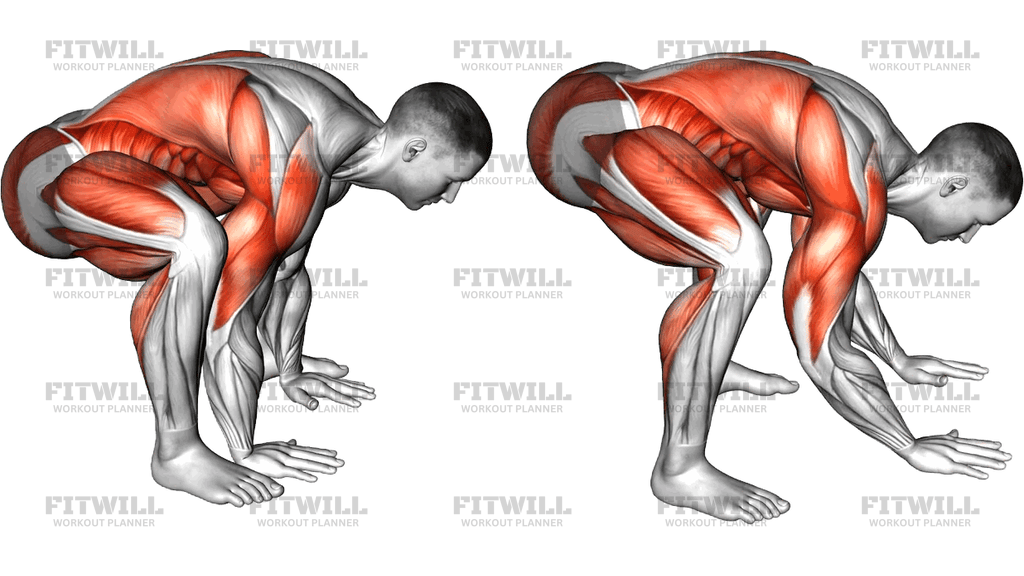
Instructions
- Stand with your feet roughly shoulder-width or slightly wider, toes turned out a little, and sit down into a full squat with your heels as close to the floor as your mobility allows.
- Place both palms flat on the floor between your feet, elbows inside your knees, and gently press your knees outward so they track over your toes.
- Shift your weight so it sits through your whole foot and the balls of your feet, with only light contact from your fingertips — your hands are for balance, not support.
- Lift your chest and brace your trunk so your back is long rather than rounded over your knees.
- Push your hands lightly into the floor and drive hard through your legs to hop forward a short distance, extending your hips and knees fully in the air.
- Land on the balls of your feet with soft knees, letting your hands return to the floor to catch your balance as you sink back into the deep crouch.
- Reset your foot position, breathe in, and repeat the hop for the planned number of reps, moving steadily forward across your available space.
- Exhale sharply on each jump and inhale during the brief reset between hops.
- After the final rep, stand up slowly from the crouch rather than jumping out of it, and give your quads and calves a moment before the next set.
Tips & Tricks
- If your heels lift off the floor in the bottom position, widen your stance slightly and turn your toes out more — forcing a narrow crouch usually rounds the lower back and shifts stress away from the legs.
- Keep the hop distance short. Long bounding jumps make you reach with your feet on landing, which drives the knees inward and dumps force into the joints instead of the muscles.
- Fingertip dragging across the floor is a sign your weight is too far forward. Pull your hips back an inch and re-set with more load through the mid-foot.
- Aim for quiet landings. A loud, heavy landing means you are absorbing with locked joints instead of sinking into the crouch with your knees and hips.
- Do not let your knees cave toward each other when you load the jump — press them out over your pinky toes, especially at the moment of takeoff.
- If your wrists bother you, press through the heel of the palm and keep the arms nearly straight rather than bending sharply at the wrist to push off.
- Stop the set the moment your landing gets sloppy. This drill trains crisp, powerful reps; grinding through fatigue teaches poor landing mechanics.
- Warm up with bodyweight squats and a few slow, sub-maximal frog hops before jumping at full effort.
- On soft or slick surfaces, check your footing first — the takeoff and landing both demand reliable grip under your feet.
Frequently Asked Questions
What muscles does the Frog work?
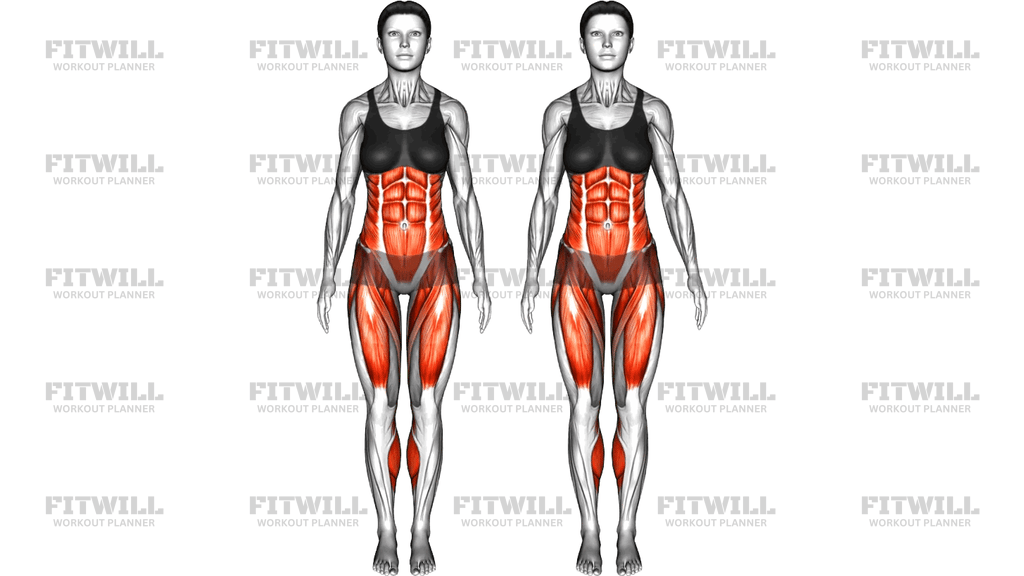
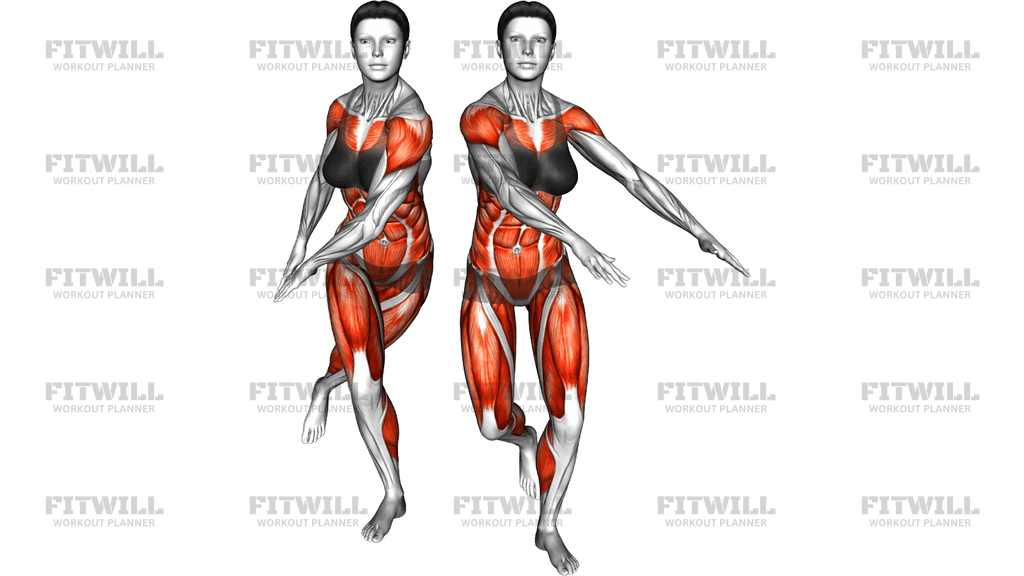
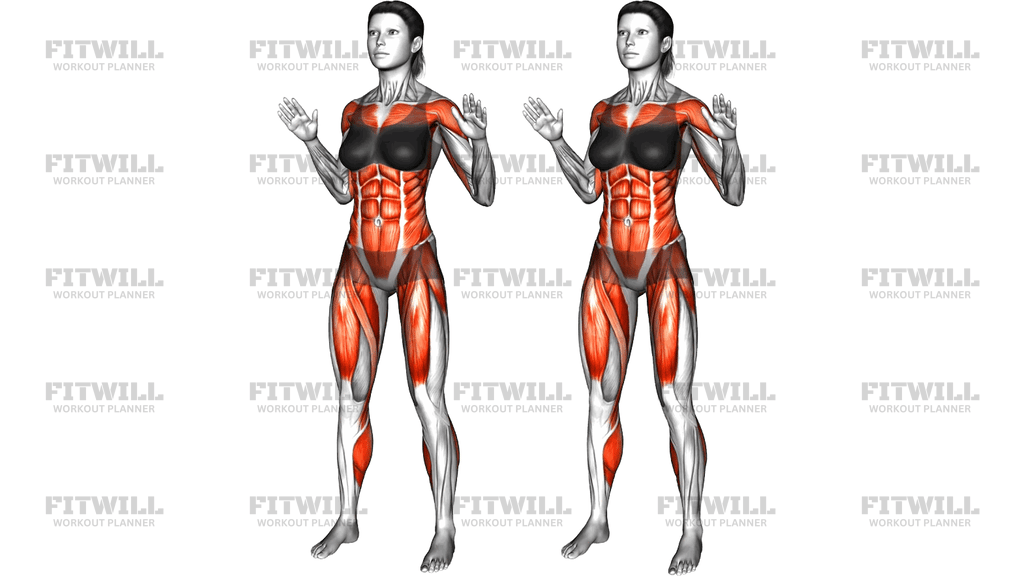
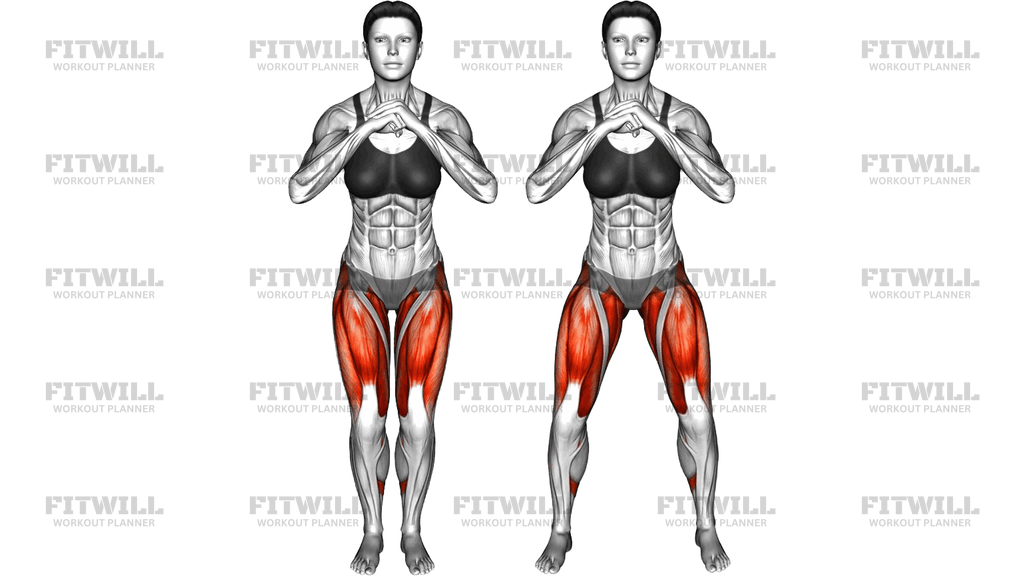
The Frog mainly targets the quads and glutes, which generate the drive from the deep crouch. The calves assist at takeoff, and the core and hip flexors stabilize your trunk and control the landing.
Why do my hands need to be on the floor for the Frog?
The hands give you a balance reference and let you lean into the takeoff, but they should only carry light pressure. If you are pushing hard off your hands, the exercise stops being a leg drill.
Is the Frog suitable for beginners?
Yes, if you can squat deeply with your heels down and land softly. Beginners should use small, low hops and fewer reps while the landing pattern becomes automatic.
My knees cave inward when I jump the Frog — how do I fix that?
Deliberately press your knees out over your toes in the crouch and keep that pressure at takeoff. Narrowing your hop distance and slowing the rhythm also helps you control the alignment.
What can I substitute if deep-knee jumping bothers my knees?
Regular squat jumps from a partial squat, box jumps, or broad jumps from standing all train similar power with less knee flexion. Build up range gradually before returning to the full crouch position.
How is the Frog different from a normal squat jump?
A squat jump uses a standing countermovement, while the Frog starts from a dead stop in a deep crouch with hands down. That starting position removes momentum, so the legs must produce all the force from the bottom range.
How many reps and sets of the Frog should I do?
For power, work in the range of five to ten hops per set for two to four sets, resting fully between sets. Quality of each landing matters far more than total volume.
Should my heels stay down during the Frog?
Your heels should be down or near the floor in the starting crouch, then naturally lift as you extend into the hop. If your heels float before you even jump, widen your stance and work on ankle mobility.
Is it safe to do the Frog on concrete?
Repeated landing on very hard surfaces adds stress to the knees and ankles. A mat, grass, or a sprung gym floor is a better choice, especially as you increase reps or jump height.
Why do I keep falling forward when I land the Frog?
This usually happens when your weight drifts over your hands or your hop is too long. Keep your hips back over your heels in the crouch and shorten the jump until you can land in balance every time.