Crawl Switch
The Crawl Switch is a ground-based transition drill that moves you between the bear crawl position, where you face down with knees hovering under your hips, and the crab position, where you face up with your hands planted behind you and hips lifted. Rather than crawling forward or backward, the entire point is the switch itself: lifting one side of your body, pivoting over your hips, and re-placing your hands and feet on the other side without letting your hips or back collapse. It comes from ground movement and animal flow style training, and it is one of the few body weight drills that forces rotation, hip mobility, and full-body tension at the same time.
This drill is useful for almost anyone who trains on the floor. Lifters use it as a warm-up to wake up the shoulders, hips, and trunk before pressing or squatting. Martial artists and field sport athletes use it because rolling and changing direction off the ground is literally the skill being trained. It is also a low-impact way to build coordination, which makes it approachable for beginners who can handle a short hold in each position.
The main muscles working are the deep core and abs, which hold your trunk rigid while your limbs move around them. Your shoulders and triceps carry your upper body weight through both positions, your glutes and hip flexors control the lift and swing of the hips, and the obliques do much of the work during the rotational pivot itself. Because your wrists and shoulders pass through extended ranges, the drill also builds useful mobility through the positions it visits.
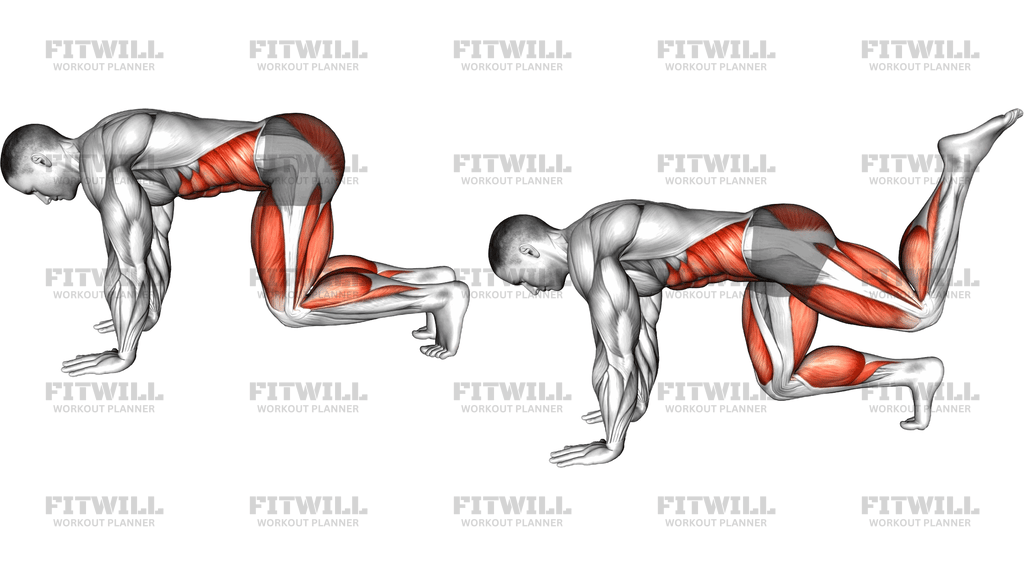
Setup matters more than speed here. In the bear position your hands sit under your shoulders with knees tucked under your hips and hovering just off the floor; in the crab position your hands sit just outside your hips with fingers angled back or slightly out, feet flat, and hips driven up so your torso is roughly level. If your hand placement or foot spacing is off, the transition becomes clumsy and your lower back takes load it should not.
To execute well, move deliberately: lift the same-side hand and foot, rotate your torso under and through so your chest turns toward the ceiling, place the hand behind you, and settle into the crab hold before switching back. Breathe steadily throughout, and treat each switch as one clean rep rather than a scramble. A controlled switch with a brief hold on each side teaches more than ten rushed ones.
The most common faults are sagging hips, dragging the pelvis along the floor instead of pivoting over it, and craning the neck to watch the hands. If the full switch feels beyond you, practice holding each end position separately first. Keep the reps modest at first, since the wrists and shoulders do unfamiliar work here, and stop if you feel pinching rather than effort.
[ Workout Log & Planner ]
Put your next workout in Fitwill
Keep your plan and training log ready when you are.


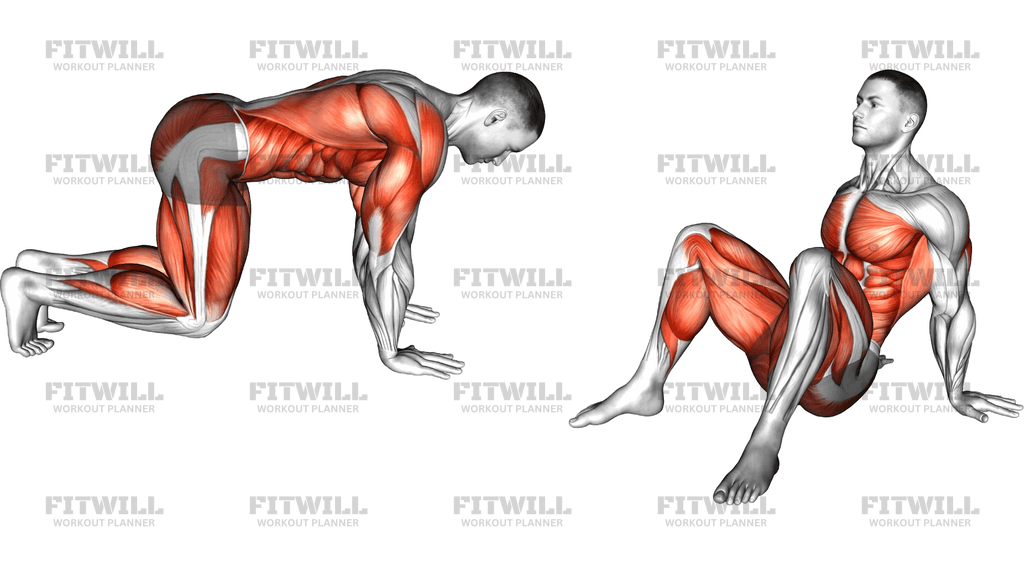
Instructions
- Start on all fours on a mat with your hands directly under your shoulders and your knees under your hips.
- Tuck your toes, press the floor away, and lift your knees an inch or two off the ground so you are balancing on hands and the balls of your feet in the bear crawl position.
- Brace your core so your back stays flat and your hips stay level with your shoulders.
- Lift your right hand and right foot slightly off the floor and begin pivoting your hips back and around, letting your torso rotate so your chest turns toward the ceiling.
- Reach your right hand behind you and place it flat on the floor just outside your right hip, fingers pointing back or slightly outward, while your right foot lands flat with the knee bent.
- Press through both palms and drive your hips up into the crab position, keeping your chest open and your torso roughly level with the floor.
- Pause briefly in the crab hold, then reverse the path: lift the same-side hand and foot, pivot your hips forward and under, and re-place them back in the bear crawl position.
- Continue alternating the side you switch over with each rep, moving slowly enough that your hips never touch the floor mid-transition.
- Exhale as you pivot through the switch and inhale as you settle into each hold, keeping your neck relaxed and eyes on one spot rather than tracking your hands.
Tips & Tricks
- If your hips drop toward the floor mid-switch, you are pivoting too slowly or your base is too wide; narrow your foot stance slightly and commit to the rotation in one smooth motion.
- Place your hand behind you close to the hip, not a foot away, or your shoulder will have to absorb your full weight in a stretched position.
- Keep the knees low in the bear position; popping the hips high before the switch turns the drill into a limp hop instead of a controlled pivot.
- If your wrists complain in the crab position, angle your fingers slightly outward and spread the load across the whole palm instead of rocking back on the heel of the hand.
- Look at a fixed point on the floor or wall instead of watching your hand travel, since chasing your hand with your eyes throws off your balance during the rotation.
- Do not rush the hold at the top; the crab position is where your glutes and shoulders actually get their work, so give it a two-second pause.
- Switch sides each rep to keep the skill symmetrical, since almost everyone develops a favorite rotation direction quickly.
- Warm up the wrists with a few circles and gentle extensions before your first set, especially if you sit at a desk most of the day.
Frequently Asked Questions
What muscles does the Crawl Switch work?
The core, especially the deep trunk muscles and obliques, does the stabilizing while the shoulders, triceps, glutes, and hip flexors handle the support and the pivot. No single muscle dominates; the value is in how they coordinate.
Is the Crawl Switch suitable for beginners?
Yes, as long as you can hold a bear crawl position and a crab position for a few seconds each. Practice the two holds separately before attempting the full switch, and start with only a few reps per side.
Should my hips touch the floor during the switch?
No. The pelvis should pivot over the floor without resting on it. If it keeps touching, your transition is too slow or your hand and foot placement is too wide.
Do I switch over the same side every rep?
Alternate sides from rep to rep so both rotation directions develop evenly. Most people have a dominant side, and only alternating will expose and fix the asymmetry.
My wrists hurt in the crab position. What should I change?
Turn your fingers out slightly, press through the base of the fingers rather than the heel of the palm, and check that your hand sits close to your hip instead of far behind you. If discomfort persists, shorten your crab holds and build up gradually.
How does the Crawl Switch differ from a regular bear crawl?
A bear crawl travels with your torso always facing down, while the Crawl Switch rotates you through a full turn between the face-down bear position and the face-up crab position. It adds rotation, hip mobility, and a different shoulder loading angle.
What can I use instead if I cannot do the full switch yet?
Hold the bear crawl and crab positions separately for time, or practice lifting just one hand and foot and setting it back down without rotating. Once both holds feel stable, link them with a slow half-switch.
Where should this drill fit in my workout?
It works well as a warm-up before pressing, squatting, or sport training because it opens the shoulders and hips while raising your heart rate. It can also serve as low-impact core finisher on its own.
How many reps should I do?
Start with 4 to 6 controlled switches per side, pausing in each position. Quality of the pivot matters far more than total volume, and the wrists and shoulders fatigue faster than you expect.