Standing Pulsing Elbow Lift
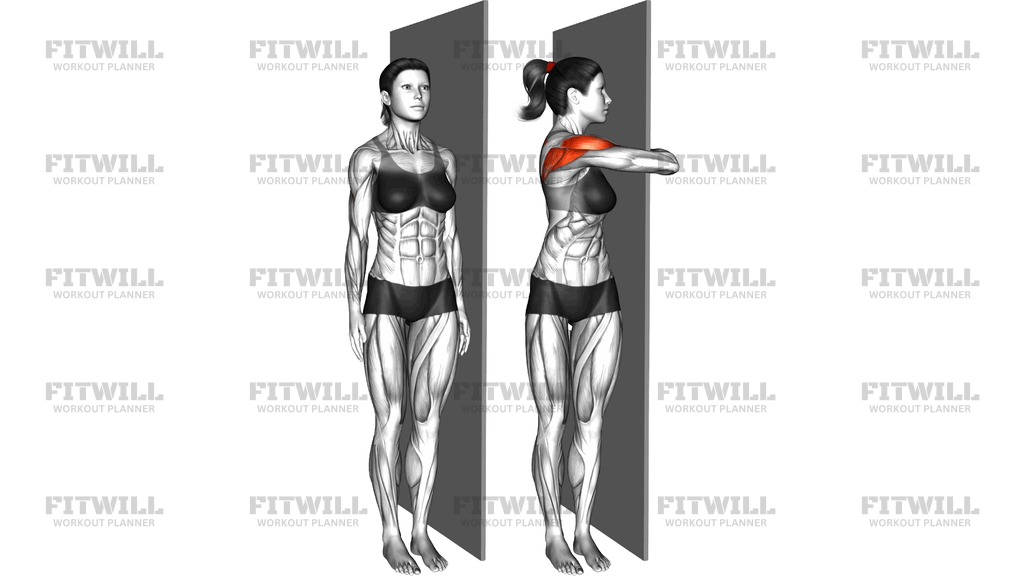
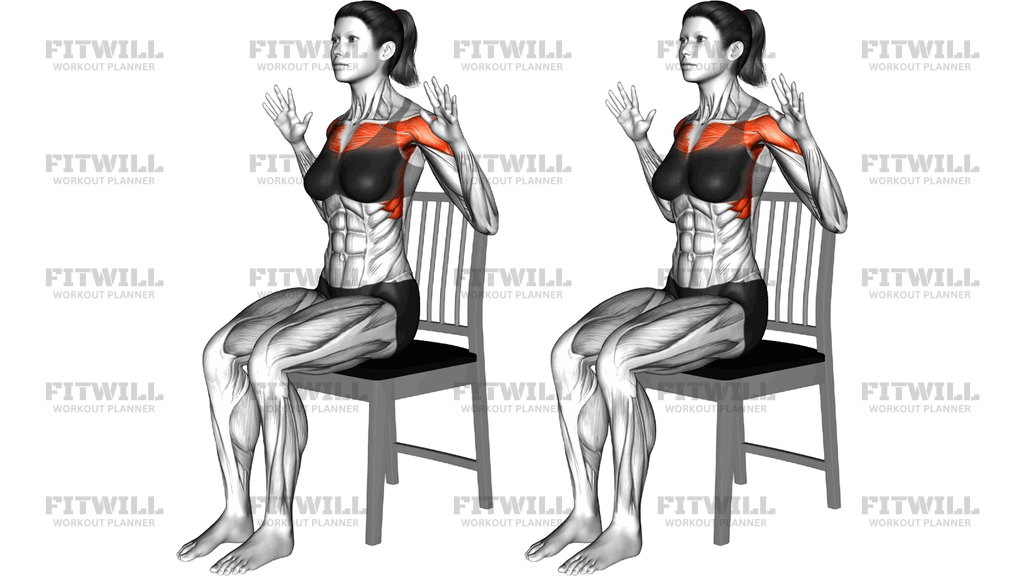
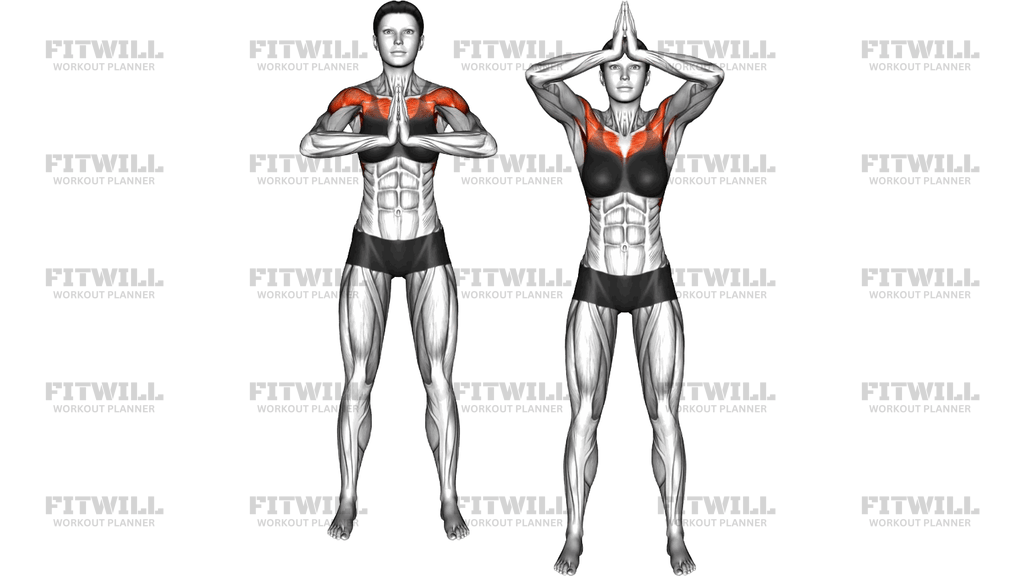
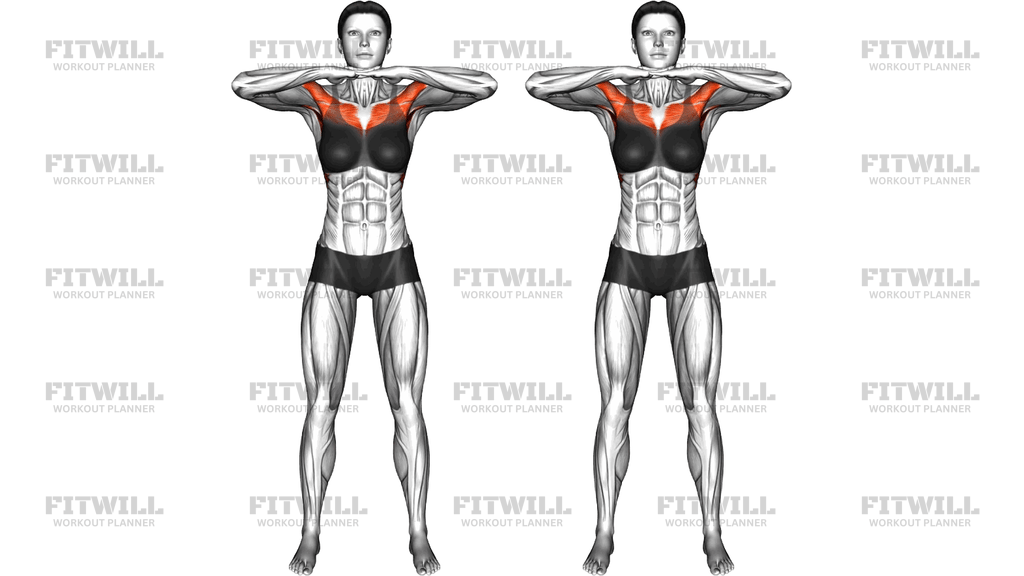
The Standing Pulsing Elbow Lift is a body weight isolation drill performed from a tall standing position with the elbows raised high and wide, roughly level with the shoulders, and the hands relaxed in front of the chest near the chin. From this position, you pulse the elbows upward in small, controlled lifts rather than swinging them through a full range. It looks deceptively simple, but once you do a set of twenty or thirty reps you will feel exactly where it works: the upper chest, the front and side of the shoulders, and the upper traps that stabilize the shoulder girdle.
What makes this movement distinct is the combination of the fixed elbow position and the short, pulsing range. Because the arms stay bent and elevated, the clavicular head of the pectoralis major is held in a shortened, loaded position, which is exactly where the upper chest fibers tend to get neglected in pressing-focused training. The small upward pulses keep continuous tension on the muscle without a rest at the bottom, so the working area fatigues quickly even with no external resistance.
This exercise suits a wide range of people. Beginners can use it to learn what upper chest activation actually feels like before moving on to incline presses or flyes. More experienced lifters use it as a burnout finisher after chest or shoulder work, or as a pre-activation drill to wake up the upper chest before pressing. It also travels well: no equipment, no floor space, and no setup, which makes it a practical option for home workouts, hotel rooms, or quick desk-break sessions.
Setup matters more than it appears to. Stand with feet about hip-width apart, knees soft but not bent into a squat, and the ribcage stacked over the pelvis. Raise the elbows out and up until the upper arms are close to parallel with the floor, and let the hands rest lightly near the collarbones or chin without pulling on the neck. If the elbows drop during the set, the emphasis slides away from the upper chest and toward the traps and neck, which is the most common fault.
Execution is about quality of the pulse, not height. Each rep is a short, deliberate lift of the elbows an inch or two upward, followed by a controlled lowering back to the starting height. Keep the shoulders pressed down away from the ears throughout, breathe steadily, and avoid rocking the torso or shrugging to help the movement. Because the range is small, tempo and tension are doing all the work here.
From a safety standpoint, this is a low-load movement, but the shoulder is held in an elevated position for an extended time, so anyone with current shoulder or neck irritation should keep the pulses shallow and stop if symptoms sharpen. Warm the shoulders up first with a few arm circles, and treat burning in the working muscles as normal and pinching or sharp pain as a signal to adjust or stop.
[ Workout Log & Planner ]
Put your next workout in Fitwill
Keep your plan and training log ready when you are.


Instructions
- Stand tall with feet hip-width apart, weight spread evenly across both feet, and knees soft rather than locked.
- Raise both elbows out to the sides and up until the upper arms are roughly parallel to the floor, with hands relaxed in front of the chest near the chin.
- Draw the shoulder blades down slightly so the shoulders are not shrugging up into the ears, and brace the core lightly to keep the torso still.
- From this position, pulse the elbows upward in a short lift of about one to two inches, feeling the work in the upper chest and shoulders.
- Lower the elbows back down to the starting height under control instead of letting them drop between reps.
- Keep the hands loose near the collarbones throughout; they are resting there, not pulling on the neck.
- Exhale on each upward pulse and inhale as the elbows lower, keeping the breath rhythm steady rather than holding it.
- Maintain the same elbow height for the whole set so the tension stays on the upper chest rather than drifting down into rest.
- Complete the target number of pulses, then lower the arms fully, roll the shoulders, and reset your posture before the next set.
- Stop the set when the elbow height can no longer be held; fatigued form that drops the elbows ends the set effectively.
Tips & Tricks
- The most common fault is shrugging the shoulders toward the ears as fatigue builds; cue yourself to press the shoulder blades down before each pulse.
- If the elbows gradually sink during the set, the upper chest is no longer doing the work; either reset the height or end the set and rest.
- Keep the pulses short and crisp. Big sweeping elbow movements turn this into a shoulder swing and lose the constant tension that makes the drill effective.
- Do not let the hands press into the neck or jaw. The arms stay relaxed so the load stays in the chest and shoulders, not the neck.
- Lean the torso back or arch the lower back to fake a taller elbow position and you will feel it in the spine; keep the ribs stacked over the hips.
- Slow the tempo down if you are powering through fifty pulses without feeling anything. Two seconds up, two seconds down should create a burn in the upper chest within fifteen to twenty reps.
- A light isometric squeeze of the elbows slightly inward toward each other during the pulses increases upper chest involvement without any equipment.
- Use this as a finisher after incline presses or flyes rather than a first exercise, since body weight resistance works best here when the muscle is already pre-fatigued.
- If your shoulders tire before your chest, narrow the elbow angle slightly so the upper arms are not fully parallel to the floor.
Frequently Asked Questions
What muscles does the Standing Pulsing Elbow Lift work?
The primary target is the upper chest, specifically the clavicular head of the pectoralis major. The front and side shoulders and the upper traps assist by holding and slightly elevating the arms through each pulse.
Why are the elbows held so high during this exercise?
Raising the elbows to shoulder height places the upper chest fibers in a shortened position, which is the angle this drill is designed to challenge. Dropping the elbows shifts the work toward the front shoulders and reduces the upper chest emphasis.
Is the Standing Pulsing Elbow Lift suitable for beginners?
Yes, it requires no equipment and only a small range of motion, so beginners can learn it quickly. Start with shorter sets of ten to fifteen pulses and focus on keeping the elbows at a consistent height.
How many pulses should I do per set?
Because the range is small and the tension is constant, higher reps work well. Aim for twenty to thirty controlled pulses per set, resting when your elbow height can no longer be maintained.
Why do I feel this more in my neck and traps than my chest?
That usually means the shoulders are shrugging up toward the ears or the hands are pressing into the neck. Draw the shoulder blades down, keep the hands relaxed, and slightly lower the elbow angle until the work shifts back into the chest and shoulders.
Can I use the Standing Pulsing Elbow Lift as a warm-up?
Yes, low-rep sets of ten to twelve gentle pulses work well as pre-activation for the upper chest before incline pressing. Just keep the intensity low so you do not fatigue the area before your main lifts.
What can I substitute if pulsing bothers my shoulders?
Try holding the elevated elbow position statically for ten to twenty seconds instead of pulsing, or lower the elbows a few inches so the upper arms sit just below parallel. Both reduce stress on the shoulder while keeping the upper chest involved.
Should I add resistance bands or weights to this movement?
It is designed as a body weight drill, and the small pulse range is hard to load cleanly with bands or dumbbells. If you want more challenge, slow the tempo or extend the set rather than adding external weight.
How is this different from a regular elbow raise?
A full elbow raise moves through a larger range from a lower starting position, while the Standing Pulsing Elbow Lift starts with the elbows already at shoulder height and uses short repeated pulses. This keeps tension constant and biases the upper chest in its shortened range.
Is it safe to do this exercise every day?
For most people, yes, since the load is low and the movement is controlled. If you are using it as a burnout finisher with high-rep sets, treat it like any other chest and shoulder training and allow a day of recovery between hard sessions.