Elbow Closed Arms Pulse
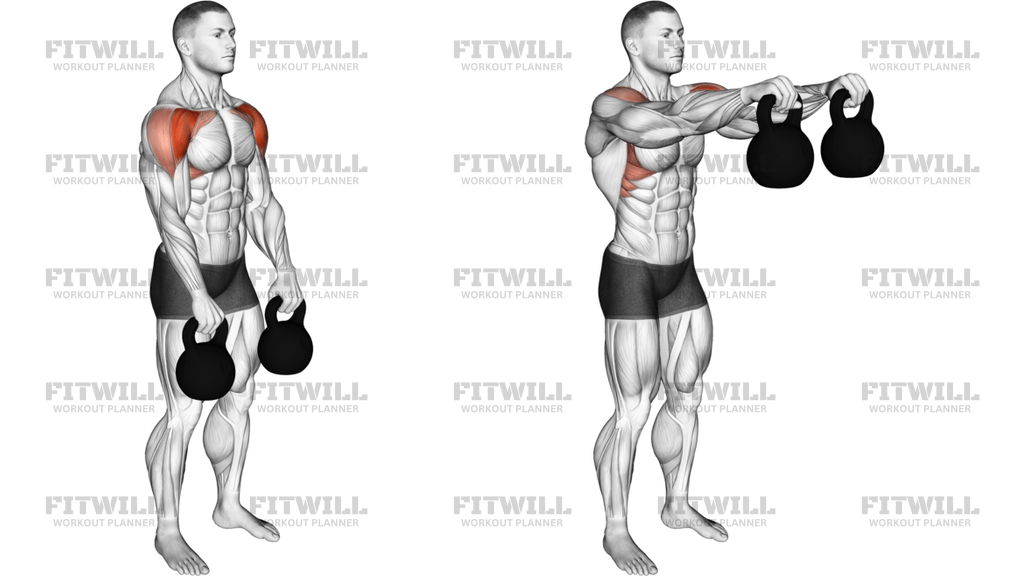
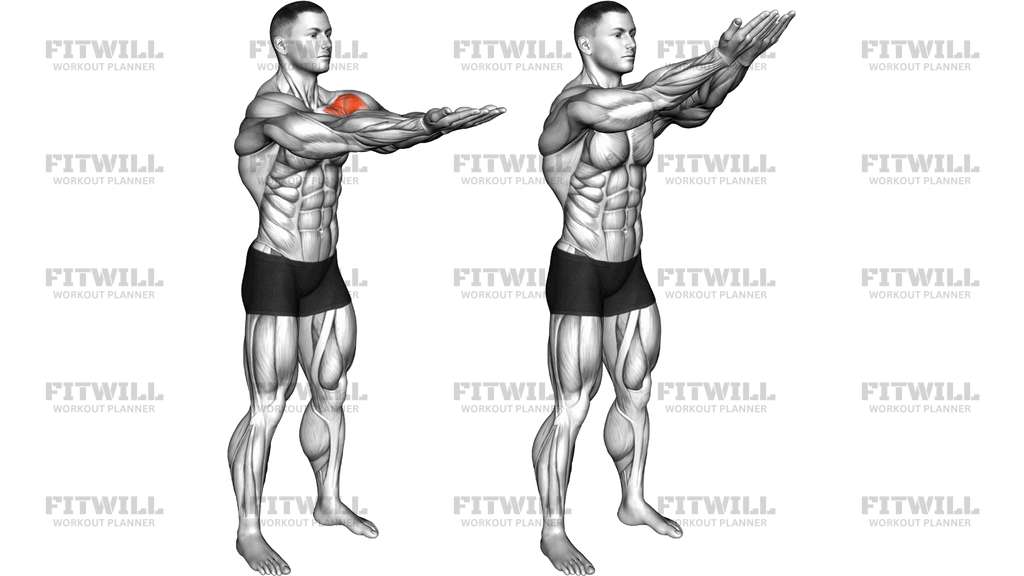
The Elbow Closed Arms Pulse is a standing bodyweight movement where you hold both arms straight out in front of you at shoulder height, keep them closed together so the hands nearly touch or cross, and pulse them upward toward about forty-five degrees above horizontal before lowering back to shoulder level. Because the arms stay locked in that closed, extended position for the entire set, there is no momentum and no rest at the bottom of each rep. The front delts work isometrically to hold the arms out while firing concentrically and eccentrically on every pulse, which makes the movement feel far harder than it looks.
The main target is the anterior deltoid at the front of the shoulder, with the upper fibers of the chest assisting as the arms angle upward. The trapezius and upper back stabilize the shoulder blades, and the triceps and forearms work to keep the elbows straight and palms rotated so the hands stay closed. Since the whole arm acts as a long lever, a small arc of motion creates a substantial demand on a relatively small muscle group.
This exercise suits people who train without equipment, lifters looking for a high-rep shoulder finisher, and anyone rehabbing tolerance to overhead-style arm positions who wants a controlled, low-load option. It is also common in warm-ups before pressing, where pre-activating the front delts helps you feel the shoulders engage during heavier work. Because the range is short and the load is your own arm weight, it is approachable for beginners while still burning out trained shoulders at the end of a session.
Setup matters more than people expect. Stand tall with feet about hip-width apart, ribs stacked over the pelvis, and raise the arms to exactly shoulder height with the hands closed together in front of you. If the arms drift lower than shoulder height, the front delts get a partial rest between pulses; if they drift higher, the traps take over and the movement stops isolating the shoulder. Locking in that horizontal reference point before the first pulse is what makes every rep count.
Execution should feel like a small, deliberate pulse, not a swing. Lift the closed arms a few inches above horizontal, squeeze briefly, then lower under control back to the starting line. Keep the neck relaxed and breathe steadily throughout. Expect a strong burning sensation across the front of the shoulders within fifteen to twenty repetitions; that local fatigue is the intended stimulus, not a signal to compensate by shrugging or arching the back.
A few practical points protect the shoulders. If you feel pinching at the front of the shoulder, reduce the pulse height slightly and make sure the palms stay rotated so the hands can close rather than letting the arms splay apart. Stop the set when you can no longer hold the arms at shoulder height between pulses, because sloppy repetitions past that point train the traps and lower back more than the delts. Short, quality sets beat long, straining ones.
[ Workout Log & Planner ]
Put your next workout in Fitwill
Keep your plan and training log ready when you are.


Instructions
- Stand with your feet about hip-width apart, weight spread evenly across both feet, and your spine tall with ribs stacked over your hips.
- Raise both arms straight out in front of you to shoulder height, elbows fully extended, and rotate your palms so the hands come closed together with fingers nearly touching or slightly overlapping.
- Brace your abs lightly and pull your shoulder blades back and down so your shoulders are not creeping up toward your ears.
- From this horizontal starting line, pulse the closed arms upward in a smooth arc until your hands are roughly forty-five degrees above shoulder level.
- Pause for a beat at the top with the arms still straight and hands closed, feeling the contraction across the front of the shoulders.
- Lower the arms slowly and under control back to exactly shoulder height, avoiding any drop or swing.
- Exhale as you pulse up and inhale as you lower back down, keeping the breathing rhythm steady rather than holding your breath.
- Continue pulsing without letting the arms sink below shoulder height between reps; if they start to sag, end the set and reset.
- To reset between sets, lower the arms to your sides, roll the shoulders once, shake out the forearms, and rebuild the starting position before the next set.
Tips & Tricks
- Pick a visual reference point, such as a mirror line or a spot on the wall at shoulder height, so the arms return to the same horizontal line on every pulse instead of drifting lower as fatigue builds.
- The most common mistake is shrugging the traps to lift the arms once the delts tire; if your shoulders rise toward your ears, shorten the pulse height rather than recruiting the upper traps.
- Do not let the hands separate as you fatigue. The closed-arm position lengthens the lever and keeps the front delts loaded, so re-squeeze the palms together the moment you feel them drift apart.
- Avoid arching the lower back to help the arms upward. If your ribs flare and your hips push forward, tighten the abs and reduce the arc until you can pulse with a neutral torso.
- Keep the elbows locked straight throughout. A soft elbow shortens the lever, makes each rep easier, and shifts work toward the triceps instead of the shoulders.
- If you feel a pinch at the front of the shoulder, lower your starting angle a few degrees below shoulder height and use a smaller pulse; the arms act as a long lever, so a slight change in angle changes the stress a lot.
- Start with time-based sets of twenty to thirty seconds rather than counting reps, since it keeps the pacing honest and prevents fast, bouncy pulses.
- Use this as a finisher after pressing work or as part of a shoulder warm-up, not as your primary shoulder builder, because the load is limited to your own arm weight.
- Lean slightly forward from the hips if your arms keep drifting down behind you; a small forward lean puts the closed arms directly in line with the shoulder joint.
Frequently Asked Questions
What muscles does the Elbow Closed Arms Pulse work?
The front delts do most of the work to hold the arms at shoulder height and pulse them upward, with the upper chest assisting as the arms rise. The upper back stabilizes the shoulder blades, and the triceps and forearms keep the elbows straight and hands closed.
Why do my arms shake so quickly during the Elbow Closed Arms Pulse?
Holding straight arms out horizontally places a continuous isometric load on the front delts, and the pulse adds dynamic work on top of it. Shaking is a normal sign of local fatigue in a small muscle group; end the set when your form breaks rather than pushing through it.
How high should I pulse my arms in the Elbow Closed Arms Pulse?
Pulse from shoulder height up to roughly forty-five degrees above horizontal, then return to shoulder height. Going much higher shifts work into the traps and reduces the emphasis on the front delts.
Do I need any equipment for the Elbow Closed Arms Pulse?
No equipment is needed. Your extended arms act as the resistance, so you can do this exercise anywhere with enough room to stand and lift both arms in front of you.
Is the Elbow Closed Arms Pulse good for beginners?
Yes, the load is low and the range is short, so beginners can learn it quickly. Start with sets of fifteen to twenty seconds and focus on keeping the hands closed and the arms at shoulder height rather than doing fast reps.
What is the most common mistake in this exercise?
Shrugging the shoulders toward the ears once the delts fatigue. If you notice your traps taking over, lower the pulse height or finish the set, since shrugged reps train the wrong muscles.
Can I use the Elbow Closed Arms Pulse as a warm-up before pressing?
Yes, one or two sets of twenty to thirty seconds is a useful way to pre-activate the front delts before bench presses or overhead presses. Keep the pulses slow and controlled so you warm the shoulder without fatiguing it.
What can I do if the Elbow Closed Arms Pulse bothers the front of my shoulder?
Lower the starting angle a few degrees, use a smaller pulse arc, and make sure the palms stay rotated so the hands close rather than the arms twisting. If discomfort persists, switch to a bent-elbow version or stop and reassess.
How many sets and reps should I do of the Elbow Closed Arms Pulse?
Two to four sets of twenty to forty seconds, or fifteen to thirty pulses, works well either as a warm-up or as a finisher. Because the resistance is light, the goal is controlled volume and a steady burn, not maximum effort.
How is the Elbow Closed Arms Pulse different from a regular front raise?
In a front raise you lower the arms fully between reps and often hold weight, while here the arms stay closed and extended at shoulder height the entire time. That continuous hold keeps the front delts under constant tension and makes each pulse harder than its range suggests.