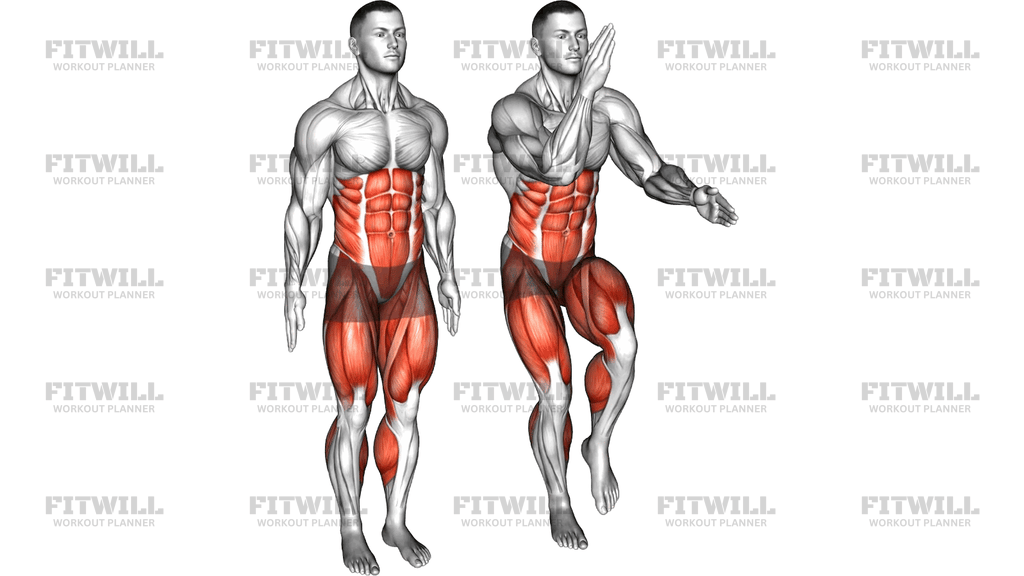
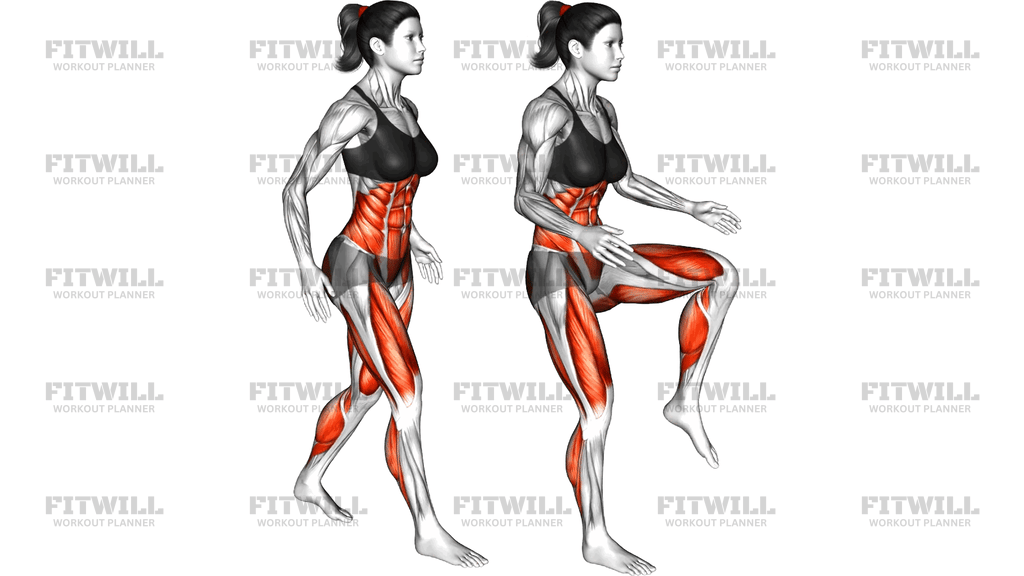
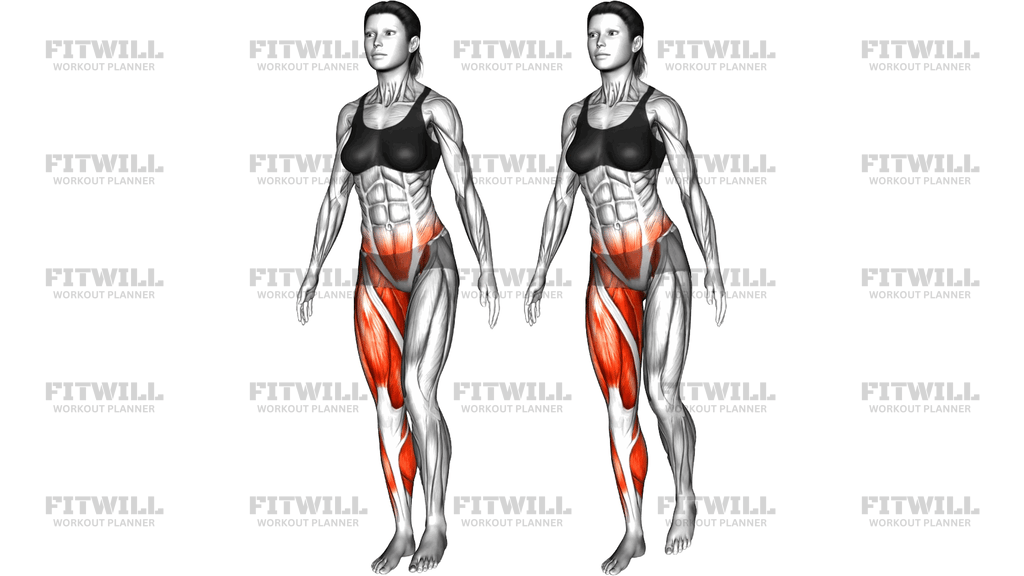
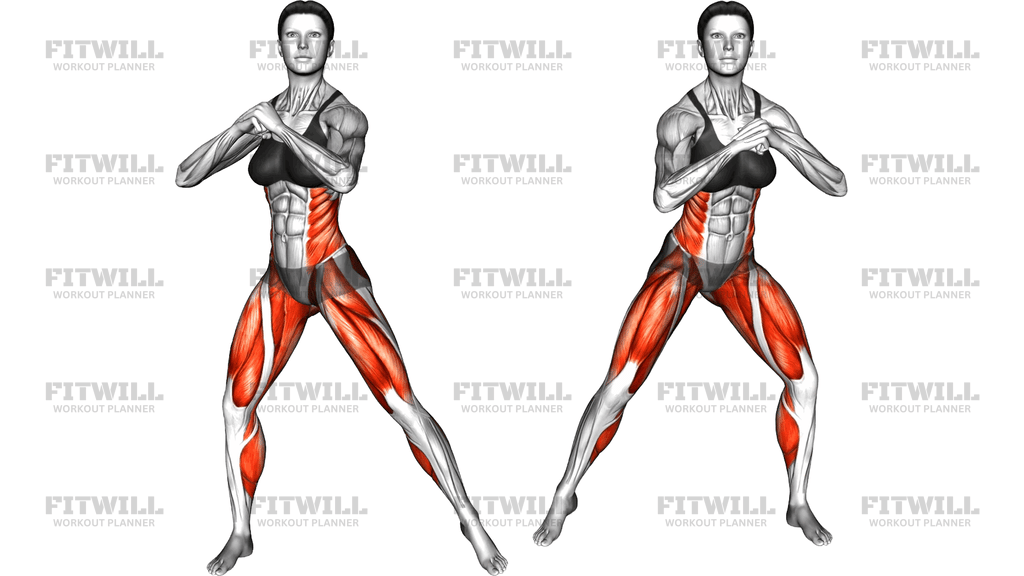
Split Jump Twist Row
The Split Jump Twist Row is a bodyweight plyometric exercise that combines an explosive split-stance jump with a rotational pulling motion of the arms. You start in a staggered lunge position with your hands clasped together in front of your chest, drop into a split squat, then drive up into a jump. As you land back into the split stance, you pull the clasped hands back toward one hip in a rowing action while rotating the torso through that same side. The result is one movement that challenges the legs, the core, and coordination all at once.
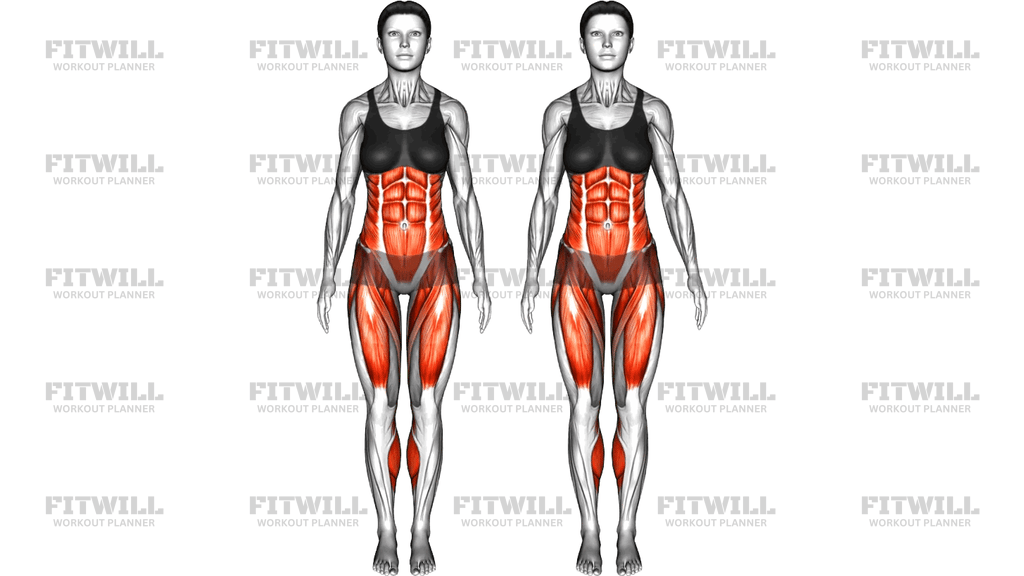
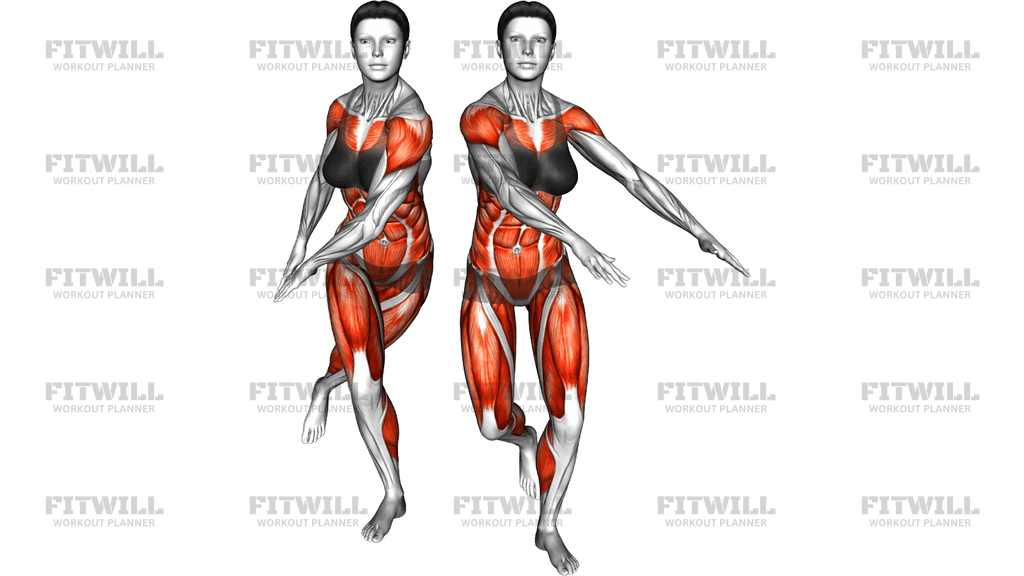
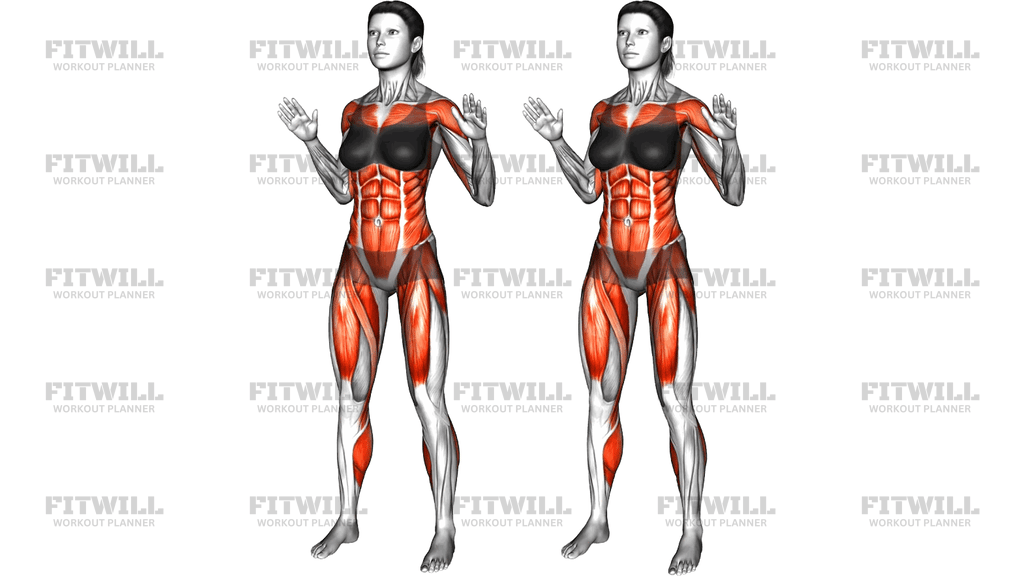
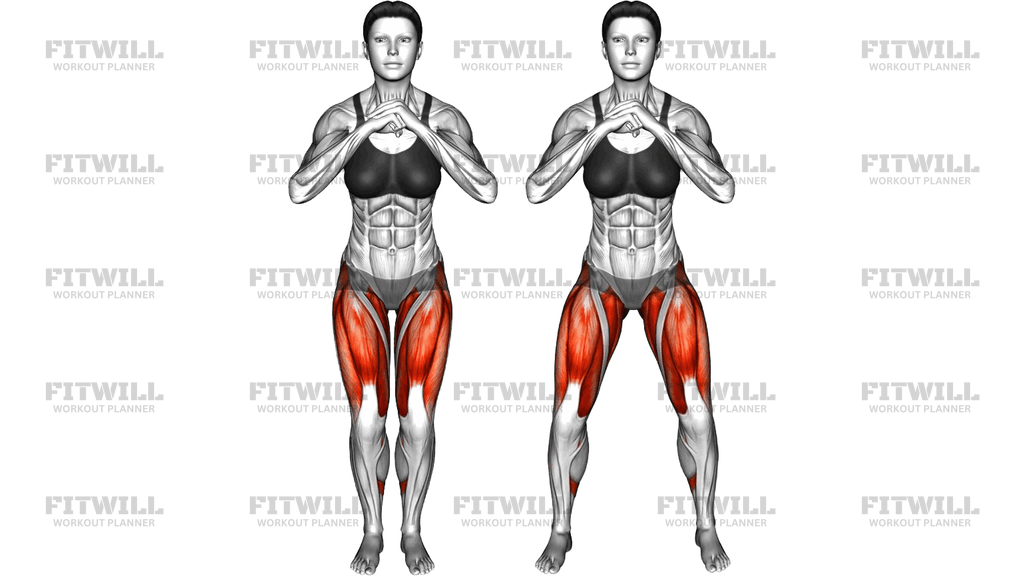
The lower body does the bulk of the power work. The front leg's quads and glutes load and explode out of the split squat, the hamstrings and calves stabilize the landing, and the rear leg's hip flexors help control the position mid-air. The twist and row shift the emphasis upward: the obliques and deep core rotate and decelerate the torso, while the muscles of the upper back work isometrically as the arms pull the clasped hands back toward the hip.
This exercise suits anyone with solid lunge mechanics and healthy knees who wants to add a rotational power element to their training. It shows up in athletic conditioning for sports that demand throwing, swinging, or changing direction, and in general fitness circuits where you want a leg exercise that also fires the midsection. Because it requires no equipment and only a few feet of space, it works well for home workouts, warm-up potentiation, or metabolic finishers.
Setup matters more than it looks. Your split stance width determines everything: too narrow and you'll wobble on the landing, too wide and you'll lose the snap out of the bottom. Keep the front shin close to vertical, the back knee tracking under the hip, and the torso leaning slightly forward with a braced ribcage. If the stance is right, the jump feels vertical and quiet; if it's wrong, you'll feel it in the front knee or lower back.
Execution should follow a rhythm: lower with control, jump with intent, land soft, row and twist on contact. The rotation should come from the ribcage and hips working together, not from cranking the lower back. Alternate the twist side from rep to rep, or complete all reps on one side before switching, depending on your goal.
The most common error is rushing the landing. A heavy, collapsed landing defeats the purpose and stresses the knees. Aim to absorb the contact by sinking into the front hip with the foot flat, then reset the torso before the next rep. Start with a small hop and a modest twist, and only increase height and rotation once the landing stays clean.
[ Workout Log & Planner ]
Put your next workout in Fitwill
Keep your plan and training log ready when you are.


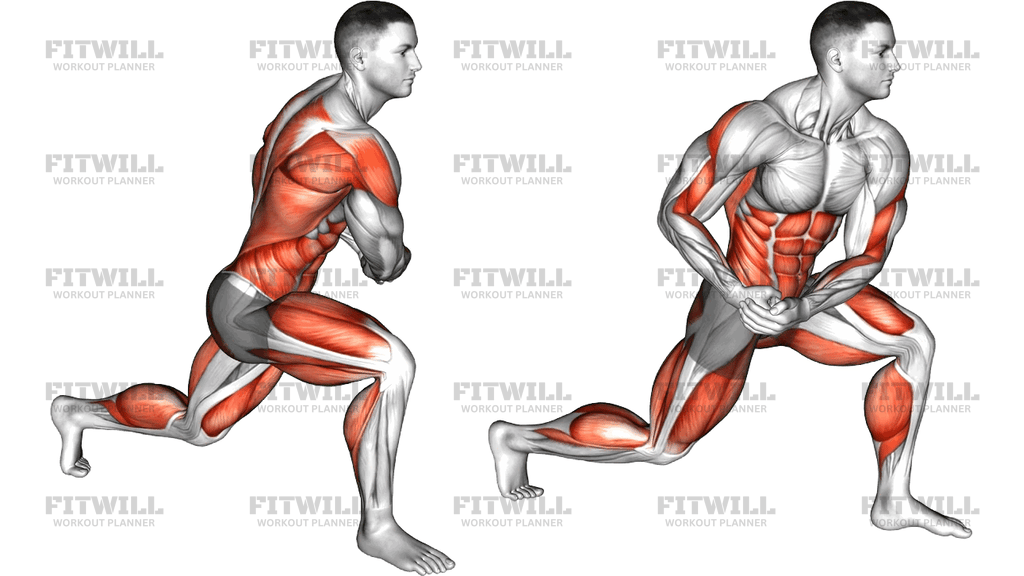
Instructions
- Stand in a staggered split stance: one foot forward far enough that your front shin stays roughly vertical, the other foot back with the heel lifted.
- Clasp your hands together in front of your chest with elbows bent, arms relaxed but held close to the body.
- Brace your core, pull your shoulders down and back, and hinge the torso slightly forward from the hips while keeping the chest tall.
- Lower into a split squat until the front knee bends to about 90 degrees and the back knee hovers just above the floor.
- Drive through the front foot and push the floor away to jump straight up, keeping the split-leg position in the air.
- As you land, pull the clasped hands back toward the hip on the side of your front leg, rotating the ribcage through that side in a rowing motion.
- Absorb the landing softly by sinking back into the front hip, keeping the front foot flat and the back knee under control.
- Exhale as you jump and twist, inhale as you lower into the next split squat.
- Alternate the twist to the opposite hip on the following rep, or complete all reps on one side before switching legs.
- Reset the stance between sets if your feet have drifted, and step out of the split position rather than jumping out of it when you finish.
Tips & Tricks
- If your front knee caves inward on the landing, narrow your stance slightly and consciously push the front knee out over the little toe.
- Keep the rowing pull short and controlled — driving the clasped hands too far past the hip will pull your chest into rotation and dump tension from the core.
- Land toe-ball-heel, not flat-footed. A stiff, flat landing on this exercise is the usual cause of knee discomfort.
- If the twist throws your balance off, reduce the rotation to a quarter turn first and master landing quietly before adding range.
- Your torso should lean slightly forward over the front leg; if you're upright and arching your lower back during the twist, re-brace the abs before the next rep.
- Keep the back heel lifted and the back knee pointing down at the floor — letting the rear leg swing wide mid-jump is a common source of landing wobble.
- Breathe out on the jump, not on the landing; holding your breath through the whole rep makes the twist feel far harder than it is.
- If your calves fatigue before your legs, you're landing too far forward on the toes — get the whole front foot down faster on contact.
Frequently Asked Questions
What muscles does the Split Jump Twist Row work?
The quads and glutes of the front leg produce the jump, with the hamstrings and calves stabilizing the landing. The twist and row bring the obliques and core in strongly, and the upper back supports the pulling motion.
Is the Split Jump Twist Row suitable for beginners?
Beginners should first be comfortable with static split squats and basic lunges. Once those are solid, start with a small hop and a limited twist before jumping to full height and rotation.
Should I alternate the twist side each rep or do all reps on one side?
Alternating sides each rep trains coordination and keeps the workload even. Doing all reps on one side before switching works better if you're focusing on rotational power for a specific direction, such as a throwing or swinging pattern.
How wide should my split stance be for this exercise?
Wide enough that both knees can bend to about 90 degrees at the bottom, with the front shin near vertical. If you wobble on landing, the stance is too narrow; if you can't explode upward, it may be too wide.
Why do my hands stay clasped instead of using weights or handles?
The clasped-hands row keeps the arms moving as one unit, which makes the rotation come from the trunk rather than the shoulders and keeps the exercise bodyweight-only. Adding load to a twisting jump significantly raises the demand on the spine and is not necessary to get a training effect.
Can I do the Split Jump Twist Row without the jump?
Yes. Perform a split squat and add the twist row as you rise from the bottom — this keeps most of the rotational core work while removing the impact, which is useful if you have sensitive knees or are training on a hard surface.
What is the most common mistake with this movement?
Landing heavy with a collapsed front knee and then twisting. The twist should begin as you contact the floor with an already-braced torso, not after you've sunk into the landing.
How many reps should I do?
For power and coordination, 6 to 10 quality jumps per side with full rest works well. In a circuit, 20 to 30 seconds of continuous alternating reps is enough — stop once the landing gets noisy.
Is it safe for my knees?
If you can lunge and land without knee pain, the exercise is generally well tolerated. Keep the front shin close to vertical, land softly, and reduce jump height immediately if you feel any pinching at the front of the knee.