Ski Runners (Version 2)
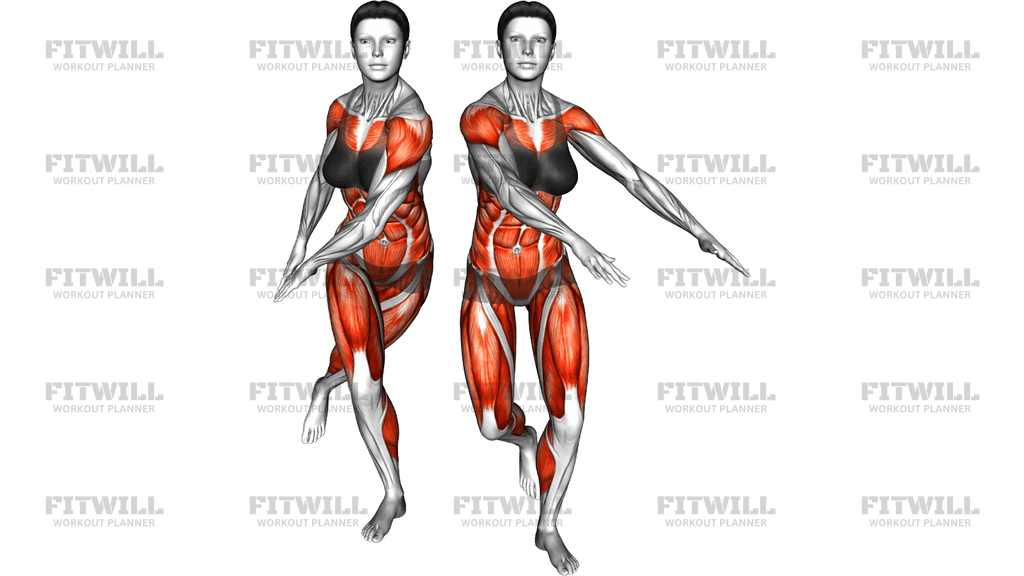
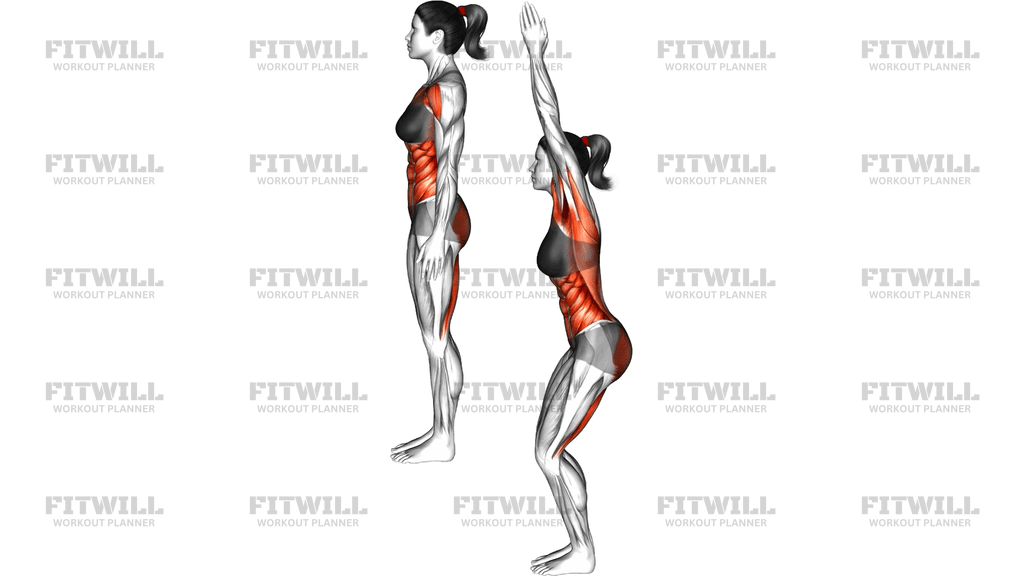
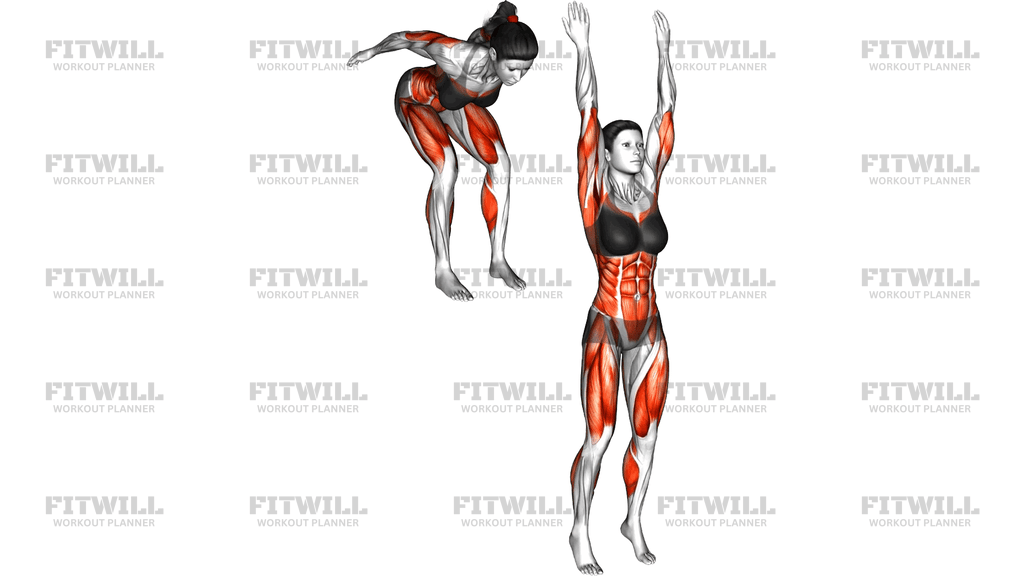
Ski Runners (Version 2) is a bodyweight hinge-and-extend drill that copies the rhythm of a skier coming out of a tuck. You start folded forward at the hips, knees softly bent and arms swung behind you like poles trailing on a downhill, then drive through the feet to stand tall and reach both arms straight overhead. The movement cycles between those two shapes, which makes it one of the simplest ways to teach the hips how to load and unload with speed.
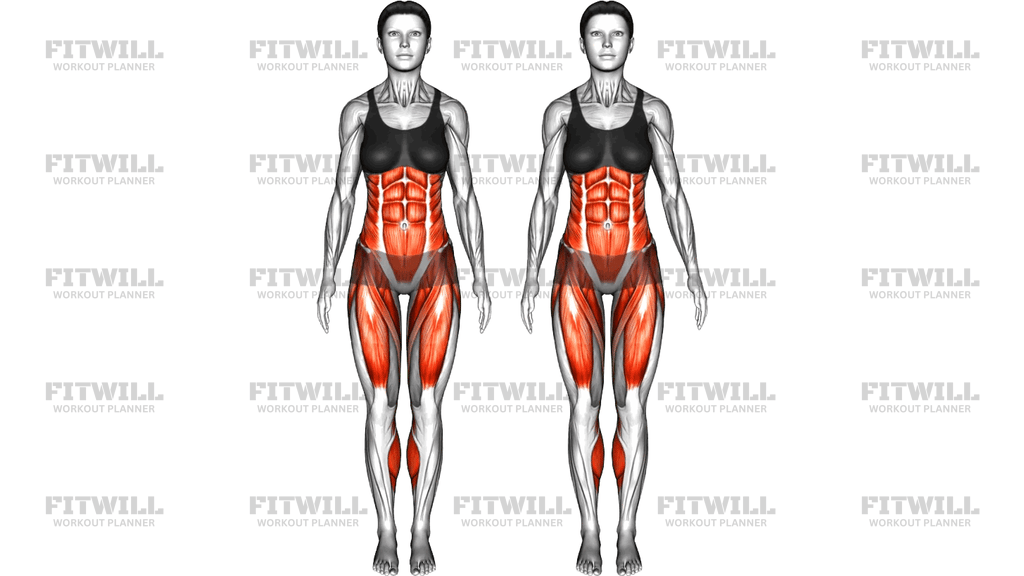
Because it uses no equipment, this version fits almost any setting: warm-ups before squats or deadlifts, circuit training, home workouts, or conditioning blocks where you want your heart rate up without impact-heavy jumping. The hinged position loads the glutes and hamstrings, while the explosive rise brings the quads, calves, and lower back into play. The overhead reach adds the shoulders and upper back, so the whole body gets involved in every rep.
Setup matters more than it looks. A stance about hip-width apart with the weight balanced across the whole foot gives you a stable base, and the fold has to come from the hips rather than rounding the spine. If you curl your lower back into the tuck, the hamstrings and glutes lose their stretch and the extension loses power. Think of the torso as one long lever hinging at the hip.
Execution should feel rhythmic, not jerky. Fold forward with control, let the arms drift back naturally, then snap the hips through and stand tall, pressing the arms up toward the ceiling and rising onto the balls of the feet at the top. Exhale as you extend, inhale as you fold back down. The return should be smooth enough that you can keep repeating it without your lower back taking over.
This drill works well for beginners learning the hip hinge pattern under light load, and it also challenges fitter lifters when done at tempo or for longer intervals. Common use cases include dynamic warm-ups, posterior chain activation before lifting, and low-impact cardio intervals. Keep the repetitions controlled and stop when the fold starts to turn into a rounded slump, which is the usual sign of fatigue in this movement.
[ Workout Log & Planner ]
Put your next workout in Fitwill
Keep your plan and training log ready when you are.


Instructions
- Stand with your feet about hip-width apart, weight spread evenly across both feet, and your arms hanging relaxed at your sides.
- Push your hips back and fold forward until your torso is angled toward the floor, letting your knees bend slightly as in a downhill ski tuck, and swing both arms behind you.
- Brace your abdominal muscles lightly and keep your spine long in the fold; your chest should be open rather than rounded.
- From the tuck, drive your hips forward and push the floor away through the balls of your feet.
- Rise to a full stand, reaching both arms straight up overhead and coming up onto your toes at the top of the movement.
- Lower your heels and bring your arms back down as you hinge at the hips to return to the ski tuck position.
- Exhale as you extend upward, and inhale as you fold back into the tuck.
- Keep the cycle continuous and rhythmic, moving at a pace you can hold without the fold collapsing.
- Reset your stance if your feet drift, and finish the set by standing tall before stepping out of the pattern.
Tips & Tricks
- The most common mistake is rounding the lower back in the tuck, which turns the drill into a spine-curl instead of a hip hinge; cue yourself to fold by pushing the hips back and keeping the chest proud.
- Do not let your knees collapse inward as you extend; think of pressing your knees slightly out over your little toes to keep the glutes engaged.
- If you feel the work only in your lower back, slow the fold down and squeeze the glutes harder at the top so the hips, not the spine, drive the movement.
- Keep the arm swing behind you relaxed in the tuck; forcing the arms back too far usually pulls the shoulders forward and rounds the upper back.
- The overhead reach should come from the shoulder movement, not from arching backward; stop the torso vertical rather than leaning past it.
- Rising onto the balls of the feet at the top adds calf involvement, but if balance wobbles, keep the heels lower and master the hinge first.
- A pace you can hold for the whole set beats short bursts followed by sloppy folds; cut the set short if the tuck starts to slump.
- Softer surfaces like a mat can help if you are doing high-rep sets and your heels feel beat up from the repeated toe rise.
- Breathe in a steady rhythm tied to the movement rather than holding your breath, especially as the sets get longer.
Frequently Asked Questions
What muscles do Ski Runners (Version 2) work?
The glutes and hamstrings do most of the hip extension, supported by the quads and calves as you stand tall. The lower back and core stabilize the folded position, and the shoulders help with the overhead reach.
Is Ski Runners (Version 2) suitable for beginners?
Yes, because it is a low-load bodyweight drill. Beginners should slow the tempo down and focus on hinging from the hips before speeding up the repetitions.
How is Version 2 of Ski Runners different from the basic version?
This version emphasizes the full extension phase, where you rise tall with both arms reaching overhead, rather than staying in the skier's tuck. That makes it a hinge-to-stand pattern instead of a repeated tuck hold.
Why do my lower back muscles fatigue before my legs?
That usually means the fold is coming from rounding the spine instead of pushing the hips back. Keep the chest open in the tuck so the glutes and hamstrings carry the load.
How many repetitions should I do of Ski Runners (Version 2)?
For a warm-up, 10 to 15 smooth reps work well. For conditioning, work in 20 to 40 second intervals and stop when the fold position starts to slump.
Can I use Ski Runners (Version 2) as a cardio exercise?
Yes, running the repetitions continuously at a steady pace raises the heart rate without any jumping impact, which makes it a good low-impact cardio option.
What can I substitute if I find the overhead reach uncomfortable?
You can stop the arms at shoulder height or keep your hands on your thighs during the fold. The hip hinge and extension pattern is the core of the exercise, so the arm path can be adjusted.
Should my knees be locked or bent during the tuck position?
Keep a soft bend in the knees, similar to a skier's stance. Locked knees limit how far the hips can hinge and reduce glute and hamstring involvement.
Is it safe to do this exercise every day?
As a bodyweight hinge drill with no added load, it is generally fine to perform frequently, especially at moderate volumes. If your lower back or hamstrings feel persistently sore, reduce the reps and give them a day to recover.