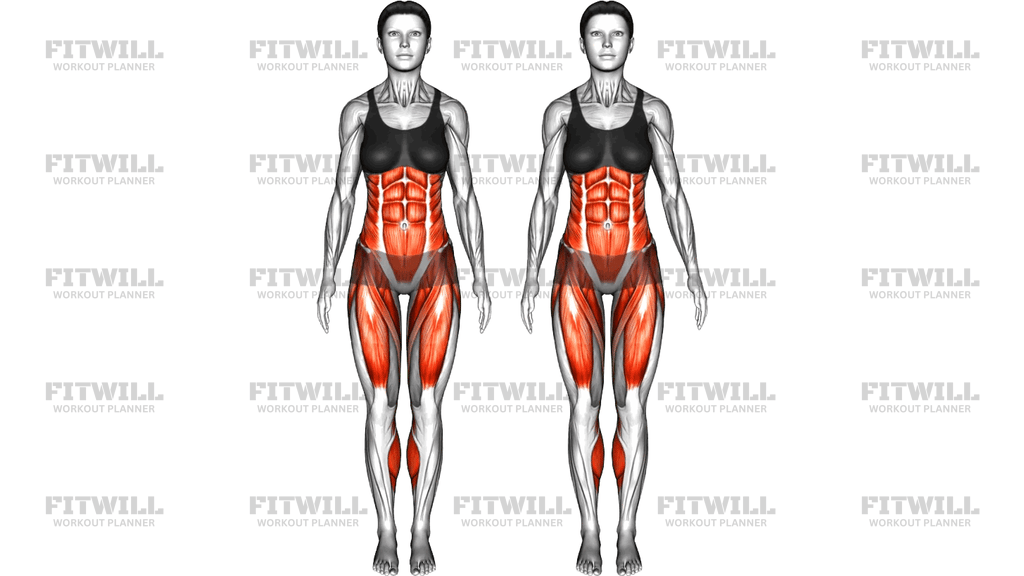
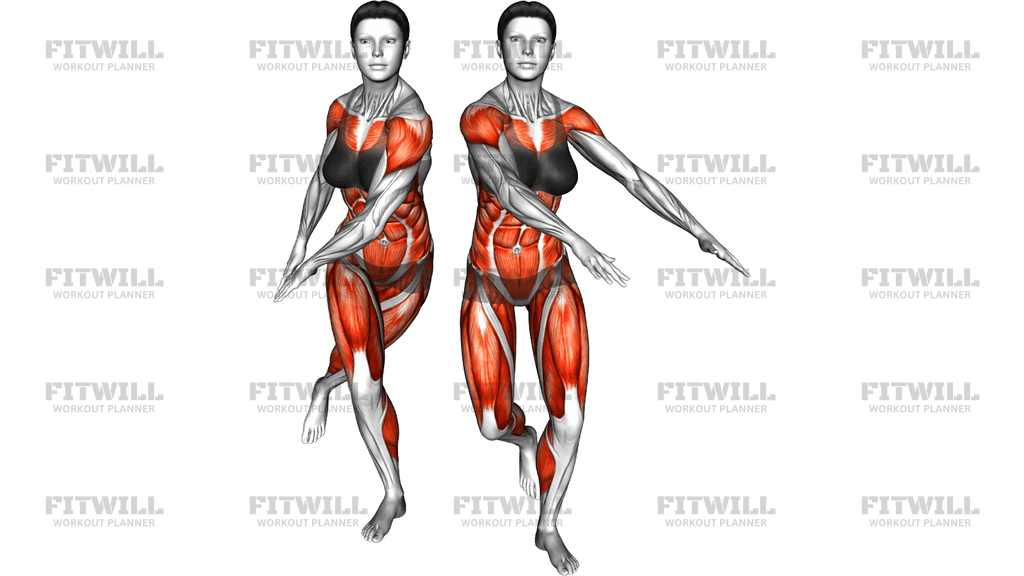
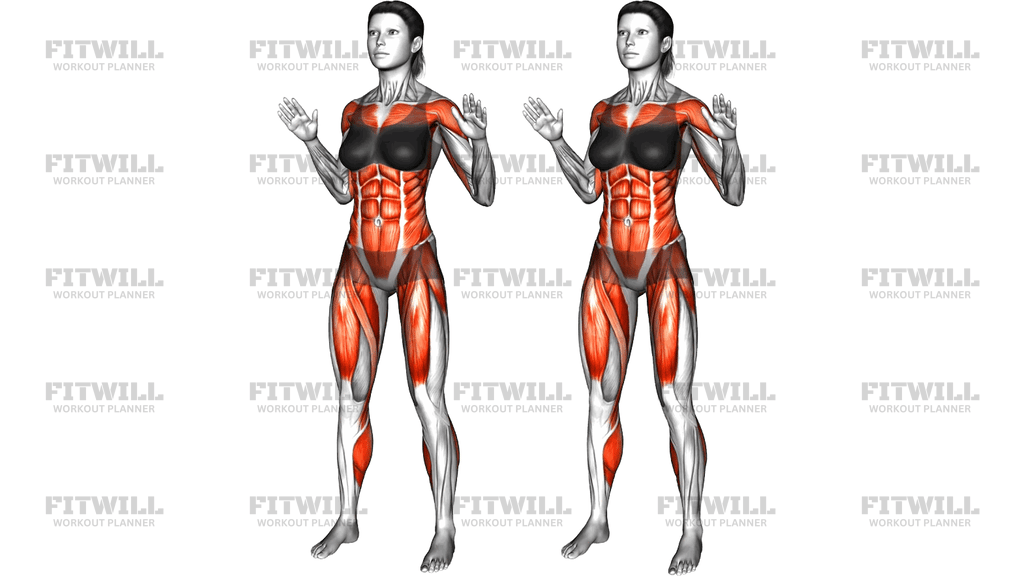
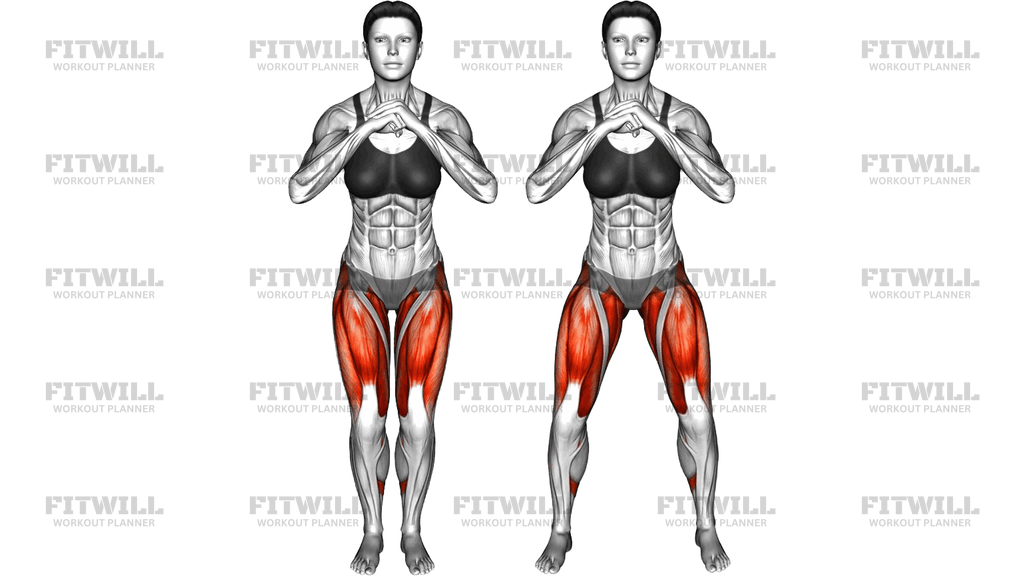
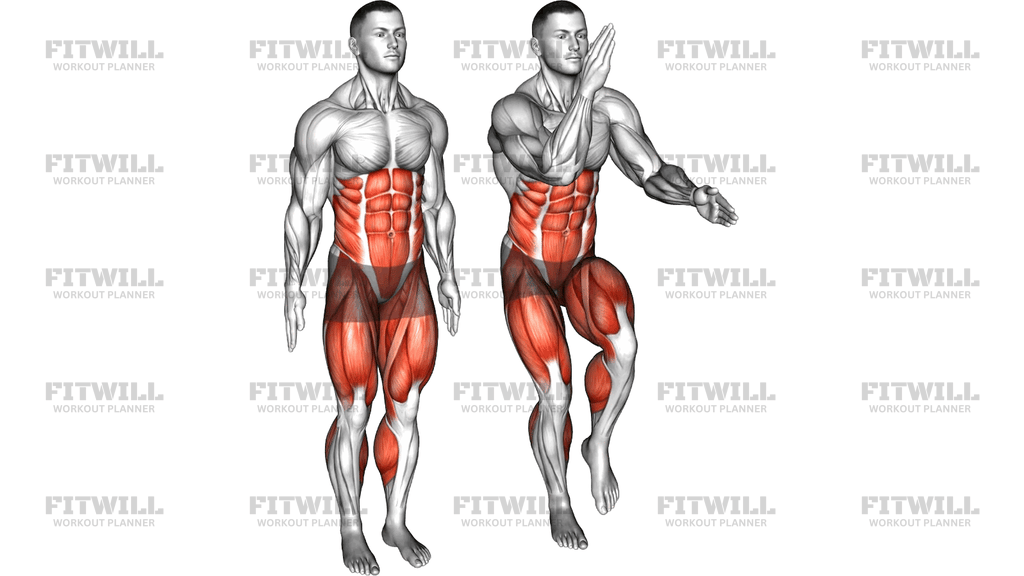
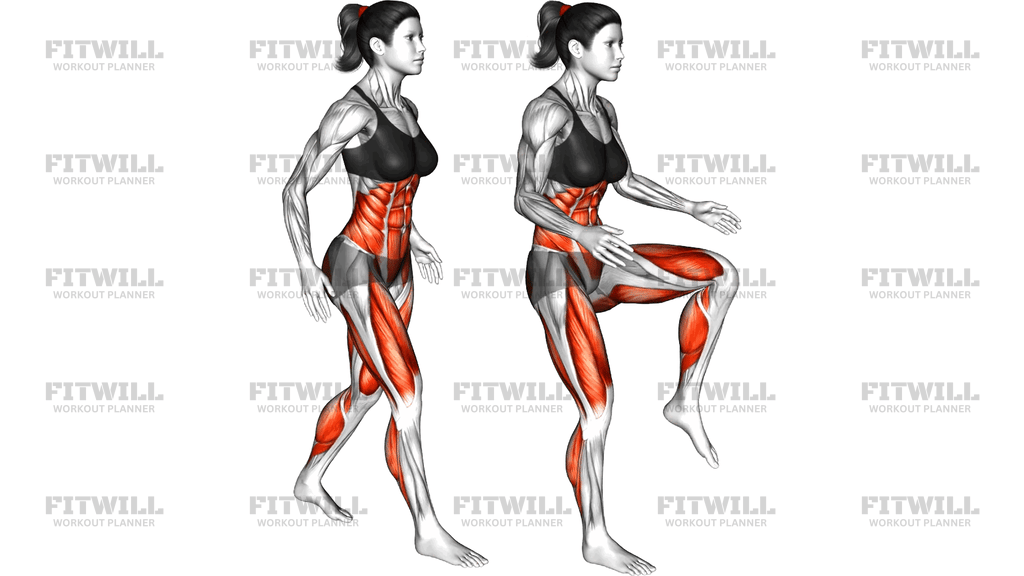
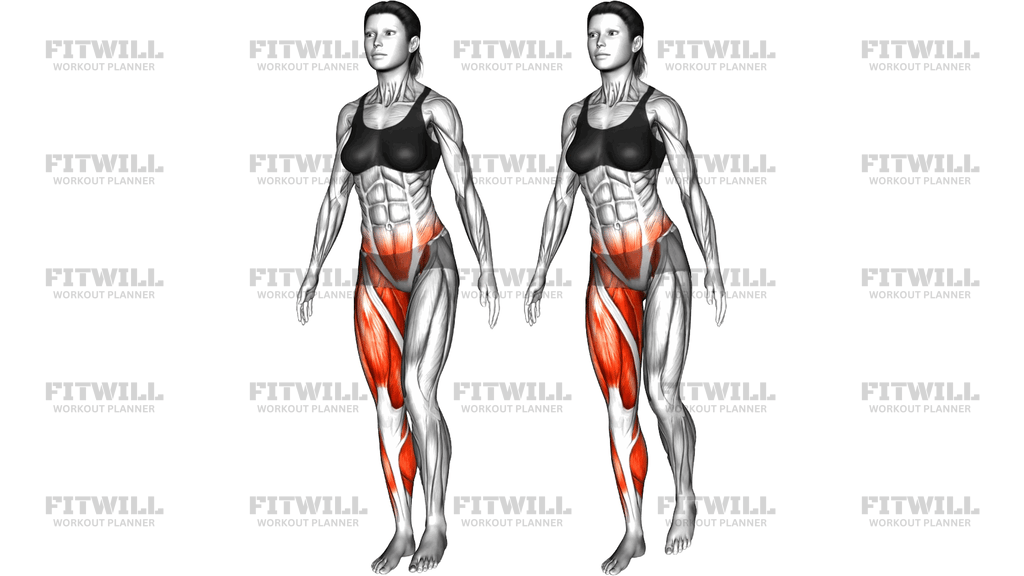
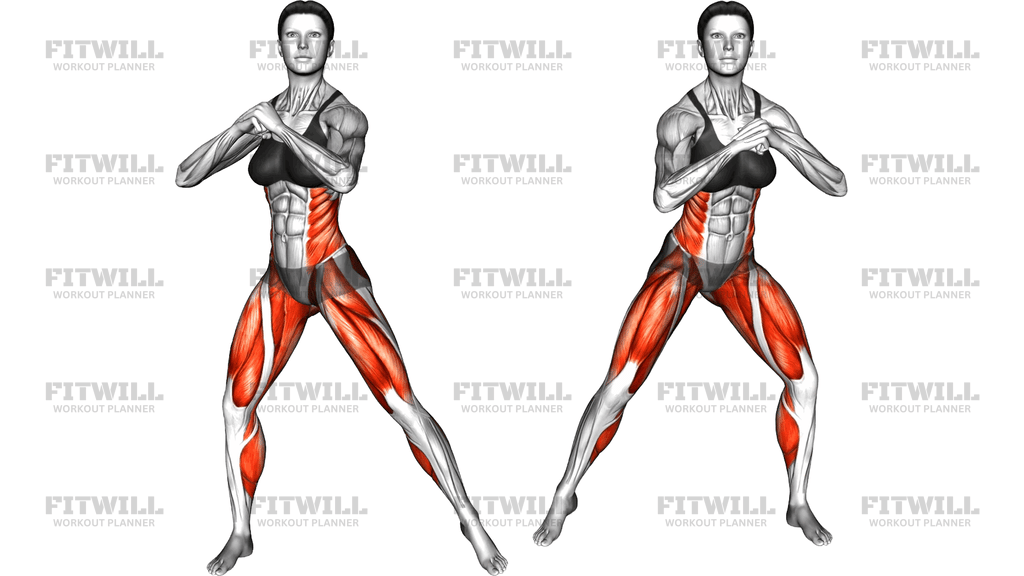
Squat Press Up
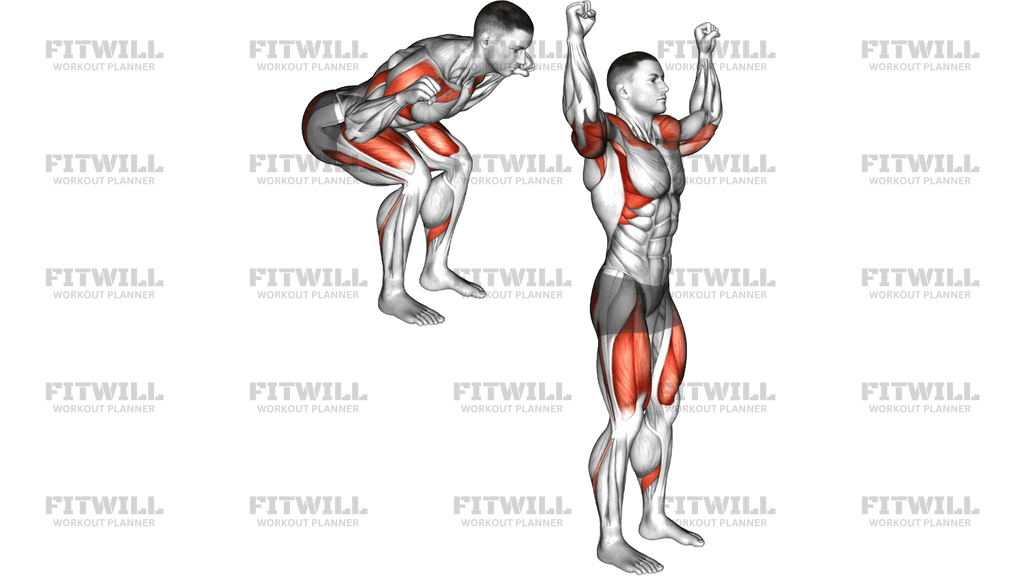
The Squat Press Up is a bodyweight movement that combines a deep squat with an explosive stand-and-reach, driving the arms straight overhead as the hips and knees extend. It is essentially the bodyweight version of a squat to press: the legs generate the force, the core transfers it, and the shoulders finish the movement by pressing the arms up toward the ceiling. Because there is no barbell or dumbbell involved, the exercise relies entirely on speed and control, which makes it a good fit for home workouts, warm-ups, and conditioning circuits.
This movement trains the quads and glutes as the primary drivers, with the hamstrings, calves, and lower back supporting the extension. The arms overhead at the top bring the shoulders and upper back into play, and holding a tall finish position forces the core to stay tight from floor to fingertips. When performed with an emphasis on a brisk, powerful ascent, it also develops coordination between the lower and upper body, which carries over well to jumping, lifting, and throwing patterns.
Setup matters more than people expect for a bodyweight drill. Feet should be about shoulder-width apart with weight spread across the whole foot, and the squat needs to reach a depth where the thighs are roughly parallel or slightly below while the chest stays up. Rushing into a shallow, heels-lifting squat changes the whole exercise and shifts stress to the knees. Taking a moment to brace the trunk before each rep keeps the spine supported through the fastest part of the movement.
To execute well, sink into the squat with the hips moving back and down, then drive the floor away and stand tall while sweeping or pressing the arms straight up overhead. The arms should finish locked out and close to the ears, not drifting forward. Lower the arms as you descend into the next rep so the rhythm stays smooth. Each rep should feel like one coordinated wave: down under control, up with intent.
The Squat Press Up works well as a general strength and conditioning exercise, a warm-up primer before weighted squats or presses, or a higher-rep finisher when equipment is limited. People who sit a lot benefit from the deep hip and knee flexion combined with full overhead reach, since it moves joints through ranges everyday life rarely touches. Keep the repetitions crisp rather than grinding, and stop the set when form starts to tilt forward or the heels begin to lift.
[ Workout Log & Planner ]
Put your next workout in Fitwill
Keep your plan and training log ready when you are.


Instructions
- Stand with your feet about shoulder-width apart, toes turned out slightly, and your weight spread evenly across both feet.
- Raise your hands in front of your chest with elbows bent, ready to press upward as you stand.
- Brace your core and pull your shoulders back before you start descending.
- Push your hips back and bend your knees to sink into a full squat, letting your arms drop down naturally as you lower.
- Keep your chest up and your heels flat at the bottom, with your knees tracking over your toes.
- Drive through the floor to stand up forcefully, pressing your arms straight overhead until your elbows are locked out and your biceps are near your ears.
- Hold the tall top position for a brief moment with your glutes tight and body in a straight line.
- Lower your arms in a controlled way as you sink into the next squat, keeping the down phase smooth rather than collapsing.
- Exhale as you stand and press, inhale as you lower into the squat.
- Reset your stance and brace between sets if your position drifts or your heels start to lift.
Tips & Tricks
- If your heels lift at the bottom of the squat, widen your stance a few centimeters or turn your toes out slightly before descending.
- A common mistake is pressing the arms forward instead of straight up; aim to finish with your hands directly over your shoulders, not in front of your face.
- Do not let the squat depth shrink as you tire, a shallow bounce reduces the work on the glutes and quads and turns the rep into a knee-dominant bob.
- Keep your lower back neutral at the bottom; if your chest collapses and your back rounds, reduce depth slightly until you can hold a tall chest.
- The arms should drop naturally as you descend, if you hold them rigid at chest level your balance shifts backward and the squat feels awkward.
- Move the ascent fast and the descent controlled, treating each stand-up as a deliberate push rather than a drift upward.
- Land softly on full-foot contact between reps if you add a jump to the top position, stiff-kneed landings pass a lot of shock into the knees.
- If your knees cave inward as you stand, think about spreading the floor with your feet and pressing your knees out over your little toes.
Frequently Asked Questions
What muscles does the Squat Press Up work?
The quads and glutes do most of the work during the squat and stand-up, while the shoulders and upper back finish the arms-overhead press. The core, hamstrings, and calves support and stabilize throughout.
Is the Squat Press Up suitable for beginners?
Yes, because it uses no external load. Beginners should first practice the squat portion alone and only add the overhead arm press once they can squat to parallel depth with a tall chest and flat heels.
How deep should I squat during the Squat Press Up?
Aim for thighs roughly parallel to the floor or slightly below, as long as your heels stay down and your lower back holds its shape. Depth without losing position beats a deeper squat with a rounded back.
Should the arm press be fast or slow?
The press should match a brisk, powerful stand-up so the whole body extends together. The lowering phase into the next squat is where you slow down and stay controlled.
Why do my arms drift forward at the top of the Squat Press Up?
Forward drift usually means the shoulders are tight or the press is leading the torso lean. Stretch the shoulders and lats briefly beforehand and cue yourself to finish with hands over the crown of your head.
Can I add a jump to the Squat Press Up?
Yes, driving off the floor into a small hop with arms overhead turns it into a plyometric variation. Only add the jump when you can already stand up smoothly with flat heels and stable knees.
What can I use instead of the Squat Press Up if it bothers my knees?
Reduce the depth to a quarter or half squat with the same overhead press, or sit back to a sturdy chair and stand up pressing the arms overhead. Both keep the pattern while lowering knee demand.
How many reps should I do of the Squat Press Up?
Ten to fifteen crisp repetitions per set works well for strength and conditioning, or twenty to thirty for a conditioning finisher. End the set when your depth, heel contact, or arm path starts to degrade.
Is it safe to do the Squat Press Up every day?
For most people, yes, since it is low load and joint-friendly in moderate volumes. If your knees or lower back feel sore rather than worked, take a rest day and check that your squat position is not drifting.