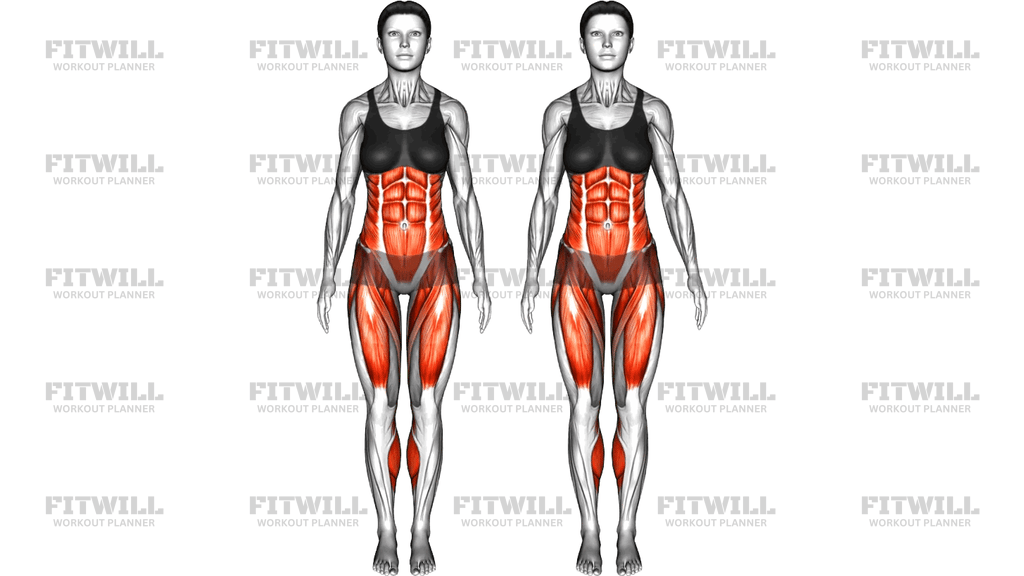
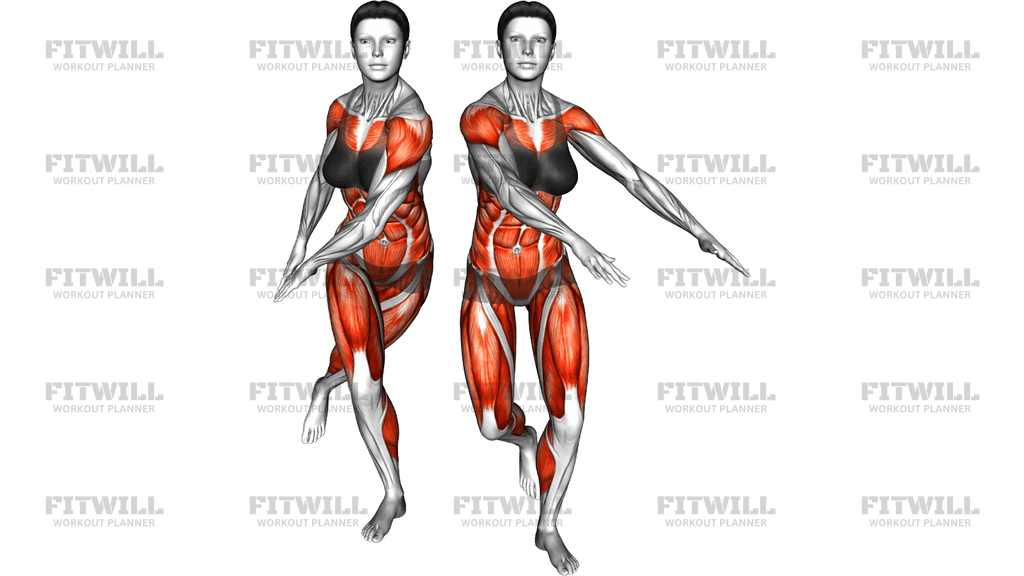
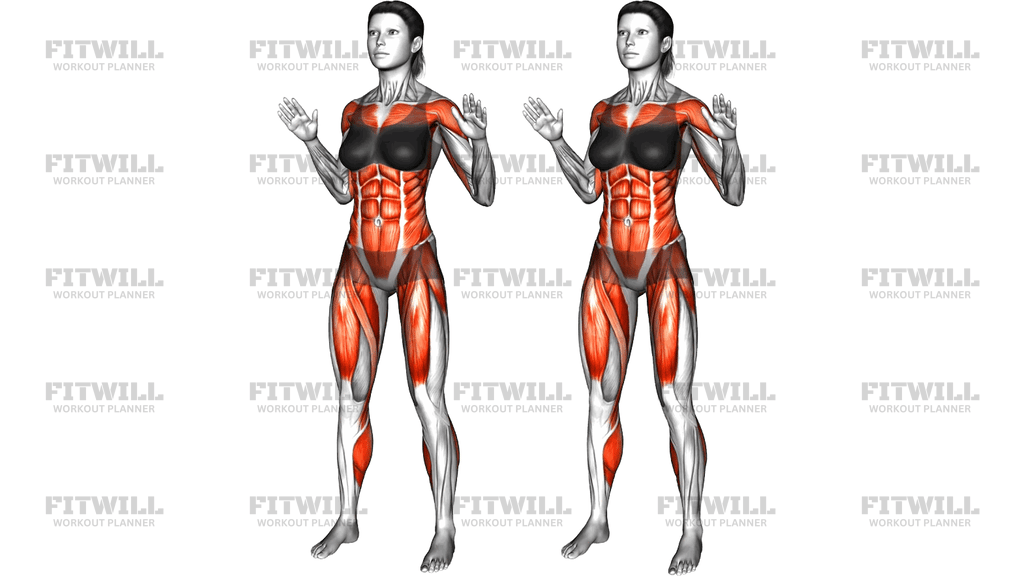
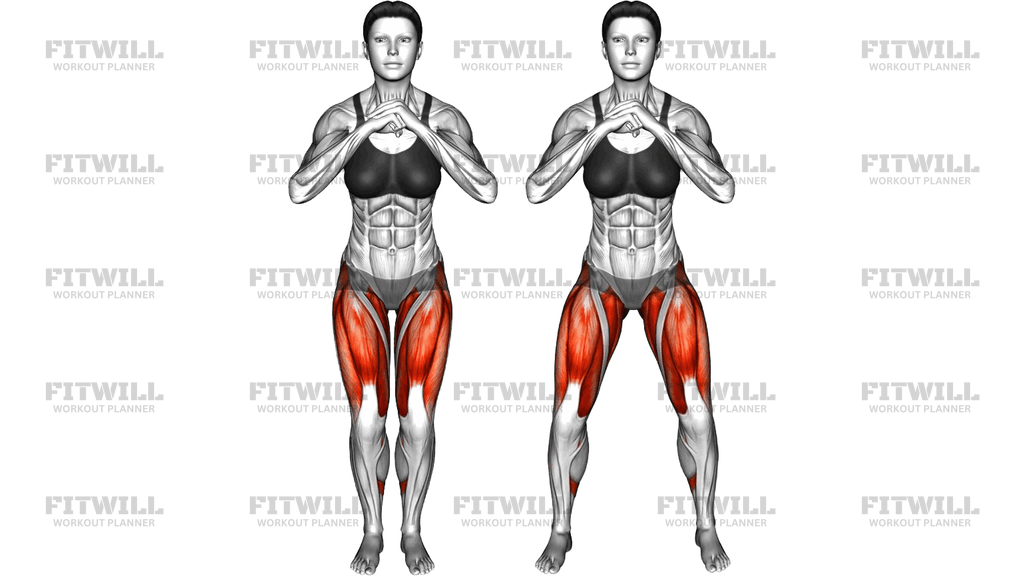
Side Bend Side Lunge
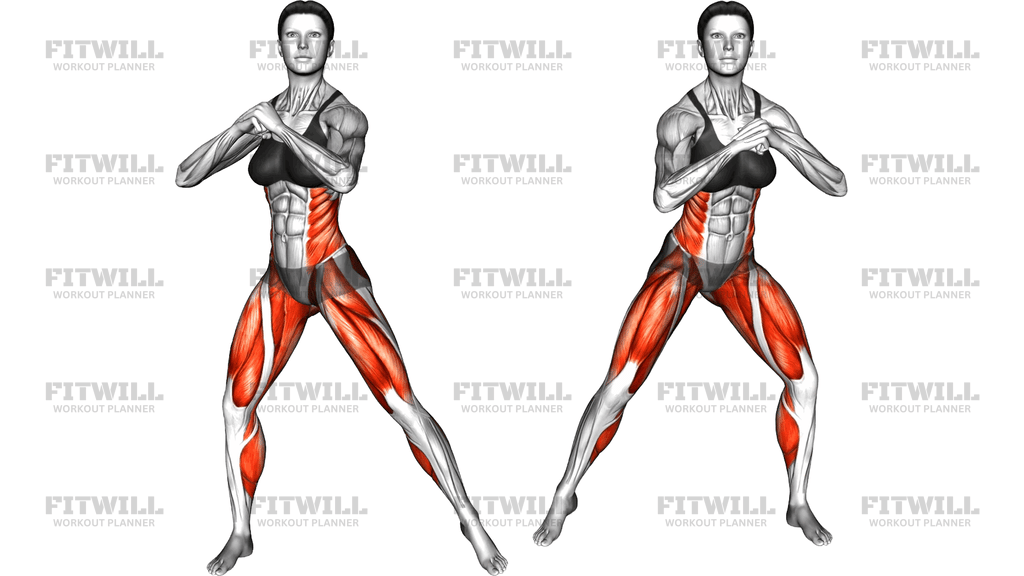
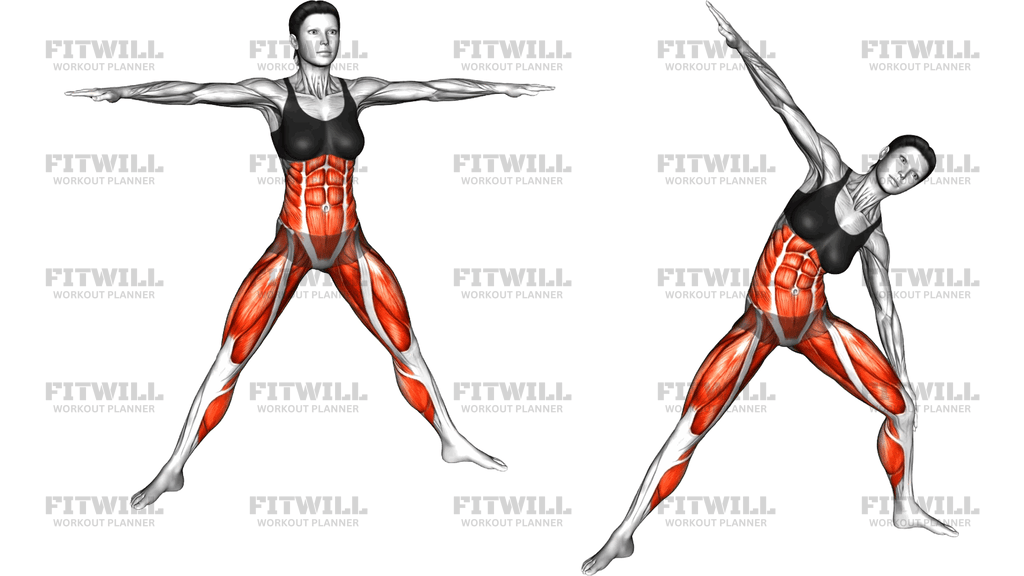
The Side Bend Side Lunge is a bodyweight movement that combines a wide-stance lateral lunge with a deep side bend over the bent leg, with the opposite arm reaching up and overhead. It looks similar to Extended Side Angle pose in yoga, but it is coached here as a strength exercise: you shift your weight sideways into one leg, fold over that thigh, and use your own trunk and leg strength to control both the descent and the return. Because it is done with no equipment, the only resistance is your bodyweight and the tension you create through the adductors, quads, glutes, and lateral core.
This movement is especially useful for people whose training is mostly forward and backward. Squats, hinges, and lunges all happen in the sagittal plane, but the Side Bend Side Lunge forces the hips into abduction and the spine into lateral flexion, which is where many lifters are weakest. The wide stance loads the inner thighs of the straight leg in a long stretch while the bent leg works through the quad and glute, and the side bend challenges the obliques and quadratus lumborum on the upper side as they control the fold and pull you back up.
Setup matters more than it looks. A stance that is too narrow turns this into a shallow bend with no leg work, while a stance too wide makes it hard to keep the straight leg planted and the foot flat. Both feet should point forward, weight spread across the whole foot, and the bend should happen over the bent leg rather than drifting toward the floor in front of you. Keeping the reaching arm long and in line with the ear helps the side bend come from the trunk instead of collapsing through the shoulder.
To execute it well, think of the movement as one smooth diagonal line from the reaching hand down to the straight leg. Push your hips back and to the side as the knee bends, let the opposite hand slide down the straight leg or toward the floor, and reach the top arm up and over so the whole torso lengthens rather than crunches. Pause briefly at the bottom, then drive through the bent leg's foot to stand back to center, keeping the torso stacked as you rise.
This exercise fits well into warm-ups, mobility-focused strength blocks, and home workouts where lateral movement is otherwise missing. It is also a common choice in group and dance-style training because it opens the inner thighs while demanding trunk control. Move slowly at first, and stop the side bend at whatever depth lets you keep the bent knee tracking over the foot and the spine long rather than rounded.
Fitwill
Log Workouts, Track Progress & Build Strength.
Achieve more with Fitwill: explore over 9600 exercises with images and videos, access built-in and custom workouts, perfect for both gym and home sessions, and see real results.
Start your journey. Download today!




Instructions
- Stand tall with your feet roughly two shoulder-widths apart, toes pointing forward, and raise both arms straight out to the sides at shoulder height.
- Shift your weight toward your right leg and turn the right foot slightly out if needed so the knee can track over the toes.
- Draw your belly in and brace your trunk before you start moving, keeping your chest lifted and gaze forward.
- Bend the right knee and push the hips back and to the side, lowering into a side lunge while keeping the left leg straight and the left foot flat.
- As you sink, side bend your torso over the bent right thigh, letting the left hand slide down the straight left leg or toward the floor inside the stance.
- Reach the right arm up and overhead so it forms a long diagonal line with the straight left leg, with the palm facing the floor.
- Hold the bottom position for a beat, feeling the stretch along the left inner thigh and the work in the right glute, quad, and side of the trunk.
- Press firmly through the right foot and squeeze the glutes to lift back up, straightening the knee and unstacking the torso until your arms are level again.
- Exhale as you fold into the side lunge and inhale on the way back up, keeping the breath steady rather than holding it.
- Complete all repetitions on one side or alternate sides, resetting to a tall, even stance between reps.
Tips & Tricks
- The most common error is bending the knee before the hips move sideways, which drives the knee forward instead of out. Start the rep by pushing the hips to the side, then let the knee bend.
- If the straight leg's foot rolls onto its outer edge, narrow your stance a few inches. A flat inner foot keeps the inner thigh stretch honest and protects the knee.
- Do not let the reaching arm hang passively. Actively lengthen it past the ear so the side bend comes from the trunk instead of the shoulder collapsing.
- Keep the bent knee stacked over the ankle and pointing the same direction as the toes. If the knee caves inward, reduce the depth rather than forcing the fold.
- Think of lengthening over the bent thigh, not curling toward it. A long spine turns the side bend into core strength work; a rounded one just hangs on the low back.
- Slower is harder here. Take two to three seconds to lower and one strong breath to rise, which keeps the adductors loaded instead of bouncing out of the stretch.
- If you feel pinching at the front of the bent hip, widen the toes slightly and sit back a little more. The fold should come from the waist, not from jamming the hip joint.
- Keep the hand on the straight leg light, touching for balance only. Pressing down hard on the leg lets you cheat the trunk muscles out of the work.
- Warm the inner thighs first with a few gentle standing side reaches or shallow lunges, since cold adductors are the most likely limit point in this movement.
Frequently Asked Questions
What muscles does the Side Bend Side Lunge work?
The bent leg's quads and glutes drive the rise, while the inner thighs of the straight leg work hard to hold the wide stance. The side bend loads the obliques and deeper lateral trunk muscles as they control the fold and pull you back to center.
Is the Side Bend Side Lunge suitable for beginners?
Yes, but beginners should use a narrower stance and a shallower side bend at first. Master keeping the straight foot flat and the bent knee tracking over the toes before reaching for full depth.
Why does one arm reach overhead during the Side Bend Side Lunge?
The overhead reach lengthens the whole upper side of the body so the bend comes from the waist rather than the shoulder. It also turns the trunk muscles on harder because they must control a longer lever.
How wide should my stance be for the Side Bend Side Lunge?
Start around one and a half to two shoulder-widths so the straight leg stays long and the foot stays flat. If your inner feet roll outward or you lose balance, narrow the stance; if the bend feels cramped, widen it.
Should the straight leg stay perfectly straight?
Keep it firm and long, but a small soft knee is fine, especially if you feel strain behind the knee. What matters is that the leg does not collapse inward as you sink.
What is the most common mistake in the Side Bend Side Lunge?
Rounding forward toward the floor instead of folding sideways over the bent thigh. This shifts the work away from the obliques and adductors and loads the low back in a rounded position.
Can I do the Side Bend Side Lunge if I cannot touch the floor with my hand?
Absolutely. Let the hand rest on the straight leg as far down as it reaches comfortably, or place it on a yoga block inside the stance. Depth is not the goal; the diagonal line from hand to foot is.
How many reps and sets should I do?
Eight to ten controlled reps per side for two to three sets works well as a strength or mobility block. In a warm-up, three to five slow reps per side is usually enough.
What can I use instead of the Side Bend Side Lunge?
A plain side lunge without the bend trains the legs similarly, while a standing side bend with the feet together isolates the trunk. Combining the two, as this exercise does, is what makes the movement unique.
Is it safe for my knees and lower back?
It is generally safe when the bent knee tracks over the toes, the straight foot stays flat, and the spine stays long during the fold. If you have a current knee or back issue, keep the depth shallow and stop at any point of sharp pain.