Squat Air Bike
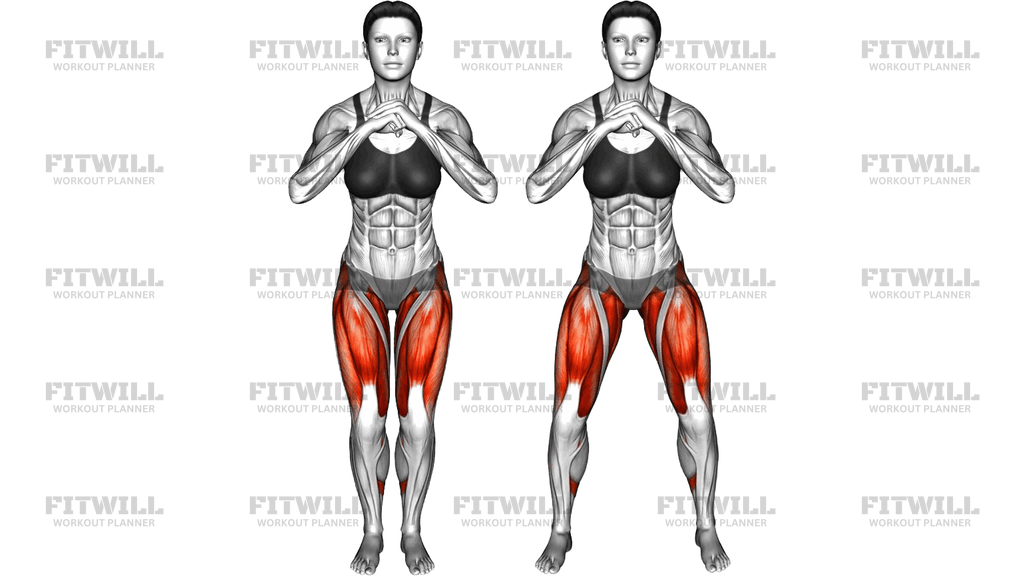
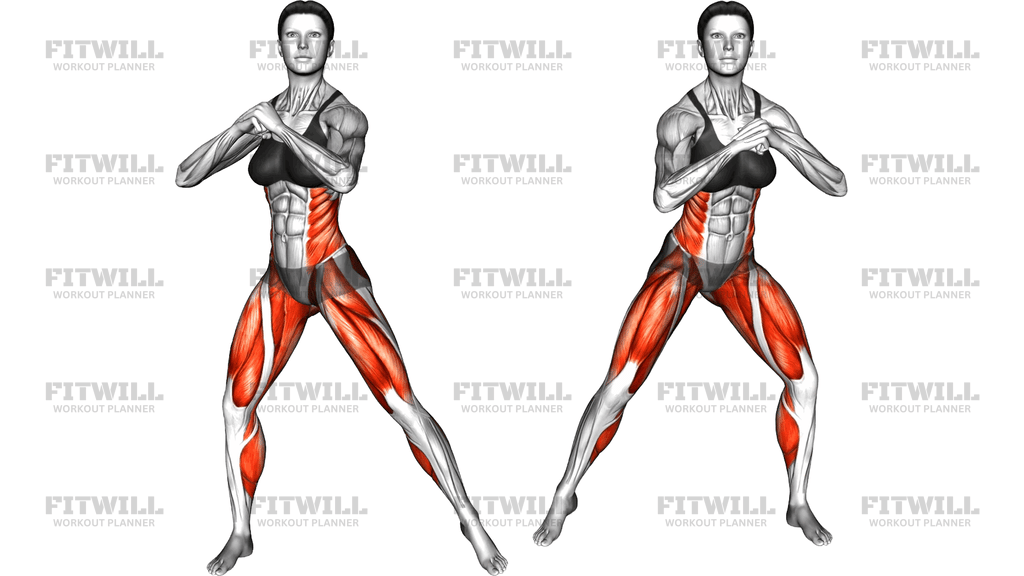
The Squat Air Bike is a bodyweight wide-stance squat performed with no equipment at all. You set your feet noticeably wider than shoulder width, turn your toes out at a comfortable angle, and fold your hands together at chest height to act as a small counterweight. From there you sit down between your legs until your thighs reach at least parallel, then drive back up to standing. Because the stance is wide and the toes are turned out, the movement places extra emphasis on the inner thighs and glutes compared with a conventional narrow-stance air squat.
This version of the squat is one of the most practical lower-body exercises you can learn. It requires zero equipment and very little space, which makes it useful for home workouts, warm-ups before weighted squats, or higher-repetition conditioning circuits. Beginners can use it to groove the squat pattern safely before touching a barbell or dumbbell, while more experienced lifters often use it for volume, tempo work, or active recovery between heavier sessions.
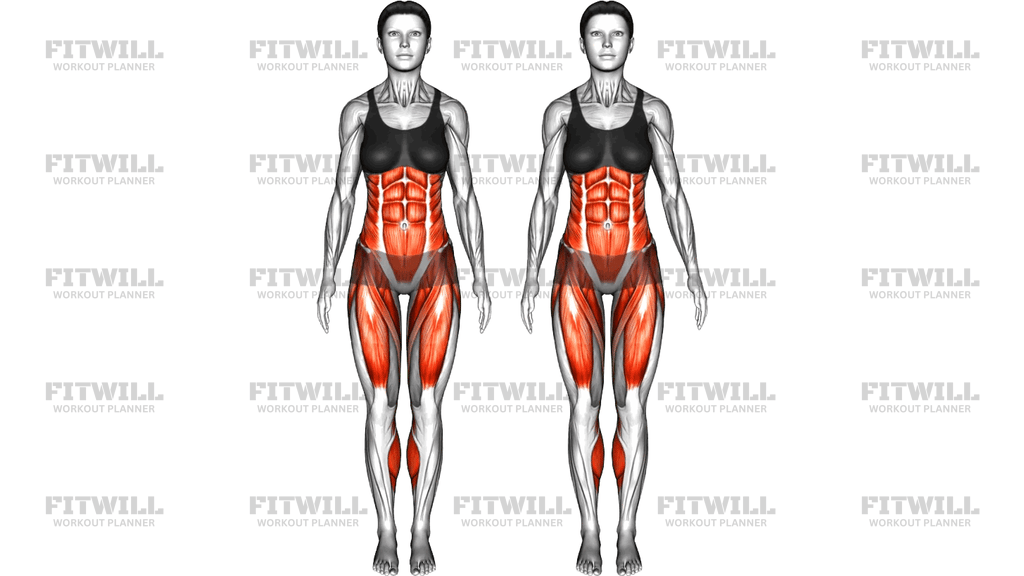
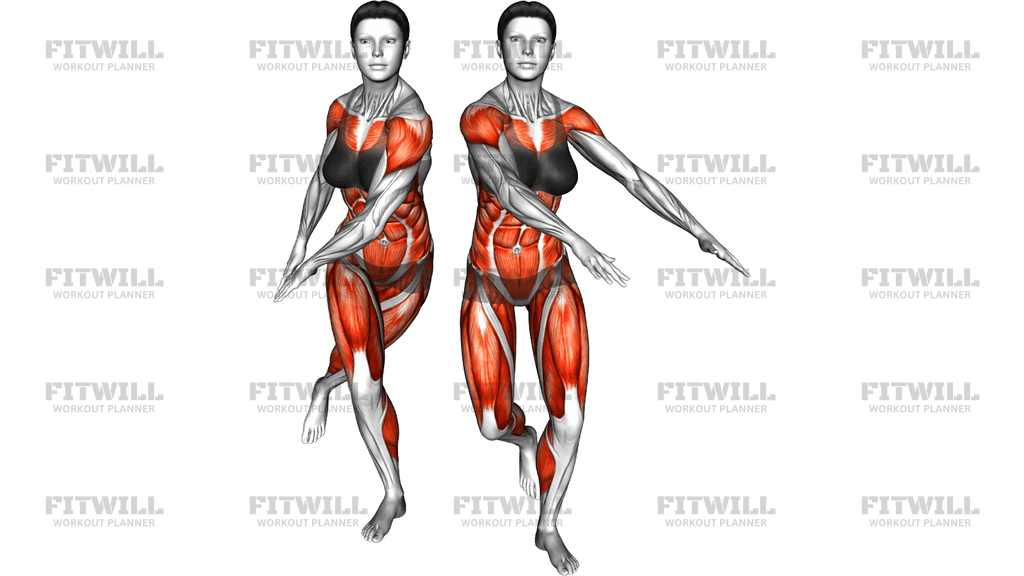
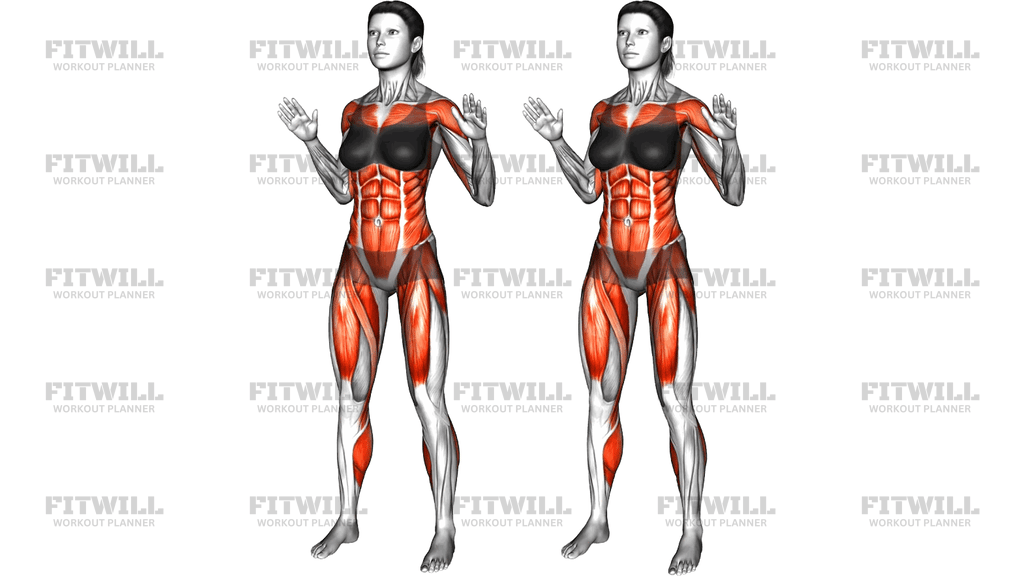
The main muscles working are the quadriceps on the front of the thighs, which extend the knees as you stand back up. The glutes and the adductors along the inner thigh do a large share of the work as well, since the wide stance loads the hips in a slightly abducted position. Your hamstrings and calves assist with control and stability, and the abdominals stay engaged the entire time to keep your torso upright. Holding the hands at the chest gives you a natural counterbalance that helps you sit back without rounding forward.
Setup matters more than most people expect in a bodyweight squat. A stance that is too narrow pushes you onto your toes, while a stance so wide that your knees collapse inward shifts stress away from the hips and toward the knee joint. Aim for a width where you can drop straight down between your feet with your knees tracking in the same direction as your toes. Weight should stay spread across the whole foot, with the heels firmly planted from the first inch of descent to the lockout at the top.
To execute the Squat Air Bike well, think of the descent as sitting rather than dipping. Push your hips back and down, keep your chest tall, and let your elbows track inside or over your knees as you lower. Pause briefly at the bottom if you can control it, then press the floor away and squeeze the glutes at the top without leaning back or hyperextending. Move at a pace you can fully control; rushing the reps is the fastest way to lose knee and hip positioning.
Common use cases include beginner lower-body programs, glute and inner-thigh focus days, mobility work for hips and ankles, and metcon-style circuits where the squat is paired with cardio movements. If you feel the exercise only in your knees or lower back rather than your thighs and hips, revisit your stance width, your foot pressure, and how far forward your torso is leaning before adding repetitions.
[ Workout Log & Planner ]
Put your next workout in Fitwill
Keep your plan and training log ready when you are.


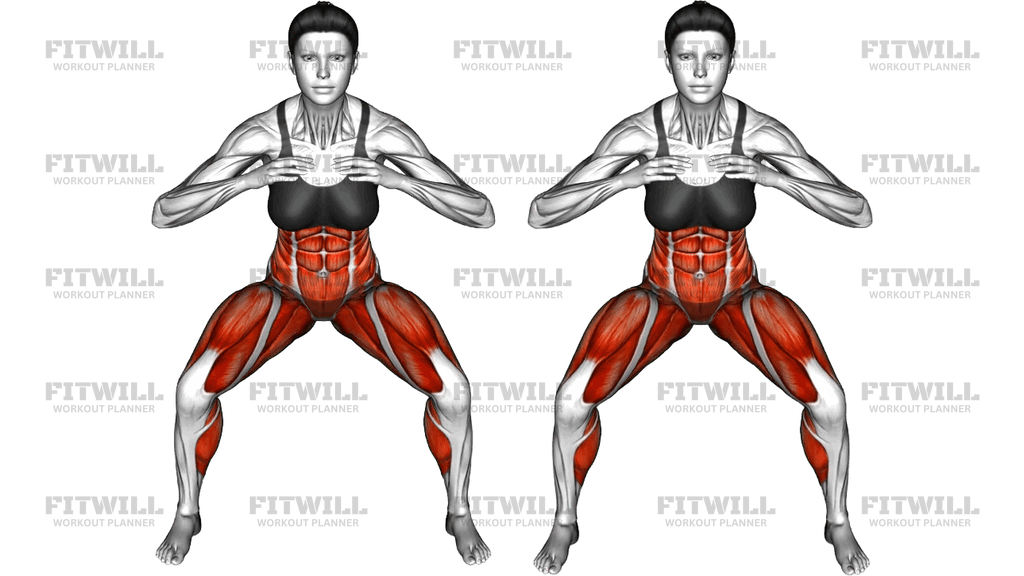
Instructions
- Stand with your feet set roughly one and a half shoulder widths apart, toes turned out about 30 to 45 degrees.
- Clasp your hands together in front of your chest with elbows pointing down and slightly out, so your fists act as a light counterbalance.
- Draw your shoulder blades gently back, lift your chest, and brace your abdominals as if preparing for a light push to the belly.
- Shift your weight so it is spread evenly across the whole foot, with the big toes, little toes, and heels all in contact with the floor.
- Push your hips back and down, letting your knees travel outward in the same direction as your toes as you descend.
- Lower until your thighs are at least parallel to the floor, or as deep as you can go while keeping your heels down and knees tracking over your toes.
- Pause for a beat at the bottom, keeping your torso upright and your hands steady at chest height.
- Drive the floor away through your whole foot to stand back up, exhaling as you rise.
- Finish tall at the top by squeezing your glutes, without pushing your hips forward or leaning back.
- Reset your brace and stance before starting the next repetition, keeping each rep consistent in depth and speed.
Tips & Tricks
- If your knees cave inward on the way up, think about gently spreading the floor apart with your feet; this wakes up the glutes and protects the knee alignment.
- Heels lifting off the floor usually means the stance is too narrow or the ankles are tight — widen your feet slightly and spend more time sitting into the bottom position.
- Letting your chest drop forward is common when the hips are stiff; raise your hands slightly higher at the chest to improve the counterbalance and keep the torso tall.
- Do not bounce out of the bottom. A one-second pause at the deepest point builds control and makes the glutes and inner thighs do real work.
- If you feel pinching at the front of the hips, do not force extreme depth; stop at a depth where your spine stays neutral and work on hip mobility separately.
- Keep your elbows from flaring wide behind your hands. Tucked elbows keep your shoulders relaxed and your upper back engaged.
- Turning the toes out too far can roll your ankles inward. Keep the foot flat on the floor and rotate from the hip, not from the ankle.
- Control the descent for two to three seconds instead of dropping fast. Slow lowering turns a simple bodyweight squat into a genuine strength stimulus.
- If your inner thighs cramp with the wide stance, that is a sign the adductors are being challenged; shorten the width slightly and build up gradually.
Frequently Asked Questions
Which muscles does the Squat Air Bike work the most?
The quadriceps and glutes are the primary workers, with heavy involvement from the adductors along the inner thigh because of the wide stance. The hamstrings, calves, and abdominals stabilize throughout the movement.
Why is the stance so wide in the Squat Air Bike?
The wide, toes-out stance opens the hips and shifts more load onto the glutes and inner thighs than a narrow stance does. It also gives many people a more upright torso and an easier path to full depth.
Is the Squat Air Bike suitable for complete beginners?
Yes, it is one of the best first squats to learn because there is no external load and the hands-at-chest position provides a natural counterbalance. Beginners can reduce depth and widen or narrow the stance until the pattern feels stable.
Why do I put my hands at my chest during the Squat Air Bike?
Holding the hands together at chest height shifts a small amount of mass forward, which helps you sit back into your hips instead of pitching onto your toes. It also encourages an upright chest and engaged upper back.
My knees drift inward when I stand up — how do I fix it?
Knee collapse usually comes from inactive glutes or a stance that is too wide for your hips. Narrow the stance slightly and consciously drive your knees outward, matching the direction of your toes, on every rep.
How deep should I go in the Squat Air Bike?
Aim for thighs at least parallel to the floor, or as deep as you can maintain with heels down, a neutral spine, and knees tracking over the toes. Depth you cannot control adds risk without adding benefit.
What can I substitute if the wide stance bothers my hips?
Use a narrower bodyweight squat with toes closer to straight ahead, or elevate your heels slightly on a firm surface to give the ankles more room. Both options preserve the squat pattern with less hip discomfort.
How many repetitions of the Squat Air Bike should I do?
For strength and technique, work in sets of 8 to 15 controlled reps; for conditioning, longer sets of 20 or more work well. Keep the tempo steady and stop the set when your depth or knee alignment starts to slip.
Can I use the Squat Air Bike as a warm-up before weighted squats?
Yes, two or three easy sets of 10 reps are an effective way to raise the temperature of the legs and rehearse the squat pattern before loading a barbell or holding a dumbbell.
Is it safe for my knees if I feel mild tightness at the bottom?
Mild muscular tightness in the thighs or hips is normal, but sharp pain in the knee joint is a signal to stop. Check that your knees are tracking over your toes, your heels are down, and your depth is within a comfortable range.