Lying Ab Hold
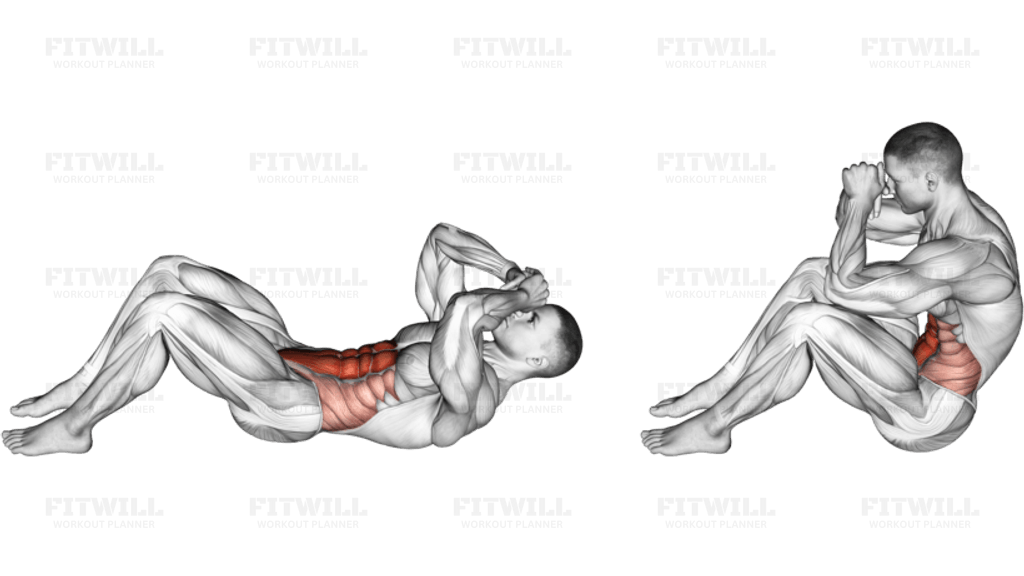
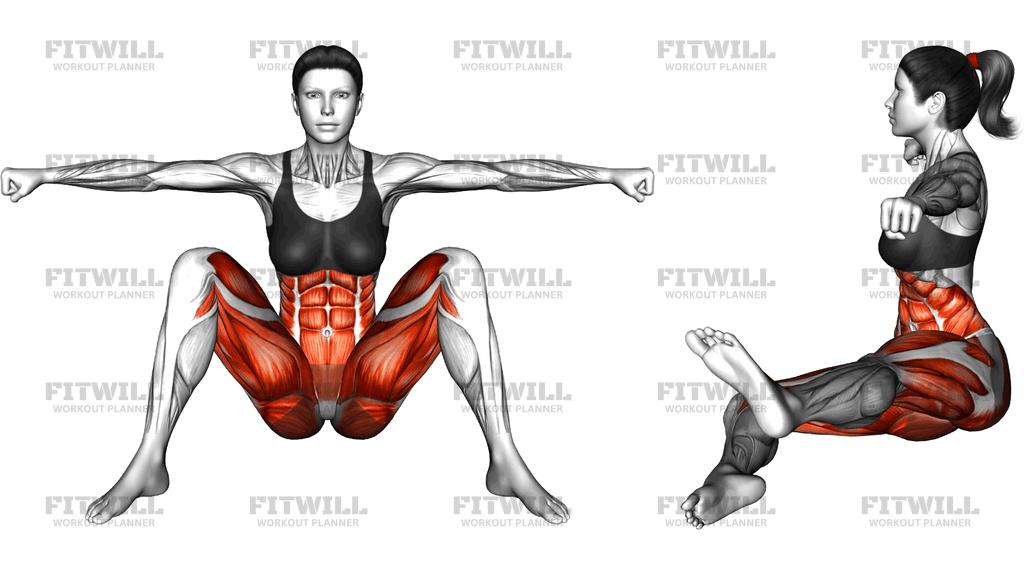
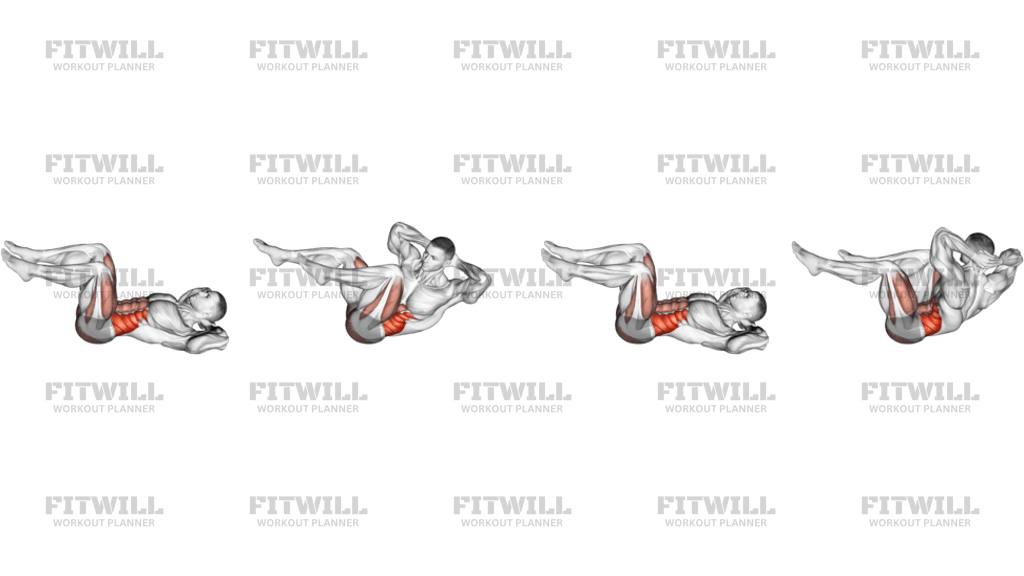
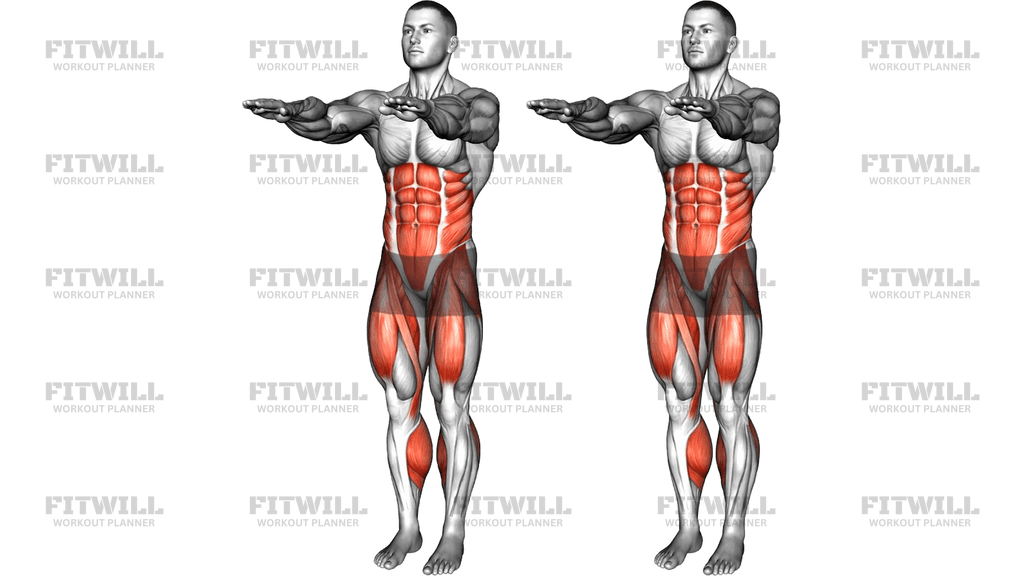
The Lying Ab Hold is an isometric core exercise performed on your back with the legs held straight and lifted a few inches off the floor. The entire challenge comes from resisting gravity in that extended position, which forces the abdominal wall to stay braced the whole time rather than contracting through a repetition. Because there is no equipment and no movement beyond holding still, it is one of the simplest ways to test and build midline strength.
The main work comes from the rectus abdominis and the deep transverse abdominis, which must keep the lower back pressed flat against the floor while the weight of the straightened legs pulls the pelvis into an arch. The hip flexors work hard to hold the legs up, and the quadriceps stay engaged to keep the knees locked out. This combination makes the hold useful for anyone who wants stronger abs for running, lifting, or bodyweight training, since it trains the trunk to stay rigid while the limbs are loaded.
Setup matters more here than in most ab exercises. Lying flat on a mat with the arms relaxed alongside the body, you press the low back into the floor before the legs ever lift. If you skip that step, the hold turns into a hip flexor exercise with an arched spine, which is the most common way people get this movement wrong. The correct setup keeps the pelvis slightly tucked and the ribcage pulled down so the abs, not the joints, absorb the load.
To perform it well, lift the straightened legs only as high as you can while keeping the lower back in contact with the floor, then hold that position with steady breathing for time. The lower the legs, the harder the hold; the higher the legs, the easier it becomes. Start with a height that lets you hold 15 to 30 seconds with clean form, and only lower the feet as your strength grows. If your back starts to arch or your legs start to tremble and drop, reset rather than pushing through.
This hold fits well at the end of a workout as a finisher, as part of a core circuit, or as a standalone drill two to three times per week. It is common in gymnastics and calisthenics preparation under the name hollow body work, but you do not need any background to benefit from it. Beginners can bend the knees or hold the legs higher, while advanced trainees can lower the legs toward the floor or add light ankle weights. As long as the low back stays flat and breathing stays calm, it is a safe, progressive way to build lasting core endurance.
[ Workout Log & Planner ]
Put your next workout in Fitwill
Keep your plan and training log ready when you are.


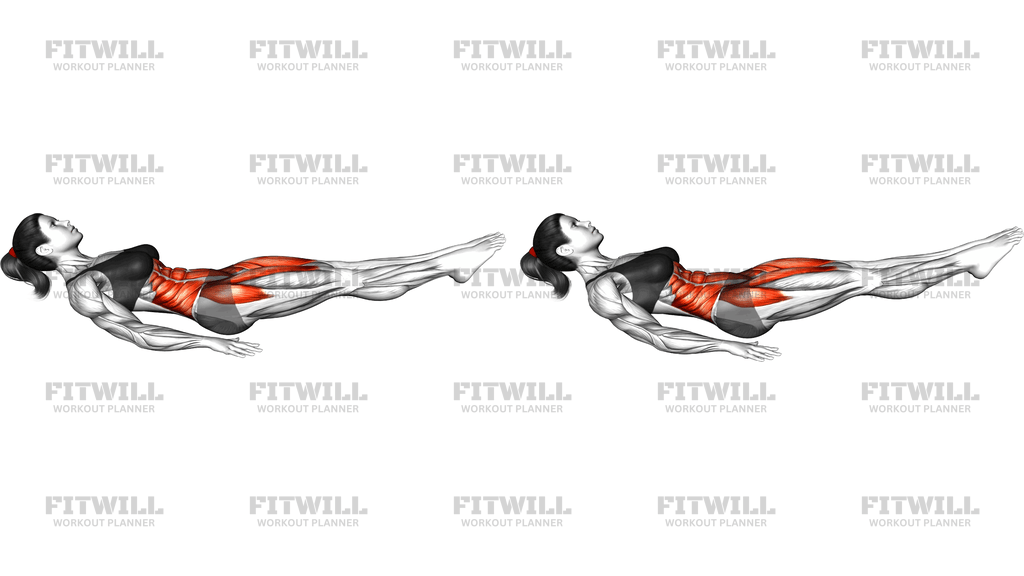
Instructions
- Lie flat on your back on an exercise mat with your legs fully extended and your arms resting alongside your body, palms facing down.
- Press your lower back firmly into the floor and slightly tuck your pelvis so there is no gap between your spine and the mat.
- Exhale and brace your abdominal wall as if preparing to take a light punch to the stomach.
- Keeping both knees straight, lift your legs together a few inches off the floor until you feel your abs working hard.
- Stop at the height where your lower back still stays flat against the floor — do not lift so high that the tension on the abs disappears.
- Point your toes lightly and keep the knees locked out so the legs stay rigid throughout the hold.
- Hold this position, breathing in a slow, controlled rhythm through your nose while keeping the ribcage pulled down.
- When the hold ends, lower the legs back to the floor with control rather than letting them drop.
- Rest briefly, re-brace, and repeat for additional timed holds, resetting the flat lower back before every set.
Tips & Tricks
- The most common mistake is an arched lower back as soon as the legs lift. If you feel your spine peel off the mat, raise your legs slightly higher until you can hold with the back flat again.
- Straining your neck or lifting the head does not add ab tension — keep the head resting on the mat and the gaze straight up.
- If your hip flexors cramp before your abs fatigue, your legs are probably too low for your current strength. Hold them higher and progress down over weeks.
- Squeeze the thighs and lock the knees out; soft, bent knees quietly shorten the lever and take work away from the core.
- Think about pushing your belly button toward the floor rather than sucking your chest in — this keeps the brace in the abs instead of the shoulders.
- Do not hold your breath. Slow nasal breathing during the hold keeps tension steady and stops you from shaking out early.
- Timed holds beat sloppy reps here: aim for 15 to 30 seconds of clean tension and add 5 seconds at a time rather than extending a failing hold.
- Placing your hands under your glutes can help tilt the pelvis correctly if your lower back keeps arching — treat it as a learning tool, not a permanent crutch.
- Stop the set the moment your legs start drifting upward or trembling downward; both are signs the abs have handed the job off to other muscles.
Frequently Asked Questions
What muscles does the Lying Ab Hold work?
The primary muscles are the rectus abdominis and deep transverse abdominis, with the lower abs doing much of the bracing. The hip flexors and quadriceps assist strongly by holding the straight legs up against gravity.
How high should my legs be during the Lying Ab Hold?
Only as low as you can go while keeping your lower back flat against the floor. If your back arches, your legs are too low — lift them slightly higher and rebuild from there.
Is the Lying Ab Hold suitable for beginners?
Yes, beginners can start with the legs held higher off the floor or with slightly bent knees to shorten the lever. As strength builds, straighten the legs and lower them gradually to increase difficulty.
Why does my lower back hurt when I hold my legs up?
That usually means your pelvis is tipping forward and your abdominal brace has given way, letting the hip flexors pull on an arched spine. Reset with the lower back pressed into the mat and hold the legs at a higher angle where you can maintain that position.
How long should I hold the Lying Ab Hold?
Aim for 15 to 30 seconds per set with clean form, and progress by adding 5 seconds at a time. Once you can hold 45 to 60 seconds with a flat lower back, lower the legs to make it harder again.
Can I do the Lying Ab Hold instead of crunches?
It serves a different purpose: crunches move the spine through flexion, while this hold trains the abs to stay braced isometrically against the pull of the legs. Both can have a place, but the hold better matches how the core works during running, lifting, and sports.
My hip flexors cramp before my abs feel anything — what should I change?
Cramping usually means the hip flexors are dominating because the legs are held too low or the abs are under-braced. Raise the legs a few inches, exaggerate the pelvic tuck, and build up the abs before lowering the angle again.
What can I use as a substitute for the Lying Ab Hold?
A dead bug with bent knees, a plank, or a hollow body hold with bent knees all train similar bracing. The dead bug is the closest match for keeping the lower back flat while the legs are loaded.
Do I need a mat for the Lying Ab Hold?
A mat is recommended because your lower back and sacrum rest directly on a hard floor for the length of the hold. Any cushioned, non-slip surface works fine.